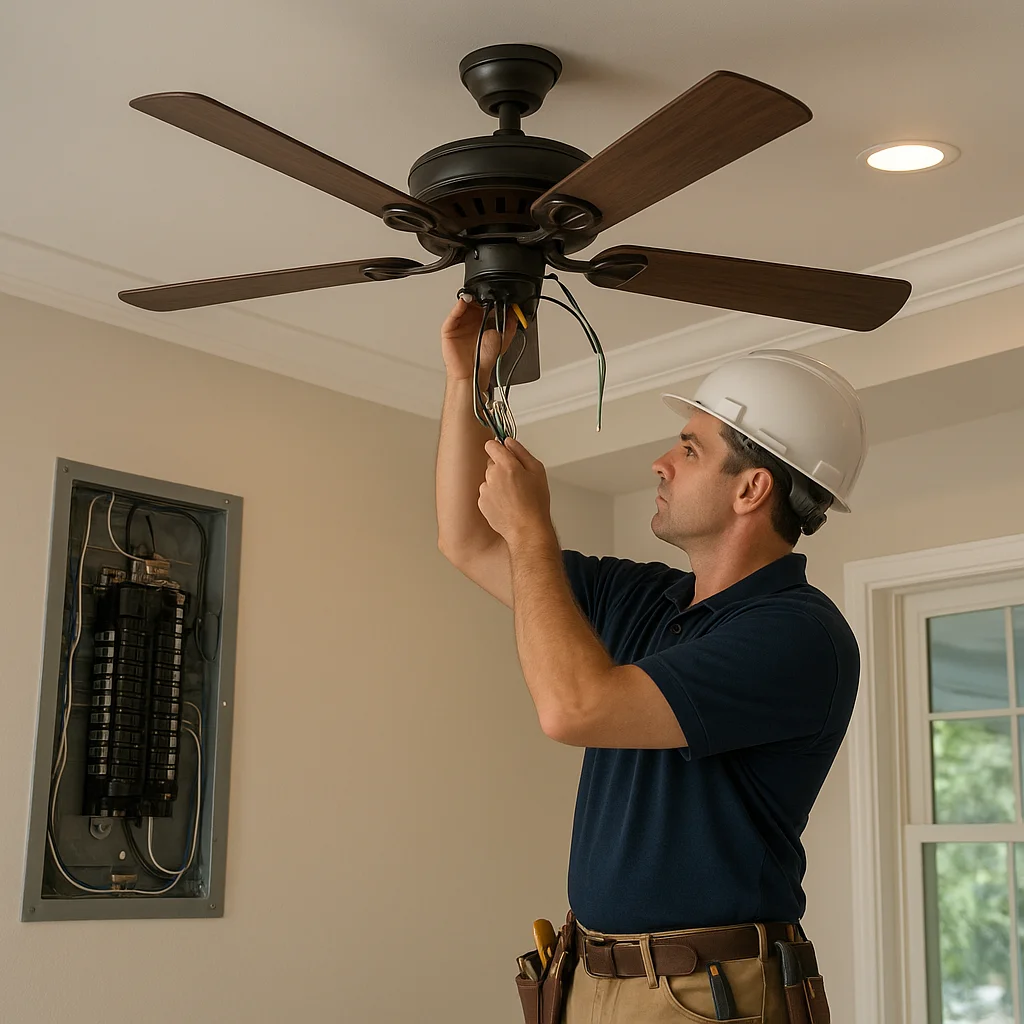
In Lower Grand Lagoon, ceiling fans do more than move air. They help homes stay comfortable through humid summers, coastal breezes, and long stretches of warm weather that can make every room feel heavier than it should. They also depend on safe electrical planning. A fan that is mounted incorrectly, wired to the wrong box, or connected to an overloaded circuit can create fire and shock hazards that are easy to miss until a repair bill gets expensive.
For homeowners, landlords, and property managers, ceiling fan work is not just a comfort upgrade. It is part of the electrical system. That means the condition of the wiring, the breaker, the switch, the ceiling box, and the grounding all matter. If you are considering a new fan or replacing an older one, the safest approach is to treat it like a real electrical project, not a simple fixture swap. A local service page like ceiling fan installation and repair in Lower Grand Lagoon can help connect the job to the right electrical work from the start.
Why ceiling fans deserve more electrical attention in Lower Grand Lagoon
Coastal weather changes how electrical systems age. Salt air, humidity, storms, and power surges can wear on wiring, switches, and connections faster than many homeowners expect. In Lower Grand Lagoon, that matters in older homes with original wiring, in remodels that added lighting or new rooms, and in vacation properties where fans run often and may not get regular inspection. A loose fan box or a weak connection in the ceiling can turn into heat buildup over time. In the worst cases, that heat can damage insulation, scorch wiring, or create a shock hazard at the switch.
Even newer homes can run into trouble if the fan was installed on a box not rated for fan support or if the circuit is already carrying too much load from lighting, outlets, and other fixtures. If you are also dealing with flickering lights, a breaker that trips, or outlets that feel warm, the fan may be part of a larger electrical issue. That is where a broader electrical inspection can help identify the real cause before it becomes a repair emergency.
What safe ceiling fan planning should include
A fan rated box, not just a light box
One of the most common problems is a ceiling fan mounted to a box that was made for a light fixture only. Fans move, vibrate, and put more stress on the ceiling connection than a standard light. A proper fan rated box is designed to hold that weight and motion. Without it, the fan can loosen over time, which can damage the wiring and create a shock risk. If a homeowner is searching for electrical inspections and code updates, this is one of the first things an electrician should check.
Correct wiring and grounding
Ceiling fan wiring should be matched to the circuit and the controls being used. If the fan has a light kit, pull chain, wall switch, or remote, the wiring needs to be set up correctly so the fan motor and light do not overwork the circuit. Grounding is equally important. A fan with poor grounding can increase shock risk, especially in humid environments where moisture and corrosion can affect connections. If there is any sign of old cloth wiring, brittle insulation, or amateur splice work, homeowners should consider whole home rewiring or at least a targeted repair plan.
Breaker and circuit capacity
A ceiling fan may not seem like a heavy load, but the circuit it shares with lights, outlets, and other devices can still be overloaded. In some Lower Grand Lagoon homes, especially those with additions or converted spaces, the breaker may already be close to its limit. If a fan causes dimming, buzzing, or repeated breaker trips, the circuit may need to be evaluated. Homeowners searching for electrical panel upgrade near me often discover that the real issue is not the fan itself but an undersized panel, an aging breaker, or too many fixtures on one branch circuit. In those cases, smart panels can provide better load visibility and help manage modern electrical demand.
Warning signs that the fan installation is not right
Some problems are easy to spot. A fan that wobbles, hums, or shakes more than expected may be loose at the mount or out of balance. A switch that feels warm, sparks, or works intermittently can point to worn wiring or a failing control. A fan that only works on certain speeds may have a control issue, a motor issue, or a wiring mismatch. If the light flickers when the fan starts, the circuit may be strained or the connection may be loose.
Burning smells, crackling sounds, or a fan that trips the breaker should be treated as urgent. Those symptoms can point to overheating, damaged insulation, or a failing component inside the motor or switch. In a coastal area like Bay County, corrosion can make these problems worse because moisture can affect terminals, connectors, and switch hardware over time. If a homeowner is already dealing with a power outage electrician near me search after a storm, that is a good time to have the fan circuit checked along with the rest of the home.
How storms and coastal weather affect ceiling fan safety
Lower Grand Lagoon homes deal with weather that can push electrical systems hard. Thunderstorms, tropical systems, and utility interruptions can all create power surges that stress fan motors and wall controls. After a surge, a fan may still spin, but the internal control board or capacitor may be weakened. That kind of damage can lead to future failure or overheating.
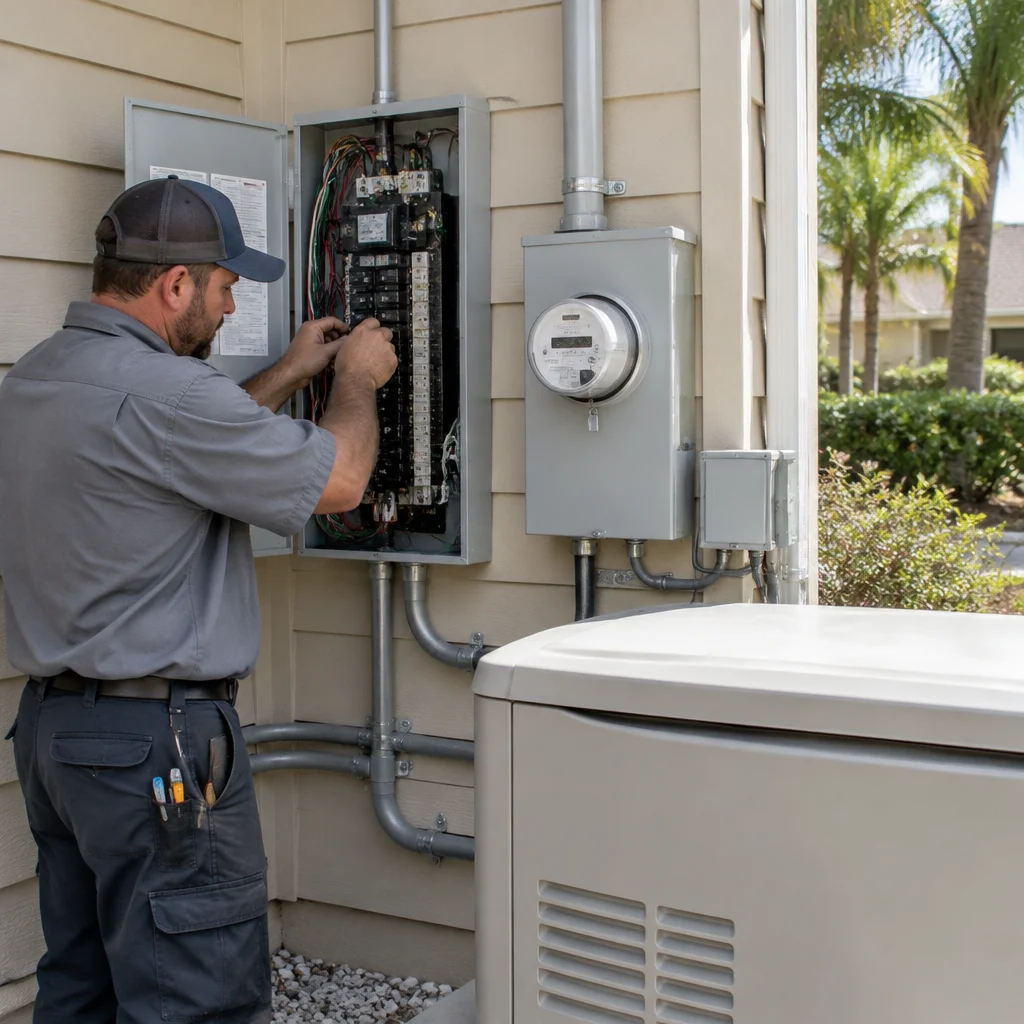
Whole home surge protection can help reduce that risk, especially in homes with multiple ceiling fans, smart controls, USB charging outlets, or upgraded lighting. If your home also has a generator, the transfer equipment should be checked to make sure fan circuits and lighting circuits are properly supported during an outage. Local electrical service matters here because an electrician who works in Bay County understands how storm conditions, humidity, and salt exposure affect the long term reliability of the system. For homeowners comparing service options across the area, the Bay County electrical service area can be a helpful starting point.
Ceiling fans, lighting, and the rest of the room circuit
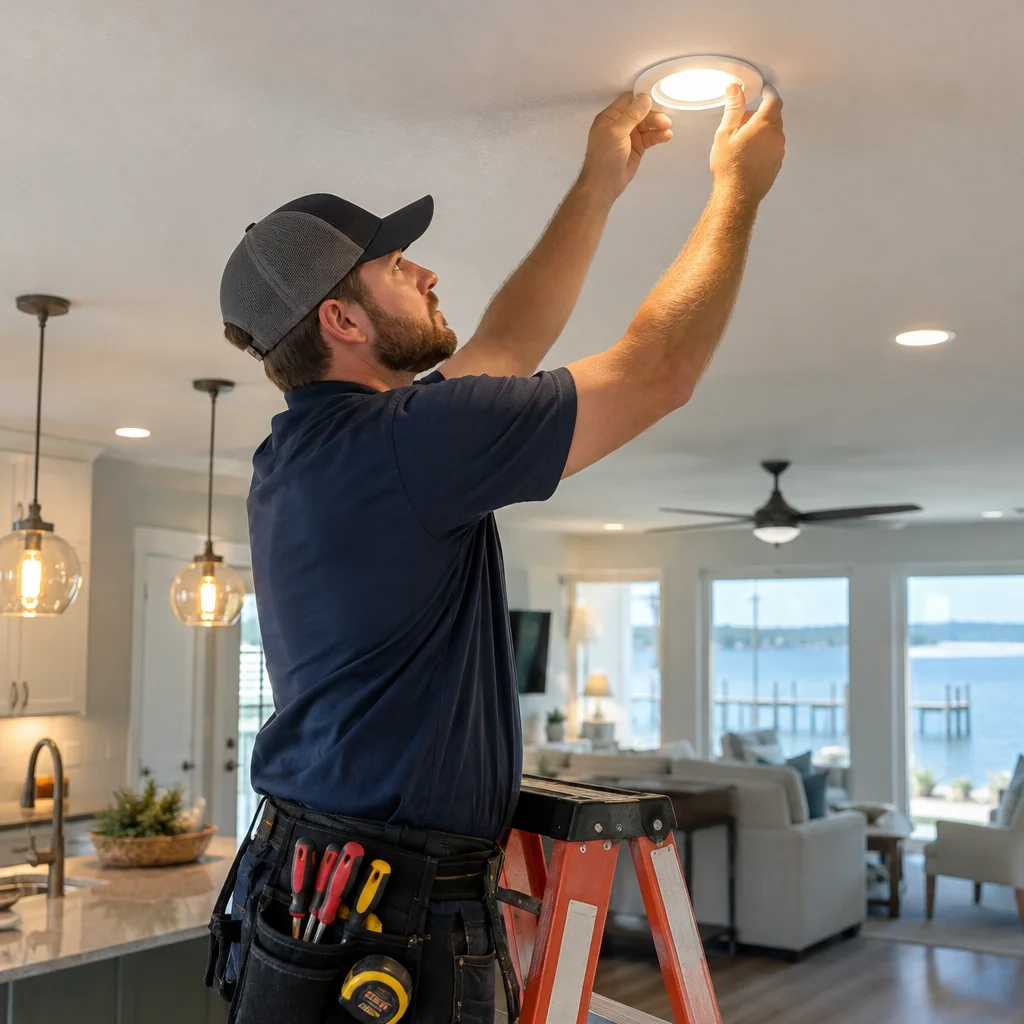
Many fan projects become electrical upgrades once the electrician looks beyond the fixture itself. A room with a new fan may also need better lighting, a dimmer switch, or a dedicated switch leg. In older homes, the existing switch may not be rated for the new fan control. In newer homes, a remodel may have added recessed lights, a ceiling fan, and extra outlets to the same circuit. That can create nuisance breaker trips or uneven performance.
If the room is part of a kitchen, enclosed porch, or addition, the electrical layout should be reviewed carefully. Homeowners often start with a search for outlet installation near me or dimmer switch installation near me, then discover the more important issue is whether the circuit itself is set up correctly. Fan work is also a good time to check GFCI protection where required, especially in areas exposed to moisture, and to confirm that nearby switches and outlets are in good condition. If you have been dealing with loose receptacles or unreliable switches, keeping outlets and switches reliable in Lower Grand Lagoon homes is worth reading alongside your fan plan.
When a ceiling fan job points to bigger electrical repairs
Sometimes a ceiling fan replacement reveals a larger problem. The box may be loose because the ceiling structure was patched during a remodel. The wiring may be too old for modern fan controls. The breaker may trip because the room circuit also feeds several outlets or lighting zones. In older homes, a fan problem can even uncover old wiring replacement needs, especially if the insulation is brittle or the splices are not enclosed properly.
That is why homeowners searching for electrical repair near me or electrical troubleshooting near me should not stop at the visible fixture. A professional can trace the circuit, test the switch leg, verify the grounding, and confirm that the fan is supported correctly. If the issue is wider than the fan, the solution may involve breaker repair, outlet repair, code correction, or a panel update. For properties with additions, detached structures, or specialty loads, dedicated circuits can make a big difference in safety and performance.
Practical maintenance that prevents expensive repairs
Ceiling fan maintenance does not need to be complicated. Start by checking for wobble, noise, or flickering a few times a year. Keep the blades clean so the motor does not work harder than it should. Make sure the pull chain, remote, or wall control responds consistently. If a fan starts acting differently after a storm, a surge, or a renovation, have it inspected sooner rather than later.
It is also smart to look at the surrounding electrical system. Are nearby outlets secure? Do any switches feel loose? Is the fan on a circuit that already powers several other devices? If you are planning other upgrades, such as keeping Lower Grand Lagoon homes ready for the next electrical upgrade or adding security system wiring, it may be more efficient to handle the fan at the same time. That can reduce labor, keep the work code compliant, and help avoid future patchwork repairs.
Why local electricians matter for fan installation and repair
Ceiling fan work can look simple, but the safest installation depends on the home behind it. A local electrician knows how coastal conditions affect boxes, connectors, switches, and breakers. They also know the common issues in Lower Grand Lagoon homes, from older wiring in established neighborhoods to newer construction that needs cleaner load management. If you are searching for an electrician near me because a fan is wobbling, a switch is failing, or the breaker keeps tripping, local experience can save time and prevent repeat service calls.
The same is true for related electrical needs. If your home needs smoke detector installation near me, carbon monoxide detector installation near me, or a home safety inspection electrician near me, the fan project is a good chance to review the whole electrical picture. A professional can also advise on surge protection, generator readiness, EV charger installation, and other modern loads that affect how much capacity the home really has.
For fans that need new wiring, replacement, or a safer mount, the right service can keep the job focused and code aware. If you are comparing options for ceiling fan wiring near me, the goal should be more than making the fan spin. It should be a safe installation that protects the wiring, the breaker, and the people living in the home.
Lower Grand Lagoon homes face enough stress from weather, moisture, and everyday power demand. Ceiling fan work should not add risk to that picture. With the right planning, proper support, and a careful look at the surrounding electrical system, a fan can improve comfort without creating hidden hazards or expensive repairs later.
For homeowners who want expert help with fan installation, replacement, repair, or wiring, A Superior Mechanical provides local electrical service that fits the needs of Lower Grand Lagoon homes, rentals, and businesses. If the project also points to broader issues like panel capacity, grounding, code corrections, or circuit problems, a full inspection can help keep the entire system safer.
Learn more about the local service area at Lower Grand Lagoon electrical services.
Find Ceiling Fans in Lower Grand Lagoon, FL
If you need Ceiling Fans in Lower Grand Lagoon, FL, visit our local service page or contact A Superior Mechanical today.
Map of Lower Grand Lagoon, FL
Frequently Asked Questions
Do ceiling fans need a special electrical box?
Yes. A ceiling fan should be mounted to a box rated for fan support, not just a standard light fixture box. The box must handle the weight and vibration of the fan safely.
Why does my ceiling fan trip the breaker?
A tripping breaker can point to an overloaded circuit, a wiring problem, a failing fan motor, or a loose connection. In some homes, the issue is the circuit itself, not the fan.
Can a ceiling fan be installed on an older home wiring system?
Often yes, but the wiring, grounding, switch, and ceiling box need to be checked first. Older homes in Lower Grand Lagoon may need repairs or code corrections before a safe installation.
How do storms affect ceiling fans and controls?
Storms and power surges can damage fan motors, capacitors, wall controls, and connected lighting. Surge protection and a professional inspection after outages can help prevent hidden damage.
Should I call an electrician for a wobbly fan?
Yes, if the wobble is severe, the fan is noisy, or the mount feels loose. A wobbly fan can mean a support, wiring, or balance problem that should be corrected before it causes damage.
Related Articles
- Keeping Lower Grand Lagoon Homes Ready for the Next Electrical Upgrade
- Outdoor Landscape Lighting and the Electrical Clues Lower Grand Lagoon Homeowners Should Not Ignore
- Keeping Pool, Spa, and Hot Tub Wiring Safe in Lower Grand Lagoon Homes
- Keeping Outlets and Switches Reliable in Lower Grand Lagoon Homes
Photo Gallery