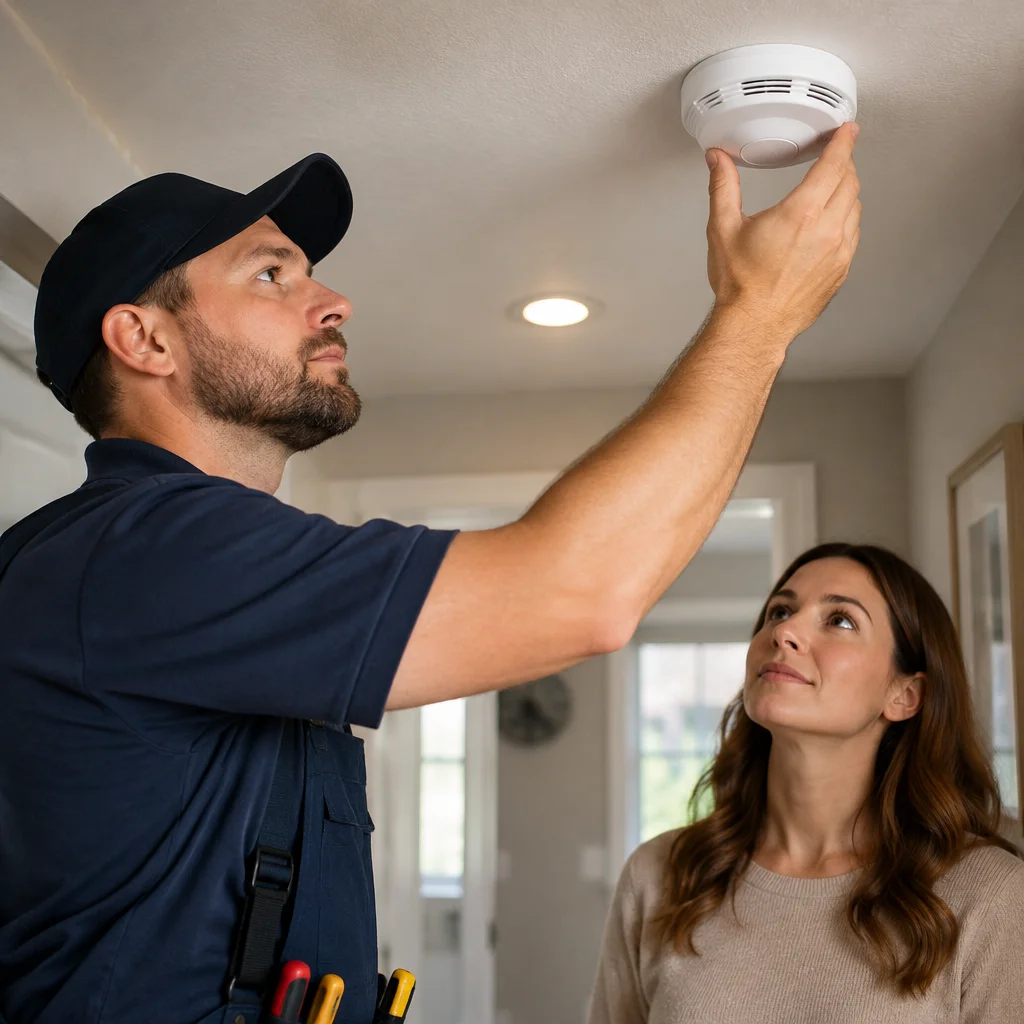
A smoke alarm can look fine from the hallway while its backup battery is dead, its sensor is past its replacement date, or its wiring has been disconnected during a remodel. Carbon monoxide alarms have similar blind spots. Reliable protection depends on where alarms are installed, how they receive power, and whether homeowners maintain them.
For homeowners in Valparaiso, FL, detector planning belongs alongside electrical inspections, wiring repairs, and storm preparation. A Superior Mechanical provides smoke detector and carbon monoxide detector services that help connect these details into a practical safety plan, whether your home has decades-old circuits or a recently installed electrical panel.
Start with coverage, not just the number of alarms
Smoke alarms and carbon monoxide alarms address different hazards. Smoke alarms detect particles associated with fire. Carbon monoxide alarms detect an invisible, odorless gas produced by fuel-burning equipment and engines. A combination unit can address both hazards, but its location still has to satisfy the manufacturer's instructions and applicable requirements for both functions.
Bedrooms, hallways, and every level
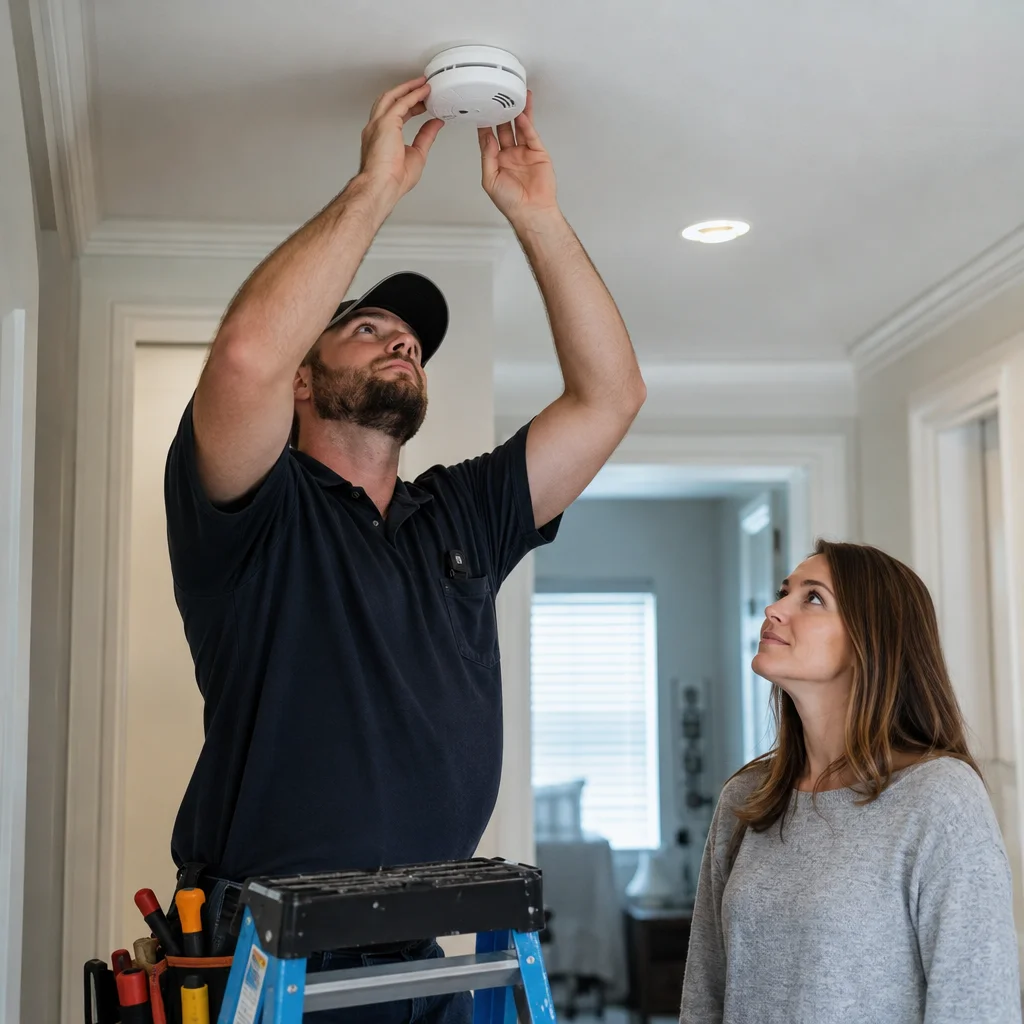
General fire safety guidance calls for smoke alarms inside each bedroom, outside each separate sleeping area, and on every level of the home. Carbon monoxide alarms generally belong outside sleeping areas and on every level. Exact placement depends on the alarm, floor plan, applicable code, and local requirements. CO alarms do not universally belong near the floor; follow the product's mounting instructions.
Placement deserves another look when a spare room becomes a bedroom or an addition creates a separate sleeping wing. Tall ceilings, partitions, and closed doors affect how quickly occupants receive a warning. Keep alarms away from locations where cooking fumes, shower steam, supply registers, or ceiling fans can interfere with operation. Manufacturer-specified clearances matter more than choosing the easiest mounting spot.
Choose the right power and interconnection arrangement
Battery-powered, hardwired, and wirelessly interconnected alarms are not automatically interchangeable. Hardwired alarms typically use household power with battery backup, while listed wireless interconnection systems allow compatible units to communicate without a signal wire between them. The right arrangement depends on the house and the requirements that apply to the work.
Interconnection is valuable because an alarm near the source can trigger compatible alarms elsewhere. That can make a meaningful difference when bedrooms are separated from the kitchen or garage. However, matching plugs or wire colors does not prove compatibility. Mixing brands or product families can prevent proper operation or damage equipment. Smart notifications are useful extras, not substitutes for audible alarms and an escape plan.
If you are searching for carbon monoxide detector installation near me, ask whether the visit includes a coverage assessment, compatibility review, and testing. For someone with hearing loss, discuss listed accessible notification equipment rather than assuming a louder hallway alarm will be sufficient.
The wiring behind a hardwired detector matters
A hardwired alarm needs a reliable, unswitched power source arranged according to its listing and applicable electrical requirements. Turning off a light switch should not turn off the alarm's normal power. The connection belongs in a suitable electrical box with secure splices and proper mounting. Loose connections, damaged insulation, and incorrect interconnection wiring require correction, not another coat of paint around the alarm base.
Older Valparaiso homes may have wiring altered through several renovations. A hallway lighting circuit might include an unexpected junction, an abandoned switch leg, or a connection hidden during ceiling repairs. Newer homes can also develop problems after fixture replacement or attic work. An electrician should trace questionable wiring instead of assuming the original installation remains intact.
During electrical wiring repair, ask for the alarm circuit and interconnection to be checked together. Verify normal power, backup operation, and communication between compatible units using the manufacturer's procedures. Do not work on energized alarm wiring or connect an interconnection conductor to household line voltage.
Panel problems can show up at the alarm
Repeated loss-of-power indications may come from the detector, its connections, or the supplying circuit. A breaker that trips repeatedly is giving a warning that needs diagnosis. Possible causes include a fault, overloaded circuit, damaged equipment, or a failing breaker. Resetting it over and over, or installing a larger breaker without verifying conductor capacity and circuit design, can create serious danger.
Smoke and CO alarms use little electricity, so adding them does not usually justify a panel upgrade by itself. The larger issue may be an aging panel, insufficient circuit capacity, corrosion, or growing household demand. EV charger installation, generator equipment, and new appliances should prompt a load assessment rather than guesswork.
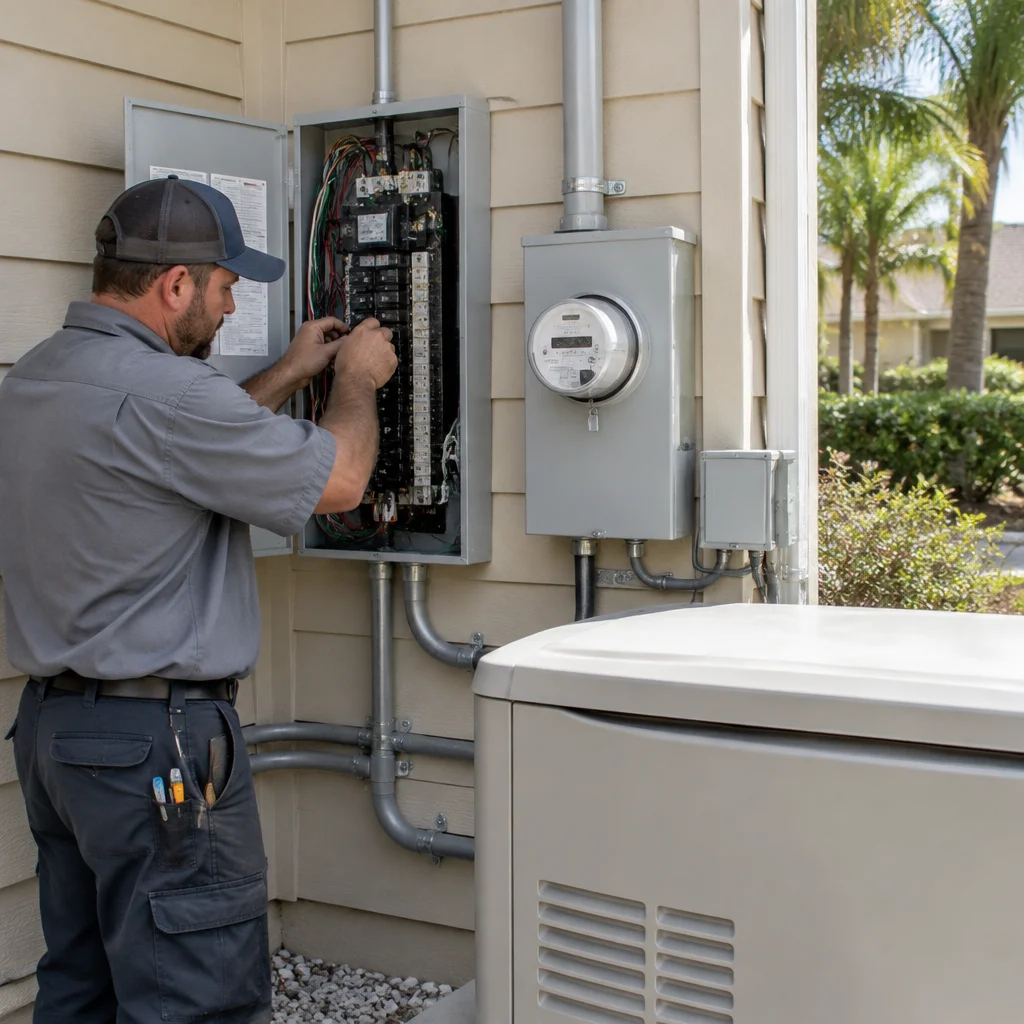
A Superior Mechanical's circuit breaker panel and rewiring services can address those broader concerns. Breaker repair or replacement should include identifying why the problem occurred, with attention to grounding, bonding, approved components, and code compliance.
Outlets, switches, and lighting deserve a separate safety check
Alarms warn about hazards; they do not correct the electrical conditions that might start a fire. Warm receptacles, loose plugs, discolored switch plates, flickering lights, and buzzing connections need investigation. An outlet repair near me search may start with one damaged receptacle but uncover worn wiring or a poor upstream connection.
GFCI protection reduces shock risk where required, including many wet, outdoor, and garage locations. It does not replace smoke alarms or fix damaged wiring. Likewise, required AFCI protection addresses certain arcing hazards but does not eliminate every fire risk. Each protective device has a different job.
During lighting installation or ceiling fan work, protect nearby detector wiring and follow alarm clearance instructions. Check dimmer switches for compatibility with the connected lights. Avoid solving nuisance alarms by moving a detector into a poorly protected corner or disconnecting it.
Coastal weather adds maintenance challenges
Valparaiso's humid climate, thunderstorms, and coastal weather make moisture and power interruptions important planning issues. Roof leaks and wind-driven rain can reach ceiling boxes or attic wiring. Corrosion can affect electrical equipment where moisture gets inside. An alarm that behaves differently after a storm deserves attention, especially if there is staining or evidence of water entry nearby.
Whole-home surge protection can help limit damage from some transient voltage events, but it cannot guarantee protection against every surge or direct lightning strike. It also does not provide backup power. Hardwired alarms still need their specified backup batteries or backup system during outages.
After significant storm damage, have affected electrical equipment evaluated before reuse. Do not energize water-damaged circuits simply because they appear dry. Local electrical service matters because the inspection can account for the home's actual moisture exposure, equipment condition, and permitting requirements across Okaloosa County.
Generator planning must include carbon monoxide prevention
Portable generators create a major CO hazard during outages. Operate them outdoors at least 20 feet from doors, windows, and vents, with exhaust directed away from the home. Never run one inside a garage, even with the door open, or in another enclosed or partly enclosed area. Follow any greater clearances required by the manufacturer.
Permanent generator installation requires its own site assessment, applicable clearances, and approved transfer equipment. Never backfeed a home through a wall outlet. A properly arranged transfer system helps prevent dangerous energization of utility lines, but it does not address unsafe exhaust placement.
Test CO alarms before storm season and keep their backup power ready. Even an all-electric home can face CO exposure from an attached garage, a generator, or another nearby combustion source. Never use a grill indoors for cooking or heating.
Use remodels and new circuits to close safety gaps
Remodels and additions are good opportunities to review detector coverage before ceilings and walls close. Moving bedrooms, enclosing a porch, or adding a second level can change the alarm plan. Permit requirements may also trigger upgrades beyond the immediate work area. A licensed electrician should confirm the requirements with the local authority rather than treating every project the same.
Coordinate dedicated circuits for equipment that needs them, including applicable appliances and EV charging equipment. Do not casually extend an alarm circuit to supply new loads. Panel capacity, conductor sizing, required protection, and circuit routing should be planned together.
For homeowners comparing a licensed electrician near me, ask who will review existing alarm locations and complete required code corrections. Our guide to electrical replacement planning for Valparaiso homes explains how to prioritize broader work. Where aging components need attention, electrical replacement services can be coordinated with detector updates.
Build a maintenance routine that catches quiet failures
Test alarms monthly using their test buttons and the manufacturer's instructions. Follow the specified battery replacement schedule, and never remove a battery to silence recurring trouble. Many smoke alarms require replacement at ten years; CO alarm service life varies by model. Check the label and instructions rather than relying on appearance.
Vacuum accessible exterior openings gently if the manufacturer recommends it. Never paint an alarm, spray cleaners into it, or use an open flame or vehicle exhaust to test it. Keep a record of installation dates, model numbers, and scheduled replacements.
A periodic chirp can indicate a battery issue, end of life, or another trouble condition. Identify the signal from the product instructions instead of assuming every sound means the same thing. Repeated nuisance alarms call for an inspection of placement, contamination, device condition, and wiring. Disabling protection is not a maintenance strategy.
Know which problems require immediate action
If a smoke alarm sounds and there may be a fire, leave immediately and call 911 from outside. If a CO alarm sounds, move everyone into fresh air, call 911, and stay out until responders say it is safe. Headache, dizziness, nausea, and confusion can accompany CO exposure, but a lack of symptoms does not make an alarm safe to ignore.
Sparking, smoke, a hot panel, or a persistent burning smell also needs urgent attention. Do not remove panel covers or touch suspect equipment. For an active fire or immediate danger, emergency responders come first. Searching for an emergency electrician near me is appropriate for urgent electrical diagnosis once people are safe, not as a substitute for evacuation.
Arrange a detector and electrical safety review
Before scheduling service, note alarm ages, trouble signals, recent outages, and any remodeling or circuit changes. Ask for a review of placement, power, interconnection, backup operation, and visible wiring concerns. Discuss permits and inspections where the proposed work requires them.
A Superior Mechanical helps homeowners coordinate electrical service in Valparaiso with practical detector planning. Contact the team to discuss installation, replacement, inspection, or repair, and address the electrical issues behind unreliable protection.
Find Smoke Detectors and Carbon Monoxide Detectors in Valparaiso, FL
If you need Smoke Detectors and Carbon Monoxide Detectors in Valparaiso, FL, visit our local service page or contact A Superior Mechanical today.
Map of Valparaiso, FL
Frequently Asked Questions
Do hardwired smoke detectors still need batteries?
Hardwired residential smoke alarms typically include battery backup so they can operate during a power outage. Some use replaceable batteries, while others have sealed backup batteries. Follow the specific model's testing, battery, and replacement instructions.
Does an all-electric Valparaiso home need carbon monoxide detectors?
An all-electric home can still face carbon monoxide exposure from an attached garage, a portable generator, or nearby fuel-burning equipment. CO alarms provide important protection even without gas appliances. An electrician can help assess placement and confirm applicable requirements for your home.
Will installing smoke and carbon monoxide detectors require a panel upgrade?
Usually not. These alarms draw very little power. A panel upgrade may be appropriate if an inspection finds unsafe equipment, inadequate capacity for other planned loads, or conditions requiring correction. The decision should be based on the electrical assessment, not simply the addition of detectors.
Related Articles
Photo Gallery