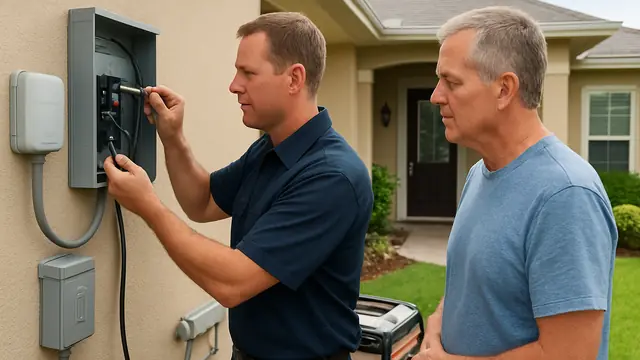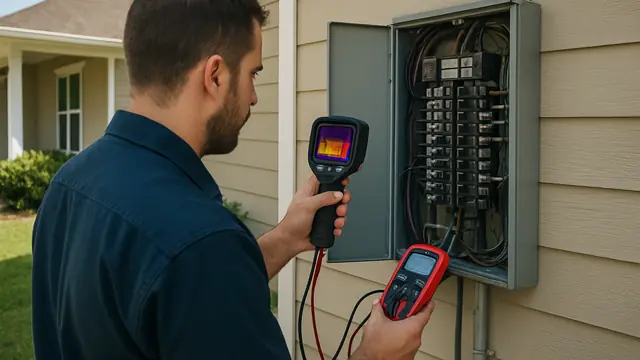
Do not remove an electrical panel cover, touch exposed conductors, bypass protection, or repeatedly reset a fault. Keep clear of smoke, sparks, burning odors, hot equipment, standing water near electricity, and downed lines, then call qualified help.
What Makes a Ceiling Fan Installation Safe?
A ceiling fan can make an occupied room or shaded porch feel more comfortable during Northwest Florida’s long warm season. However, replacing a ceiling light with a fan is not simply a fixture swap. The installation must support the fan’s weight and movement, provide suitable electrical connections, and maintain the clearances specified by its manufacturer. A fan that runs quietly on installation day can still be unsafe if its concealed mounting support is inadequate.
For homeowners in Bid-A-Wee, the first planning questions are straightforward: Where will the fan operate, what supports it, and how will it be controlled? Coastal humidity and salt exposure also matter when choosing equipment for a porch or other exposed space. A licensed electrician can evaluate an existing installation before a replacement is purchased, particularly when the ceiling box, wiring history, or previous mounting method is unknown.
Confirm That the Ceiling Can Support a Fan
An electrical box intended only for a light fixture is not automatically suitable for a ceiling fan. Fans create movement and repeated loading as their motors start, stop, and change speed. The mounting arrangement must be approved for fan support and suitable for the particular fan. Depending on the installation, that may involve a fan-rated box attached to appropriate framing, a listed support assembly, or another manufacturer-approved structural mounting method.
An electrician checks the box identification, its attachment, the supporting structure, and the fan’s mounting hardware. A decorative canopy can conceal loose fasteners, an unsuitable box, or improvised repairs, so appearance from the floor is not enough. If access above the ceiling is limited, support upgrades may require additional work. Ask whether the proposed installation includes verifying existing support rather than assuming that a previously installed fan proves the mounting is adequate.
Choose the Right Rating for Coastal Exposure
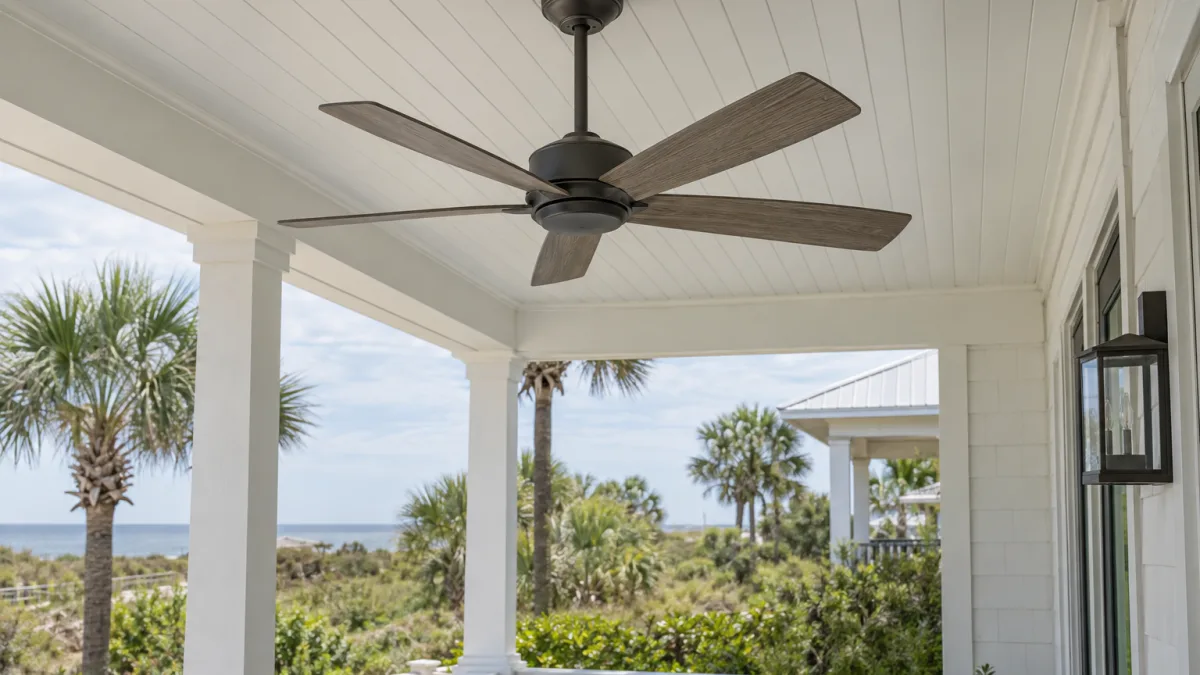
Indoor, damp-location, and wet-location fans are not interchangeable. An indoor fan belongs in a protected interior environment. A damp-location fan is designed for moisture in the air but not direct water exposure. A wet-location fan is intended for locations where water exposure is expected, within the limits of its listing and installation instructions. A roof over a porch does not necessarily prevent wind-driven rain from reaching a fan.
Salt air adds another selection concern for coastal Bay County homes. A moisture rating does not, by itself, promise resistance to salt-related corrosion. Compare the manufacturer’s stated suitability for coastal locations, material descriptions, care requirements, and warranty exclusions. Blade material also matters because an unsuitable blade can swell, sag, or deteriorate in humidity. Have the electrician assess the actual exposure instead of choosing equipment solely because its packaging calls it an outdoor fan.
Plan Blade Clearance, Ceiling Height, and Placement
Fan size should suit both the room and the available clearance. A broad blade span may distribute air well but create conflicts with walls, cabinet doors, bunk beds, or tall furniture. Ceiling height affects whether a flush-mount design or a downrod installation is appropriate. Follow the fan manufacturer’s required distances from the floor, walls, and other obstacles, along with applicable installation requirements. Do not select a fan based only on room square footage.
Sloped ceilings may need a compatible mounting adapter, and extended downrods must be approved for the fan rather than improvised from unrelated parts. On porches, consider door swings, screens, beams, and nearby fixtures. The electrician should also evaluate access for future maintenance. If the desired location does not provide sufficient clearance, a different fan design or another means of air circulation is safer than shortening required distances or modifying blades.
Match the Fan to the Wiring and Controls
An existing ceiling light may have only one switched supply, while a homeowner wants separate wall controls for the fan and its light. Some fans can provide separate functions through a compatible receiver and remote; others require a different wiring arrangement. Before installation, explain whether you want wall controls, remote operation, smart-home features, or independent lighting. The electrician can determine which options the existing wiring supports and whether new cable is needed.
An ordinary lighting dimmer generally must not control a fan motor. Fan speed controls, light dimmers, receivers, and integrated electronics must be compatible with the exact equipment. Many electronically controlled fans, including many DC-motor models, require their supplied or specifically approved controls. A professional also checks grounding provisions, conductor condition, connection space, and the available supply. A replacement fan’s newer electronics do not correct missing grounding or damaged wiring in the ceiling.
Know Which Warning Signs Require You to Stop
Stop using a fan if its canopy or mounting point moves, a blade appears loose or cracked, or the assembly suddenly develops substantial wobbling. Scraping, grinding, visible deformation, or a noticeable change in operating noise also warrants evaluation. Small blade-balance problems and structural mounting failures can look similar from below. Do not continue operating an unstable fan to see whether it settles down, and keep people away from the area beneath it.
A burning odor, smoke, sparking, or apparent electrical damage requires prompt action. Switch the fan off only if you can do so safely, and do not restart it. If it is safe to access and identify the correct breaker, disconnect the circuit; otherwise, stay clear and seek help. Smoke or fire calls for evacuation and emergency services. Never touch a moving assembly, open its canopy, or attempt repairs on energized wiring.
What Professional Troubleshooting Should Include
A useful diagnosis starts with the symptom history. Tell the electrician whether the problem followed installation, cleaning, a utility interruption, a control replacement, or a long period without use. Note which speeds are affected and whether the light and motor behave differently. These details can help distinguish a control issue from mechanical wear, blade damage, or a supply problem. Do not reproduce a dangerous symptom just to make a recording.
With appropriate electrical safety procedures, the electrician can inspect mounting support, blade attachments, wiring connections, control compatibility, and signs of moisture or overheating. Electrical testing may help determine whether the fault lies in the supply, switch, receiver, or fan assembly. Depending on the model, a failed capacitor, motor component, or electronic module may be repairable. Balancing a fan should come after confirming sound mounting and undamaged parts, not serve as a substitute for those checks.
Maintain the Fan Without Disturbing Its Wiring
Dust buildup can affect appearance and contribute to uneven blade loading. Clean only with the fan off, the blades fully stopped, and a safe means of access. Follow the manufacturer’s instructions for cleaning products and methods. Avoid soaking the housing, spraying cleaner into openings, or pressing hard enough to bend blade brackets. If cleaning requires overreaching or unsafe ladder use, arrange professional help rather than stretching from furniture or working around obstacles.
Periodically observe the stationary fan for blade sagging, missing parts, corrosion, or a canopy that no longer sits as expected. Inspect outdoor fans more attentively where salt and moisture exposure are significant, using the manufacturer’s maintenance schedule as a starting point. Many residential fan motors do not require homeowner lubrication. Do not add oil unless the instructions specifically call for it. Leave canopy removal, mounting repairs, and electrical connections to a qualified professional.
Account for Seasonal Occupancy and Utility Interruptions
In a seasonally occupied home or vacation rental, simple, understandable controls reduce confusion. Keep the correct remote available and provide brief operating directions, especially if a wall switch must remain on for the receiver to function. When several remotely controlled fans are nearby, have pairing and independent operation checked during installation. A missing remote or incompatible replacement can make a functioning fan seem defective and encourage unsuitable control substitutions.
Some electronically controlled fans remember their previous setting after a utility interruption, while others behave differently. Confirm the model’s restart behavior before relying on it in an unattended property. During turnover or reopening checks, look for visible blade damage and listen for new noises before routine use. Ceiling fans cool people through air movement; they do not lower room temperature or remove moisture. Running them continuously in an empty room is not a substitute for humidity control.
Decide Between Repair and Replacement
Repair may be reasonable when the mounting is sound, the fan is appropriate for its location, and an approved replacement part is available. Replacement deserves consideration when blades are deteriorating, corrosion affects important components, motor problems recur, or required parts cannot be obtained. A fan installed in an unsuitable environment should not simply be replaced with the same type. Correct the location-rating or exposure mismatch as part of the project.
Before scheduling work, provide the fan model if known, photographs taken safely from floor level, ceiling height, control preferences, and any access limitations. Ask whether the estimate includes support verification, compatible controls, necessary wiring corrections, removal of the old fan, and operating checks. For a Bid-A-Wee property, tell the electrician about porch rain exposure or visible salt-related corrosion. After installation, have the controls demonstrated and keep the model information and care instructions where the homeowner or property manager can find them.
About this guide: This resource provides general homeowner education, not a remote diagnosis. Actual conditions, code requirements, equipment, and safe repair options must be evaluated at the property.