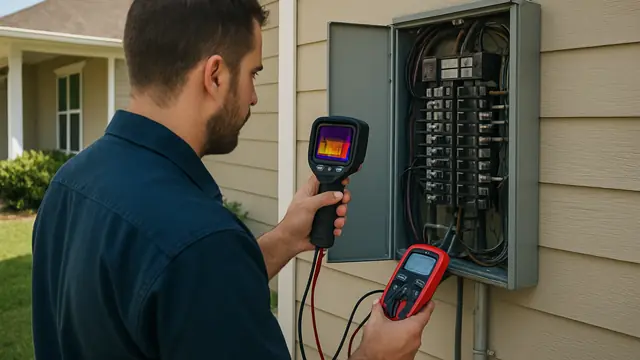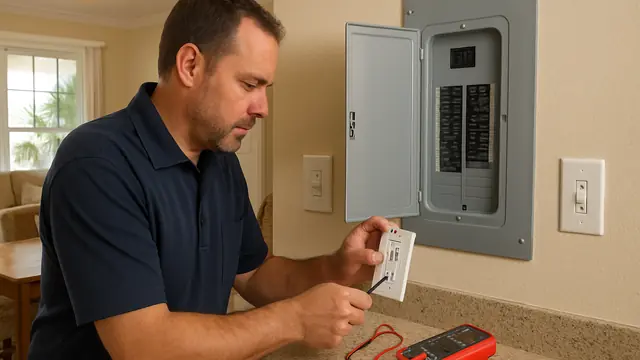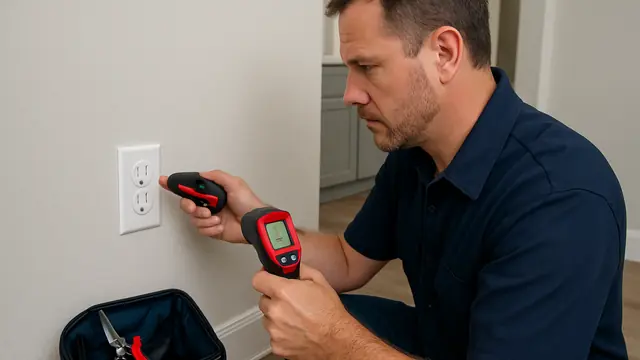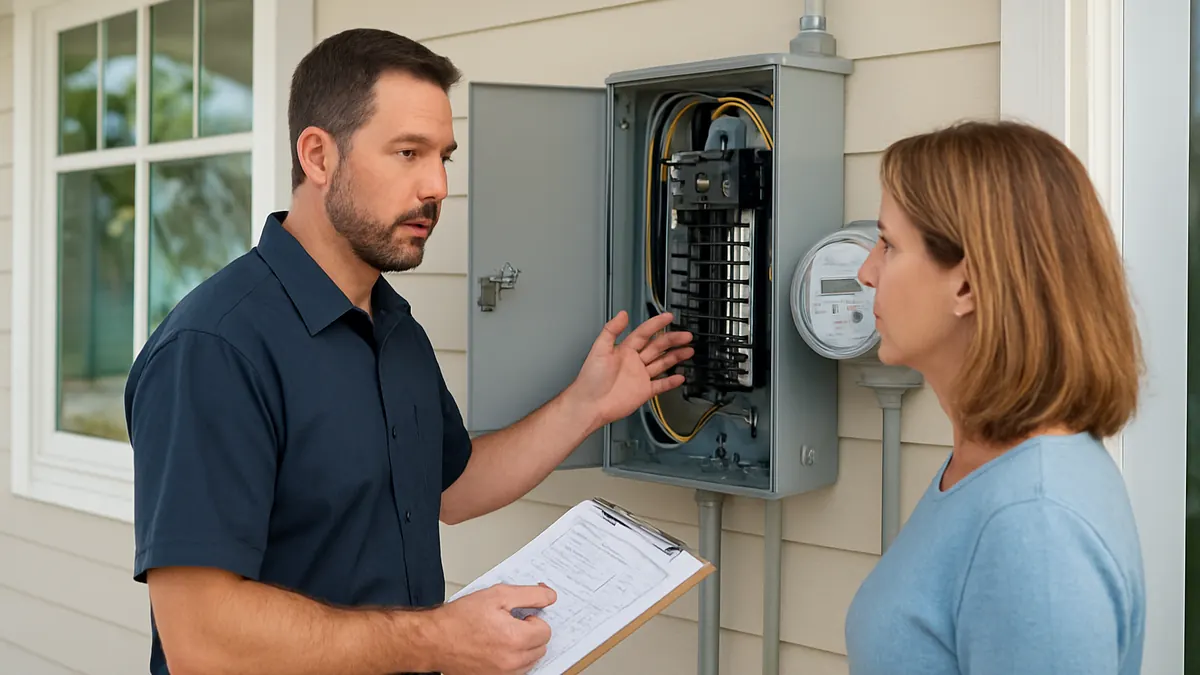
Do not remove an electrical panel cover, touch exposed conductors, bypass protection, or repeatedly reset a fault. Keep clear of smoke, sparks, burning odors, hot equipment, standing water near electricity, and downed lines, then call qualified help.
You turn on the electric range while the clothes dryer is running, and the lights dim for a moment. Later, you notice the electrical panel has almost no open spaces, and you are wondering whether there is enough capacity for a new heat-pump water heater, hot tub, standby generator connection, or Level 2 EV charger. That situation does not automatically mean your Bid-A-Wee home needs a 200-amp electrical service, but it is a good reason to have the system evaluated.
The safe immediate step is to reduce unnecessary high-demand electrical use and avoid repeatedly resetting any breaker that trips. Do not remove the panel cover or touch service wiring. A licensed electrician can determine whether the problem is a failing component, an overloaded branch circuit, a crowded panel, or a service that is genuinely too small for the home's present and planned electrical demand.
What a 200-Amp Electrical Service Actually Means
The amp rating describes how much electrical current the service equipment is designed to supply under defined conditions. Many homes have 100-amp, 125-amp, 150-amp, or 200-amp service. A 200-amp service can support more simultaneous electrical demand, but it does not mean every circuit can use 200 amps at once without limits.
The main breaker is only one clue. Service conductors, meter equipment, disconnects, the panel, grounding, bonding, and the utility connection must all be compatible. A "200-amp" panel may still be protected by a smaller main breaker.
Common Reasons a Bid-A-Wee Home May Need More Capacity
Several Major Electric Loads Have Been Added
A service that worked well when the home had a gas water heater and no EV charger may become inadequate after major equipment changes. Electric ranges, dryers, heat pumps, tankless electric water heaters, pool equipment, hot tubs, EV chargers, and workshop tools can add substantial demand.
Electricians use a load calculation to estimate expected demand rather than simply adding appliance ratings.
The Panel Is Full or Improperly Modified
A panel with no available breaker spaces often causes homeowners to assume they need 200 amps. Sometimes a properly sized subpanel can create circuit space, but a subpanel does not increase the total service capacity. It only provides additional distribution points.
Improper doubled conductors or unapproved tandem breakers require correction whether or not the service is upgraded.
You Are Planning Electrification or Remodeling
Remodeling, larger HVAC equipment, electric water heating, or EV charging can change the load calculation. Evaluate capacity before equipment is purchased or walls are closed.
Safe Checks You Can Perform
You can gather useful information without opening the panel.
Read the number on the main breaker handle only if it is visible with the panel door open. Do not remove screws or the inner cover. List large loads such as HVAC equipment, water heaters, ranges, dryers, pool pumps, hot tubs, EV chargers, and workshop tools. Record when tripping, dimming, buzzing, or lost power occurs and which equipment was operating. Also note realistic future additions. These observations help the electrician but do not replace a load calculation.
What You Should Not Attempt
Do not remove the panel cover, tighten service lugs, replace the main breaker, or measure voltage inside service equipment. Parts may remain energized with the main off. Never install a larger breaker to stop tripping; it may allow undersized wiring to overheat. A subpanel does not increase available amperage, and extension cords are not permanent substitutes for properly installed circuits.
Signs the Situation Is Urgent
Schedule prompt electrical service if the main breaker trips repeatedly, the panel feels unusually hot, or you hear persistent crackling or buzzing. A burning odor, smoke, visible arcing, melted insulation, or discoloration around breakers requires immediate attention.
If you see smoke or active fire, leave the home and call emergency services. If it is safe to do so without approaching damaged equipment, shut off power at an accessible exterior disconnect. Do not reenergize the system until it has been inspected.
Water entering the panel or meter equipment is also urgent. Moisture can cause corrosion, tracking, and unpredictable faults.
How a Licensed Electrician Determines Whether You Need 200 Amps
The electrician verifies the service rating and inspects the panel, breakers, meter base, conductors, grounding, and bonding. A formal load calculation considers the home and its connected equipment. Operating measurements and nameplates can add context, while inspection may uncover a utility issue, loose connection, damaged breaker, or voltage problem that mimics insufficient capacity. If an upgrade is justified, the electrician identifies required meter, conductor, panel, grounding, permit, and utility work.
Repair and Upgrade Options, Starting With the Least Invasive
Start with the actual defect: repair a loose connection, replace a damaged breaker, or correct a failing component. Redistributing circuits or adding a dedicated circuit may resolve a localized overload. Listed load management can reduce or pause an EV charger when demand is high. A subpanel can add spaces when calculated capacity is sufficient, and a same-amperage panel replacement may address damaged equipment. A full 200-amp upgrade is appropriate when calculations and realistic plans show the existing service is insufficient.
What Affects the Cost of a Service Upgrade?
Cost depends on service size, panel and meter configuration, conductor route, grounding corrections, accessibility, permits, utility work, surge protection, circuit count, and finish repairs. Relocation or damaged equipment adds complexity. A proposal should explain what is replaced, expected power interruption, and included inspection or utility steps.
Prevention and Maintenance
Have the system reviewed before adding a major load. Keep the panel dry, accessible, and accurately labeled. Recurring dimming, heat, odors, or trips deserve inspection. Whole-home surge protection protects equipment but does not increase capacity.
Homeowner FAQs
Is 200 amps required for every modern home?
No. The correct service size depends on the calculated load, equipment, and future plans. Some homes operate safely on less than 200 amps.
Will a bigger panel lower my electric bill?
No. Service capacity does not reduce energy consumption. Your bill depends on how much electricity the home uses.
Can I add an EV charger without upgrading?
Sometimes. The answer depends on charger size, existing load, and whether approved load management is practical.
Does a full panel mean I need 200 amps?
Not necessarily. You may need more breaker space rather than more service capacity. A subpanel may help if the load calculation allows it.
Does Your Home Need a 200-Amp Electrical Service in Bid-A-Wee?
The answer should come from a load calculation and a physical inspection, not from guesswork. If your service is smaller, the panel is crowded, or you are adding major electric equipment, an assessment can show whether a repair, load-management solution, subpanel, panel replacement, or full 200-amp upgrade is the right next step.
About this guide: This resource provides general homeowner education, not a remote diagnosis. Actual conditions, code requirements, equipment, and safe repair options must be evaluated at the property.