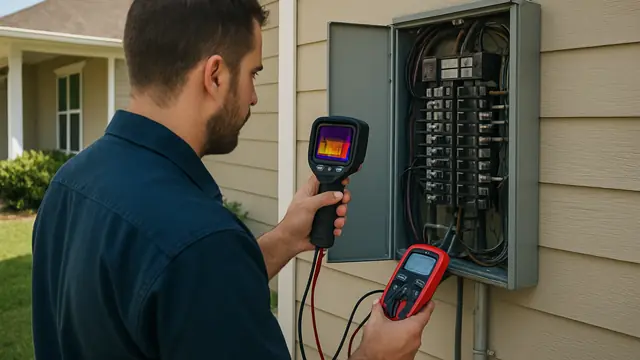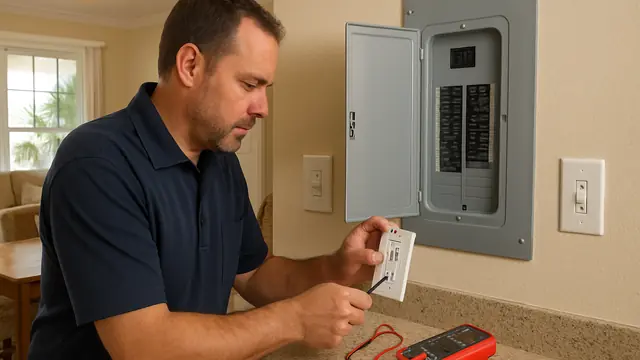
Do not remove an electrical panel cover, touch exposed conductors, bypass protection, or repeatedly reset a fault. Keep clear of smoke, sparks, burning odors, hot equipment, standing water near electricity, and downed lines, then call qualified help.
You brought home an electric vehicle, plugged its factory cord into a standard outlet, and discovered that overnight charging does not add enough range for the next day. A Level 2 charger seems like the solution, but your electrical panel looks crowded or has no obvious open spaces. That does not automatically mean you need a new panel. It means the home's capacity, panel condition, circuit space, and proposed charger size must be evaluated together.
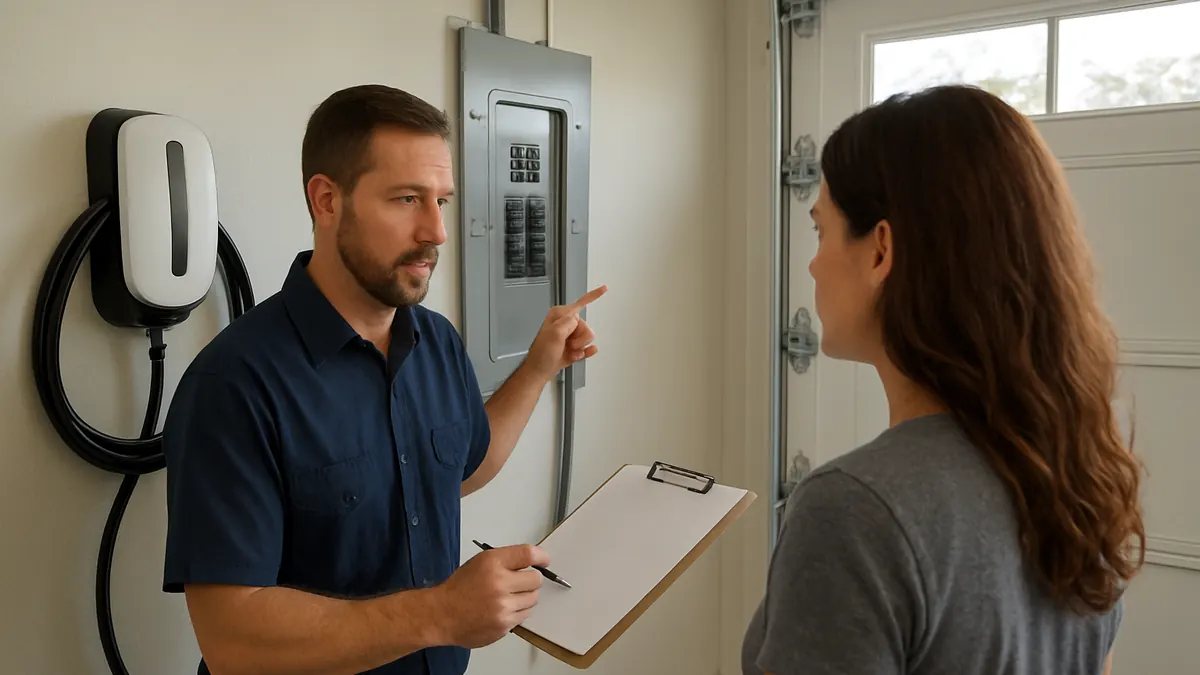
A Level 2 charger normally uses a 240-volt circuit and charges faster than a 120-volt Level 1 cord. For now, use only approved equipment as directed. Avoid extension cords, improvised adapters, and repeated breaker resets. Before buying a high-output charger, have a licensed electrician determine what your Bid-A-Wee home can safely support.
Can Your Electric Panel Support a Level 2 EV Charger?
The answer depends on more than whether the panel is rated for 100, 150, or 200 amps. An electrician must calculate existing household demand and add the proposed charging load. EV charging runs for long periods, so the circuit and service calculation must account for sustained current.
Charger size matters. A 32-amp charger commonly requires a 40-amp circuit, while a 40-amp charger commonly requires a 50-amp circuit. A 48-amp unit is generally hardwired and commonly paired with a 60-amp circuit, subject to the equipment instructions and applicable code. Level 2 equipment normally uses a dedicated circuit instead of sharing power with a dryer or water heater.
A panel may support a moderate charging rate even when it cannot support the charger's maximum advertised output. Matching charging speed to the vehicle and daily mileage can prevent unnecessary electrical work.
Common Reasons a Panel May Not Be Ready
Existing household demand is high
Electric heat, air conditioning, water heating, cooking appliances, pool equipment, and other large loads may already use much of the service capacity. Normal operation without breaker trips does not prove that another large continuous load can be added.
There is no suitable breaker space
Most Level 2 chargers need a two-pole breaker occupying two adjacent positions. An apparently empty slot is not always usable. The panel label and manufacturer instructions determine permitted breaker types and arrangements.
The panel is damaged or outdated
Rust, heat damage, loose connections, obsolete equipment, or improper alterations can turn an EV-charger project into a panel-repair issue. Hours of charging place sustained demand on connections that may have handled lighter loads without obvious symptoms.
The proposed charger is larger than necessary
A homeowner may choose a 48-amp charger because it sounds better, even though the vehicle accepts less current or remains parked long enough for a smaller unit to restore the day's mileage.
Safe Checks You Can Perform
Gather information without removing the panel cover. Note the main-breaker rating, photograph the breaker layout and panel label, and list whether the water heater, range, dryer, and heating system are electric or gas. Record the charger's maximum amperage and whether it is plug-in or hardwired.
Measure the practical route from the panel to the parking location. Note whether the vehicle parks indoors, under cover, or outside. A short run through an accessible wall can be simpler than routing conductors through finished rooms, an attic, or underground.
These observations help with planning, but they do not replace a load calculation or internal inspection. Electrical panel capacity and the home's existing peak load are important parts of evaluating charging power requirements.
What You Should Not Attempt
Do not remove the panel cover. Energized components may remain exposed even when branch breakers are off. Do not install a breaker merely because it physically fits; it must be approved for that panel.
Never increase breaker size without verifying and, when required, replacing the conductors. Do not use a household extension cord, unapproved splitter, or improvised dryer-outlet adapter. An existing 240-volt receptacle is not automatically suitable; its wiring, grounding, terminations, protection, condition, and duty must be evaluated.
Repeatedly resetting a breaker that trips during charging is unsafe. A trip indicates that the circuit, charger, receptacle, wiring, or breaker needs attention.
Signs the Problem Is Urgent
Stop charging and arrange prompt service if you notice a burning odor, buzzing, crackling, discoloration, melted plastic, a hot receptacle, a hot plug, visible arcing, or repeated breaker trips. Turn off the affected circuit if you can do so safely.
Urgency also increases when the panel shows corrosion, water intrusion, missing covers, damaged handles, or overheating. A charger that repeatedly reduces power, disconnects, or reports a wiring fault needs evaluation. If smoke or fire is present, leave the area and contact emergency services.
How a Licensed Electrician Diagnoses It
The electrician identifies the service rating and panel specifications, then checks panel condition, breaker compatibility, grounding and bonding, available spaces, conductor sizes, and previous modifications.
A formal load calculation follows. It considers the home's fixed appliances, heating and cooling equipment, general household load, and proposed charger. This is more reliable than adding breaker numbers because breaker handles show circuit limits, not actual simultaneous demand.
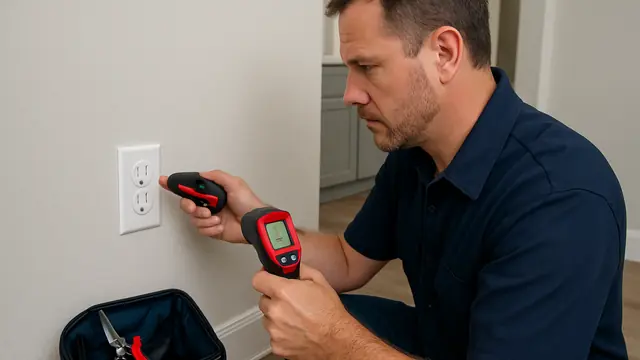
The electrician also reviews the charger manual, vehicle charging capability, wiring route, and installation method. Testing may be performed when existing conditions suggest a voltage, connection, or wiring concern.
Repair and Installation Options
The least invasive answer may be a lower-amperage Level 2 charger. A 16-, 24-, or 32-amp setting can still restore useful range overnight while requiring a smaller circuit.
Another option is approved energy-management equipment. It monitors household demand and reduces or pauses charging when other loads are high. This may avoid a full service upgrade when properly designed and permitted.
If capacity is adequate but breaker space is limited, an electrician may reorganize permitted circuits or add a subpanel. A subpanel creates spaces but does not increase total service capacity.
Targeted repairs may include replacing a damaged breaker, receptacle, conductor run, or panel component. When the service truly lacks capacity or the panel is obsolete or unsafe, a panel or service upgrade may be the appropriate long-term solution.
What Affects the Cost?
Cost factors include charger amperage, hardwired versus receptacle installation, conductor size, route length, wall or attic access, outdoor exposure, trenching, panel condition, breaker space, energy-management equipment, permitting, and any service upgrade.
A charger close to the panel is usually less involved than one requiring a long route through finished areas or underground. Correcting existing improper work can also change the scope.
Prevention and Maintenance
Choose listed charging equipment that matches the vehicle and actual driving pattern. Have it installed on a properly designed circuit according to the manufacturer's instructions. Protect the cable from tires, sharp bends, standing water, and physical damage.
Occasionally inspect the plug, cable, connector, and enclosure for cracks, looseness, discoloration, or heat. Keep the panel directory accurate and have unusual trips or charging errors evaluated promptly.
Homeowner FAQs
Does a 200-amp panel automatically support any Level 2 charger?
No. Existing loads, panel condition, breaker space, and charger requirements still must be evaluated.
Can a 100-amp service support Level 2 charging?
Sometimes. A lower-amperage charger or approved load-management system may work, but an inspection and load calculation are required.
Is hardwiring better than using a receptacle?
Hardwiring reduces plug-and-receptacle connection points and is required for some higher-output units. The right choice depends on the charger, location, and installation requirements.
Can I use my dryer outlet?
Not automatically. Circuit sharing, receptacle condition, wiring, and equipment compatibility must be evaluated.
How fast should my charger be?
It should replace the mileage normally used while the vehicle is parked. The largest charger is not always necessary.
Will a subpanel solve a capacity problem?
No. It adds circuit spaces but does not add service capacity.
Schedule the Right Next Step
Can your electric panel support a Level 2 EV charger in Bid-A-Wee? It may support the selected charger, a lower charging rate, or an energy-managed installation. The dependable answer comes from matching the vehicle, charger, panel, service capacity, and wiring route.
Verified article-body word count: 1,341 words.
About this guide: This resource provides general homeowner education, not a remote diagnosis. Actual conditions, code requirements, equipment, and safe repair options must be evaluated at the property.