Do not remove an electrical panel cover, touch exposed conductors, bypass protection, or repeatedly reset a fault. Keep clear of smoke, sparks, burning odors, hot equipment, standing water near electricity, and downed lines, then call qualified help.
The power fails, your standby generator starts, and the house comes back to life-until the air conditioner and water heater turn on together. The lights dim and the breaker trips. The safest immediate response is to turn off optional appliances through their normal controls and leave the generator off if you notice smoke, a fuel odor, arcing, or repeated shutdowns. Do not keep resetting the breaker or open the transfer switch.
What size standby generator does your home need in Pretty Bayou? It needs enough capacity for required outage loads and enough short-term reserve to start compressors and pumps. The answer comes from a load calculation, equipment data, homeowner priorities, fuel availability, and the transfer-switch arrangement-not square footage alone. Manufacturers likewise direct homeowners toward a professional site survey or load assessment.
Start by Defining What "Backup Power" Means to You
One homeowner may want refrigeration, lighting, internet, medical equipment, security, and one air-conditioning system. Another may expect the water heater, range, dryer, two HVAC systems, pool equipment, and EV charging.
Those expectations create different generator requirements.
An essential-load design powers selected circuits. A broader whole-home design may connect most of the panel while automatic controls prevent several high-demand appliances from operating together. The right choice depends on how you plan to live during an outage.
The Most Common Reasons a Generator Is Sized Incorrectly
Running Watts Are Counted but Starting Demand Is Missed
Motors usually require a brief burst of additional current when starting. An air conditioner may run comfortably after the compressor is moving but overwhelm the generator during startup. This is why adding only the normal running wattage can produce an apparently adequate system that still stalls or trips.
Every Large Appliance Is Treated as Equally Important
Electric water heating, cooking, laundry, pool equipment, and EV charging can consume substantial capacity. Automatic prioritization can preserve essential comfort without sizing the generator around every optional appliance.
The Main Breaker Is Used as the Generator Size
A 200-amp electrical service does not mean the home continuously uses 200 amps or needs a generator that reproduces the service's full maximum capacity. The generator is sized around calculated backup demand and motor-starting requirements.
A Performance Problem Is Mistaken for Undersizing
If a generator previously carried the same loads, it may need service rather than replacement. Fuel restrictions, a weak battery, loose conductors, failed controls, or transfer-switch trouble can reduce performance.
Safe Checks the Homeowner Can Perform
List loads that must operate, would be convenient, and can remain off. Include HVAC, refrigeration, water heating, cooking, laundry, pumps, medical equipment, office equipment, and vehicle charging.
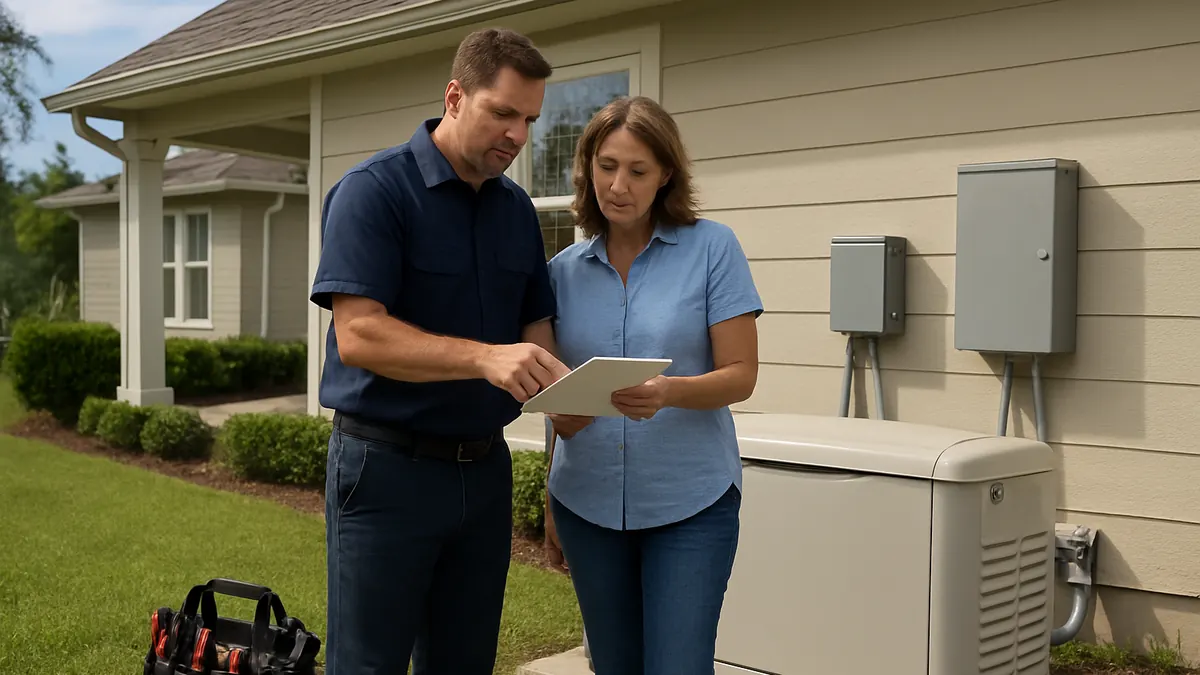
Photograph visible nameplates without removing covers. The outdoor HVAC label, generator data plate, and appliance labels can help the electrician identify voltage, current, model information, and starting characteristics.
If you already own a standby generator, write down the exact fault code and what happened immediately before the shutdown. Note whether the trouble appeared at transfer, when an air conditioner started, or later after hot-water or laundry use.
Check carbon-monoxide alarms using their test buttons according to the manufacturer's directions. Do not test generator exhaust or attempt to diagnose a fuel smell yourself.
What You Should Not Attempt
Never connect a portable generator to a dryer outlet, range outlet, or ordinary receptacle. This can energize the home's wiring in an unsafe direction and expose occupants or utility workers to dangerous voltage.
Do not replace a tripping breaker with a larger breaker, bypass a load-shedding module, alter generator programming, or move conductors inside the panel. Protective devices are intended to limit unsafe current and isolate faults.
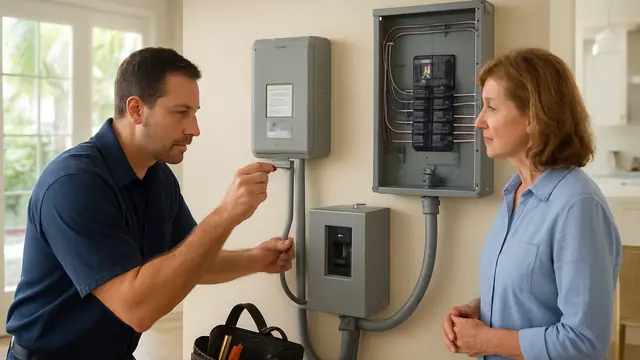
Do not open the automatic transfer switch. It can contain conductors supplied from both the utility and the generator.
Fuel piping, regulators, grounding and bonding connections, exhaust arrangements, and internal generator repairs require qualified evaluation.
Portable generators must never be operated inside a home, garage, basement, shed, porch, or carport. CPSC advises outdoor operation at least 20 feet from buildings, with exhaust directed away from doors, windows, and vents, and recommends working carbon-monoxide alarms.
Signs That Make the Problem Urgent
Move away and call emergency services if you see fire, heavy smoke, visible arcing, or a substantial fuel leak. Treat a carbon-monoxide alarm as an emergency: everyone should go outside to fresh air and call emergency services. CPSC specifically advises not reentering until responders say it is safe.
Arrange prompt professional service for repeated generator stalling, severe or prolonged light dimming, rapid transfer-switch clicking, recurring output-breaker trips, melted insulation, burning odors, abnormal vibration, or appliances repeatedly restarting.
These symptoms may indicate overload, unstable voltage, poor fuel delivery, loose connections, control failure, or internal generator trouble. Repeatedly resetting the system can expose connected equipment to additional stress.
How a Licensed Electrician Diagnoses the Correct Capacity
The electrician begins with the homeowner's priority list and an inventory of fixed equipment. Each major appliance and motor is identified, including HVAC systems, water heating, pumps, and specialty loads.
Next comes the load calculation. The electrician evaluates the amount of power likely to be required simultaneously rather than simply adding every breaker rating. Motor-starting demand is analyzed separately, especially for the largest compressor or pump.
The electrician also inspects panels, conductors, breakers, grounding and bonding, transfer equipment, load controls, and the proposed generator location.
Fuel capacity must be confirmed with an appropriately qualified professional. A generator cannot deliver its rated electrical output if fuel pressure, flow, pipe sizing, or regulator operation is inadequate.
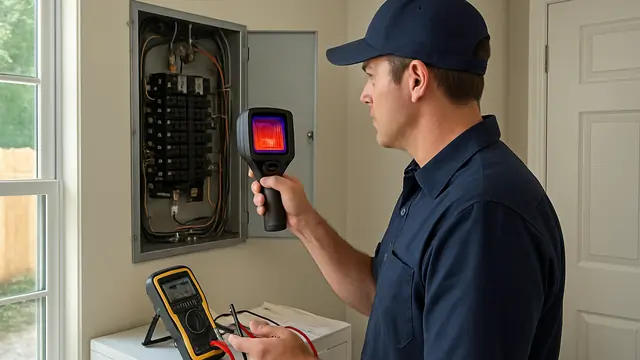
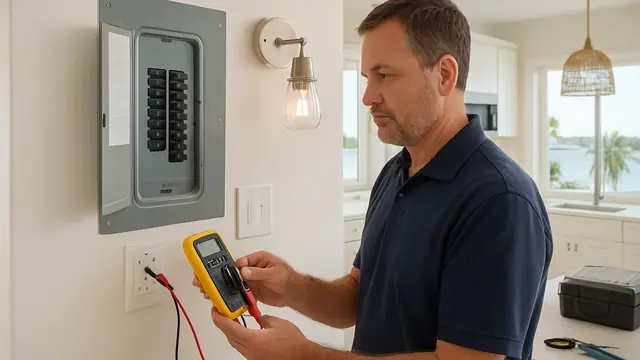
Existing-system tests may cover the battery, voltage, frequency, fault history, transfer operation, controls, and major-load startup.
Repair and Upgrade Options From Least Invasive to Most Extensive
The first option may be revising the backed-up loads. Excluding an electric dryer, EV charger, or other optional circuit can free capacity.
Approved load-management modules can temporarily disconnect lower-priority equipment when demand is high and reconnect it when capacity returns.
A compatible HVAC soft-start device may reduce the compressor's starting demand. It must be evaluated for the specific air-conditioning equipment and does not reduce the home's total running load.
When performance declines, repairs may include battery replacement, engine service, fuel correction, wiring repair, control-board replacement, or transfer-switch service.
Replacement becomes reasonable when required loads still exceed practical capacity or the existing unit is obsolete, unreliable, badly damaged, or unsupported.
Factors That Affect Generator Installation Cost
Cost depends on output, transfer-switch capacity, backup design, load controls, panel condition, fuel work, placement, mounting, trenching, conductor distance, permits, and access.
Multiple panels, solar or battery equipment, major panel work, or long electrical and fuel routes add complexity.
Maintenance That Protects Generator Performance
Follow the exact model's maintenance schedule, including calendar and operating-hour requirements. Service may include oil and filters, battery testing, ignition and wiring checks, diagnostics, and transfer-switch testing.
Keep vegetation, stored items, and debris away from the enclosure so cooling air can circulate. Watch for corrosion, insect activity, damaged wiring, fluid leaks, and unusual sound or vibration.
A successful exercise cycle does not prove full capacity; professional load testing can reveal problems that appear only when major equipment starts.
Choose the Generator From Measured Needs, Not Guesswork
What size standby generator does your home need in Pretty Bayou? It needs enough output for your outage plan, enough reserve to start major motors, and properly coordinated fuel, transfer, protection, and load-management systems. A licensed evaluation can determine whether you need selected-circuit backup, better load control, a repair, or a different generator.
About this guide: This resource provides general homeowner education, not a remote diagnosis. Actual conditions, code requirements, equipment, and safe repair options must be evaluated at the property.