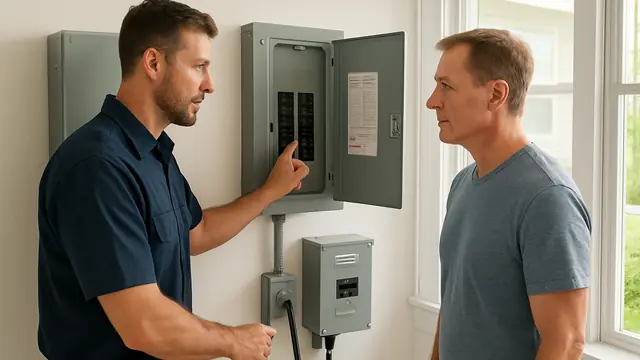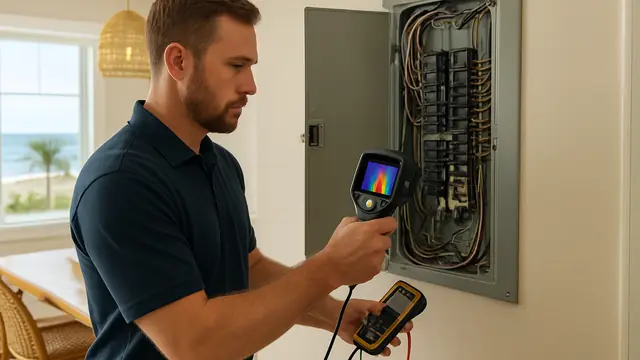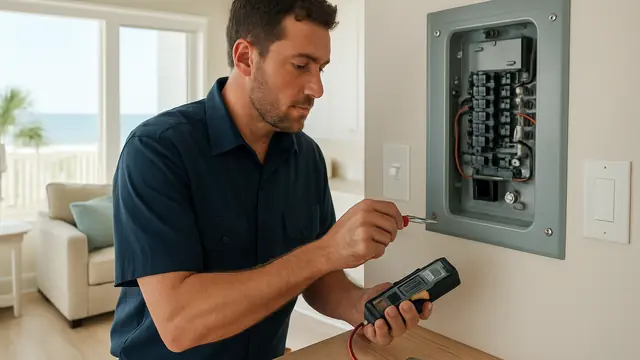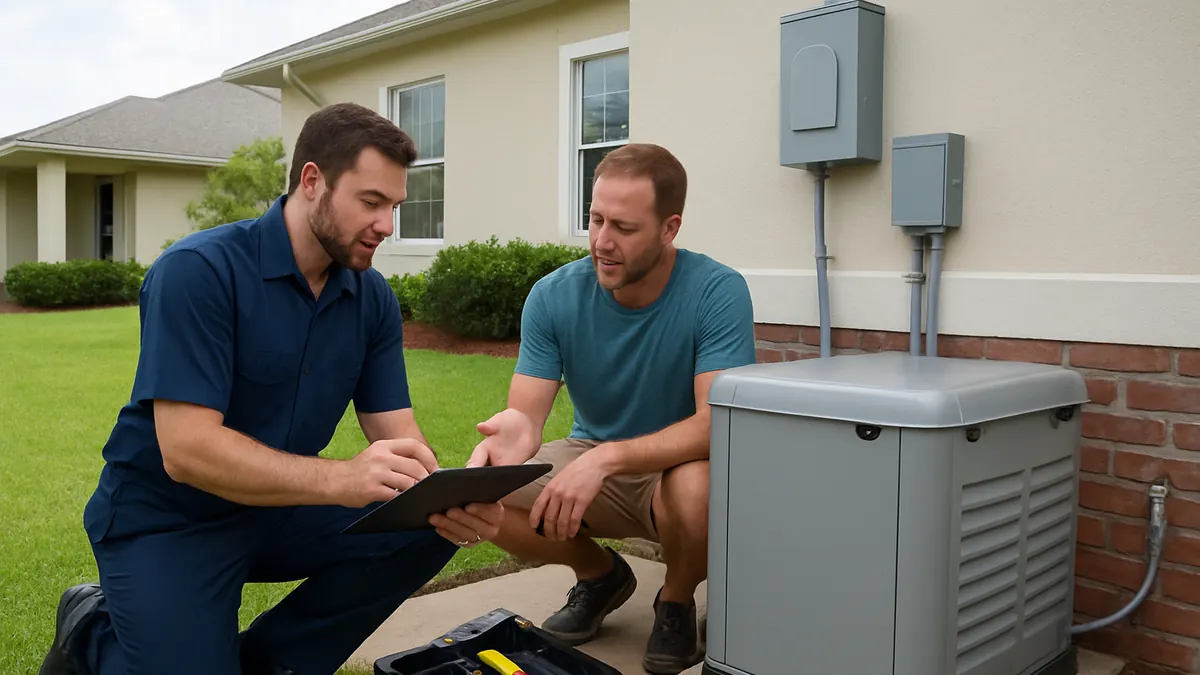
Do not remove an electrical panel cover, touch exposed conductors, bypass protection, or repeatedly reset a fault. Keep clear of smoke, sparks, burning odors, hot equipment, standing water near electricity, and downed lines, then call qualified help.
A storm has taken down utility power, the indoor temperature is rising, and you are trying to keep food cold while charging phones and running necessary medical or work equipment. Switch off or unplug nonessential appliances if an existing generator sounds strained or begins tripping. Do not repeatedly reset it or attempt to add circuits while it is operating.
What size standby generator does your home need in Callaway? The answer depends on the equipment you expect to use at the same time, the starting demand of motors, and whether the system backs up selected circuits or most of the home. Square footage provides only a rough starting point. Generator manufacturers recommend a professional load assessment because HVAC, appliance fuel type, and starting wattage can change the result substantially.
Begin With the Outage You Want the Generator to Handle
Some homeowners want a basic emergency system. Their priorities may include the refrigerator, freezer, lights, internet, several receptacles, and one cooling system. Others want the house to operate almost normally, including multiple HVAC units, an electric water heater, cooking equipment, laundry, pumps, and entertainment systems.
Those are very different electrical demands. A generator selected for emergency circuits may work perfectly when loads are limited but overload when someone starts the clothes dryer while the air conditioner and water heater are already operating.
A standby system normally starts automatically and uses a transfer switch to isolate the home from the utility before supplying approved loads.
The Loads That Most Often Change Generator Size
Air-conditioning compressors
Central air conditioning is commonly one of the most important outage loads. Its compressor has a running demand and a higher momentary starting demand. A calculation that considers only normal running amperage may produce a generator that struggles every time the compressor starts.
Electric water heating and cooking
Electric water heaters, ranges, ovens, and clothes dryers create large resistance loads. They do not usually have the same starting surge as a compressor, but they can consume a large portion of generator capacity while operating.
Heat-pump auxiliary heat
A heat pump's electric auxiliary or emergency heat can use far more power than the compressor alone. The design must address whether those heat strips are backed up, limited, or prevented from operating on generator power.
Electric vehicle charging
An EV charger can be one of the home's larger continuous loads. Many backup designs intentionally disconnect or shed EV charging during an outage so cooling, refrigeration, and household essentials have priority.
Safe Checks Before an Electrician Arrives
Write down three load lists: equipment that must operate, equipment you would like to operate, and equipment you can leave off. This simple ranking helps prevent paying for capacity you do not need while ensuring critical systems are not overlooked.
Without removing electrical covers, photograph data labels on each HVAC outdoor unit, water heater, range, dryer, pump, and other major appliance. Note whether appliances use electricity or gas.
Record whether the home has multiple panels, solar, batteries, or existing generator equipment because these affect system design.
If an existing generator is overloading, turn off optional loads using normal appliance controls. Do not remove panel covers or change breaker positions unless the system's operating instructions specifically identify homeowner-controlled load priorities.
What Homeowners Should Never Attempt
Never backfeed a home by connecting a portable generator to a receptacle. Never use a double-ended cord, bypass a transfer switch, or defeat an interlock. Improvised connections can energize conductors unexpectedly and create electrocution and fire hazards.
Do not install a larger generator output breaker to stop nuisance tripping. Breakers protect wiring and equipment. Increasing the breaker without redesigning the system can expose conductors to more current than they are intended to carry.
Do not alter gas regulators, fuel piping, or programming to force more output.
Keep people away from generator exhaust. CPSC warns that carbon monoxide from generators can incapacitate or kill quickly, and it recommends working carbon-monoxide alarms in the home.
Urgent Warning Signs During Generator Operation
Shut down the system from a safe location and request service when you notice smoke, arcing, burning insulation, repeated breaker trips, severe voltage fluctuation, or a fuel odor. If there is fire or an active fuel leak, move away and call emergency services.
Treat a carbon-monoxide alarm as an emergency. Everyone should leave the building and contact emergency services. Headache, dizziness, nausea, confusion, and weakness during generator use can also indicate exposure.
Other urgent symptoms include transfer-switch chattering, repeated stalling when HVAC starts, or appliances cycling off and restarting.
How a Licensed Electrician Sizes and Diagnoses the System
The electrician first identifies every load intended for backup. Nameplate data and circuit information are combined with the applicable residential load calculation.
Next, the electrician evaluates simultaneous demand. A water heater may cycle off before the dryer starts, but a generator design cannot depend on occupants remembering every combination. Load-management controls create predictable priorities.
Motor starting is then reviewed. The electrician may examine locked-rotor or starting-current information for air conditioners and pumps. This determines whether the generator can start the largest motor while carrying other necessary loads.
The electrician inspects the service, panels, grounding, transfer switch, conductors, and installation space. Fuel capacity must also be verified because inadequate delivery can make a correctly selected generator perform poorly.
Operational testing shows whether an existing system is undersized or simply needs repair.
Least-Invasive Repair and Upgrade Options
The simplest correction may be changing load priorities. A nonessential water heater, second air conditioner, pool pump, or EV charger can be removed from backup operation.
Approved load-management modules can temporarily shed lower-priority equipment when demand is high.
A compatible soft-start device may reduce the starting demand of certain air-conditioning compressors. It must be selected and installed according to equipment instructions; it should not be treated as a substitute for a proper load calculation.
If the generator previously handled the home but now struggles, service may solve the problem. Possible repairs include battery replacement, fuel-system correction, engine maintenance, damaged conductor repair, transfer-switch service, or replacement of a failed control module.
Replacing the generator is the final major option when required loads exceed its practical capacity or the existing unit is unreliable, obsolete, or significantly damaged.
What Affects the Project Cost?
The major factors are generator output, transfer-switch capacity, essential-circuit versus whole-home design, number of load controls, panel condition, fuel source, fuel-line requirements, installation location, trenching, conductor distance, mounting base, permits, and access.
Maintenance That Protects Available Capacity
A generator cannot deliver its rated performance if it has a weak battery, restricted fuel supply, dirty filters, deteriorated ignition components, damaged wiring, or neglected oil. Follow the manufacturer's maintenance schedule and arrange professional service at least as often as required for the model and operating hours. Annual professional attention is a common manufacturer recommendation.
Keep vegetation and stored items away from the enclosure, maintain cooling airflow, and test carbon-monoxide alarms monthly. A no-load exercise does not prove the unit will start major equipment, so qualified load testing remains useful.
Select the Generator Around Real Priorities
What size standby generator does your home need in Callaway? It needs enough capacity for the loads that matter, enough motor-starting ability for HVAC and pumps, and a transfer and load-management design that prevents overload. A professional assessment separates true capacity needs from repairable performance problems.
About this guide: This resource provides general homeowner education, not a remote diagnosis. Actual conditions, code requirements, equipment, and safe repair options must be evaluated at the property.