Do not remove an electrical panel cover, touch exposed conductors, bypass protection, or repeatedly reset a fault. Keep clear of smoke, sparks, burning odors, hot equipment, standing water near electricity, and downed lines, then call qualified help.
You lose power during a summer storm, the thermostat goes blank, and the refrigerator stops humming. Within minutes, you begin wondering whether a standby generator could keep the home comfortable. The safest immediate step is to turn off or unplug nonessential appliances, keep refrigerator and freezer doors closed, and avoid opening the electrical panel or attempting a temporary generator connection.
What size standby generator does your home need in Latitude Margaritaville Watersound? The answer depends on the equipment you want to operate, the power required to start motors, and whether you want essential-circuit backup or near-whole-home operation. Square footage matters less than the actual HVAC system, water heater, appliances, and other major electrical loads.
Start With the Loads You Truly Need
Generator sizing begins with priorities. Essential loads may include refrigeration, selected lighting, internet equipment, security equipment, garage-door operation, receptacles for charging devices, and one central air-conditioning system.
A broader backup plan may also include an electric water heater, additional HVAC equipment, cooking appliances, laundry equipment, or a home office. The more high-demand equipment you include, the larger the generator or the more sophisticated the load-management plan may need to be.
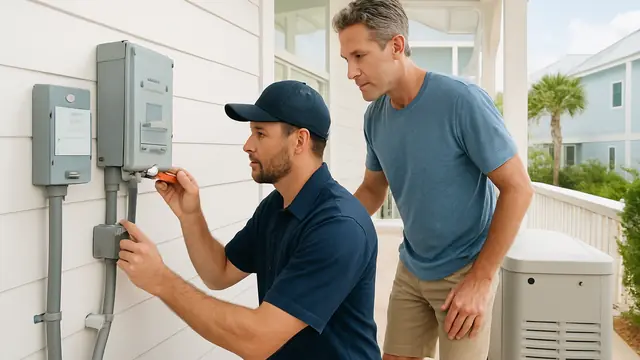
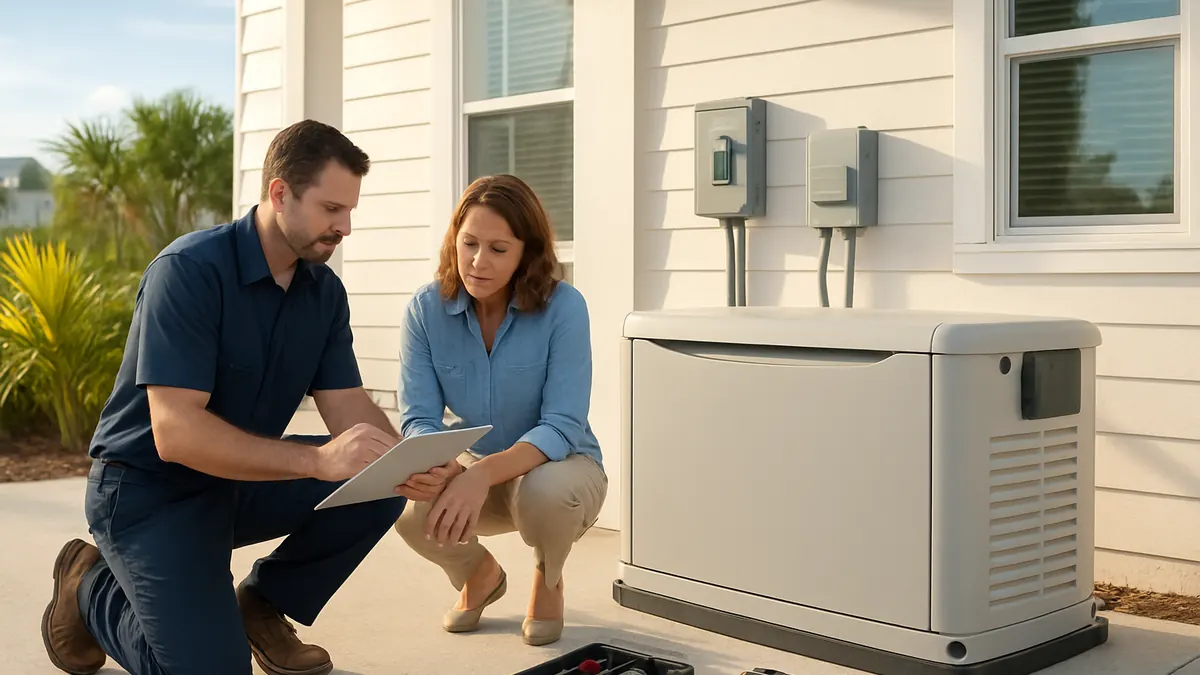
A standby generator connects through an automatic transfer switch. This equipment separates the home from utility power and connects approved circuits to generator power. It prevents dangerous backfeeding and allows the system to transfer automatically.
Common Reasons Homeowners Choose the Wrong Size
Relying on square footage
Two homes of equal size can have very different electrical demands. One may use gas for water heating and cooking, while another uses electricity for every major appliance.
Overlooking air-conditioner startup
An air-conditioning compressor briefly draws much more power when it starts than while it runs. This temporary surge is called starting current or inrush current. A generator may appear large enough based on running watts but still struggle whenever the compressor starts.
Expecting every appliance to run together
An electric water heater, dryer, range, pool equipment, and EV charger can each use a substantial portion of available capacity. A generator may run each one separately but overload when several operate at once.
Ignoring future upgrades
A new HVAC system, EV charger, second refrigerator, or change from gas to electric appliances can alter the home's electrical load. Planned upgrades should be discussed before generator selection.
Safe Checks You Can Perform
List the equipment you consider essential during an outage. Divide it into three categories: must run, would like to run, and can remain off.
Without removing covers, photograph visible labels on the outdoor HVAC unit, water heater, range, dryer, pool equipment, and other major appliances. These labels help an electrician identify voltage, amperage, and motor-starting requirements.
Note whether the home has one panel or multiple panels. Record whether you have solar panels, battery storage, an existing generator, or automatic load-control equipment.
If an existing generator trips, write down what was operating at the time. It may carry refrigeration and lights normally but shut down when the air conditioner and water heater start together.
What the Homeowner Should Not Attempt
Do not connect a portable generator through a dryer outlet, range outlet, or homemade double-ended cord. This can backfeed the electrical system and energize wiring unexpectedly.
Do not remove the transfer-switch cover, change breaker sizes, bypass load controls, or alter generator programming to force more output. Protective devices help prevent overheating and equipment damage.
Do not work on fuel regulators, gas piping, grounding, or internal generator wiring unless properly qualified.
Never operate portable equipment inside a garage, porch, carport, or enclosed area. Generator exhaust contains carbon monoxide, an odorless gas that can cause severe illness or death. Working carbon-monoxide alarms should be installed and tested according to their instructions.
Signs That Make the Situation Urgent
Move away and seek immediate help if you smell fuel, see smoke, notice arcing, or hear a carbon-monoxide alarm. Call emergency services for fire, a strong fuel leak, or symptoms such as headache, dizziness, nausea, weakness, or confusion during generator operation.
Prompt electrical service is also necessary when the generator repeatedly stalls, its output breaker trips, lights flicker severely, appliances restart repeatedly, or the transfer switch rapidly clicks between utility and generator power.
These symptoms may result from overload, poor fuel delivery, loose connections, transfer-switch failure, engine problems, or an undersized generator.
How a Licensed Electrician Determines Generator Size
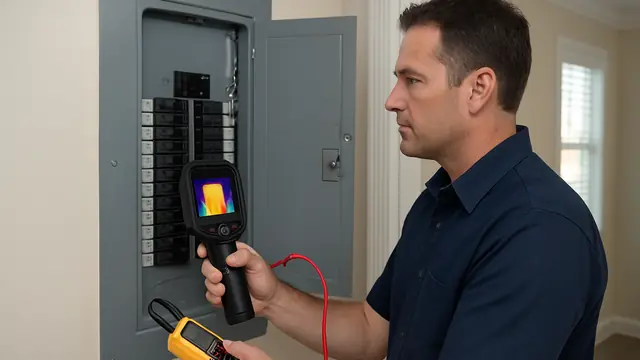
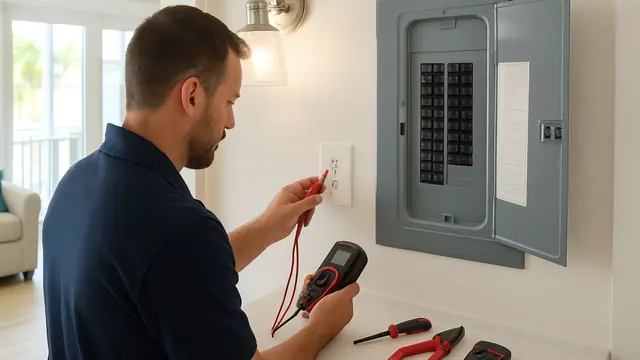
The electrician begins with a load inventory covering HVAC equipment, water heating, appliances, pumps, receptacles, and special equipment requested for backup.
Running demand and motor-starting demand are calculated separately. Running demand is the power equipment uses during normal operation. Starting demand is the brief surge required when a compressor or motor begins turning.
The electrician then evaluates which loads may operate together. Not every circuit needs power at the same moment. Load-management controls can temporarily turn off lower-priority equipment when the generator approaches its limit.
The service equipment, panels, grounding, transfer switch, conductor sizes, and installation area are also reviewed. Fuel capacity must be confirmed because a correctly selected generator can still perform poorly if it does not receive adequate fuel.
Repair and Upgrade Options From Least Invasive to Most Extensive
The least invasive option may be changing which circuits receive generator power. Removing an EV charger, dryer, second air conditioner, or pool heater from backup operation can free substantial capacity.
Approved load-management modules can shed lower-priority loads automatically. For example, the water heater may turn off briefly while the air conditioner starts and reconnect when capacity becomes available.
A compatible HVAC soft-start device may reduce compressor starting demand. It must be selected for the specific equipment and cannot replace an accurate load calculation.
If an existing generator once worked well but now struggles, maintenance or repair may restore performance. Possible corrections include battery replacement, engine service, conductor repair, fuel-delivery correction, control-module replacement, or transfer-switch service.
Replacement becomes appropriate when required loads exceed practical capacity or the equipment is unreliable, obsolete, or significantly damaged.
Factors That Affect Installation Cost
Cost depends on generator capacity, transfer-switch size, essential-load versus whole-home design, number of load controls, panel configuration, fuel source, fuel-line requirements, equipment location, trenching, conductor distance, mounting surface, permitting, and access.
Multiple HVAC systems, solar equipment, several panels, or complicated fuel routing can add planning and labor.
Prevention and Maintenance Guidance
Follow the manufacturer's maintenance schedule. Routine care may include oil and filter service, battery testing, spark-plug replacement where applicable, inspection of electrical connections, fuel-system checks, and transfer-switch testing.
Keep vegetation, storage items, and debris away from the enclosure. Watch for corrosion, insect activity, and water intrusion. Test carbon-monoxide alarms monthly.
Arrange professional service after extended generator operation and request a capacity review before adding major electrical equipment.
Choose Capacity Based on Real Electrical Demand
What size standby generator does your home need in Latitude Margaritaville Watersound? It needs enough capacity to start and run the equipment you consider essential, supported by the correct transfer switch, fuel system, and load-management plan. A professional load calculation prevents guessing and helps distinguish true undersizing from repairable performance problems.
About this guide: This resource provides general homeowner education, not a remote diagnosis. Actual conditions, code requirements, equipment, and safe repair options must be evaluated at the property.