Do not remove an electrical panel cover, touch exposed conductors, bypass protection, or repeatedly reset a fault. Keep clear of smoke, sparks, burning odors, hot equipment, standing water near electricity, and downed lines, then call qualified help.
Your standby generator starts during an outage, the lights return, and then everything goes dark again as soon as the air conditioner comes on. Another homeowner may have no generator installed and be unsure whether they need essential-circuit or broader backup. Turn off nonessential appliances through normal controls and leave repeated faults for a qualified technician.
What size standby generator does your home need in Laguna Beach? It must support the equipment selected for backup, the largest motor's starting demand, and the loads likely to operate at the same time. Square footage alone cannot determine it. Professional sizing accounts for appliances, HVAC motors, fuel, and the intended backup strategy.
First Decide Whether You Need Essentials or Near-Normal Operation
An essential-circuit generator may supply refrigeration, selected lighting and receptacles, communications equipment, security, and one cooling system. This can be a sensible choice when the homeowner is willing to leave electric cooking, laundry, pool equipment, and other large loads off during an outage.
A broader whole-home design allows more normal operation, but it still requires priorities. If two air conditioners, an electric water heater, a range, and a clothes dryer all request power together, even a substantial residential generator can be challenged. Approved load-management controls can temporarily disconnect lower-priority equipment and reconnect it when capacity is available.
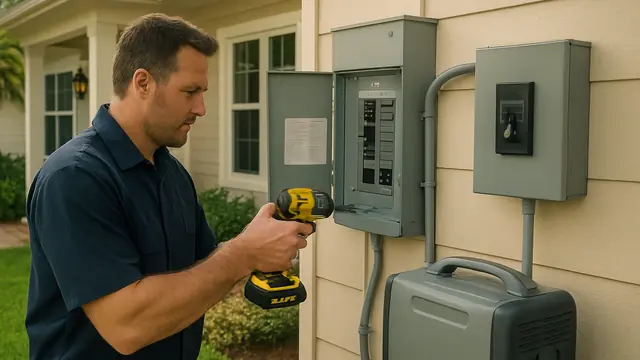
The automatic transfer switch separates the home from utility power before connecting generator power. Standby systems are designed for automatic operation.
Why a Generator That Looks Large Enough May Still Struggle
Compressor starting current was overlooked
Air conditioners and pumps use motors. A motor may need several times its normal running current for a brief period while starting. If the generator cannot supply that momentary demand, voltage may dip, lights may flicker, or the controller may shut down.
Too many high-demand loads were allowed together
A generator may be capable of running each appliance individually but not all of them simultaneously. Electric water heating, cooking, laundry, auxiliary heat, pool equipment, and EV charging can quickly consume available capacity.
Fuel delivery is inadequate
A generator's rated electrical output assumes it receives adequate fuel. Undersized piping, incorrect regulator arrangements, restricted flow, or insufficient available pressure can cause poor performance that resembles electrical undersizing.
A repair problem is reducing generator output
A weak battery, overdue engine maintenance, dirty components, ignition problems, damaged wiring, or control faults can prevent a previously adequate generator from carrying its normal load. Replacement should not be recommended until repairable causes are checked.
Safe Checks You Can Make Without Opening Equipment
Create a priority list for the next outage. Mark each item as essential, preferred, or unnecessary. Include every HVAC system, refrigerator, freezer, water heater, cooking appliance, laundry appliance, pump, medical device, office setup, and EV charger.
Photograph equipment labels that are visible without removing panels. Air-conditioner labels are especially useful because they may show rated load and locked-rotor information. Note which appliances use gas and which use electricity.
Review what happened before an overload. Did the second air conditioner start? Was the dryer running? Did the water heater recover after several showers? Patterns help the technician recreate the problem safely.
Record the controller's exact fault message without repeatedly clearing its history.
What You Should Not Do
- Do not estimate capacity by adding breaker ratings; they do not represent actual simultaneous demand.
- Do not increase a generator breaker, replace a fuse with a larger size, or bypass a load-shedding module. These protective devices are part of the system's safety design.
- Never connect generator power through an ordinary receptacle or use a double-ended cord. A proper transfer mechanism is essential to prevent unsafe backfeeding.
- Do not work on fuel piping, regulator settings, grounding conductors, transfer-switch wiring, or internal generator controls unless properly qualified.
Do not place portable equipment in a garage, carport, porch, or near doors, windows, and vents. CPSC advises operating portable generators outside at least 20 feet from the home with exhaust directed away. Standby equipment also requires approved placement and working carbon-monoxide alarms.
Warning Signs That Require Urgent Action
Leave the area and call for emergency assistance if you smell a strong fuel odor, see fire, or hear a carbon-monoxide alarm. Anyone experiencing headache, dizziness, nausea, weakness, or confusion during generator operation should move into fresh air and receive emergency guidance.
Arrange prompt electrical service for smoke, arcing, melted insulation, repeated output-breaker trips, rapid transfer-switch cycling, or severe voltage fluctuation. Do not keep resetting a generator that stalls whenever a motor starts.
Unstable generator power can damage equipment. Disconnect optional loads through normal controls and request testing.
How a Licensed Electrician Finds the Correct Generator Size
The electrician documents the service, panels, appliances, HVAC equipment, pumps, and requested backup circuits, separating running load from motor-starting demand.
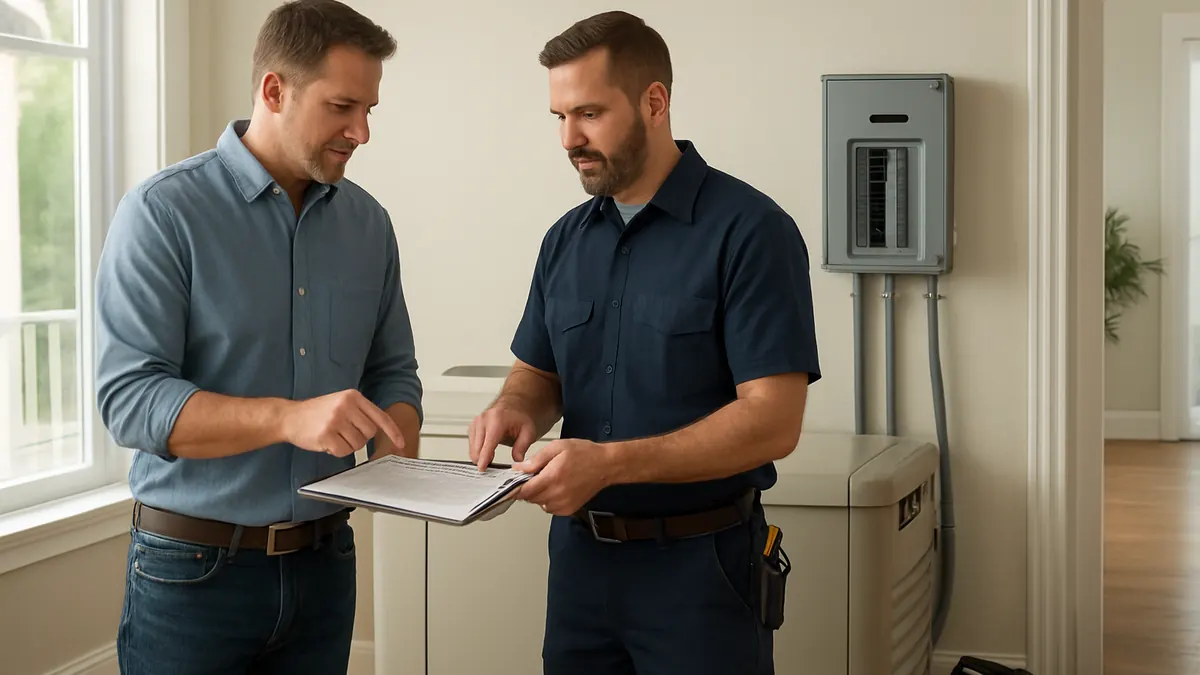
Next, the electrician determines which loads can operate together and which should be managed. This is where homeowner priorities become part of the design. A second air conditioner may receive power only after the first compressor has started, while an EV charger may remain disconnected throughout the outage.
The transfer switch, disconnects, grounding, conductors, and existing equipment are inspected. Solar, batteries, or multiple panels require additional source coordination.
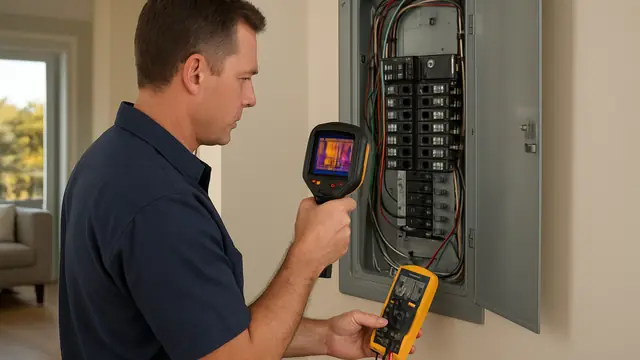
Fuel capacity and installation requirements are reviewed with the appropriate qualified professionals. After installation or repair, testing should include automatic startup, transfer in both directions, the largest motor startup, load-management sequence, and operation under realistic load.
Repair and Upgrade Choices From Simplest to Most Extensive
The least invasive solution is often revising the backup plan. Moving an electric dryer, water heater, pool heater, or EV charger out of the generator-backed group may solve an overload without affecting essential comfort.
Approved load-management modules can create automatic priorities. When generator demand rises, lower-priority circuits are temporarily shed rather than allowing the entire system to trip.
A manufacturer-compatible soft-start device may help certain air-conditioning compressors start with less inrush current. It must be evaluated for the specific HVAC system and cannot compensate for a generator that is broadly undersized.
If performance has deteriorated, maintenance or component repair may restore capacity. The technician may correct fuel delivery, replace a weak battery, repair conductors, service the engine, replace a control board, or repair transfer equipment.
A larger generator is appropriate when required loads still exceed practical capacity after repairs and load management.
Factors That Influence Cost
Project cost depends on generator output, transfer-switch size, essential-load versus whole-home design, number of managed circuits, panel modifications, fuel source, fuel piping, generator placement, trenching, conductor distance, mounting surface, permits, and equipment access.
Maintenance and Prevention
Follow the generator manufacturer's schedule for oil, filters, battery testing, spark plugs where applicable, engine inspection, and transfer-switch service. Home-generator guidance commonly calls for professional maintenance at least annually, with operating-hour requirements also considered.
Keep vegetation and debris away, maintain ventilation, and test carbon-monoxide alarms monthly.
Ask for a sizing review before adding major electrical equipment. Planning before an HVAC replacement, pool upgrade, or EV charger installation is easier than diagnosing overloads during the next outage.
Size the System for Reliable Operation, Not a Label
What size standby generator does your home need in Laguna Beach? It needs enough running and starting capacity for the loads you expect to use, with proper fuel delivery, transfer equipment, and automatic priorities. A load calculation and operational test provide a more dependable answer than square footage or a general estimate.
About this guide: This resource provides general homeowner education, not a remote diagnosis. Actual conditions, code requirements, equipment, and safe repair options must be evaluated at the property.