Do not remove an electrical panel cover, touch exposed conductors, bypass protection, or repeatedly reset a fault. Keep clear of smoke, sparks, burning odors, hot equipment, standing water near electricity, and downed lines, then call qualified help.
Your cleaner finishes a turnover at a Callaway vacation rental and discovers that half the kitchen outlets are dead. The refrigerator runs, but the coffee maker, countertop receptacles, and dining-room lights have no power. The panel shows no obvious tripped breaker, and the next guest is arriving soon.
That symptom may come from a tripped GFCI, a breaker sitting between on and off, a loose connection, a failed receptacle, or a wiring problem farther upstream. The safe action is to unplug countertop appliances, stop using any warm or discolored outlet, and reset a GFCI or breaker once. If power does not return or the device trips again, leave the circuit off and call a licensed electrician.
The most common electrical problems on vacation rentals in Callaway are often discovered during turnovers. A quick workaround may restore power temporarily but leave the next guest with the same failure or a greater safety risk.
Most Common Electrical Problems on Vacation Rentals in Callaway
Dead Outlets With No Obvious Breaker Trip
Several outlets can lose power even when the panel looks normal. A breaker handle may be slightly out of position, a GFCI in another area may have tripped, or one failed receptacle may interrupt power to devices farther along the circuit.
Kitchen and Laundry Circuit Overloads
Guests often use countertop appliances together. A coffee maker, toaster, griddle, and microwave can create substantial demand. Laundry equipment, irons, or portable devices may also load a circuit heavily.
A tripping breaker may be protecting the wiring as designed. Installing a larger breaker is not a safe solution.
Loose Connections in Frequently Used Devices
Rental outlets experience repeated plugging and unplugging. A receptacle may stop gripping plugs, or an internal connection may loosen. Switches can also become noisy, inconsistent, or warm.
Loose connections can work intermittently, which is why a problem may disappear before the owner arrives. Intermittent operation does not mean the condition is safe.
AFCI or GFCI Trips
AFCI breakers help detect dangerous arcing, while GFCI devices reduce shock risk. Either may trip because of a damaged cord, moisture, appliance fault, loose connection, or wiring error.
Calling every trip a nuisance can be risky. The protective device may be identifying a condition that an ordinary breaker would not detect.
Damaged Switches, Fixtures, and Fans
A crackling switch, unstable fan, or flickering fixture may have a worn control, loose connection, failing motor, or incompatible part. Replacing a bulb may solve a simple complaint, but recurring flicker or heat at a switch needs professional attention.
Panel and Breaker Concerns
Poor labeling, missing filler plates, loose breakers, corrosion, or previous modifications can complicate maintenance. A panel may still supply power while containing defects that deserve correction.
Owners should not remove the panel cover. Energized parts inside can remain dangerous even when a branch breaker is off.
Why These Problems Develop
Vacation rentals experience concentrated electrical use. Guests run appliances together, while owners may add televisions, smart locks, cameras, and other equipment over time.
Previous repairs also matter. A circuit may have been extended without considering load, or a device may have been wired incorrectly. Surge protection can reduce certain risks, but it does not correct overloads or loose wiring.
Safe Checks Before Calling an Electrician
Ask which appliances were running, whether the outage affected one device or several rooms, and whether anyone noticed buzzing, heat, or odor.
Unplug portable equipment from the affected area. Check nearby GFCI outlets and press reset once only when the device is dry and undamaged.
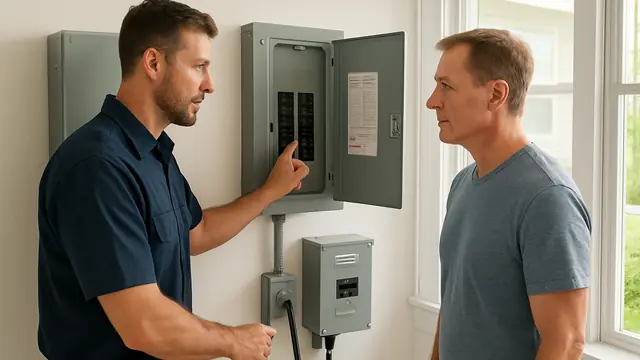
At the panel, look for a breaker that is not aligned with the others. Move it fully off and then on once. If it trips immediately, leave it off. Record the breaker label and affected rooms.
You may replace a standard bulb with the correct type and inspect visible cords for cuts or scorch marks. Stop if the problem involves wiring, heat, sparks, or repeated outages.
What You Should Not Attempt
- Do not repeatedly cycle breakers until they hold. Do not install a higher-amperage breaker, bypass a protective device, or use extension cords as permanent wiring.
- Do not push a loose outlet back into the wall, tape over a cracked device, or keep using a buzzing switch. Never remove the panel cover or probe outlets with improvised tools.
- A rental deadline does not make a temporary repair safe. Keep the affected area out of service until the fault is corrected.
Signs the Situation Is Urgent
Call for prompt help when you find a burning odor, smoke, melted plastic, scorch marks, visible sparks, shocks, a hot panel, or repeated trips.
Act quickly when several rooms lose power, lights become unusually bright and dim, or the failure follows water intrusion. Do not touch wet electrical equipment or stand in water while reaching for a breaker.
For active fire or smoke, evacuate and call emergency services. Leave power off until the area is inspected.
How a Licensed Electrician Diagnoses the Failure
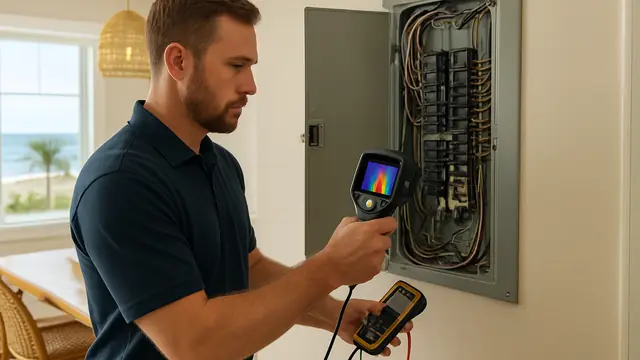
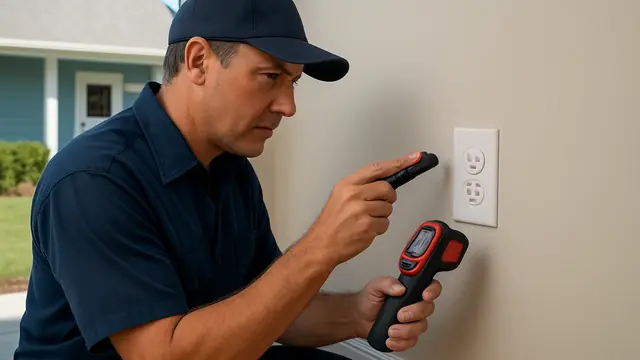
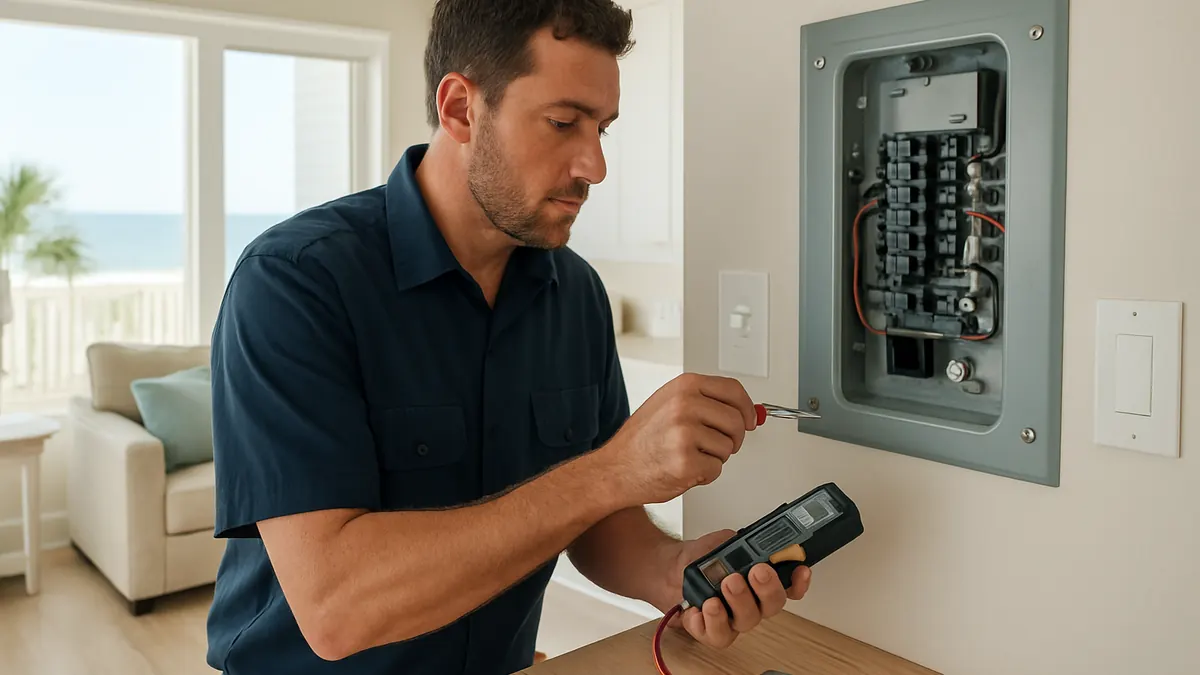
The electrician reviews what happened and tests the affected circuit. Voltage and load measurements can reveal lost power, an open neutral, abnormal voltage, or excessive demand.
The electrician may inspect device terminals, test AFCI and GFCI operation, trace wiring, examine appliance cords, and verify grounding and bonding. When a fault is intermittent, the guest's description and a list of operating appliances are especially useful.
Diagnosis separates the symptom from the cause. Replacing one device without finding damaged wiring or a faulty appliance may allow the problem to return.
Repair Options From Least to Most Invasive
The simplest repair may be removing a faulty appliance and resetting a correctly operating protective device. Other focused repairs include replacing a worn receptacle, switch, GFCI, light control, or damaged cord.
Loose connections may be corrected when the wiring remains serviceable. A defective breaker can be replaced with the correct compatible part after the circuit is tested.
If several appliances overload one circuit, the electrician may recommend changing usage or adding a dedicated circuit. Damaged conductors or improper extensions may require limited wall access.
Panel replacement or a service upgrade may be appropriate when equipment is damaged, overcrowded, obsolete, or unable to support demand. It should follow a load and condition assessment, not be the automatic answer to every trip.
Factors That Affect Cost
Cost depends on diagnostic time, access to wiring, the number of affected devices, panel condition, permits, and whether the failure can be reproduced.
An accessible failed GFCI is simpler than an intermittent connection hidden between several outlets. A useful estimate follows testing and a defined scope.
Prevention and Maintenance Guidance
Use a turnover checklist that covers representative outlets, lights, fans, GFCIs, alarms, and exterior devices. Ask staff to report warmth, buzzing, loose plugs, broken covers, or repeated resets.
Keep panel directories readable, avoid permanent extension cords, and have added equipment reviewed for circuit capacity. Track complaints by room because several minor reports may describe one developing problem.
Restore Safe, Reliable Operation
The most common electrical problems on vacation rentals in Callaway include partial outages, overloaded appliance circuits, failed GFCI or AFCI protection, loose outlets, damaged switches, and panel defects. Limit use, perform only safe checks, and diagnose the cause before the next guest relies on the circuit.
A focused repair may be enough, but repeated trips, heat, sparks, or voltage changes require prompt attention.
About this guide: This resource provides general homeowner education, not a remote diagnosis. Actual conditions, code requirements, equipment, and safe repair options must be evaluated at the property.