Do not remove an electrical panel cover, touch exposed conductors, bypass protection, or repeatedly reset a fault. Keep clear of smoke, sparks, burning odors, hot equipment, standing water near electricity, and downed lines, then call qualified help.
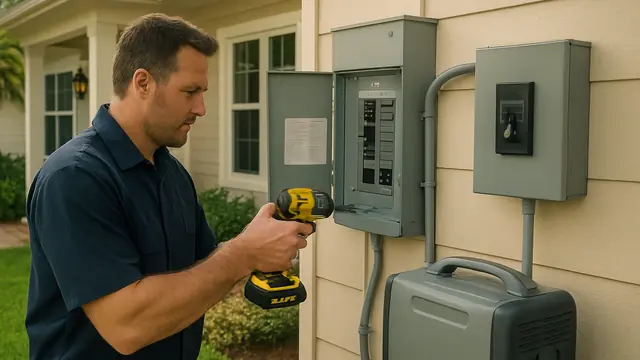
A guest at your Laguna Beach vacation rental reports that the patio lights stopped working after rain, the outdoor GFCI will not reset, and a phone charger sparks at a nearby receptacle. The rest of the house has power, so the problem may seem minor. It may indicate moisture, a damaged outlet, a loose connection, or a fault affecting downstream receptacles.
Keep everyone away from the outlet, unplug equipment only when the plug and area are dry, and avoid repeated GFCI resets. Do not touch wet equipment or bypass the failed outlet with an extension cord. Turn off the related breaker if it can be identified safely, then arrange an inspection.
The most common electrical problems on vacation rentals in Laguna Beach include exterior failures, overloaded circuits, loose outlets, flickering lights, tripping protection, and aging alarms. Frequent occupancy can reveal hidden weaknesses.
Why Rental Electrical Problems Appear Suddenly
Electrical demand changes with every group. Guests may bring chargers, gaming systems, hair tools, coolers, and portable cooking devices.
Exterior equipment faces harsher conditions than indoor devices. Covers crack, seals loosen, and cords are damaged. Moisture does not need to flood an outlet to trip a GFCI or corrode a connection.
Problems can also develop slowly as heat cycles loosen connections and outlets lose their grip.
Most Common Electrical Problems on Vacation Rentals in Laguna Beach
Exterior Outlets and Lights That Stop Working
Outdoor receptacles and fixtures need weather protection. A cracked cover, loose gasket, damaged box, corroded terminal, or failing GFCI can interrupt power.
Several exterior outlets may share one GFCI. A reset may restore power once, but repeated trips mean the fault remains.
Breakers That Trip During Peak Use
Guests may operate kitchen equipment, laundry appliances, hair dryers, and portable devices at the same time. That combined demand can overload a shared circuit.
A breaker is a safety device. If it trips again after one proper reset, leave it off.
Loose Receptacles and Worn Contacts
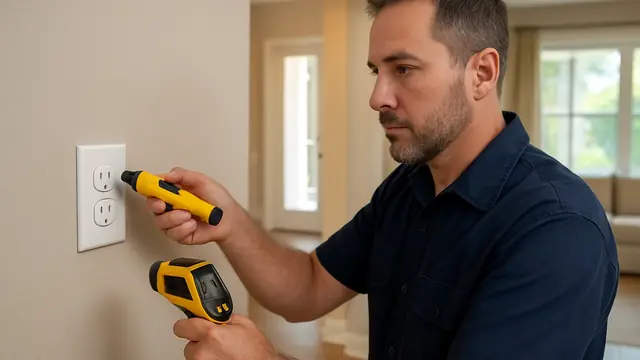
An outlet that cannot hold a plug may have worn contacts. A device that moves in the wall may have loose mounting or a damaged box.
Warmth, buzzing, discoloration, or a burning odor indicates more than cosmetic wear. Poor contact creates heat, so remove the outlet from service.
Flickering Lights and Unstable Voltage
One flickering light may come from a loose bulb. Flickering in several rooms, strong dimming, or lights becoming unusually bright can indicate a loose neutral or another supply problem.
These conditions can damage electronics and create overheating.
Repeated GFCI and AFCI Trips
GFCI devices detect current leaking from its intended path. AFCI protection responds to patterns associated with electrical arcing.
A damaged appliance may cause the trip, but moisture, loose wiring, damaged insulation, or a failed protective device are also possible.
Alarm Defects
Chirping, missing batteries, expired units, disconnected wiring, painted-over devices, or alarms that do not communicate should be corrected.
Do not silence an alarm by removing the battery. Determine whether it signals low power, end of life, contamination, or a hazard.
Safe Checks a Homeowner or Manager Can Make
Ask what stopped working, what was plugged in, whether rain or appliance use preceded the failure, and whether anyone noticed sparks, heat, or odor.
When everything is dry and undamaged, you may unplug portable appliances and press the GFCI reset button once. At the panel, reset a tripped breaker once by moving it fully off and then on.
Inspect visible cords, covers, and fixtures without opening them. Look for cracks, black marks, loose mounting, or water. Replace a bulb with the correct type when only one light is affected.
Keep notes and photos from a safe distance. The sequence of events can help diagnose intermittent problems.
What You Should Not Attempt
- Do not open an outdoor outlet, fixture, disconnect, or panel when moisture may be present. Do not dry electrical equipment with a hair dryer or heat gun.
- Never bypass a GFCI, install a larger breaker, tape a breaker on, or connect permanent equipment through an extension cord. Do not use adapters to make incompatible plugs fit.
- Do not replace weather-exposed devices without confirming the proper enclosure, cover, grounding, and rating.
Signs That Require Urgent Service
Treat shocks, smoke, burning odors, melted plastic, crackling, arcing, or heat at an outlet or panel as urgent.
Water makes an outdoor failure more serious. Keep guests away, do not touch the equipment, and turn off the circuit only from a dry location. Call emergency services for fire or active smoke.
Also seek prompt help for repeated trips, partial power loss, or lights that swing sharply between bright and dim. These symptoms can indicate a loose service or neutral connection.
How a Licensed Electrician Diagnoses the Problem
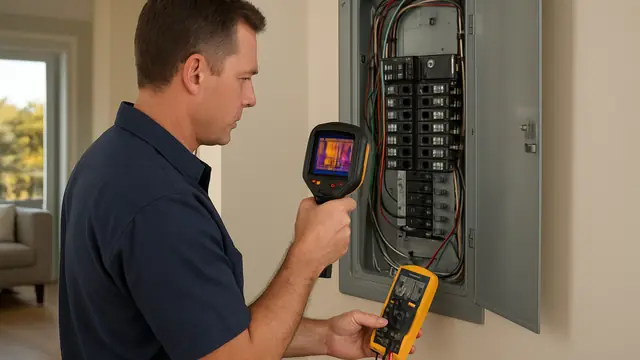
The electrician reviews when the failure occurred and which devices were operating. The panel and circuit are inspected for correct breaker type, damage, loose terminations, and overheating.
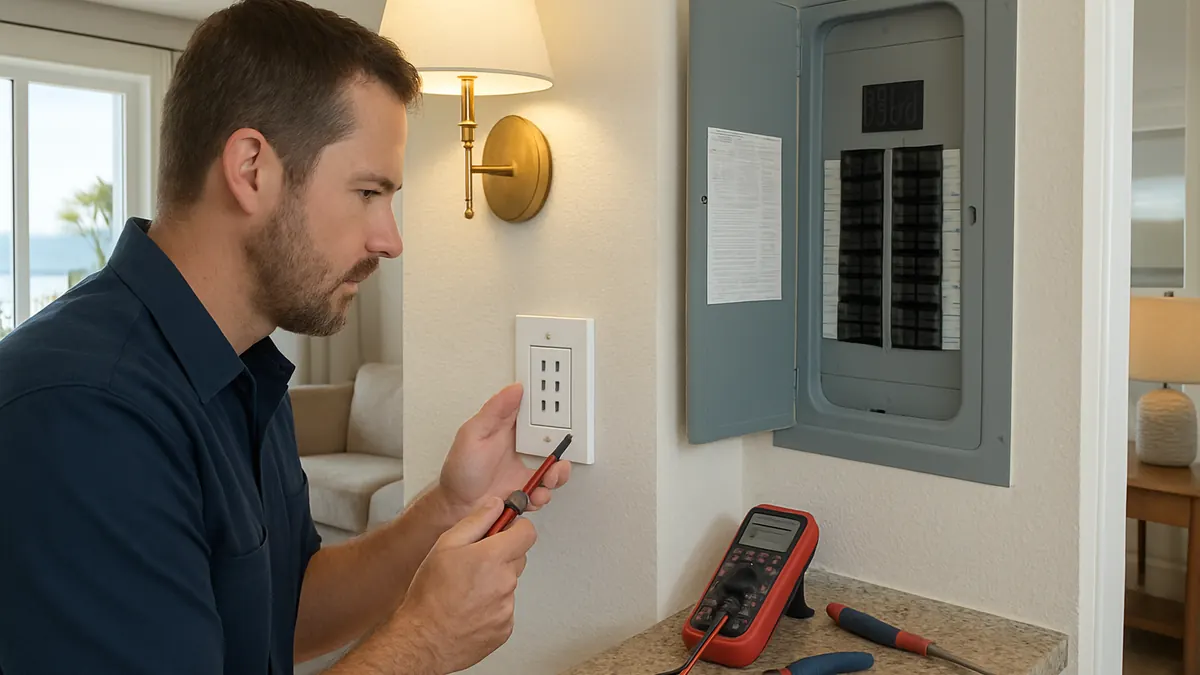
Testing may include voltage readings, continuity checks, ground-fault testing, load measurements, and verification of grounding and bonding. Exterior devices may be opened after power is isolated to check for moisture, corrosion, failed seals, and damaged conductors.
Appliances may be disconnected one at a time to locate a fault. Widespread flickering may require testing panel connections and incoming service conditions.
The diagnosis should explain the cause and repair needed to prevent recurrence.
Repair Options Beginning With the Least Invasive
The least invasive solution may be removing a damaged appliance, replacing a broken cover, correcting a loose terminal, or replacing one worn receptacle, switch, GFCI, or fixture component.
Exterior repairs may require the correct weather-resistant device, in-use cover, gasket, box, or connection method. Damaged cords and plug ends usually require replacement rather than tape.
When overload is the cause, appliance-use guidance may help, but regularly used high-demand equipment may need a dedicated circuit. Damaged wiring can sometimes be repaired in a limited area.
More extensive work may include replacing a deteriorated circuit, correcting unsafe modifications, or upgrading panel equipment. Whole-property rewiring should be based on widespread conditions, not one failed outlet.
Factors That Affect Repair Cost
Cost depends on diagnostic time, access, moisture or corrosion, the number of affected devices, and hidden wiring damage.
Panel condition, permits, weather-rated materials, dedicated circuits, and reservation scheduling also matter. A visible failed receptacle is simpler than an intermittent fault affecting several devices.
Prevention and Maintenance Guidance
Inspect exterior covers, cords, lighting, and receptacles during routine property checks. Test GFCI and AFCI protection according to manufacturer directions. Replace loose outlets, cracked covers, damaged cords, and expired alarms promptly.
Do not use extension cords as permanent wiring. Give guests a clear way to report trips, heat, buzzing, or sparks. Ask cleaning and maintenance teams to document complaints instead of simply resetting devices.
Consider an inspection after renovations, repeated complaints, or equipment changes.
Protect the Property and the Next Guest
The most common electrical problems on vacation rentals in Laguna Beach often begin with a tripped exterior GFCI, loose outlet, overloaded circuit, flickering light, or alarm complaint. Treat these symptoms as warnings, not inconveniences to hide until checkout.
Stop using the affected equipment, perform only dry and noninvasive checks, and have repeated or hazardous symptoms diagnosed by a licensed electrician.
About this guide: This resource provides general homeowner education, not a remote diagnosis. Actual conditions, code requirements, equipment, and safe repair options must be evaluated at the property.