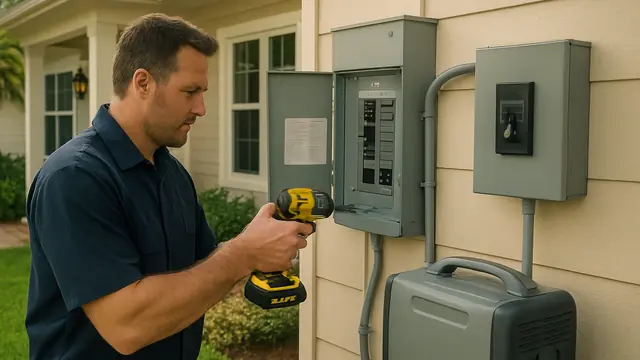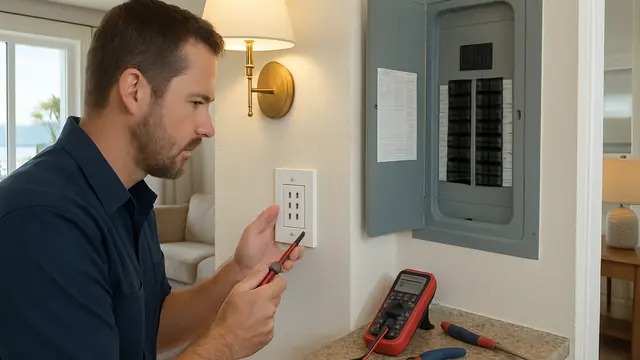
Do not remove an electrical panel cover, touch exposed conductors, bypass protection, or repeatedly reset a fault. Keep clear of smoke, sparks, burning odors, hot equipment, standing water near electricity, and downed lines, then call qualified help.
You return home, turn on the air conditioner and water heater, and notice the hallway lights pulse. A few minutes later, a breaker trips. When you approach the electrical panel, you detect a warm, slightly burned smell. In a Laguna Beach property, the correct response is not to keep resetting the breaker until it holds. These symptoms may come from one faulty circuit, but they can also indicate a loose connection, damaged breaker, moisture exposure, or overheating inside the panel.
Turn off or unplug unnecessary equipment and leave a repeatedly tripping circuit off. Keep the panel door closed. If the cabinet is hot, wet, smoking, sparking, or making loud crackling sounds, do not touch it. Move to a safe location and call a licensed electrician; call emergency services for smoke or fire.
Why Panel Problems Can Be Easy to Misread
Panel defects can appear as flickering lights, unreliable outlets, appliance problems, or tripping breakers. A damaged appliance or branch wire can create the same symptoms. Inspection determines whether the panel is faulty, the breaker is responding correctly, or the home's demand has changed.
Seven Signs Your Electrical Panel Needs an Inspection in Laguna Beach
1. Breakers Trip Without a Clear Overload
A trip after several high-wattage devices run together may be an overload. Tripping during ordinary use or with loads disconnected may indicate a short circuit, ground fault, damaged wire, weak breaker, or loose connection.
Record what was running. Unplug portable devices and reset once only when there is no odor, moisture, or damage. Leave it off if it trips again.
2. The Main Breaker Trips or Large Areas Lose Power
Repeated main-breaker trips, loss of power to a large area, or intermittent power can indicate a service problem, severe overload, poor connection, or breaker failure. Partial outages may also involve utility equipment, which homeowners should never touch.
3. Lights Become Brighter and Dimmer
A momentary dip when a motor starts is not always a panel defect. However, lights that repeatedly brighten in one area and dim in another may point to a loose neutral or unstable service voltage.
A deteriorated neutral can create uneven voltage and damage electronics or appliances. Turn off sensitive equipment and seek prompt evaluation.
4. There Are Burn Marks, Melting, or a Hot-Plastic Odor
Darkened metal, melted parts, brittle insulation, or a hot-plastic smell indicates overheating from loose terminals, corrosion, overloads, poor breaker contact, or incompatible components.
Do not assume the danger has passed because the smell fades. Heat damage can remain behind the panel cover. If there is active smoke, glowing material, or fire, leave the property and call emergency services.
5. The Panel Produces Buzzing or Crackling Sounds
Buzzing, snapping, crackling, or popping may indicate a loose connection or arcing-electricity jumping across a gap and creating damaging heat.
Do not place your ear against the cabinet or open it to locate the sound. Reduce electrical use only if you can do so safely away from the panel, and schedule an inspection without delay.
6. Rust, Residue, or Water Stains Appear Near the Equipment
Rust, residue, staining around conduits, or dampness can indicate moisture intrusion. Corrosion may increase electrical resistance and heat even after the water dries.
Do not spray cleaner, rust remover, or lubricant inside the panel. Keep the area clear and have both the moisture source and the electrical damage evaluated. Replacing one corroded part will not solve continued water entry.
7. The Panel Is Crowded, Poorly Labeled, or Modified
Missing filler plates, uneven breakers, incorrect labels, doubled conductors in unsuitable terminals, or repeated additions justify inspection. Some conditions are visible only after a qualified person removes the cover.
Added HVAC equipment, electric cooking, water heating, workshops, or vehicle charging may require dedicated circuits. A load calculation determines available capacity.
Safe Observations a Homeowner Can Make
Keep the panel closed and accessible. Note odors, sounds, stains, the affected breaker, and whether symptoms involve one circuit or several. Record recent appliance changes, remodeling, or leaks, and unplug portable devices on the problem circuit.
Repairs Homeowners Should Never Attempt
Do not remove the inner panel cover, tighten terminals, replace service components, move conductors, or test exposed energized parts. Even with the main breaker off, incoming service terminals may remain live.
Never install a larger breaker to stop tripping; the wire may not support it. Do not force incompatible breakers, bypass protection, or dry wet equipment with a fan or heat gun.
Conditions Requiring Immediate Action
Urgent signs include smoke, fire, visible arcing, a hot cabinet, burning odors, melted material, water inside, repeated main trips, shocks, or sudden voltage changes. For active smoke or sparking, leave and call emergency services. Stay away from downed lines.
How a Licensed Electrician Performs the Inspection
The electrician reviews symptoms and recent changes, then checks breaker compatibility, panel rating, conductor sizes, loading, terminals, bus bars, grounding, moisture, corrosion, heat damage, and previous modifications.
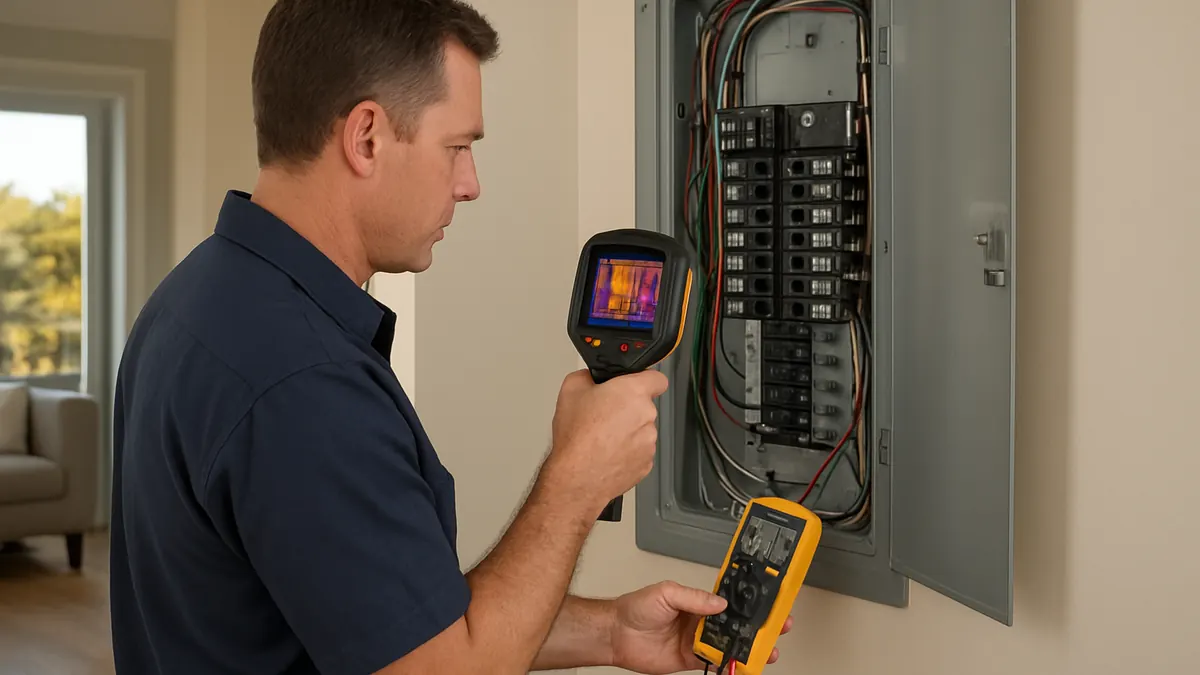
Voltage, current, and thermal tests help locate imbalance, overload, unstable supply, or abnormal heat and determine whether the fault is inside or outside the panel.
Repair Options Before Full Replacement
The least invasive correction may be repairing a downstream wire, replacing a failed appliance connection, installing one approved breaker, correcting a loose terminal when the equipment remains undamaged, or moving a high-demand appliance to a dedicated circuit.
Other options include replacing damaged conductors, correcting grounding, adding a subpanel, or repairing moisture entry. A subpanel adds spaces but not service capacity.
Replacement may be reasonable for damaged bus bars, widespread corrosion, severe heat damage, unavailable parts, or uncorrectable alterations. A service upgrade depends on calculated demand.
What Determines the Cost
Cost factors include panel type, breaker availability, access, affected circuits, damage, service size, grounding, permits, and finish repairs.
A useful proposal should distinguish troubleshooting from repair, identify the observed defect, and explain whether a smaller safe correction is available before recommending replacement.
Preventing Future Panel Trouble
Keep the panel dry, clear, and correctly labeled. Schedule electrical review before adding major equipment. After leaks, renovations, or unusual power events, watch for odors, heat, flickering, and trips. Surge protection cannot repair loose or overheated connections.
Homeowner FAQs
Is an old panel automatically unsafe?
No. Age is one factor, but condition, compatibility, installation quality, damage, and available capacity are more important than age alone.
Why does a breaker trip only when nobody is home?
Equipment such as HVAC systems, water heaters, refrigerators, pumps, and timers may operate automatically. An electrician can identify what shares the circuit and test the load.
Can flickering be caused by the utility?
Yes. Supply-side problems are possible, but wiring and panel defects can create similar symptoms. A licensed electrician can help determine where the problem begins.
Should I replace every breaker during an inspection?
Not necessarily. Breakers should be replaced when testing, damage, compatibility, or manufacturer guidance supports it. Unnecessary part replacement does not correct a wiring fault.
Is a subpanel the same as a service upgrade?
No. A subpanel provides more circuit positions and distribution options. It does not increase the amount of power available from the service.
Can surge protection prevent a panel fire?
Surge protection helps with certain transient voltage events. It does not prevent overheating caused by loose connections, overloaded conductors, corrosion, or defective breakers.
Arrange the Inspection Before the Symptoms Escalate
Seven signs your electrical panel needs an inspection in Laguna Beach include unexplained breaker trips, main-breaker or partial-power problems, unstable lighting, burning evidence, abnormal sounds, moisture damage, and crowded or questionable modifications. Do not assume every symptom requires replacement, but do not ignore repeated warnings. A licensed diagnosis can identify the smallest safe repair and determine whether broader panel or service work is justified.
About this guide: This resource provides general homeowner education, not a remote diagnosis. Actual conditions, code requirements, equipment, and safe repair options must be evaluated at the property.