Do not remove an electrical panel cover, touch exposed conductors, bypass protection, or repeatedly reset a fault. Keep clear of smoke, sparks, burning odors, hot equipment, standing water near electricity, and downed lines, then call qualified help.
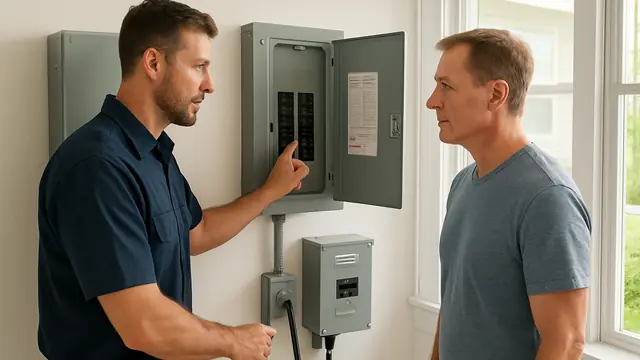
A breaker trips when the clothes dryer starts, half the kitchen loses power, and the lights briefly flicker when the air conditioner cycles on. You reset the breaker and everything returns to normal-until it happens again. For a Callaway homeowner, that pattern is a reason to inspect the electrical panel rather than assume the house is simply "using too much power."
The panel divides incoming electricity among the home's circuits, so internal problems may appear elsewhere. Reduce unnecessary use, unplug portable equipment on the affected circuit, and reset a tripped breaker only once. If there is smoke, a burning odor, visible damage, or strong heat at the panel, stay clear and contact a licensed electrician immediately.
What the Warning Signs Usually Mean
Common causes include overloads, loose terminals, damaged breakers, moisture, improper previous work, or inadequate capacity. A defective appliance or branch circuit can create similar symptoms, so diagnosis should come before replacement.
Seven Signs Your Electrical Panel Needs an Inspection in Callaway
1. The Same Breaker Trips Repeatedly
A breaker should trip when current exceeds a safe level or when it detects certain electrical faults. If the same breaker opens every time a specific appliance runs, the appliance or circuit may be overloaded. If it trips even with loads unplugged, damaged wiring, a weak breaker, or a short circuit may be responsible.
Record the breaker number and equipment operating. After unplugging portable devices, reset it once only when there is no heat, odor, or damage. Leave it off after another trip.
2. Several Circuits Behave Strangely at Once
One dead outlet may be a local wiring problem. Flickering lights, intermittent power, or appliances slowing down across several areas can indicate a loose connection at the panel, service equipment, or neutral conductor.
A loose or damaged neutral can make some lights brighten while others dim and cause electronics to restart. Multi-circuit symptoms are more concerning than one loose bulb.
3. The Panel Makes an Unfamiliar Sound
Buzzing that continues, crackling, snapping, or popping can signal a loose connection or arcing. Arcing is electricity crossing a gap instead of flowing through a secure metal connection. It generates heat and can damage a breaker, terminal, or the panel's internal bus bars.
Do not open the cover to locate the sound. Turn off easily accessible appliances if the panel is not hot or visibly damaged, then call for an inspection.
4. Breakers or the Panel Cover Are Hot
Some warmth can occur under load, but a hot cover, concentrated hot spot, odor, or discoloration is abnormal.
The cause may be a loose wire, overloaded conductor, defective breaker, incompatible component, or poor contact inside the panel. Heat damage often begins where it cannot be seen. Avoid repeatedly operating the affected equipment.
5. There Is Corrosion, Water Staining, or Dampness
Rust around the cabinet, staining above or below it, residue on metal, or dampness near cable openings means moisture may be reaching electrical equipment. Water increases the risk of corrosion, poor connections, and unintended current paths.
Do not touch damp equipment or try to dry the inside. Address any active leak and have the system inspected; replacing a stained cover alone does not correct hidden damage.
6. You Notice a Burning Odor or Discoloration
An odor resembling hot plastic, darkened metal, melted breaker material, or scorch marks suggests excessive heat. Causes can include loose terminals, overloaded circuits, damaged insulation, a breaker that is not properly connected, or an incorrectly sized protective device.
Stop using the affected circuit. Smoke, sparks, or active fire require evacuation and emergency assistance. When there is no active fire, a licensed electrician should still inspect the panel before the system returns to normal use.
7. The Panel Is Crowded or Has Questionable Alterations
A panel deserves inspection when it has no open spaces, unclear labels, missing filler plates, poorly fitting breakers, or signs of repeated modification. A crowded appearance does not prove a violation, but it warrants review.
New loads such as HVAC changes, workshop tools, or vehicle charging may require dedicated circuits or a load calculation. The answer could be a new circuit, subpanel, panel replacement, or service upgrade.
Safe Checks Before the Electrician Arrives
Keep the panel closed and accessible. Determine whether the issue affects one device, one circuit, or several areas. Unplug portable loads and note recent appliance or remodeling changes.
From a safe distance, look for rust, missing blanks, dark marks, or staining. Never approach damaged utility equipment or downed lines.
What Not to Do
Never remove the panel's inner cover, probe with a meter, tighten energized terminals, rearrange breakers, or touch service conductors. Turning off the main breaker does not necessarily de-energize every part inside.
Do not substitute a larger breaker for one that trips. The breaker protects the wiring, and increasing its rating without verifying conductor size can create overheating. Do not tape a breaker on, bypass protection, spray corrosion products, or use improvised parts.
When Inspection Cannot Wait
Urgent signs include smoke, visible arcing, a burning smell, melted components, water inside the panel, repeated main-breaker trips, a hot cabinet, electrical shocks, or dramatic brightening and dimming of lights. A partial outage affecting major areas can also point to a damaged service connection.
Leave the area if there is active smoke or fire. Call emergency services when appropriate, then arrange electrical evaluation before re-energizing damaged equipment.
How an Electrician Finds the Cause
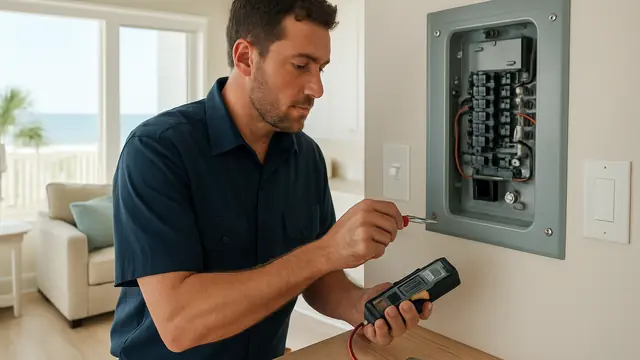
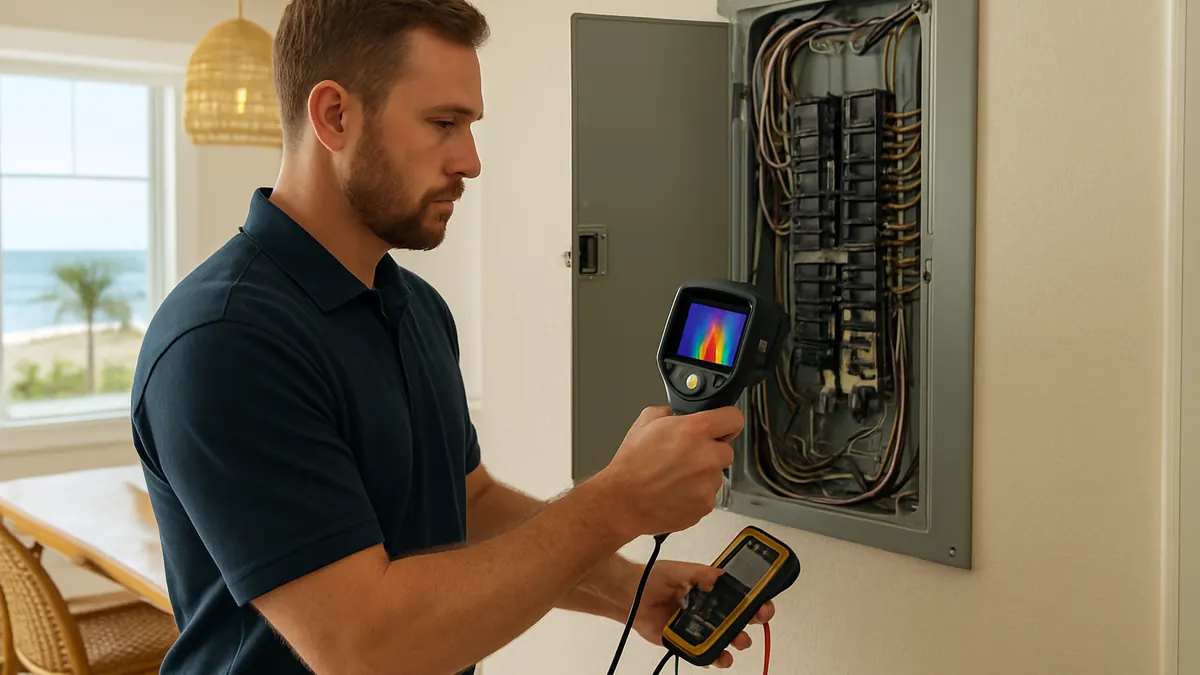
Diagnosis starts with the symptom history. The electrician checks panel rating, breaker types, conductor sizes, terminals, grounding, moisture, overheating, and component compatibility.
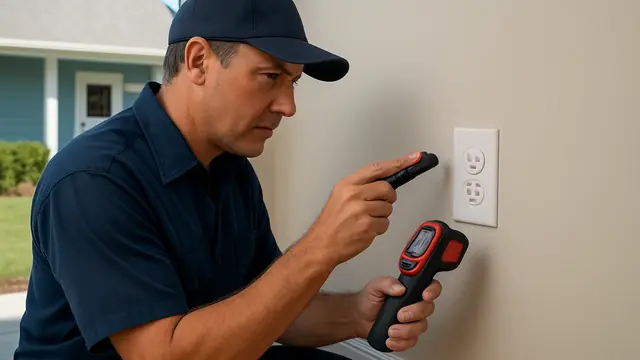
Voltage, current, and thermal tests help distinguish a panel defect from a wiring, appliance, or service problem.
Repair Choices From Smallest to Largest
The least invasive solution may be replacing one compatible breaker, repairing a damaged connection, correcting a mislabeled or overloaded circuit, or installing a dedicated circuit for equipment that should not share power. A loose connection may be corrected only if the conductor and equipment remain serviceable.
More extensive work may include replacing damaged conductors, adding a properly designed subpanel, or correcting grounding and bonding. Panel replacement may be appropriate for extensive corrosion, damaged bus bars, severe overheating, unavailable compatible components, or unsafe modifications. A service upgrade is considered when calculated demand exceeds available capacity.
Factors That Shape the Cost
Cost depends on the defect, panel type, parts availability, accessibility, circuit count, damage, service size, grounding corrections, permits, and finish repairs. Intermittent faults may require more diagnostic time.
Ask for an explanation of the finding, repair scope, alternatives, and why each option is being recommended.
Prevention and Routine Care
Keep the panel dry, visible, and unobstructed. Maintain readable labels and use qualified electrical help when adding high-demand equipment.
Pay attention after leaks, renovations, or appliance installations. Consider inspection before major upgrades or when the system's history is uncertain.
Homeowner FAQs
Can one bad appliance make the panel seem defective?
Yes. A failing appliance can overload or fault a circuit. Testing separates an appliance problem from a breaker, wiring, or panel issue.
Should I reset a breaker immediately after it trips?
First turn off or unplug loads on that circuit. Reset it once only when there is no heat, odor, moisture, or visible damage. Leave it off if it trips again.
Does a full panel always require replacement?
No. A listed subpanel or approved breaker arrangement may be possible, but available service capacity must also be evaluated.
Why do my lights dim when the AC starts?
A brief small dip can occur with motor startup, but pronounced or worsening dimming may indicate voltage drop, a loose connection, circuit problems, or capacity concerns.
Can corrosion be cleaned from a panel?
Homeowners should not clean inside electrical equipment. An electrician must determine whether affected parts can be safely replaced or whether broader replacement is necessary.
Schedule the Right Inspection
Seven signs your electrical panel needs an inspection in Callaway are repeated trips, multi-circuit power changes, unusual sounds, excessive heat, moisture damage, burning evidence, and crowded or questionable modifications. The safest response is not to guess which part has failed. Document the symptoms, reduce the load, avoid opening the equipment, and have the cause tested.
About this guide: This resource provides general homeowner education, not a remote diagnosis. Actual conditions, code requirements, equipment, and safe repair options must be evaluated at the property.