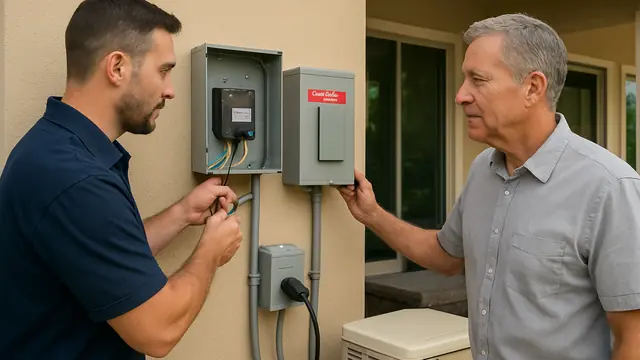
Do not remove an electrical panel cover, touch exposed conductors, bypass protection, or repeatedly reset a fault. Keep clear of smoke, sparks, burning odors, hot equipment, standing water near electricity, and downed lines, then call qualified help.
You are getting ready for the evening in your Upper Grand Lagoon home when the bathroom lights shimmer. Later, the living-room lights dim as the air conditioner starts, and an exterior light flashes even after the bulb has been replaced. One symptom may be simple, but several together can indicate a circuit or service problem.
Note whether the flicker affects one fixture, one circuit, or the entire property. Turn off any light, appliance, or circuit that smells burned, feels hot, buzzes, crackles, sparks, smokes, or shows corrosion or discoloration. Do not open the panel or electrical boxes. If lights become unusually bright, power drops out in sections, or electronics restart, call a licensed electrician.
Why Are My Lights Flickering in Upper Grand Lagoon?
Flickering occurs when voltage changes or the connection supplying a light becomes unstable. A brief, mild dim when a large motor starts can happen normally. Repeated pulsing or alternating brightness should not be dismissed.
One fixture suggests a local device. Several lights may indicate excessive load or a loose connection. Whole-property flickering can involve the panel, neutral, service, meter, or utility supply.
Common Possible Causes
A Bulb, Socket, or LED Driver Problem
A bulb can flicker when loose, defective, or overheating. LED bulbs rely on electronic drivers that can fail. If a known-good bulb also flickers, the socket, control, or wiring may be responsible.
A Failing Dimmer, Timer, Sensor, or Photocell
Lighting controls can wear or become incompatible with LED bulbs. A failing or incompatible dimmer, timer, sensor, or photocell may cause pulsing or rapid switching.
Moisture or Corrosion at an Exterior Fixture
Damaged covers, failed gaskets, or deteriorated boxes can allow moisture to corrode contacts and create an unsafe path. Turn off a flickering exterior light with visible water or discoloration.
A Loose Switch, Receptacle, or Splice
A connection elsewhere on the circuit can affect the lights. A loose wire or splice can interrupt downstream devices and produce flickering, arcing, and heat.
A Circuit Carrying Too Much Demand
High-current portable appliances can make lights on a shared circuit dim when they start.
A Major Appliance or HVAC Starting Problem
Motor-driven equipment draws extra current at startup. A failing motor or starting component can make the high draw last too long.
A Loose Neutral, Breaker, or Service Connection
A neutral conductor helps balance voltage across household circuits. If it becomes loose, one group of lights may brighten while another dims. A poor breaker connection, damaged panel bus, loose service conductor, or utility connection can create similar symptoms.
Safe Checks the Homeowner Can Perform
Record affected rooms, running appliances, and whether electronics reset.
For one fixture, turn the light off and let the bulb cool. Confirm that it is fully seated, within the fixture's wattage limit, and rated for the location. Replace it with a known-good bulb. For an exterior or enclosed fixture, use a bulb listed for that application.
If a control is present, note whether flickering occurs only at a certain setting or time.
Unplug nonessential appliances and test one load at a time. Inspect visible cords, plugs, and cover plates.
What You Should Not Attempt
Do not remove the panel cover, meter enclosure, fixture canopy, switch, receptacle, or junction-box cover. Service equipment can remain energized even with the main breaker off.
Do not tighten breaker, neutral, or service connections yourself.
Never replace a breaker with a larger size to stop dimming or tripping. Do not repeatedly reset a breaker, bypass a lighting control, or continue using a damp or corroded fixture. Extension cords should not replace permanent wiring.
Signs That Make Flickering Urgent
Arrange prompt service if flickering affects multiple circuits, worsens, or occurs without a predictable load. Lights that become much brighter than normal can indicate unstable voltage.
Other urgent signs include burning odor, hot devices, buzzing, crackling, smoke, sparks, repeated trips, partial power loss, or electronics restarting.
Turn off the affected circuit if it is clearly identified and safe to operate. If smoke, fire, or active arcing is present, leave the property and contact emergency services. Never touch wet electrical equipment.
How a Licensed Electrician Diagnoses Flickering Lights
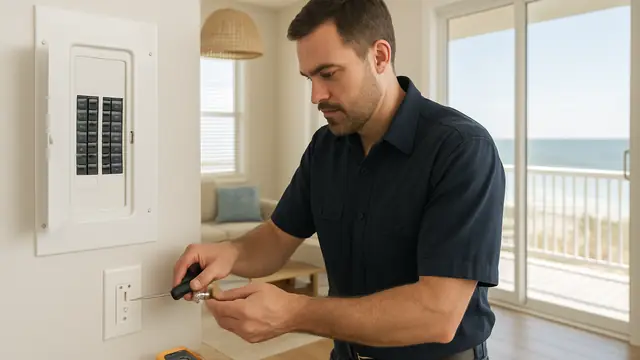
The electrician separates a fixture issue from a circuit, service, or utility problem. Testing may begin with the bulb, socket, control, fixture, switch, and receptacles.
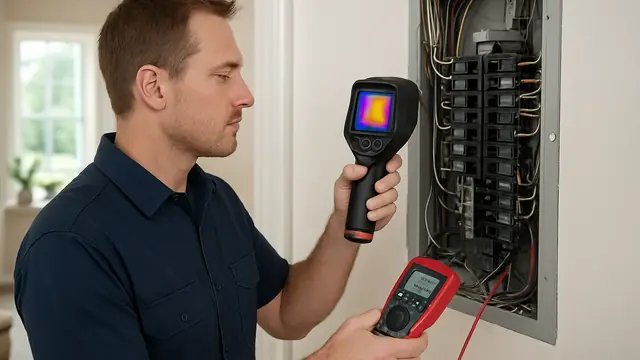
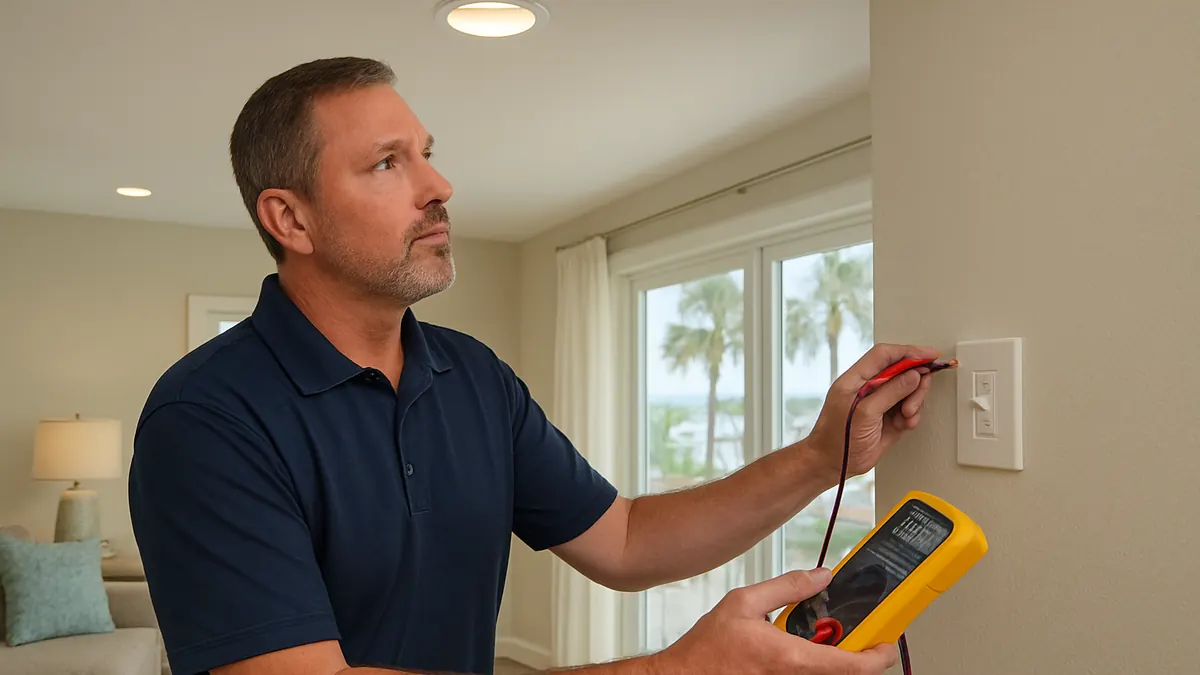
Voltage measurements show whether power is stable. Current testing reveals whether the circuit or an appliance is drawing excessive current. Voltage-drop testing helps locate resistance caused by a loose or damaged connection.
The electrician inspects breakers, terminations, neutral connections, grounding, and evidence of heat or arcing. Service measurements help determine whether utility involvement is needed.
Repair Options Beginning With the Least Invasive
- Simple repairs include replacing a defective bulb, compatible dimmer, worn switch, failed timer, photocell, or socket.
- Exterior repairs may include new seals, box repairs, corrosion removal, or a properly rated fixture.
- An accessible loose connection can be re-terminated after the circuit is de-energized. Heat-damaged wire ends or devices may require replacement.
- Heavy loads may be redistributed or moved to a dedicated circuit. A faulty appliance may need repair.
A damaged breaker may be replaced when the panel bus remains serviceable. Panel replacement is considered only when damage, unsafe equipment, overheating, or inadequate capacity makes limited repair unreliable.
Typical Factors That Affect Cost
Cost depends on the cause, access, and diagnostic time. Replacing one photocell is less involved than tracing an intermittent neutral fault across several circuits.
Other factors include access, affected circuits, panel condition, permits, utility coordination, and new wiring.
Prevention and Maintenance Guidance
Use bulbs rated for the fixture, location, dimmer, and wattage limit. Keep exterior fixtures sealed and replace cracked covers, failed gaskets, damaged boxes, and corroded components.
Avoid operating several high-current appliances on one circuit. Have major equipment installed on correctly sized circuits and keep the panel directory accurate.
After storms, outages, renovations, or appliance additions, watch for new flickering, buzzing, warm devices, or breaker trips.
Homeowner FAQs
Why Does My Exterior Light Flicker Even With a New Bulb?
The socket, photocell, sensor, moisture damage, corrosion, or fixture wiring may be responsible.
Can Moisture Make an Exterior Light Flicker?
Yes. Moisture entering a damaged fixture or box can corrode contacts and create unsafe current paths.
Why Do the Lights Dim When the Air Conditioner Starts?
The system draws extra current during startup. A slight dip may be normal, but deep or repeated dimming can indicate an HVAC or electrical problem.
Can a Loose Neutral Damage Electronics?
Yes. It can create unstable voltage that may damage appliances and sensitive electronic equipment.
Will Whole-Home Surge Protection Stop Flickering?
No. Surge protection limits brief voltage spikes. It does not repair loose connections, overloaded circuits, failing controls, or neutral problems.
Does Flickering Mean I Need a New Panel?
Not necessarily. Many problems can be corrected with a bulb, control, fixture, connection, circuit, appliance, or breaker repair.
Protect the Home by Addressing the Cause
Why are my lights flickering in Upper Grand Lagoon? The problem may be a bulb, dimmer, sensor, photocell, switch, or exterior fixture. Repeated or widespread flickering can also reveal an overloaded circuit, failing appliance, loose connection, damaged breaker, unstable neutral, or service issue. Make only safe checks, stop using anything that shows heat, moisture damage, or arcing, and have a licensed electrician identify the least invasive dependable repair.
About this guide: This resource provides general homeowner education, not a remote diagnosis. Actual conditions, code requirements, equipment, and safe repair options must be evaluated at the property.