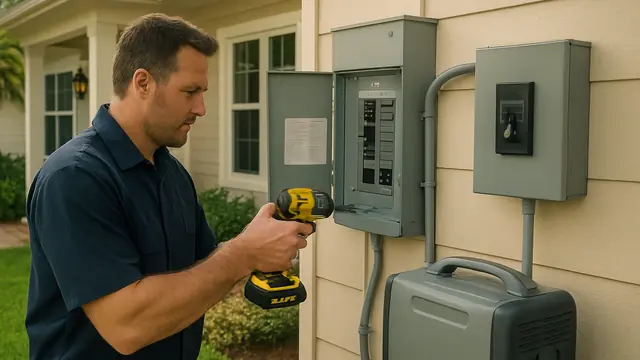
Do not remove an electrical panel cover, touch exposed conductors, bypass protection, or repeatedly reset a fault. Keep clear of smoke, sparks, burning odors, hot equipment, standing water near electricity, and downed lines, then call qualified help.
The porch light at your Laguna Beach home blinks even after you replace the bulb. Inside, the bathroom lights shimmer when the exhaust fan starts, and the kitchen pendants dim when the air conditioner cycles. You may wonder whether this is normal voltage movement or a warning that something is loose.
A brief dim when a large appliance starts can be harmless, but recurring flickering should be traced. Observe which lights are affected and what equipment is running. Turn off any fixture or circuit that is hot, noisy, discolored, or producing an odor. Do not open the panel or handle wiring. If lights throughout the property brighten and dim, or flickering comes with sparks, buzzing, or partial power loss, arrange immediate evaluation.
Why Are My Lights Flickering in Laguna Beach?
Lights flicker when the electrical energy reaching them is interrupted or changes rapidly. The problem can be at the bulb, switch, fixture, circuit, breaker, main service, or utility supply.
One light usually narrows the search to that fixture. Several lights flickering together often share a circuit or connection. Whole-property flickering can involve the service neutral, panel, meter connection, or incoming power.
Start by Identifying the Pattern
Begin by asking:
- Does one light flicker or do several flicker together?
- Does it happen when a particular appliance starts?
- Do the lights only dim, or do some become brighter?
- Has the problem become more frequent?
Flicker at a low dimmer setting often indicates incompatibility. A fixture reacting when its switch moves may have worn contacts. Dimming when a motor starts suggests voltage drop. Random brightening and dimming in several rooms may indicate a loose neutral.
Common Reasons Lights Begin to Flicker
Bulb, Socket, or LED-Driver Trouble
A bulb must make firm contact with its socket. Wear, corrosion, or a failing LED driver can cause pulsing. If several bulbs flicker in one fixture, the socket or wiring deserves inspection.
An Incompatible Dimmer
Older dimmers were designed for incandescent lamps. Many LEDs require an LED-rated dimmer. A mismatch can cause shimmer, delayed startup, flashing at low settings, or a narrow usable dimming range.
A Loose Splice or Terminal
Wires join at fixtures, switches, receptacles, and junction boxes. A splice is simply a connection between conductors. When it loosens, electricity may arc across a tiny gap. Power is interrupted, and heat can build at the connection.
Voltage Drop on a Loaded Circuit
When current rises, voltage drops along a circuit. Long runs, loose connections, undersized wiring, or too many loads can make that drop visible.
A Neutral, Breaker, or Service Problem
A loose neutral can make one group of lights dim while another brightens. A breaker can also develop worn contacts or a poor connection to the panel bus, which distributes power. Meter, service, or utility connections can affect the entire home.
Checks You Can Safely Make
For one flickering light, switch it off and let it cool. Confirm that the bulb is fully seated, within the fixture's wattage limit, and rated for the fixture. Replace it with a known-good bulb.
If the fixture uses a dimmer, test it at full brightness. Look for markings showing that the bulb is dimmable and the control is LED-compatible.
Observe whether flickering starts when a major appliance operates. Unplug nonessential portable loads from the affected circuit and record the time, rooms affected, sounds, and smells.
From a safe distance, look for exterior damage after a storm or service interruption. Do not approach damaged lines, meter equipment, or wet electrical components.
What Not to Do
Do not remove switch plates, fixture canopies, or the panel cover. A loose connection can arc when disturbed, and some parts remain energized even when a breaker is off.
Do not install a larger bulb than the fixture permits. Excess heat can damage the socket and wiring. Never replace a breaker with a higher-amperage model or repeatedly reset one that trips.
Do not assume a power strip or plug-in surge protector will correct unstable voltage. It cannot repair loose wiring, overloaded circuits, or a failing neutral.
Urgent Warning Signs
Prompt attention is needed when flickering spreads, occurs without an obvious load, or becomes more frequent. Unusually bright lights are a warning of possible neutral instability.
Other urgent indicators include burning odor, hot or discolored switches, buzzing from the panel, crackling in a wall, smoke, sparks, partial power loss, repeated breaker trips, or electronics cycling off and on.
If safe, switch off the affected circuit. Do not stand in water or touch wet equipment. For smoke, fire, or active arcing, leave the property and contact emergency services.
How a Licensed Electrician Diagnoses It
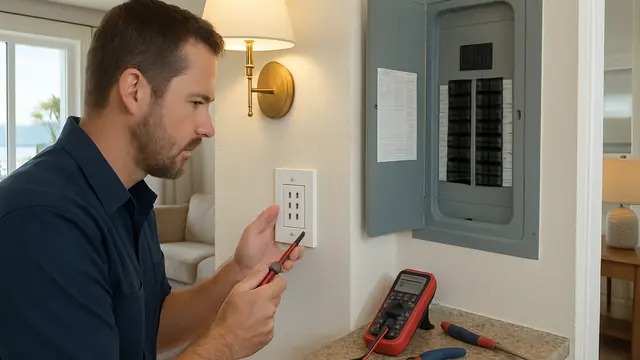
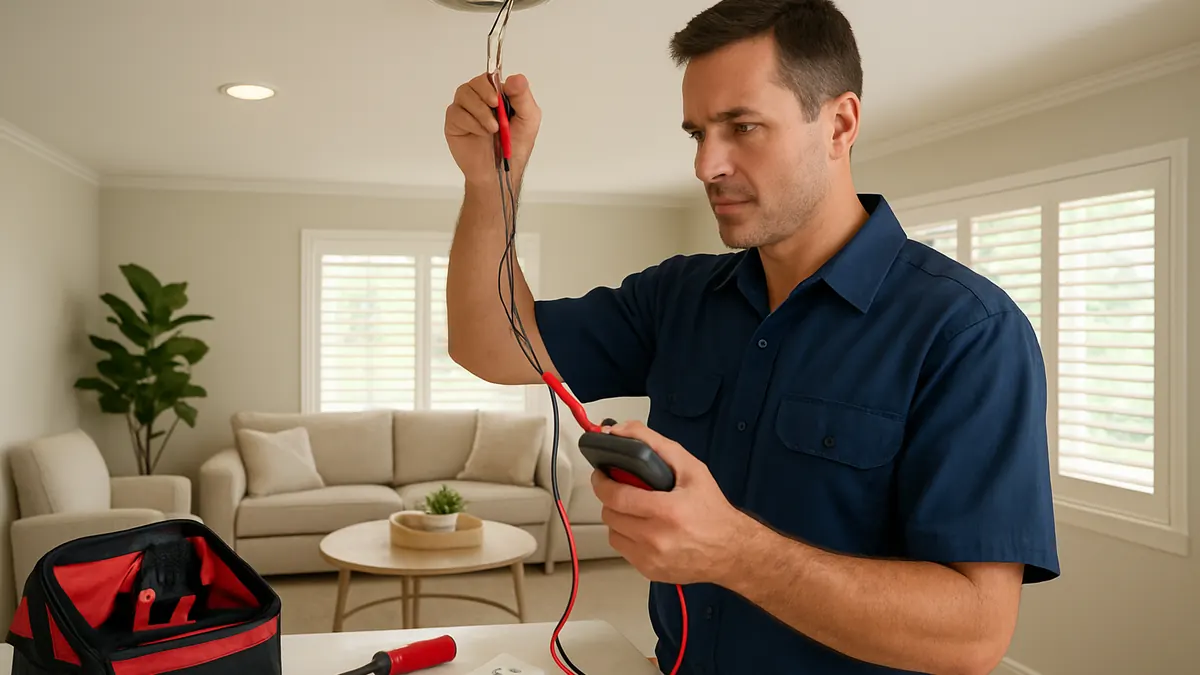
The electrician separates fixture-level problems from circuit and service problems. Testing may begin with a known-good bulb, switch inspection, socket evaluation, and voltage measurement. Other devices on the circuit are checked because a loose receptacle can affect lights farther downstream. Current and voltage-drop tests reveal overloads and weak connections.
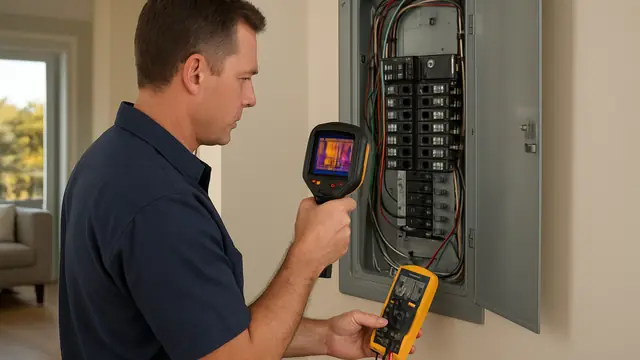
At the panel, the technician checks breaker condition, bus contact, neutral terminations, grounding and bonding, conductor sizing, and heat damage. Thermal imaging may identify an abnormally warm component. Service testing helps determine whether the issue is inside the property or on the utility side.
Repair Options From Least Disruptive to Most Involved
A minor repair may be installing the correct bulb, replacing a failing LED, or changing an incompatible dimmer. A worn switch or socket can often be replaced without disturbing surrounding finishes.
Loose fixture or junction-box connections can be re-terminated after the circuit is safely de-energized. Damaged wire ends may need to be cut back and reconnected with approved components.
When load is the problem, the electrician may redistribute devices or add a dedicated circuit. A motor-driven appliance drawing excessive startup current may need appliance or HVAC service.
Panel repairs may involve replacing a damaged breaker or correcting a conductor termination. Replacement is reserved for damaged bus work, extensive overheating, unsafe equipment, or inadequate capacity. Service work may require permits and utility coordination.
What Determines the Cost?
Cost depends heavily on how long it takes to reproduce and locate the fault. A visible fixture defect is less involved than a service-neutral issue that appears only under certain loads. Accessibility, the number of circuits, panel condition, new wiring, permits, and utility coordination also affect the scope.
The goal is to identify the failed point, correct related damage, and verify stable voltage after repair-not to replace unnecessary equipment.
Prevention and Ongoing Maintenance
Use quality lamps rated for the fixture and location, keep exterior fixtures properly sealed, and do not exceed wattage limits. Match dimmers to the LED load and avoid crowding high-demand appliances onto one circuit.
After power disturbances, watch for buzzing, flickering, or electronics resetting. Persistent loose or overheated connections require repair.
Homeowner FAQs
Can Wind Make My Lights Flicker?
Wind can affect damaged utility lines or loose exterior service connections, but indoor flickering may have another cause. Widespread symptoms should be evaluated.
Why Does the Bathroom Light Flicker When the Fan Starts?
The fan motor may cause a voltage drop, or the fan and light may share a weak connection.
Can Moisture Make an Exterior Light Flicker?
Yes. Moisture entering a damaged fixture can corrode contacts or create unsafe leakage paths. Turn it off and have it inspected.
Is One Flickering Recessed Light Dangerous?
It may be a failing bulb, but a hot socket, loose connector, or overheating fixture can also be responsible.
What Does It Mean When One Room Dims and Another Brightens?
That pattern can indicate a loose neutral. It should be treated as urgent because voltage may be unstable.
Will Whole-Home Surge Protection Stop Flickering?
No. Surge protection limits brief spikes; it does not fix loose wiring, overloaded circuits, failing appliances, or neutral problems.
Do Not Let a Small Flicker Become a Larger Failure
Why are my lights flickering in Laguna Beach? It could be a bulb, socket, dimmer, or switch, but recurring flickering can also reveal a loose splice, overloaded circuit, failing appliance, damaged breaker, neutral problem, or service issue. Make only safe observations, stop using equipment that shows heat or arcing, and let a licensed electrician test the system before recommending the least invasive reliable repair.
About this guide: This resource provides general homeowner education, not a remote diagnosis. Actual conditions, code requirements, equipment, and safe repair options must be evaluated at the property.