Do not remove an electrical panel cover, touch exposed conductors, bypass protection, or repeatedly reset a fault. Keep clear of smoke, sparks, burning odors, hot equipment, standing water near electricity, and downed lines, then call qualified help.
You are sitting in your Latitude Margaritaville Watersound living room when the ceiling lights dim as the air conditioner starts. Later, the kitchen pendants pulse even though no major appliance is running. You replace one bulb, but the problem returns. Flickering may come from something simple, such as a loose bulb, or something more serious, such as an unstable electrical connection.
Observe the pattern without opening electrical equipment. Note whether one fixture, one room, or the entire home is affected. Turn off any light, appliance, or circuit that produces a burning odor, buzzing, crackling, sparks, or unusual heat. Do not remove the panel cover or tighten wiring yourself. If lights throughout the home become brighter and dimmer, arrange prompt electrical service.
Why Are My Lights Flickering in Latitude Margaritaville Watersound?
Flickering occurs when the voltage reaching a light changes or the connection feeding it becomes intermittent. Voltage is the electrical pressure that moves power through a circuit. A slight, momentary dim when a large motor starts can occur normally. Repeated flashing, deep dimming, or flickering without an obvious cause needs attention.
One blinking lamp usually points toward the bulb, socket, switch, or fixture. Several lights on one circuit may indicate a loose connection or excessive load. Flickering across multiple areas can involve the panel, neutral conductor, service equipment, or utility supply.
Common Causes of Flickering Lights
A Loose Bulb or Incompatible Dimmer
A bulb that is not making firm contact with its socket can blink. LED bulbs also contain electronic drivers that can fail. In addition, not every dimmer works properly with every LED. An older dimmer may cause LEDs to shimmer, flash at low settings, or hum.
A Worn Switch, Socket, or Fixture Connection
Switches and sockets contain contacts that can loosen or deteriorate. Flickering that changes when a switch is touched or operated can indicate a worn device. A loose connection creates resistance, and resistance can produce heat.
Too Much Demand on One Circuit
A microwave, hair dryer, portable heater, vacuum, or other appliance may share a circuit with lighting. When several high-demand devices operate together, the voltage can dip. The breaker may not trip immediately, so recurring dimming still deserves evaluation.
A Motor Starting or Struggling
Air conditioners, refrigerators, pumps, and other motors require extra current at startup. A brief, mild dim may be expected. A severe dip, repeated flicker, or worsening symptom can point to a failing motor, starting component, loose connection, or circuit problem.
A Loose Neutral or Service Connection
The neutral conductor completes the path for many household circuits. If it becomes loose, voltage may become unbalanced. Some lights can grow bright while others dim. Because unstable voltage can damage electronics and overheat connections, this pattern requires prompt attention.
Safe Checks a Homeowner Can Perform
Write down when the flickering happens, which rooms are affected, whether electronics reset, and which appliances are running.
For one fixture, turn the switch off and let the bulb cool. Confirm that it is fully seated and within the fixture's wattage rating. Replace it with a known-good bulb. If the fixture uses a dimmer, move the control to full brightness and see whether the flicker changes.
Unplug nonessential portable appliances from the affected area. Operate devices one at a time to see whether a particular load triggers the symptom. Look for damaged cords, loose plugs, discoloration, or melted plastic without removing covers.
If nearby homes have the same problem, the utility may be involved. Still, do not assume the issue is outside your home until the electrical system has been evaluated.
What You Should Not Attempt
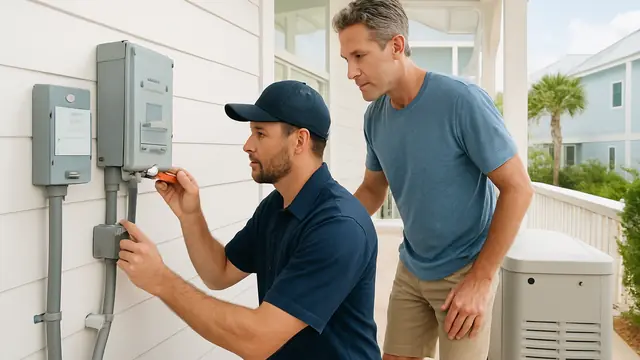
Do not remove the panel cover, meter enclosure, switch, receptacle, or fixture canopy to search for a loose wire. Panels contain energized parts that may remain dangerous even when the main breaker is off.
Never replace a breaker with a larger one to stop dimming or nuisance trips. Breaker size must match the conductor it protects. Do not repeatedly reset a breaker that trips after flickering. Avoid bypassing controls or using extension cords as permanent wiring.
Signs That Make Flickering Urgent
Call promptly if flickering affects several rooms, occurs randomly, or becomes more frequent. Lights that alternate between unusually bright and dim may indicate an unstable neutral.
Other urgent signs include a hot panel, buzzing breaker, burning smell, scorched cover plate, crackling inside a wall, smoke, visible sparks, partial power loss, or electronics repeatedly restarting. Turn off the affected circuit only when it is safe and clearly identified.
If you see smoke, fire, or active arcing, leave the area and contact emergency services. Do not touch wet electrical equipment or stand in water while operating switches or breakers.
How a Licensed Electrician Diagnoses the Problem
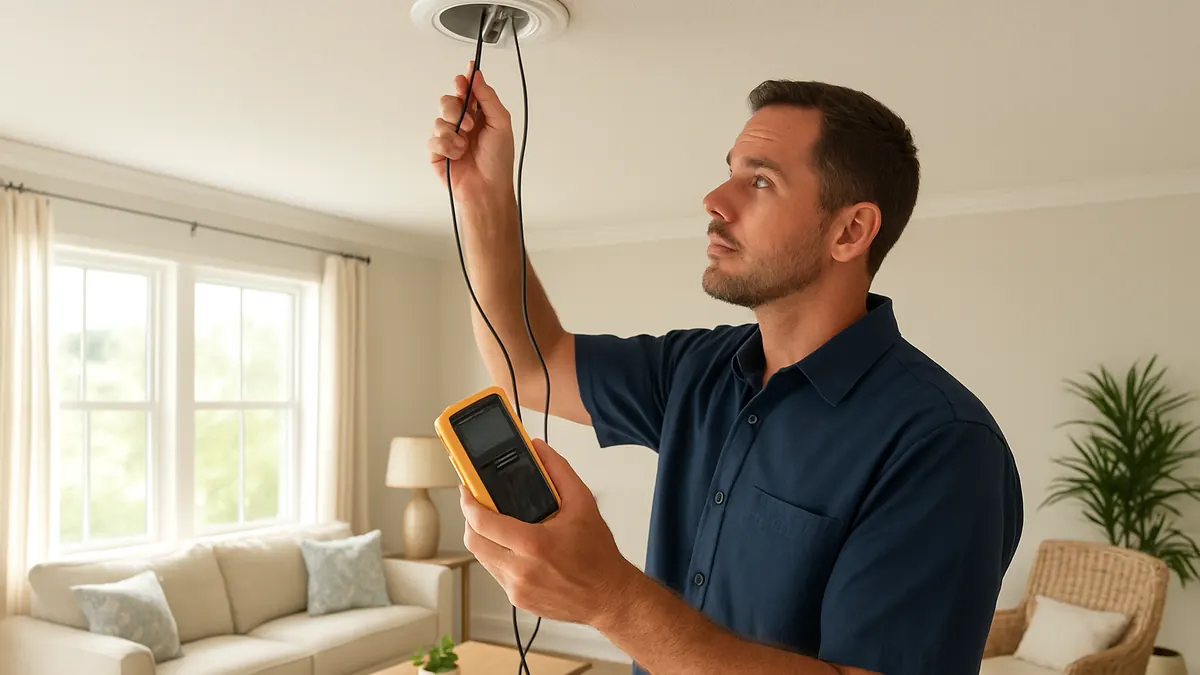
An electrician begins by determining the scope and timing of the symptom. The technician may test the bulb, fixture, switch, dimmer, receptacles, and junction points before moving to the panel.
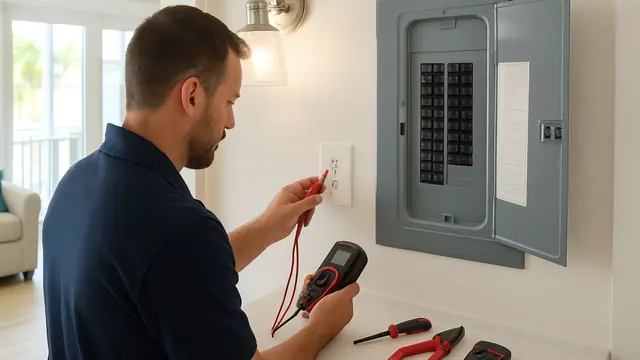
Voltage measurements show whether power is stable and whether it changes when large appliances start. Current testing helps identify overloaded circuits. Voltage-drop testing can reveal resistance at a loose or damaged connection.
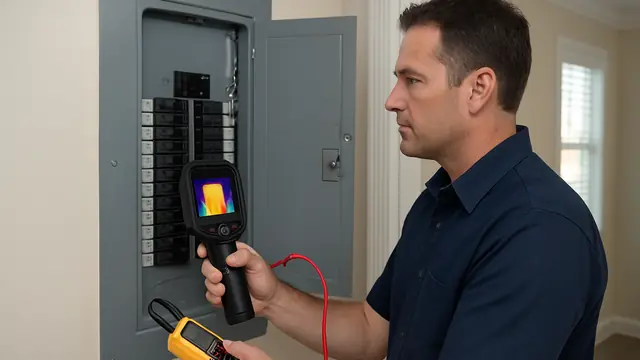
At the panel, the electrician checks breaker condition, conductor terminations, neutral connections, grounding and bonding, and signs of overheating or arcing. Thermal imaging may reveal an unusually hot connection. If testing points to incoming power, the findings can be shared with the utility.
Repair Options From Least Invasive to More Involved
The simplest repair may be replacing a bulb, installing a compatible LED dimmer, changing a worn switch, or repairing a fixture socket. A loose connection in an accessible box may be safely re-terminated after the circuit is de-energized.
If a circuit is overloaded, the electrician may recommend moving loads, adding a dedicated circuit, or correcting improper wiring. When a specific appliance causes the voltage drop, that appliance may need repair.
A damaged breaker or conductor termination can sometimes be repaired without replacing the panel. Panel replacement is considered when the bus, enclosure, or internal components are damaged, unsafe, or unable to support the home's electrical demand.
Factors That Affect Cost
Cost depends on the cause, accessibility, and time required to reproduce the flicker. Replacing one dimmer is less involved than tracing an intermittent connection through several boxes.
Other factors include the number of circuits affected, panel condition, conductor damage, permit requirements, utility coordination, and whether new wiring or a dedicated circuit is needed.
Prevention and Maintenance Guidance
Use bulbs rated for the fixture and match LED lamps with compatible dimmers. Do not exceed fixture wattage limits. Replace switches or receptacles that feel loose, operate inconsistently, or show discoloration.
Avoid placing several high-current portable appliances on one circuit. Have new equipment installed on correctly sized circuits. Pay attention to recurring dimming, buzzing, warm devices, and breaker trips.
An electrical inspection can be useful after renovations, major appliance additions, storm-related outages, or changes in how the home is used.
Homeowner FAQs
Is It Normal for Lights to Dim When the Air Conditioner Starts?
A slight, momentary dim can happen. Deep dimming, repeated pulsing, or worsening symptoms should be evaluated.
Can LED Bulbs Flicker Even When the Wiring Is Fine?
Yes. A failing bulb, incompatible dimmer, loose bulb, or electronic control can cause LED flicker.
Why Do Only the Kitchen Lights Flicker?
They may share a circuit with a high-demand appliance, or a loose connection may affect that lighting circuit.
Can a Loose Neutral Damage Electronics?
Yes. An unstable neutral can expose devices to abnormal voltage and cause lights in different areas to brighten and dim.
Should I Call the Utility or an Electrician?
If only your home is affected, an electrician is usually the practical first call. If nearby homes are affected or utility equipment is visibly damaged, contact the utility as well.
Take Repeated Flickering Seriously
Why are my lights flickering in Latitude Margaritaville Watersound? The cause may be a bulb or dimmer, but repeated flickering can also point to a loose connection, overloaded circuit, failing appliance, damaged breaker, unstable neutral, or service problem. Observe the pattern, stop using equipment that shows heat or arcing, and arrange a licensed electrical evaluation before the condition becomes more disruptive.
About this guide: This resource provides general homeowner education, not a remote diagnosis. Actual conditions, code requirements, equipment, and safe repair options must be evaluated at the property.