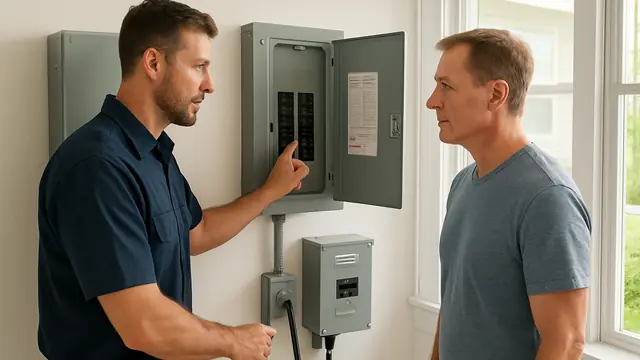
Do not remove an electrical panel cover, touch exposed conductors, bypass protection, or repeatedly reset a fault. Keep clear of smoke, sparks, burning odors, hot equipment, standing water near electricity, and downed lines, then call qualified help.
You flip on the dining-room light in your Callaway home and it flashes before settling down. Later, the hallway lights pulse when the microwave runs, and the television briefly resets when the air conditioner starts. Flickering lights are not a diagnosis by themselves, but they show that power is not reaching the lights as steadily as it should.
Note whether the flicker affects one fixture, one circuit, or the entire house. Turn off any device that is hot, buzzing, sparking, or giving off a burned-plastic smell. You can check a cooled bulb and unplug portable appliances, but do not open electrical boxes or the panel. Widespread flickering, unusually bright lights, or breaker trips deserves prompt attention.
What Flickering Lights Usually Mean
A light needs steady voltage and a secure electrical path. Sometimes the cause is a loose bulb. Other times, flickering reveals a weak connection behind a switch, inside a junction box, at the panel, or along the service.
The pattern matters. One lamp reacting when its cord moves differs from several rooms dimming together. Flickering tied to one appliance suggests a load issue, while random brightening and dimming can suggest a neutral or service problem.
Why Are My Lights Flickering in Callaway? Common Causes
A Bulb or Dimmer Problem
A bulb may not be making firm contact, or its internal electronics may be failing. Many LED bulbs also require dimmers designed for LED loads. An incompatible combination can cause flashing at low settings, delayed startup, humming, or flickering throughout the range.
A Worn Switch, Receptacle, or Fixture Connection
A switch may still work after its contacts deteriorate. Flickering when the switch is touched can indicate wear. A loose wire at a receptacle can affect lights farther along the same circuit. Electricians call these devices "downstream" because they receive power after that connection.
Too Much Load on One Circuit
Kitchen appliances, portable heaters, hair dryers, tools, and window units can draw substantial current. When several devices share a circuit, voltage can sag. The breaker may eventually trip, but visible dimming can occur first.
A Motor Struggling to Start
Air-conditioning compressors, refrigerators, pumps, and other motors need extra current during startup. If a motor or starting component is failing, the high draw may last longer than normal and cause repeated dimming.
A Loose Panel, Neutral, or Service Connection
Connections must be tight, clean, and properly sized. A loose breaker connection, neutral conductor, or service connection can interrupt power for fractions of a second. It may also create heat and arcing, which is electricity jumping across a small gap.
Utility Voltage Fluctuation
Utility equipment or line damage can affect voltage. If neighboring homes have the same problem, notify the utility. An electrician can determine whether the home's system contributes.
Safe Checks Before Scheduling Service
Identify which rooms are affected and whether clocks or electronics reset. A reset suggests a stronger interruption than a barely visible shimmer.
For one fixture, switch it off and wait for the bulb to cool. Make sure the bulb is fully seated and rated for the fixture. Try a known-good bulb. For a dimmer-controlled light, move the control through its range and note when flickering begins.
Unplug portable appliances on the suspected circuit. Operate one device at a time to see whether a specific appliance triggers the problem. Visually inspect cords and plug faces for damage, but do not remove cover plates.
Look outside from a safe distance for obvious service-line or meter damage. Never approach a fallen line, damaged mast, or sparking equipment.
Work Homeowners Should Not Attempt
Do not remove the metal cover over the breakers. The panel can remain energized even when the main breaker is off. Service conductors may have no homeowner-accessible disconnect ahead of them.
Do not tighten a neutral, breaker, or service lug. Correct torque matters, and heat-damaged parts may need replacement rather than tightening. Never install a higher-amperage breaker or swap breakers at random.
Do not bypass a flickering switch, tape a breaker on, or keep using a loose or scorched receptacle. Temporary workarounds can conceal a worsening fault.
When Flickering Becomes Urgent
Call promptly when flickering affects several circuits, lights swing from dim to very bright, or the home loses power in sections. A loose neutral can create damaging voltage differences between circuits.
Urgent signs include crackling in a wall, a hot panel, burning odor, smoke, sparks, repeated breaker trips, or melted plastic. Shut off the affected circuit only when it can be done safely. If fire or active arcing is present, leave the structure and contact emergency services.
Persistent flickering after a storm or outage also deserves evaluation. A voltage disturbance may have damaged a connection or protective device.
How an Electrician Finds the Cause
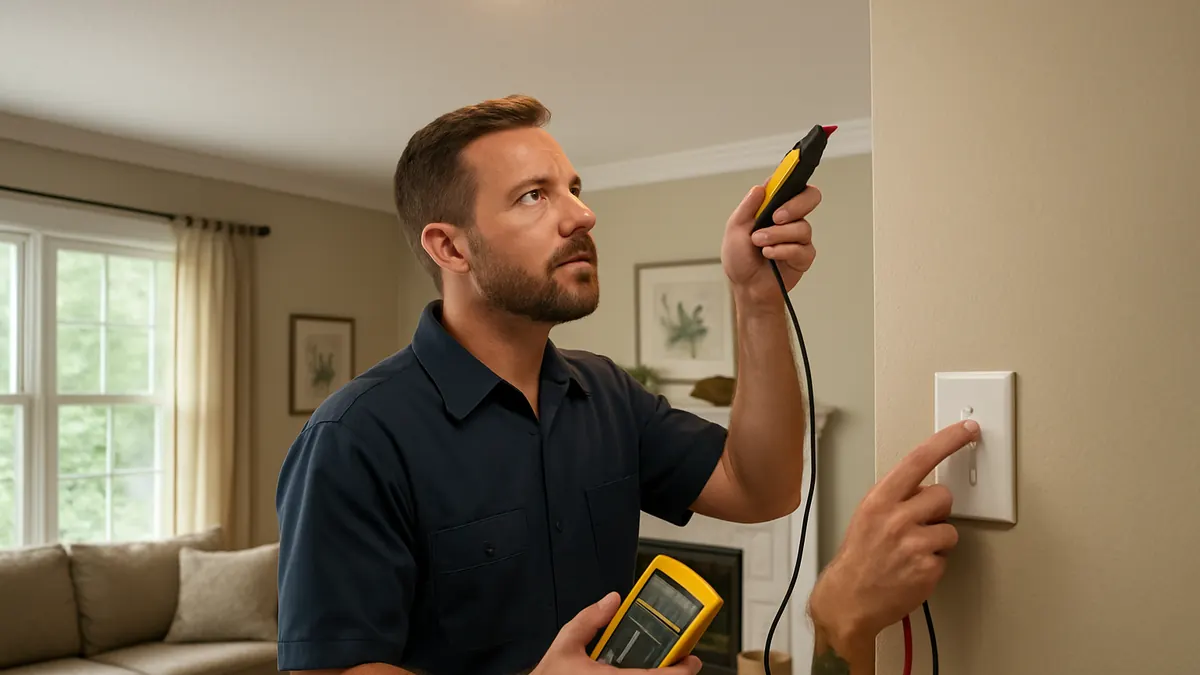
Diagnosis begins with the pattern. The electrician determines whether the issue is load-related, limited to one circuit, or present throughout the property. The technician may inspect the bulb, fixture, switch, receptacles, and junction points.
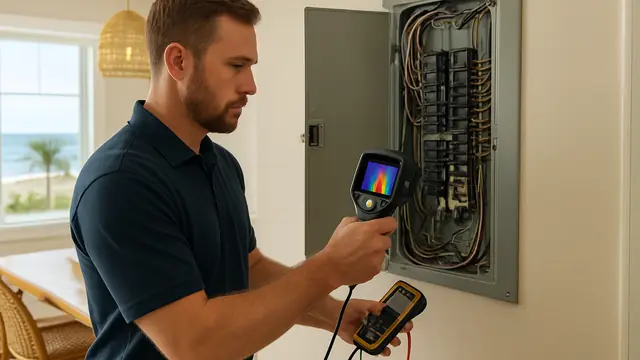
Voltage and current measurements show whether a circuit is overloaded, whether voltage changes when equipment starts, and whether a neutral problem is present.
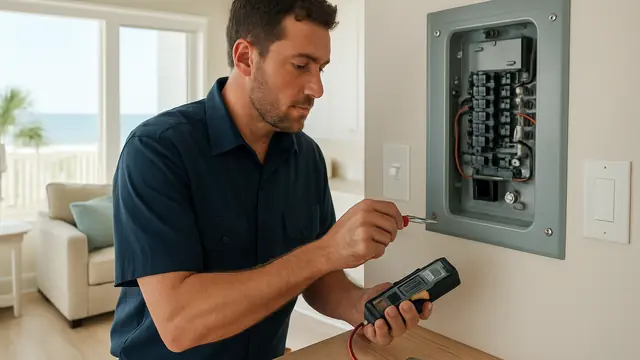
At the panel, the electrician checks breakers, conductor terminations, heat damage, corrosion, and signs of arcing. The service entrance and grounding system may also be examined. If measurements indicate a utility-side issue, the utility can be contacted with specific evidence.
Repair Choices From Simple to More Involved
Repairs should match the diagnosis. A faulty bulb can be replaced. An incompatible dimmer can be changed to an LED-rated model. A worn switch, damaged socket, or loose fixture connection can often be corrected without opening large areas.
For an overloaded circuit, the electrician may redistribute loads or add a dedicated circuit. If an appliance causes the drop, its motor, starting component, or circuit may need service.
A damaged breaker or conductor termination may be repaired while the panel remains serviceable. Panel replacement is considered when bus work or the enclosure is damaged, or the equipment cannot safely support the home. Complete rewiring is reserved for broader wiring defects.
Factors That Influence Cost
A visible bad switch is faster to correct than an intermittent splice hidden in an attic, wall, or chain of junction boxes. Diagnosis may take longer when the flicker occurs unpredictably.
Cost also depends on the number of circuits, panel condition, access, conductor damage, permits, utility coordination, and whether a dedicated circuit or surface opening is required.
Prevention and Maintenance
Use bulbs listed for the fixture and compatible with the dimmer. Do not exceed fixture wattage limits. Replace switches that feel loose or operate inconsistently.
Avoid running several high-current appliances on one circuit. Have major equipment installed on correctly sized circuits and consider a load review after adding significant electrical demand.
Pay attention to buzzing, warm cover plates, delayed startup, and recurring breaker trips. Early diagnosis is less disruptive than waiting for failure.
Get a Clear Answer Before the Problem Grows
Why are my lights flickering in Callaway? The cause may be a bulb or dimmer, but it may also be a worn device, overloaded circuit, struggling appliance, loose neutral, panel fault, or utility issue. Safe observation can help narrow the pattern, but electrical connections should be tested and repaired by a licensed professional.
About this guide: This resource provides general homeowner education, not a remote diagnosis. Actual conditions, code requirements, equipment, and safe repair options must be evaluated at the property.