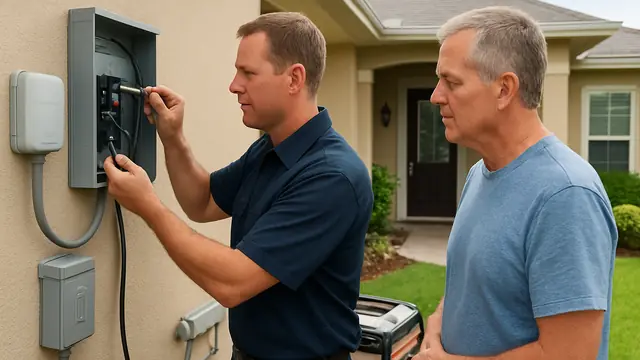
Do not remove an electrical panel cover, touch exposed conductors, bypass protection, or repeatedly reset a fault. Keep clear of smoke, sparks, burning odors, hot equipment, standing water near electricity, and downed lines, then call qualified help.
You are relaxing at home in Bid-A-Wee when the kitchen lights dim as the air conditioner starts. Later, a bedroom lamp flickers even though no major appliance is running. The lights may brighten again, pulse several times, or affect only one room. Repeated flickering usually means the electrical system is reacting to a changing load, a loose connection, a failing device, or an unstable power supply.
The safest immediate action is to notice where the flickering occurs and whether it follows a specific appliance. Turn off any fixture, switch, appliance, or circuit that smells hot, buzzes, sparks, or shows discoloration. Do not remove the electrical panel cover or tighten wiring yourself. If flickering affects the entire home, becomes severe, or comes with smoke or a burning odor, call a licensed electrician promptly.
Why Are My Lights Flickering in Bid-A-Wee?
Flickering happens when the voltage reaching a light changes or the connection feeding it becomes unstable. Voltage is the electrical pressure that pushes power through wiring. A small, momentary dip can occur when a large motor starts. Frequent, pronounced, or unexplained changes need evaluation.
The pattern provides clues. One flickering lamp often points to the bulb, socket, cord, or switch. Several lights on one circuit may indicate a loose connection, overload, or breaker problem. Whole-home flickering may involve the service, neutral conductor, utility supply, or a large appliance.
Common Causes of Flickering Lights
A Loose Bulb or Incompatible Dimmer
A bulb that is not fully seated can lose contact for a fraction of a second. LED bulbs may also flicker when used with an older dimmer designed for incandescent bulbs. A failing LED driver can cause pulsing even when the wiring is sound.
A Worn Switch, Socket, or Fixture Connection
Switches and sockets wear over time. Internal contacts can loosen, pit, or overheat. Flickering when you touch a switch, hear crackling, or move a pull chain can point to a failing device. A loose connection creates resistance, and resistance can produce damaging heat.
A Heavily Loaded Circuit
A circuit may dim when a microwave, vacuum, hair dryer, or window air conditioner starts. If several high-demand devices share the circuit, voltage can dip enough for lights to pulse. The breaker may not trip immediately, so recurring dimming should still be checked.
A Large Appliance Starting or Failing
Central air conditioners, refrigerators, pumps, and other motors need extra current at startup. A brief, mild dim may be normal. A deep dim, repeated flicker, or a worsening symptom can indicate an appliance problem, loose connection, undersized circuit, or voltage issue.
A Loose Neutral or Service Connection
The neutral conductor completes the electrical path for many circuits. If it loosens, some lights may become bright while others dim. Abnormal voltage can damage electronics and overheat the connection. Loose breaker, panel, meter, or utility connections can also cause broad flickering.
Safe Checks a Homeowner Can Perform
First, determine the scope. Does one bulb flicker, one room flicker, or the whole house flicker? Write down when it happens and what was operating.
For one fixture, turn the switch off and let the bulb cool. Confirm that the bulb is the correct type and wattage, then gently tighten it. Replace a questionable bulb with a known-good bulb. If the fixture is on a dimmer, verify that the bulb and dimmer are compatible.
Unplug portable devices on the affected circuit and see whether the flicker changes. Check whether a high-demand appliance starts at the same moment. You may read breaker labels without removing the panel cover.
Stop immediately if you see scorching, melted plastic, damaged cords, water near electrical equipment, or repeated breaker trips.
What You Should Not Attempt
Do not remove a switch, receptacle, fixture, meter enclosure, or panel cover to search for a loose wire. The panel can contain dangerous energized parts even when individual breakers are off.
Do not repeatedly reset a breaker that trips after the lights flicker. Never replace a breaker with a larger size to stop trips. Breaker size must match the wire it protects.
Avoid using extension cords as permanent wiring or shifting major appliances to random circuits without knowing the circuit capacity.
Signs the Problem Is Urgent
Schedule prompt service when flickering is frequent, affects multiple rooms, or suddenly becomes worse. Treat it as urgent if lights become unusually bright, the panel buzzes, switches feel warm, outlets discolor, or electronics shut off and restart.
Turn off the affected circuit if it can be identified safely. If you smell burning, see smoke or sparks, or hear active arcing, leave the area and contact emergency services when appropriate. Whole-home flickering may also require the electric utility, especially if nearby homes have the same problem.
How a Licensed Electrician Diagnoses It
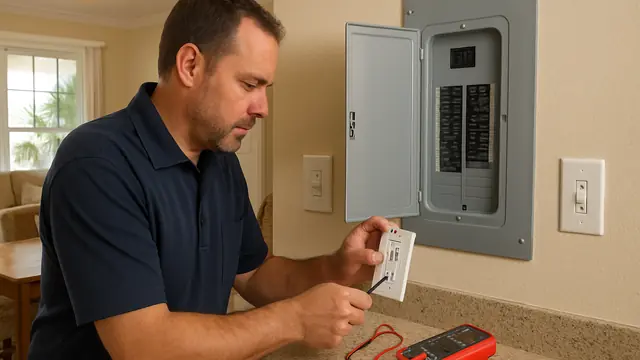
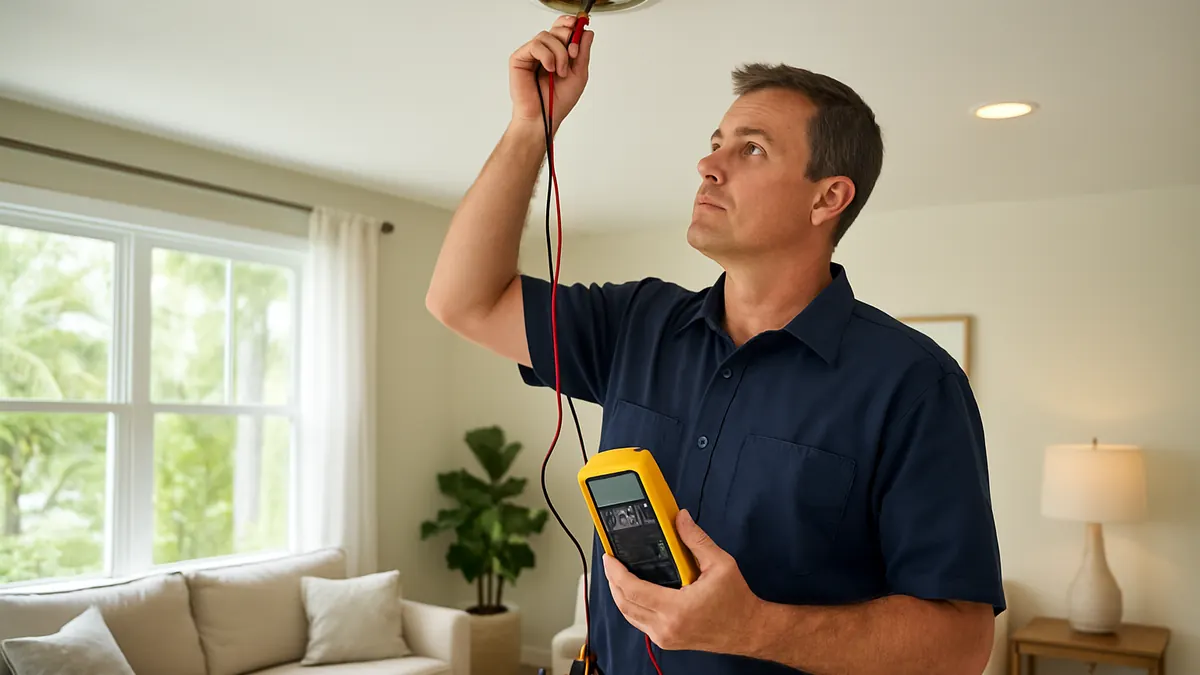
An electrician asks where the flicker occurs, how long it lasts, and which loads are running. Testing may begin with the bulb, dimmer, switch, fixture, and receptacles before moving to the panel and service equipment.
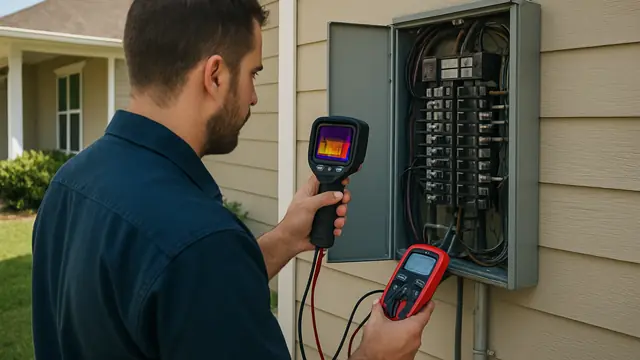
Voltage measurements show whether electrical pressure is stable. The electrician may compare readings with major appliances off and running. Current testing can reveal an overloaded circuit. Temperature checks or thermal imaging may identify a hot connection hidden from view.
The electrician also checks breaker seating, neutral and grounding connections, conductor condition, panel components, and the service entrance. If testing points to the utility side, the findings can be documented for the utility.
Repair Options, Starting With the Least Invasive
The simplest repair may be replacing a defective bulb, installing a compatible LED dimmer, correcting a fixture connection, or replacing a worn switch or socket.
If one circuit is overloaded, the solution may involve moving plug-in loads, adding a dedicated circuit, or repairing damaged wiring. A failing appliance may need service before it continues causing voltage drops.
Loose breaker, neutral, or service connections may require proper re-termination or replacement of damaged parts. Panel replacement is not automatically the first recommendation. It is appropriate when the equipment is damaged, unsafe, obsolete, or unable to support the home's electrical needs.
What Affects the Cost?
Cost depends on how widespread the problem is, how long diagnosis takes, whether the fault is accessible, and which components are damaged. Replacing one dimmer is different from tracing an intermittent connection through several boxes.
Other factors include panel condition, access, permits, utility coordination, and whether a new circuit is needed. Accurate diagnosis helps avoid unnecessary replacement.
Prevention and Maintenance
Use quality bulbs that match the fixture and dimmer. Avoid placing several high-current portable appliances on the same circuit. Replace damaged cords, loose switches, and worn receptacles instead of continuing to use them.
Have recurring dimming, warm devices, buzzing, or breaker trips evaluated early. Periodic electrical inspections are useful after renovations, appliance additions, storm-related outages, or major changes in how the home is used.
Homeowner FAQs
Is a Brief Dim When My Air Conditioner Starts Normal?
A slight, momentary dim can occur when a large motor starts. Deep dimming, repeated pulsing, or worsening symptoms should be checked.
Can an LED Bulb Flicker When the Wiring Is Fine?
Yes. An incompatible dimmer, failing bulb, loose bulb, or electronic control can cause LED flicker.
Why Do My Lights Flicker in Only One Room?
The issue may be a bulb, fixture, switch, loose connection, or overloaded circuit serving that room.
Can a Loose Neutral Damage Appliances?
Yes. It can produce unstable voltage, causing some lights to brighten while others dim and exposing electronics to damage.
Should I Call the Utility or an Electrician First?
If only your home is affected, an electrician is usually the practical first call. If nearby homes also flicker or lines are damaged, contact the utility too.
Take Flickering Lights Seriously Without Panicking
Why are my lights flickering in Bid-A-Wee? The answer may be a loose bulb or incompatible dimmer, but repeated or whole-home flickering can indicate an overloaded circuit, failing connection, loose neutral, appliance problem, or service issue. Observe the pattern, stop using anything that smells hot or behaves abnormally, and arrange a professional diagnosis before a small defect becomes a larger repair.
About this guide: This resource provides general homeowner education, not a remote diagnosis. Actual conditions, code requirements, equipment, and safe repair options must be evaluated at the property.