Do not remove an electrical panel cover, touch exposed conductors, bypass protection, or repeatedly reset a fault. Keep clear of smoke, sparks, burning odors, hot equipment, standing water near electricity, and downed lines, then call qualified help.
The outage begins while several systems are running. One air conditioner is cooling, the water heater is recovering, a refrigerator starts, and pool equipment may also be operating. Your generator starts, but the voltage appears unstable or lower-priority equipment shuts off. Use normal appliance controls to turn off optional loads and let the system stabilize. If you smell fuel, see smoke, hear arcing, or experience repeated trips, shut the system down from a safe location and request professional help.
What size standby generator does your home need in Upper Grand Lagoon? It needs sufficient continuous capacity for the loads expected to run together, plus enough starting capability for compressors and pumps. Homes with several motor-driven systems may require careful load sequencing even when their total running wattage appears acceptable. Professional sizing guidance considers backup priorities, HVAC, motor loads, fuel, and load management.
Simultaneous Demand Matters More Than a Simple Appliance List
An appliance inventory is only the beginning. A generator may run an air conditioner, water heater, and pump individually yet struggle when the compressor starts while the other equipment is operating.
A reliable design considers continuous load and timing. Automatic controls can prioritize one air conditioner, delay another motor, and reconnect optional equipment after the system stabilizes.
Common Causes of Generator Overload or Poor Performance
Several Motors Start Together
Compressors and pumps briefly draw more current when starting. Closely timed startups can create a demand spike that causes deep light dimming, breaker trips, or generator shutdown.
Large Optional Loads Remain Connected
EV charging, electric pool heating, laundry, cooking, or a second water heater may consume capacity needed for cooling and refrigeration, making them candidates for automatic shedding.
Fuel Supply Cannot Support Full Output
A generator may be correctly sized electrically but unable to produce rated output because fuel pressure, pipe capacity, regulator operation, or available supply is inadequate.
The Existing System Has Deteriorated
A weak battery, overdue service, damaged wiring, or control failure can reduce reliability. If the unit previously handled the load, investigate these causes before replacement.
Backup Priorities Changed After Installation
Adding HVAC equipment, converting appliances to electricity, installing pool equipment, or adding an EV charger changes the electrical picture. The original generator may not have been designed for the new loads.
Safe Checks a Homeowner or Property Owner Can Perform
- List all motor-driven and heating loads, including HVAC, refrigeration, water heating, pumps, cooking, laundry, and EV charging.
- Mark each item as critical, preferred, or optional. This gives the electrician practical information for configuring load priorities.
- Photograph visible data plates without removing covers. HVAC, generator, and appliance information can speed diagnosis.
If the generator is already installed, note the exact sequence before the failure. Did the second air conditioner start? Did the problem occur after showers, cooking, or laundry? Did a pump begin running? Timing often points toward the load that pushed the system over its limit.
Test carbon-monoxide alarms according to their instructions and make sure occupants know what an alarm means.
What You Should Not Attempt
Never move circuits, open the transfer switch, change generator programming, or bypass load-control equipment without proper qualifications.
Do not install a larger breaker to stop tripping. A breaker does not create generator capacity; it protects the wiring and equipment from excessive current.
Never connect a portable generator through a range outlet, dryer outlet, or ordinary receptacle. Improvised backfeeding can energize conductors unexpectedly and endanger occupants and utility workers.
Do not adjust gas pressure, change regulators, modify fuel piping, or work on internal generator components.
Portable generators must be operated outside and away from buildings. CPSC advises keeping them at least 20 feet from homes, with exhaust directed away from windows, doors, and vents. A porch or carport is not an acceptable location. Working carbon-monoxide alarms are an essential additional safeguard.
Urgent Warning Signs During Generator Operation
A carbon-monoxide alarm requires immediate evacuation to fresh air and a call to emergency services. Do not reenter until responders give permission.
Move away and call emergency services for a significant fuel leak, fire, heavy smoke, or active electrical arcing.
Arrange urgent technical service for repeated output-breaker trips, transfer-switch chattering, severe voltage fluctuation, melted insulation, burning odors, unusual mechanical knocking, fluid leakage, or appliances continuously shutting down and restarting.
If the generator stalls every time a particular motor starts, stop repeating the test. The cause may be overload, poor fuel delivery, motor trouble, wiring problems, or reduced generator output.
How a Licensed Electrician Diagnoses and Sizes the System
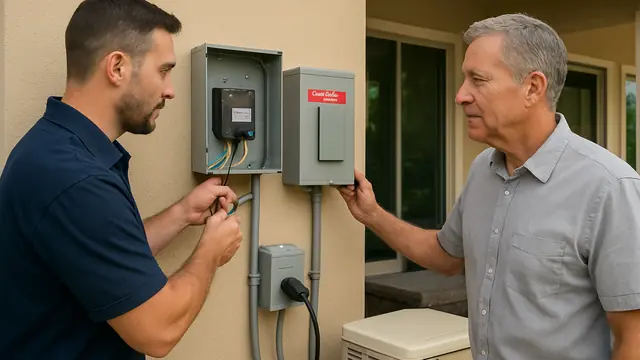
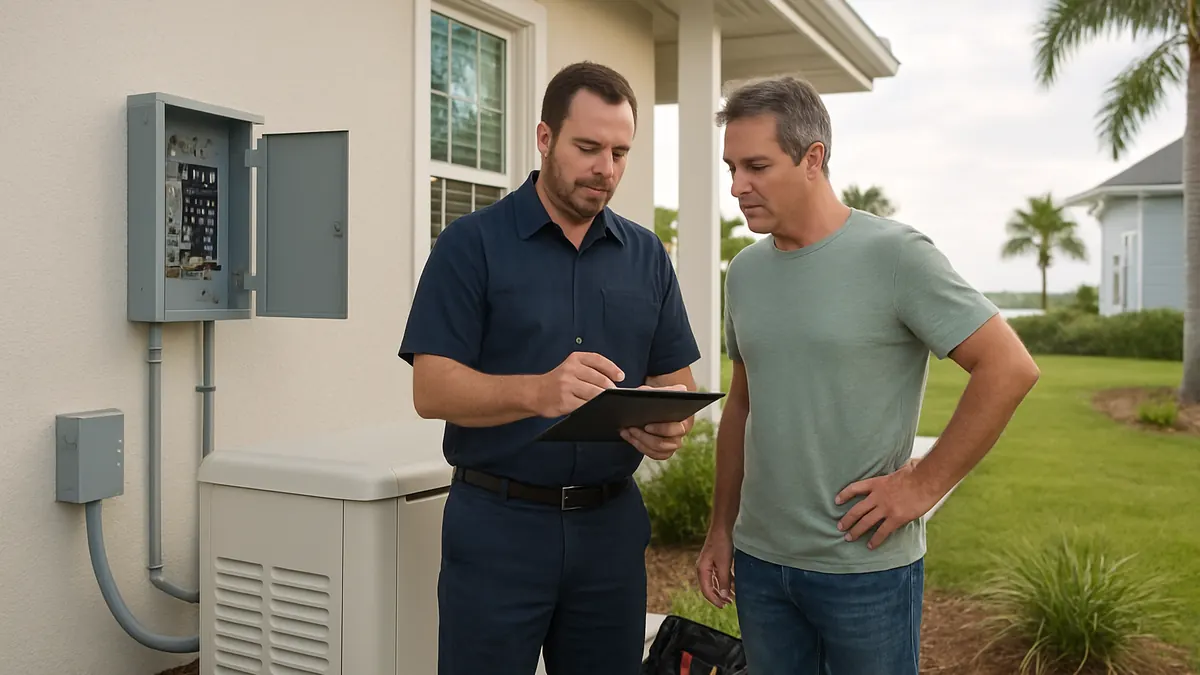
The electrician documents the service, panel arrangement, and requested backup loads, considering each compressor, pump, heating appliance, and specialty circuit.
A calculation estimates normal simultaneous demand. The electrician then examines starting-current requirements for major motors. This determines whether the generator can start the largest compressor while continuing to supply the critical running load.
The design may use a whole-home transfer switch with load controls or isolate selected essential circuits, depending on capacity and priorities.
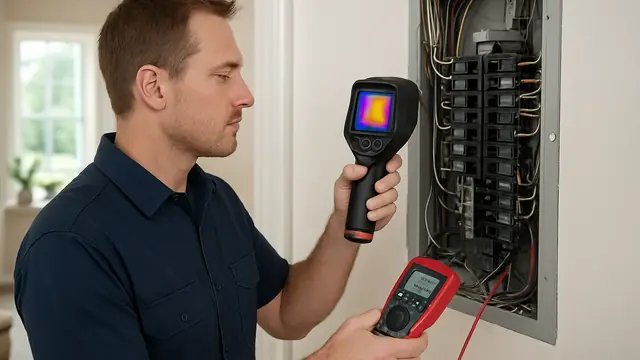
The electrician inspects conductors, breakers, grounding and bonding, transfer equipment, connections, and load controls. Existing-system tests may cover the battery, voltage, frequency, faults, transfer timing, and controlled major-load startup.
Fuel capacity must be confirmed by an appropriately qualified professional. Electrical and fuel evaluations must work together.
Repair and Upgrade Options Beginning With the Smallest Change
The least invasive correction may be revising load priorities. Pool heating, EV charging, electric laundry, or a second HVAC system may be excluded or assigned a lower priority.
Approved load-management controls can stage compressors and temporarily remove optional loads. A failed module can also be repaired or replaced if it no longer follows the intended sequence.
A compatible soft-start device may reduce the initial demand of a specific HVAC compressor. This may improve startup performance, but it cannot correct an inadequate fuel system or insufficient continuous generator capacity.
If output has declined, targeted repairs may include battery replacement, engine maintenance, fuel-system correction, conductor repair, controller replacement, or transfer-switch service.
Replacing the generator becomes appropriate when the required backup plan exceeds its practical capacity after reasonable management measures, or when the equipment is obsolete, unreliable, severely damaged, or unsupported.
Typical Factors That Affect Cost
Cost depends on capacity, transfer-switch rating, load controls, panel configuration, fuel work, electrical distance, trenching, placement, mounting, permits, inspections, and access.
Multiple HVAC systems or panels, solar or battery equipment, and long electrical or fuel routes add complexity.
Maintenance and Prevention Guidance
Follow the exact manufacturer's schedule. Service commonly includes oil and filters, battery testing, ignition, cooling and electrical checks, diagnostics, and transfer-switch testing. Intervals may depend on time and engine hours.
Keep vegetation, debris, and stored items away from the generator so airflow is not restricted. Look for corrosion, insect activity, damaged wiring, fluid leaks, and loose enclosure components.
After a long outage, check the operating hours and arrange any required service. Review system capacity whenever you add a large motor or electric heating load.
An exercise confirms startup, not full-load capacity, so professional load testing remains valuable.
Coordinate Capacity, Motor Starting, and Load Priorities
What size standby generator does your home need in Upper Grand Lagoon? It needs enough continuous output for realistic simultaneous demand, enough reserve for the largest motor startup, adequate fuel delivery, and controls that sequence optional equipment safely. A licensed load assessment and operational test can determine whether the best next step is reprioritizing loads, repairing the current system, adding controls, or installing a different generator.
About this guide: This resource provides general homeowner education, not a remote diagnosis. Actual conditions, code requirements, equipment, and safe repair options must be evaluated at the property.