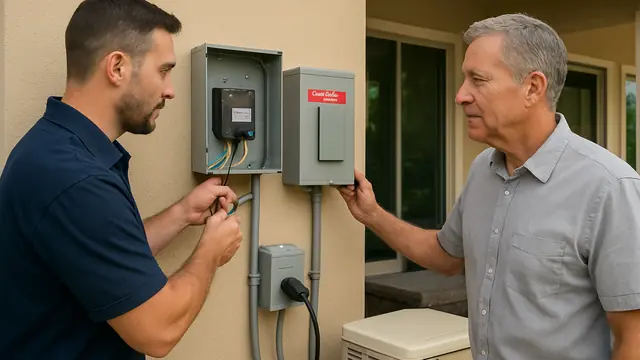
Do not remove an electrical panel cover, touch exposed conductors, bypass protection, or repeatedly reset a fault. Keep clear of smoke, sparks, burning odors, hot equipment, standing water near electricity, and downed lines, then call qualified help.
After a short power interruption, the clocks are flashing, the Wi-Fi is offline, and the smart thermostat no longer communicates with the air conditioner. A television may still turn on, but one input has failed. These scattered problems may indicate a power surge.
Unplug equipment that smells burned, feels hot, sparks, or operates unpredictably. If a breaker trips again after one reset, leave it off. Do not open the panel, handle exposed wiring, or keep cycling damaged equipment. When several devices fail together, a licensed electrician should inspect the system before replacements are connected.
Whole-home surge protection reduces sudden voltage spikes before they reach circuits throughout the property. It also protects many mechanical systems containing sensitive control boards.
What Whole-Home Surge Protection Actually Protects
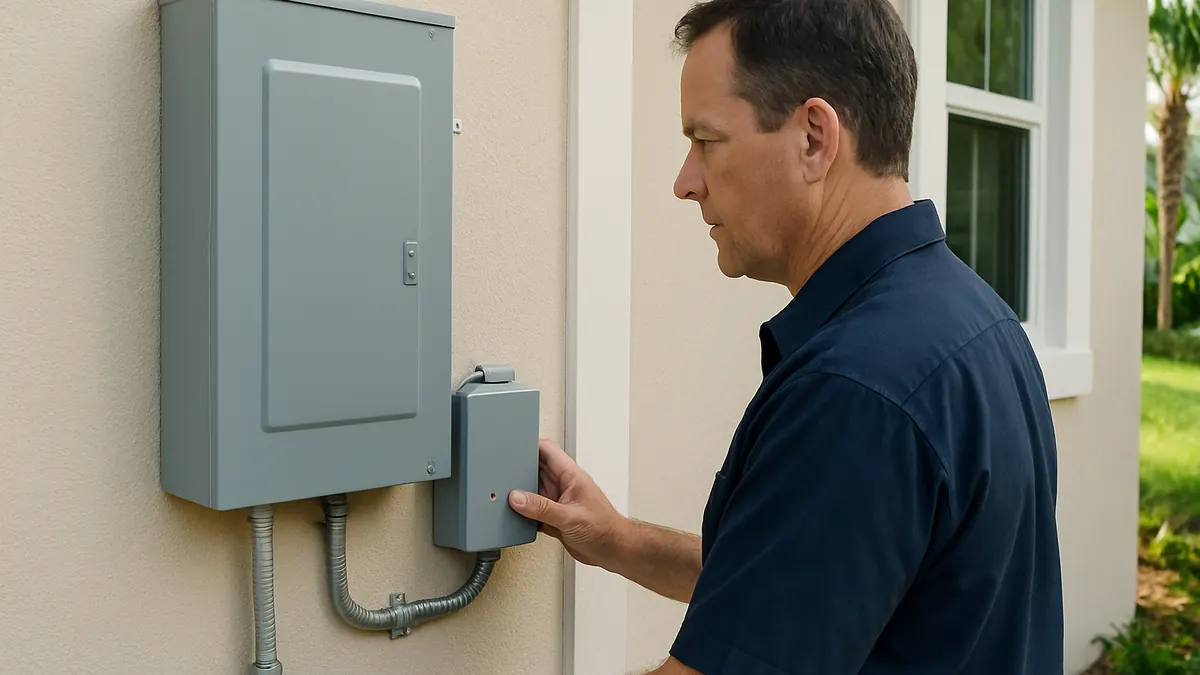
A whole-home surge protective device is installed at the main panel. When voltage rises sharply, it diverts much of the excess energy toward the grounding system.
It can help protect:
- Air conditioners, heat pumps, thermostats, and HVAC control boards
- Refrigerators, freezers, ranges, dishwashers, washers, and dryers
- Televisions, computers, routers, modems, and charging equipment
- Security systems, cameras, electronic locks, and smart-home controls
- Garage-door openers, fans, dimmers, and LED lighting components
- Water-heating controls, pumps, and other hardwired equipment
The protection covers equipment supplied through the panel. Cable, satellite, telephone, antenna, and data lines may need separate protection.
What Surge Protection Does-and Does Not Do
A surge protector reacts to a short increase in voltage-the electrical pressure moving current through wiring. When that pressure rises beyond normal limits, electronics can be damaged before a standard breaker responds.
Whole-home protection does not provide backup power during an outage. It does not correct overloaded circuits, failing breakers, loose wires, poor utility voltage, or damaged equipment. It also cannot guarantee protection against a direct lightning strike or every extreme electrical event.
Its purpose is to limit surge energy reaching downstream equipment.
Common Causes of Surges and Similar Symptoms
Nearby lightning can energize electrical or communication lines without a direct strike. Utility switching and power restoration can also create brief spikes.
Compressors, pumps, refrigerators, and other motors may create smaller internal transients. Repeated events can weaken circuit boards and power supplies.
A loose neutral can produce symptoms that look like surge damage. The neutral helps balance household voltage. If it loosens, some lights may brighten while others dim. Damaged breakers, overheated connections, and grounding defects can cause similar problems.
Safe Checks the Homeowner Can Perform
List affected devices and note whether problems began after a storm, outage, flicker, or operation of a large appliance. Determine whether failures involve one circuit or several areas.
Inspect accessible plugs, cords, receptacle faces, and equipment housings. Stop using anything with melted plastic, dark marks, cracks, unusual warmth, or a burned odor.
If a whole-home protector is present, view only its external status indicator. Do not remove the panel cover. A green light often means active protection; a red light, missing light, or alarm may indicate a fault.
Check plug-in surge strips for a separate protection light. A strip can continue providing electricity after its protective components have failed.
You may reset a normal breaker once if there is no heat, smoke, buzzing, water exposure, or visible damage. If it trips again, leave it off.
What You Should Not Attempt
- Do not install or replace a whole-home device unless qualified. Service equipment may remain energized even with the main breaker off.
- Do not move breakers, place multiple wires under a terminal not designed for them, or use a device that is not compatible with the panel.
- Never install a larger breaker to stop repeated tripping. The existing wiring may not safely carry additional current.
- Do not improvise grounding connections. Grounding and bonding require approved components and continuous paths.
- Do not assume a failed appliance is the only problem. Replacing a control board without checking voltage can cause another failure.
Signs That Make the Problem Urgent
- Schedule prompt service when multiple devices fail together, the protector displays a fault, or equipment continues resetting.
- Urgent signs include a burning smell, smoke, sparks, arcing, crackling from an outlet, buzzing at the panel, melted plugs, scorched receptacles, or an unusually hot panel cover.
- Very bright lights in one area and dim lights in another can indicate a loose neutral. A shock or tingling sensation from an appliance or metal surface is also an urgent warning.
- If smoke or fire is present, leave the area and contact emergency services instead of touching the panel.
How a Licensed Electrician Diagnoses the Problem
The electrician compares the timing and location of failures. One damaged receptacle suggests a local issue, while failures across unrelated circuits may indicate a service-level event.
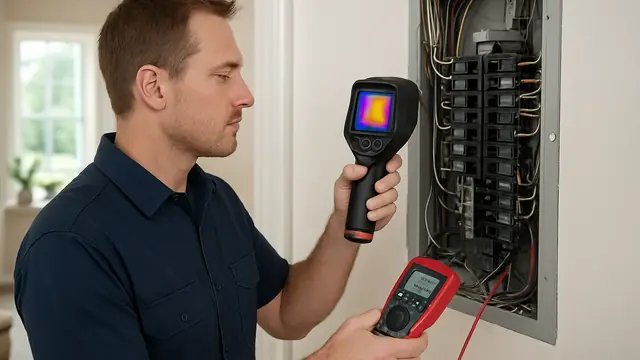
Testing may include incoming voltage, neutral stability, breaker performance, grounding, bonding, panel connections, and affected branch circuits. The electrician looks for loose conductors, corrosion, heat damage, improper connections, and evidence of arcing.
For an existing surge device, the electrician checks the indicator, rating, breaker connection, compatibility, and conductor routing. Short, direct connections generally improve surge performance.
Damaged entertainment or internet equipment may also require evaluation of communication-line entry points.
Repair Options Beginning With the Least Invasive
When the electrical system tests normally and only a plug-in protector has failed, replacing that protector may be the least invasive solution.
If an existing panel-level device has reached the end of its service life, the electrician may replace only the surge protector.
If the property has no whole-home protection, a compatible breaker-mounted or externally mounted device may be installed. Limited panel space may be addressed with approved breaker arrangements or a separate enclosure.
Loose neutrals, grounding defects, damaged breakers, overheated connections, or compromised wiring must be corrected when discovered. Surge protection cannot compensate for an unsafe electrical system.
Panel replacement may be appropriate when the equipment is unsafe, extensively damaged, severely corroded, obsolete, or unable to accept a compliant installation. It should not be automatic when a smaller repair is reasonable.
Factors That Affect Cost
Cost depends on the device type and surge rating, panel brand and condition, available breaker space, accessibility, installation method, grounding and bonding work, permitting, and additional repairs.
Replacing one protector in a sound panel differs from repairing service conductors or a neutral fault. The estimate should distinguish necessary safety work from optional improvements.
Prevention and Maintenance Guidance
Use layered protection. A panel-level device reduces surge energy entering branch circuits, while listed point-of-use protectors add protection for televisions, computers, network hardware, and other sensitive electronics.
Check status indicators periodically and after storms, outages, or unusual electrical events. Replace a unit that shows a fault even if normal power remains available.
Keep the panel dry and accessible. Avoid daisy-chaining power strips. Schedule an inspection for recurring flickering, trips, buzzing, heat, or unexplained failures.
Choose the Right Next Step After an Electrical Event
What does whole-home surge protection actually protect in Upper Grand Lagoon? It helps defend HVAC controls, household appliances, lighting components, smart-home equipment, televisions, computers, internet hardware, and other devices connected through the electrical panel.
If multiple systems failed together, lights are changing brightness, or the protector indicates a fault, do not replace electronics without checking the electrical system. The appropriate repair may be as limited as replacing a protector or as important as correcting a neutral, grounding, wiring, or panel problem.
About this guide: This resource provides general homeowner education, not a remote diagnosis. Actual conditions, code requirements, equipment, and safe repair options must be evaluated at the property.