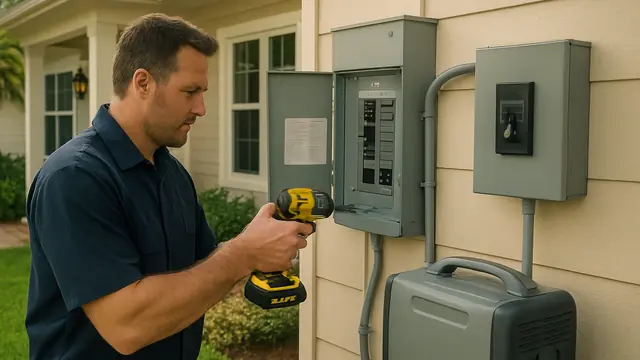
Do not remove an electrical panel cover, touch exposed conductors, bypass protection, or repeatedly reset a fault. Keep clear of smoke, sparks, burning odors, hot equipment, standing water near electricity, and downed lines, then call qualified help.
A storm passes, the power flickers, and everything seems normal-until the thermostat goes blank, the garage-door opener stops responding, or the television develops a new problem. In another home, no dramatic event occurs; appliance control boards simply fail one after another. Both situations can make a Laguna Beach homeowner wonder whether whole-home surge protection would have helped.
The safe response is to disconnect any damaged device, avoid outlets or panels that are hot or discolored, and leave repeatedly tripping breakers off. If several systems changed behavior after one electrical event, call a licensed electrician. The cause may be a surge, but it could also be a loose service connection, unstable neutral, or grounding problem.
Whole-home surge protection is a defensive device, not a repair for existing wiring trouble. Its job is to limit short bursts of excessive voltage before that energy reaches equipment throughout the house.
What Is a Surge?
Your electrical system is designed to operate within a normal voltage range. A surge is a brief increase above that range. Think of voltage as electrical pressure. When that pressure suddenly rises, sensitive components can overheat, puncture, or degrade.
A whole-home surge protective device creates a path for excess energy and redirects much of it toward the grounding system. Some units withstand many smaller events, while a large surge may cause the device to sacrifice its protective components and require replacement.
What Does Whole-Home Surge Protection Actually Protect?
Because the device connects at the electrical panel, it can help protect equipment on circuits throughout the home, including:
- Air-conditioning equipment and electronic thermostats
- Refrigerators, freezers, washers, dryers, dishwashers, and ranges
- Electric and tankless water-heating controls
- Televisions, computers, printers, chargers, and internet equipment
- Security panels, cameras, doorbells, smart switches, and LED lighting
- Garage-door openers and properly connected pool or spa controls
Protection applies to plugged-in and hardwired equipment supplied through the panel. However, surge energy may also enter through cable, phone, satellite, network, or antenna lines. Those systems may need separate protection.
A direct lightning strike or extreme surge can exceed ordinary equipment capacity, so the practical goal is risk reduction rather than guaranteed protection.
Common Sources of Voltage Spikes
Nearby lightning can induce voltage on utility lines without striking the house directly. Utility operations may also create transients when power is switched or restored.
Inside the property, compressors, motors, pumps, and other large loads can contribute smaller surges as they start and stop. Repeated internal events may gradually stress electronics.
Electrical defects can create similar symptoms. A loose neutral may cause voltage to rise on some circuits and fall on others. Loose service conductors, damaged breakers, or poor grounding can also lead to flickering, overheating, and equipment failure.
Because these symptoms overlap, installing a surge protector without inspecting the system may leave the real problem unresolved.
Safe Checks Homeowners Can Perform
Identify whether affected equipment is concentrated in one room or spread across the property. One failed outlet suggests a local circuit problem, while unrelated failures in several areas may indicate a broader event.
Inspect visible cords, plugs, and receptacle faces. Stop using anything with melted plastic, soot, a burned smell, or unusual warmth.
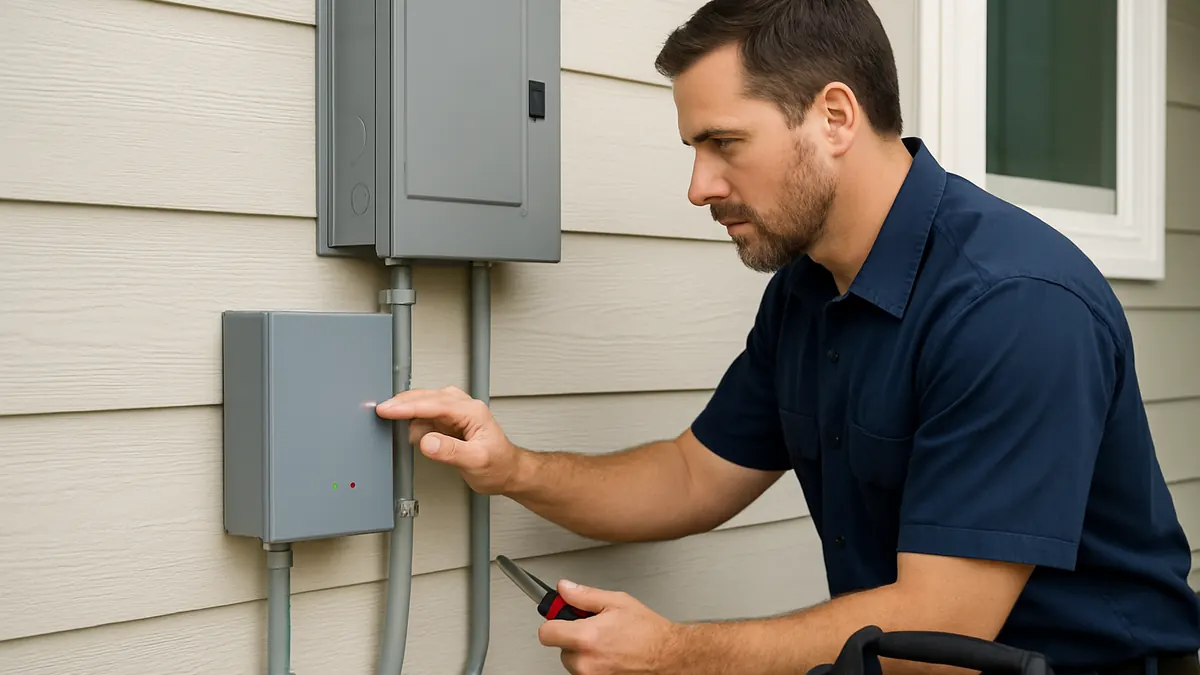
If the panel has an externally visible surge-protection indicator, check it without opening the cover. The label may explain whether the light means "protected," "replace," or "fault." If the indicator is off or red, arrange service.
Check plug-in strips for a protection-status light; continued power does not prove continued protection.
What Not to Attempt
- Do not install or replace a whole-home surge device yourself. Service equipment can contain lethal voltage, including areas that remain energized when the main breaker is off.
- Do not move breakers, double-lug terminals, or splice panel wiring to create space. Equipment must be installed using methods approved for that panel.
- Do not add makeshift grounding connections. Effective grounding and bonding require approved materials, secure connections, and coordination with the service equipment.
- Do not keep resetting a breaker that trips after an outage. It may be responding to damaged wiring or equipment.
- Avoid reconnecting expensive electronics until unusual voltage behavior has been evaluated. A replacement device can be damaged if the underlying problem remains.
When the Problem Is Urgent
Contact an electrician promptly when multiple appliances fail after one event, a whole-home device shows a fault, or electronics repeatedly lose power or settings.
Immediate hazards include smoke, sparks, arcing, a hot panel, a persistent burning odor, buzzing from the panel, extremely bright lights, shock from metal appliance surfaces, or breakers that trip instantly.
If electrical equipment is wet, do not touch it or stand in water nearby. Keep clear and contact qualified help.
How an Electrician Diagnoses the System
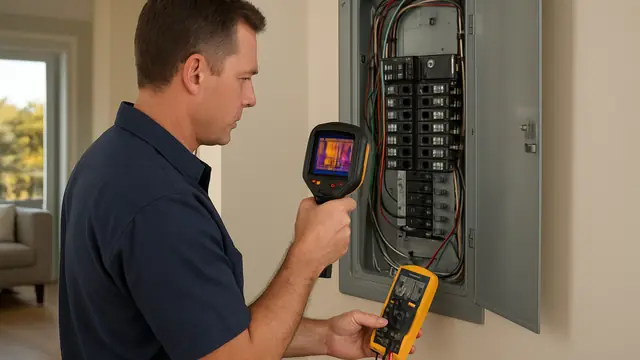
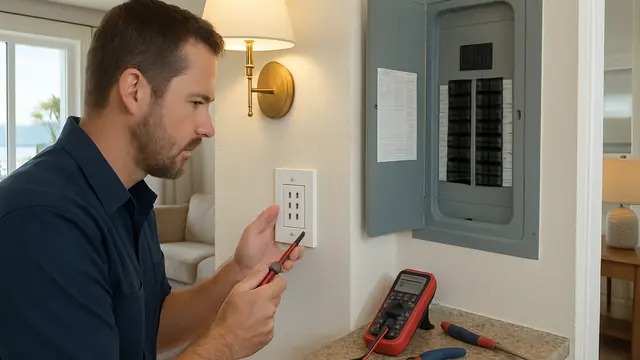
A licensed electrician does more than confirm that an appliance is dead. The inspection begins with service voltage, panel condition, neutral integrity, grounding, bonding, and visible connections.
The electrician may test voltage under different loads, check for loose or overheated conductors, and inspect breakers for damage. If symptoms occur when HVAC or another motor starts, that equipment and circuit may also be evaluated.
For an existing surge device, the electrician checks its indicator, model, rating, installation location, breaker connection, and conductor length. Short, direct conductors improve performance because longer paths can increase the voltage reaching downstream equipment.
Cable, internet, and other low-voltage entry points may also need evaluation.
Repair and Upgrade Options
The least invasive repair may be replacing a failed plug-in protector or correcting one loose receptacle connection when testing shows the rest of the system is stable.
If the whole-home device has reached the end of its service life, it may be replaced independently. The panel does not automatically need replacement.
For a home without panel-level protection, an electrician may install a listed device using a compatible breaker or approved mounting method. If the panel lacks space, approved options may include reorganizing compatible breakers or using an external enclosure.
Grounding, bonding, neutral, breaker, or wiring defects should be repaired first or at the same time. Where the panel is damaged, obsolete, heavily corroded, or unsuitable for safe modification, replacement may be responsible. It should follow a documented evaluation rather than a one-size-fits-all recommendation.
What Determines Cost?
Cost factors include the device rating, panel brand, installation method, breaker space, accessibility, grounding condition, and additional defects.
A sound, accessible panel requires less work than one with damaged breakers, corrosion, service problems, or crowding. Ask for a written explanation of the device, repairs, and limitations.
Prevention and Maintenance
Use whole-home protection together with point-of-use protectors for computers, network equipment, televisions, and other sensitive electronics.
Check indicator lights regularly and after severe storms or outages. Keep the model information and instructions accessible. A protector that has sacrificed itself may show only a small warning light or alarm.
Schedule an inspection when you notice repeated flickering, unexplained equipment failures, overheating, or breaker problems. Surge protection works best when wiring, grounding, and service connections are sound.
Protect the Electronics Built Into Your Home
What does whole-home surge protection actually protect in Laguna Beach? It can help protect nearly every electrical device served by the panel, including hardwired HVAC equipment, appliance control boards, lighting controls, security devices, televisions, and computers.
The strongest approach combines sound grounding and bonding, panel-level protection, point-of-use protection, and professional diagnosis of ongoing voltage problems. If you have experienced equipment failures, flickering, or a failed indicator light, have the system inspected before the next electrical event.
About this guide: This resource provides general homeowner education, not a remote diagnosis. Actual conditions, code requirements, equipment, and safe repair options must be evaluated at the property.