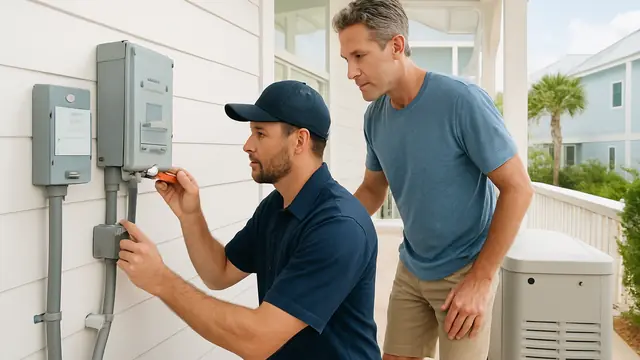
Do not remove an electrical panel cover, touch exposed conductors, bypass protection, or repeatedly reset a fault. Keep clear of smoke, sparks, burning odors, hot equipment, standing water near electricity, and downed lines, then call qualified help.
You may be home during a brief storm when the lights blink, the television turns off, and the air conditioner pauses before restarting. The thermostat may reset, the internet may not reconnect, or an appliance may display an error code. For a homeowner in Latitude Margaritaville Watersound, that pattern can indicate a voltage surge or another electrical disturbance affecting several systems.
The safest immediate action is to unplug any device that smells burned, feels unusually hot, buzzes, or no longer operates normally. Leave a breaker off if it trips repeatedly. Do not remove the electrical panel cover or reconnect expensive electronics until the system has been evaluated when several devices were affected.
Whole-home surge protection reduces the excess voltage reaching equipment throughout the house. It cannot prevent every form of electrical damage, but it provides an important first line of defense for homes filled with electronic controls.
What Whole-Home Surge Protection Actually Protects
A whole-home surge protective device is normally installed at or near the main electrical panel. When a short burst of excessive voltage enters the system, the device diverts much of that energy toward the grounding system instead of allowing the full surge to travel through branch circuits.
It can help reduce damage to heating and cooling equipment, smart thermostats, refrigerators, dishwashers, ranges, washers, dryers, televisions, computers, modems, routers, garage-door openers, lighting controls, security systems, and electronically controlled water heaters.
Many homeowners think surge protection is mainly for televisions and computers. Expensive control boards are hidden inside HVAC equipment and major appliances.
Why Modern Homes Are Vulnerable
Modern equipment frequently uses circuit boards, sensors, variable-speed motors, digital displays, and communication modules. These features improve comfort and performance, but they can be sensitive to voltage spikes.
A surge does not always destroy equipment immediately. One event may weaken a circuit board and cause failure later. Repeated smaller surges can also shorten equipment life without producing an obvious outage.
Common Sources of Electrical Surges
Lightning is the source most people recognize. It does not need to strike the house directly. A nearby strike can induce voltage on utility, cable, or communication lines.
Utility switching may also create voltage spikes when power is restored after an outage or equipment changes occur on the distribution system.
Some surges begin inside the home. Large motors and compressors create electrical disturbances as they start and stop. Air conditioners, refrigerators, and pumps are common examples.
Other problems can imitate surge symptoms. A loose neutral, damaged service connection, poor grounding, or failing breaker may cause flickering, uneven voltage, equipment failure, or overheating. A licensed electrician should identify the cause before assuming that a surge protector alone will solve it.
Safe Checks the Homeowner Can Perform
Note what happened and when. Did the problem follow a storm, outage, or utility interruption? Did equipment in several rooms fail, or is the problem limited to one circuit?
Inspect the outside of affected plugs, cords, and receptacles. Look for melted plastic, dark marks, cracks, or a burned odor. Stop using damaged items.
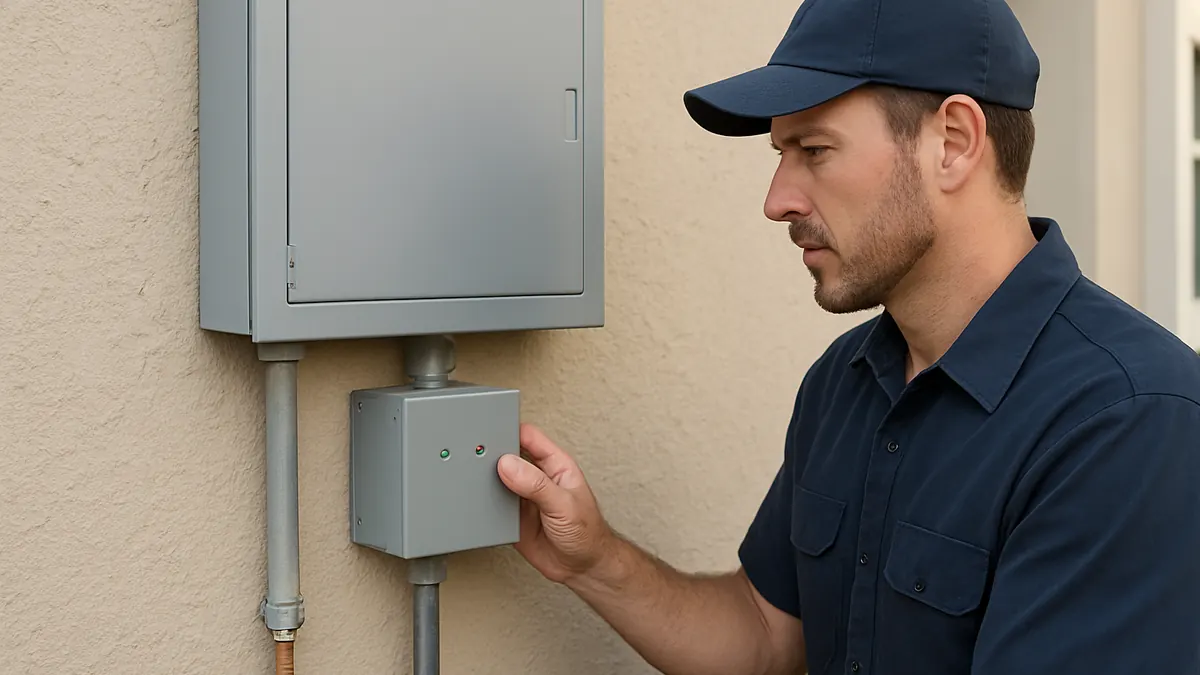
If a whole-home surge protector is installed, look only at its external indicator. Do not remove the panel cover. Many units use a green light for normal operation and a red light, missing light, or alarm for a fault, but meanings vary by model.
Check plug-in surge protectors for a protection-status light. A strip may still supply power after its protective components have failed.
You may reset a normal breaker once when there is no heat, odor, visible damage, or unusual noise. If it trips again, leave it off and schedule service.
What You Should Not Attempt
Do not install a panel-mounted surge protector yourself unless properly qualified. Portions of the electrical service can remain energized even when the main breaker is off.
Do not replace a breaker with a larger one to stop tripping. Breaker size is matched to wiring capacity, and increasing it can allow conductors to overheat.
Do not create an improvised grounding connection to a pipe, fence, or other metal object. Grounding and bonding must be installed correctly for surge protection to work as intended.
Do not assume every power strip offers surge protection. Some strips only provide more outlets, and even a true surge strip protects only connected equipment.
Signs That Make the Problem Urgent
Arrange prompt electrical service when several devices fail after one event, the whole-home protector shows a fault, or electronics continue failing without an obvious reason.
Urgent warning signs include a burning smell, buzzing or crackling sounds, smoke, sparks, a hot panel cover, extremely bright or dim lights, repeated breaker trips, or a tingling sensation from an appliance.
Very bright lights in one area and dim lights in another can indicate a loose neutral. That condition may expose equipment to damaging voltage and should be evaluated immediately.
How a Licensed Electrician Diagnoses the Issue
The electrician asks which devices were affected, whether the event followed an outage or storm, and whether symptoms remain.
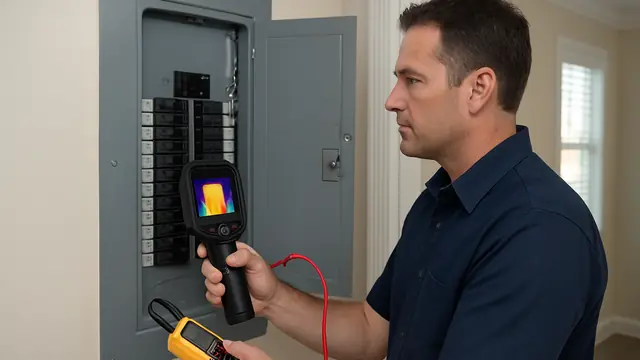
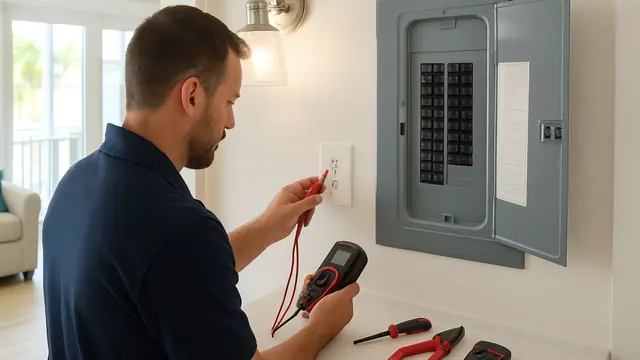
The inspection may include the main panel, breakers, service conductors, neutral connections, grounding electrodes, bonding connections, and affected circuits. Voltage testing can reveal instability, imbalance, or poor connections.
If a whole-home device is present, the electrician checks its indicator, rating, breaker connection, conductor routing, and panel compatibility. Short, direct conductor paths generally improve performance.
Cable, internet, satellite, or other low-voltage entry points may also be considered because surge energy can enter through more than the electrical service.
Repair Options, Starting With the Least Invasive
The least invasive option may be replacing a failed plug-in protector for one sensitive device.
If an existing whole-home protector has reached the end of its service life, replacing only that device may be appropriate when the panel and wiring are otherwise safe.
If no panel-level protection exists, an electrician may install a compatible breaker-style or externally mounted device. When panel space is limited, approved options may include reorganizing compatible breakers or using a separate enclosure.
Grounding, bonding, loose connections, damaged breakers, or neutral problems should be repaired when found. Surge protection cannot compensate for unsafe wiring.
Panel replacement should be considered only when existing equipment is unsafe, severely damaged, obsolete, heavily corroded, or unable to support an approved installation.
Factors That Affect Cost
Cost depends on the protector's type and rating, panel condition, breaker space, installation method, accessibility, grounding condition, permit requirements, and related repairs.
A straightforward installation in a sound panel requires less work than one involving grounding corrections or damaged components. The estimate should separate required safety work from optional improvements.
Prevention and Maintenance
Use layered protection. A whole-home device protects at the panel, while quality point-of-use protectors add another layer for televisions, computers, and networking equipment.
Check indicator lights periodically and after major storms or outages. Keep the model information available so you understand warning lights.
Have grounding and bonding checked when surge protection is installed. Keep the panel dry and accessible. Schedule an inspection if you notice repeated flickering, unexplained electronic failures, or breaker problems.
Protect the Electronic Systems Your Home Relies On
What does whole-home surge protection actually protect in Latitude Margaritaville Watersound? It can help protect components throughout the home, including HVAC controls, appliances, lighting systems, security equipment, televisions, computers, and internet devices.
The strongest approach combines panel-level protection, correct grounding and bonding, point-of-use protectors, and professional diagnosis of ongoing voltage problems. If you have experienced outage-related damage, repeated equipment failures, or a fault indicator, schedule an electrical evaluation before another surge occurs.
About this guide: This resource provides general homeowner education, not a remote diagnosis. Actual conditions, code requirements, equipment, and safe repair options must be evaluated at the property.