Do not remove an electrical panel cover, touch exposed conductors, bypass protection, or repeatedly reset a fault. Keep clear of smoke, sparks, burning odors, hot equipment, standing water near electricity, and downed lines, then call qualified help.
The power goes out for a few seconds, comes back on, and suddenly the Wi-Fi router will not restart. Later, you notice the refrigerator display is flashing and the thermostat has lost its settings. For a Callaway homeowner, that pattern may indicate a power surge or another voltage problem affecting more than one circuit.
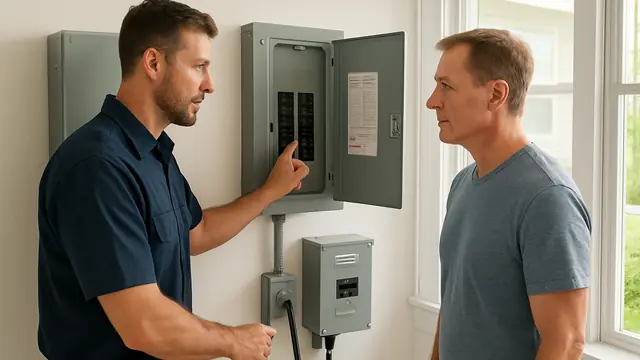
Your first safe step is to unplug malfunctioning electronics and stop using anything that smells burned, feels hot, or has visible damage. Do not repeatedly reset tripping breakers or remove the electrical panel cover. When several devices fail at the same time, a licensed electrician should determine whether the cause was a surge, a loose neutral, a grounding problem, or damaged service equipment.
Whole-home surge protection limits damaging voltage spikes before they spread through the wiring. It protects much more than countertop electronics.
What Does Whole-Home Surge Protection Protect?
A properly installed whole-home surge protective device can help protect most electrical equipment supplied by the main panel. It responds to sudden excess voltage and redirects much of that energy into the grounding system.
It can help protect:
- Central air-conditioning and heat-pump controls
- Refrigerators, freezers, ranges, washers, dryers, and dishwashers
- Televisions, computers, chargers, and office equipment
- Security systems, cameras, smart thermostats, and doorbells
- Garage-door openers, dimmers, fans, and hardwired lighting
Electronic control boards are especially vulnerable. A surge can damage them immediately or weaken them so failure appears later.
Why Surge Protection Matters Beyond Storms
Many homeowners associate surges only with lightning. Lightning is a major source, but voltage spikes may also occur when utility power is switched, when service is restored after an outage, or when equipment fails on the electrical distribution system.
Surges can originate inside the house as well. When a large motor switches on or off, the changing electrical demand can create a smaller transient voltage event. Air conditioners, refrigerators, pumps, and shop equipment are common examples.
Repeated internal surges can gradually stress electronic components. A whole-home protector acts near the service entrance, while point-of-use protection adds a second layer for especially valuable electronics.
Safe Checks You Can Perform
Begin with the timing. Did the problem happen immediately after an outage, thunderstorm, or brief flicker? Did one device fail, or did unrelated devices in different rooms stop working?
Check the outside of plugs, receptacles, and cords. Look for discoloration, melted plastic, or a burned odor. Leave damaged equipment unplugged.
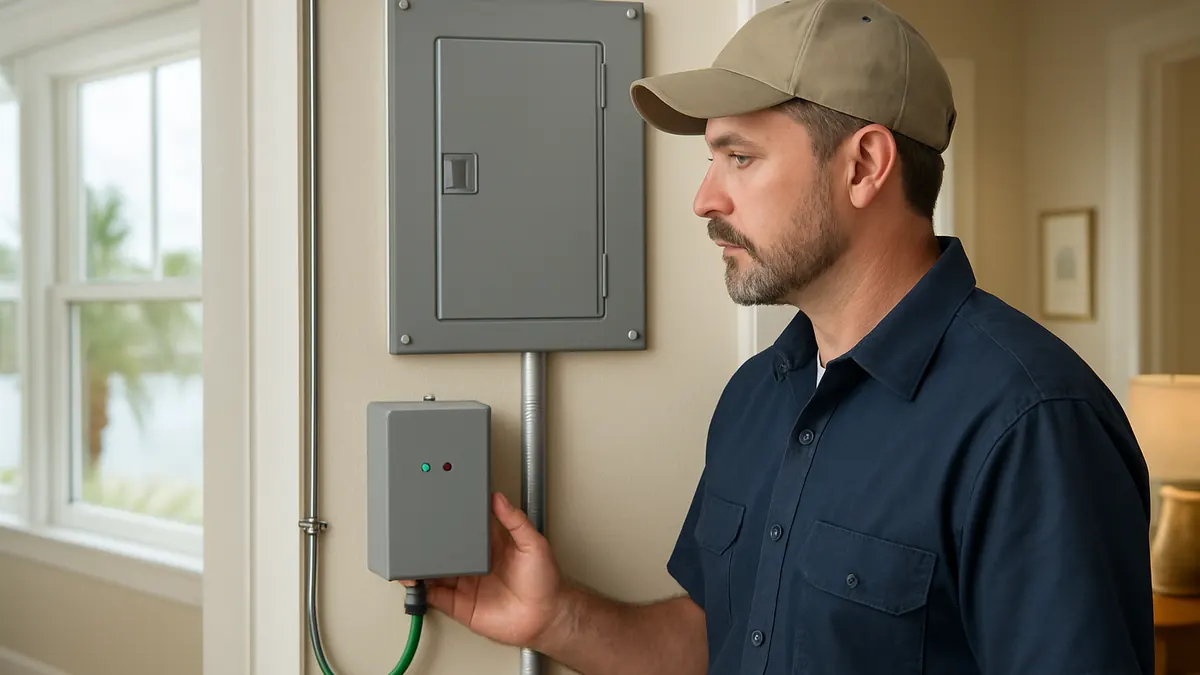
If your home already has a whole-home surge protector, locate only the visible status light. Do not touch wiring or remove covers. Depending on the model, a changed light, missing light, or alarm may mean the device has sacrificed itself and no longer provides protection.
Check plug-in protectors for separate "power" and "protected" lights. A strip may still supply power after its protective components fail.
You may reset a normal breaker once if there is no heat, odor, noise, or damage. If it trips again, leave it off.
What Homeowners Should Not Do
Do not work inside the main panel. Even when the main breaker is off, portions of the service equipment may remain energized.
Do not connect a protector to an improvised breaker, double-tapped terminal, or extension cord. Panel-mounted devices must be compatible with the electrical equipment and installed according to their listing.
- Do not attach a makeshift grounding wire to a pipe, fence, or other convenient metal object. Grounding and bonding must be designed as a coordinated system.
- Never replace a breaker with a higher amperage rating to stop tripping. The breaker protects the wiring from overheating.
- Finally, do not rely on ordinary outlet strips for whole-house protection. A strip protects only connected devices and has limited capacity.
Warning Signs Requiring Prompt Attention
Schedule electrical service quickly when a surge device indicates failure, several appliances malfunction after power restoration, or sensitive electronics continue failing without an obvious cause.
Urgent warning signs include a burning smell, crackling or snapping sounds, smoke, sparks, warm panel covers, very bright or dim lights, repeated breaker trips, or tingling from an appliance.
Very bright lights in one area and dim lights in another can indicate a neutral problem rather than an ordinary surge. That condition can expose equipment to damaging voltage and deserves immediate evaluation.
How a Licensed Electrician Finds the Cause
Diagnosis begins with the event history. The electrician will ask which devices failed, whether utility power was interrupted, and whether the issue is ongoing.
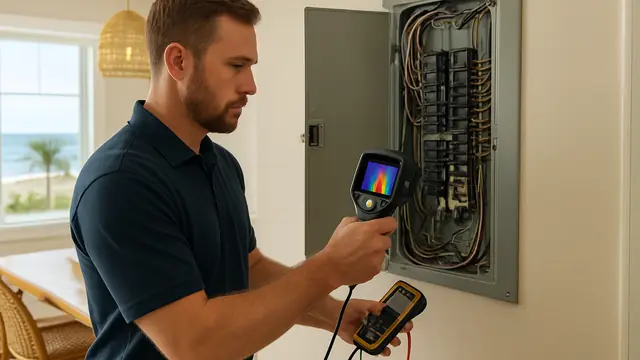
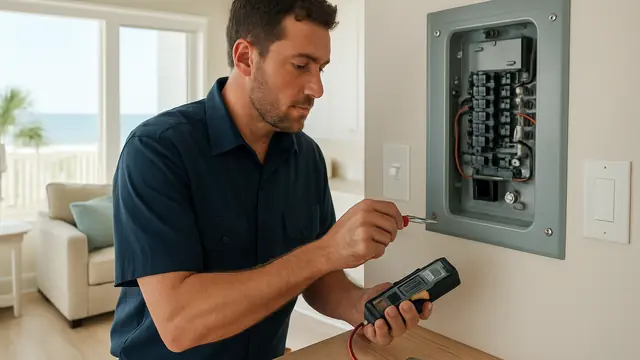
The panel is inspected for heat damage, loose connections, corrosion, improper breaker use, and available space. The electrician may test service voltage, neutral stability, grounding, bonding, and affected branch circuits.
If a surge protector is installed, the electrician checks its indicator, specifications, conductor routing, breaker connection, and panel compatibility. Short, direct connections matter because unnecessary conductor length can reduce performance.
Cable, phone, antenna, satellite, and network lines can also carry surge energy. When equipment has failed, circuits should be tested before replacements are connected.
Repair Options, Starting With the Least Invasive
If only a plug-in protector has reached the end of its useful life, replacing it may be sufficient for that device. Choose a listed product appropriate for the connected equipment.
When a whole-home unit has failed but the panel is otherwise safe and compatible, the electrician may replace only the surge protective device. This is often simpler than panel replacement.
If no whole-home protection exists, a compatible panel-mounted device may be installed using an available breaker position or another approved method. Where panel space is limited, the electrician can evaluate manufacturer-approved options rather than immediately recommending a new panel.
Grounding and bonding defects should be corrected when found. Loose neutrals, damaged breakers, overheated connections, or compromised wiring also require repair because surge protection cannot correct those hazards.
Panel replacement becomes reasonable when the equipment is unsafe, severely damaged, obsolete, corroded, or unable to accept an approved installation. The recommendation should be based on documented conditions.
Factors That Affect Cost
Cost depends on device type, surge capacity, panel configuration, breaker availability, accessibility, grounding condition, and whether related repairs are needed.
Labor may increase when the panel is crowded, weather-damaged, difficult to access, or equipped with obsolete components. Ask for an explanation separating required safety repairs from optional upgrades.
Preventing Future Damage
Use a layered strategy. Install panel-level protection for the electrical system and point-of-use protection for computers, televisions, network hardware, and other sensitive electronics.
Check status lights after major outages or storms. Keep the device documentation so you know what each indicator means. Replace failed plug-in units rather than continuing to use them as ordinary power strips.
Have grounding, bonding, and panel connections inspected when protection is added. Avoid overloading outlet strips, and keep appliances connected to properly grounded receptacles.
Before severe weather arrives, unplugging nonessential electronics can provide another layer of protection when it can be done safely. Do not handle cords during active lightning or when water is present.
Take the Next Step Before Another Electrical Event
What does whole-home surge protection actually protect in Callaway? It helps protect electronic controls, motors, appliances, lighting systems, and connected devices throughout the home by reducing the voltage spike that reaches them.
It is most effective as part of a properly grounded electrical system and a layered protection plan. If your property has experienced repeated equipment failures, outage-related damage, or an inactive surge-device indicator, schedule an electrical inspection before replacing more electronics.
About this guide: This resource provides general homeowner education, not a remote diagnosis. Actual conditions, code requirements, equipment, and safe repair options must be evaluated at the property.