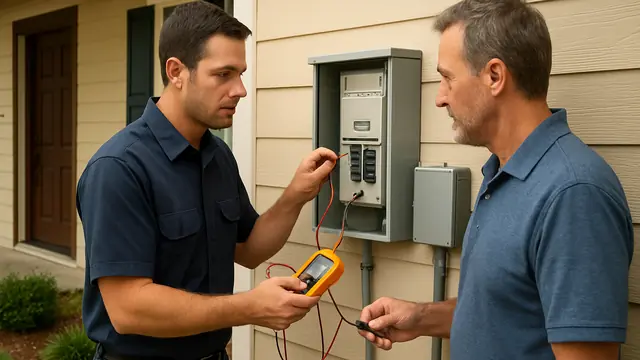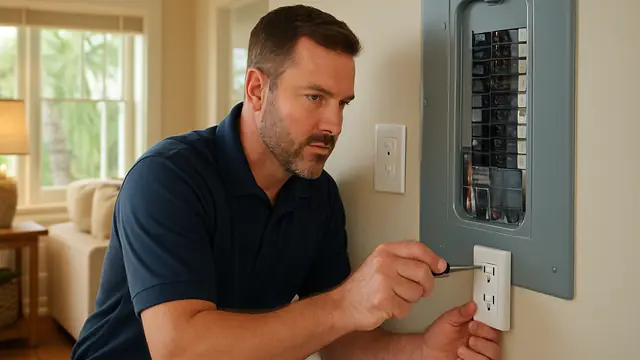
Do not remove an electrical panel cover, touch exposed conductors, bypass protection, or repeatedly reset a fault. Keep clear of smoke, sparks, burning odors, hot equipment, standing water near electricity, and downed lines, then call qualified help.
You turn on the oven while the air conditioner is running, and a breaker trips. Later, lights in two rooms flicker when the outdoor unit starts. Perhaps you also hear a faint buzz near the electrical panel that was not there before. In a Camp Creek home, these symptoms may appear briefly and then disappear, making them easy to dismiss. Repeated changes in how the electrical system behaves usually mean the panel, a circuit, an appliance, or a connection needs professional attention.
The safe first step is to reduce the load. Unplug unnecessary devices, stop using the appliance connected to the problem, and leave the panel cover closed. You may reset a tripped breaker once when there is no smoke, burning odor, sparking, unusual heat, or visible damage. If it trips again, leave it off and contact a licensed electrician.
Seven Signs Your Electrical Panel Needs an Inspection in Camp Creek
1. The Same Breaker Trips Repeatedly
A circuit breaker shuts off power when electrical current rises above a safe level. One trip may happen because too many high-demand devices were used on the same circuit. Repeated tripping can point to an overloaded circuit, damaged appliance, short circuit, ground fault, loose wiring, or worn breaker.
Write down what was operating each time the breaker opened. That pattern can help the electrician locate the problem.
2. Lights Flicker in Multiple Rooms
A loose bulb can make one light flicker. When several lights dim or pulse together, the cause may be farther upstream. Possible causes include a loose panel connection, overloaded service, damaged neutral conductor, failing breaker, or voltage problem.
A brief dip when a large motor starts can happen, but frequent or widespread flickering should be evaluated. Lights that alternate between unusually bright and dim are especially important to report.
3. The Panel Makes Buzzing, Crackling, or Popping Sounds
A properly operating panel is generally quiet. Persistent buzzing, crackling, sizzling, or popping can indicate a loose termination or electrical arcing. Arcing means electricity is jumping across a gap instead of flowing through a tight connection. That action creates concentrated heat.
Do not remove the interior cover to find the sound. If noise is combined with smoke, odor, heat, or sparks, keep away and treat the situation as urgent.
4. You Smell Burning Plastic or Notice Heat
A panel should not produce a sharp, hot-plastic odor. Discoloration, melted material, scorched marks, or unusual warmth may result from excessive current, corrosion, a loose conductor, or a damaged breaker.
A connection can still carry power while overheating, so working lights do not prove the system is safe. Do not touch a panel that appears hot or damaged. Active smoke or fire requires emergency services.
5. A Breaker Will Not Reset Normally
A breaker handle should move firmly from tripped to off and then back to on. A handle that feels loose, stays between positions, trips immediately, or will not remain on may be defective or may be responding to an active fault.
Turn off and unplug equipment on that circuit before one reset attempt. If the breaker will not hold, leave it off. Never tape, wedge, or repeatedly force it on.
6. The Home Relies on Too Many Power Strips
Power strips provide more plug openings, but they do not increase the capacity of the circuit behind the wall. If a room depends on several strips or permanent extension cords, the home may need additional receptacles or dedicated circuits.
An electrician can determine whether the circuit is overloaded or needs a dedicated circuit.
7. The Panel Shows Damage, Corrosion, or Questionable Alterations
Visible rust, missing filler plates, damaged covers, unlabeled breakers, mismatched components, or improvised work are reasons to schedule an inspection. Filler plates close unused openings so energized parts are not exposed.
Two wires under a terminal designed for one can create a loose connection. Breaker compatibility must be verified using manufacturer specifications.
Safe Checks a Homeowner Can Perform
Keep checks outside the panel. Note the breaker number, affected rooms, time of day, and appliances operating when the symptom occurs. Check accessible cords, plugs, switches, and receptacles for cracks, discoloration, warmth, or odor.
Unplug nonessential equipment and see whether the problem stops. Do not continue testing if you notice smoke, sparking, severe heat, or a strong burning smell.
What You Should Not Attempt
Do not remove the panel's interior cover, tighten terminals, replace breakers, rearrange wires, or test energized components yourself. Conductors entering the panel from the utility may remain energized even when the main breaker is off.
Do not replace a tripping breaker with a higher-amp model. The breaker must match the wire's safe carrying capacity. A larger breaker can allow the wire to overheat.
Never spray cleaner, lubricant, rust treatment, or moisture-displacing chemicals inside electrical equipment.
Signs That Make the Problem Urgent
Request prompt service for repeated trips, multi-room flickering, persistent noise, corrosion, or a breaker that will not stay reset. Symptoms beginning after water intrusion, storm damage, remodeling, or new equipment also deserve quick attention.
Smoke, flames, active sparking, a strong burning odor, or a panel too hot to approach are emergencies. Keep people away and call emergency services when fire or smoke is present.
How a Licensed Electrician Diagnoses the Problem
The electrician reviews the symptom pattern and recent changes in the home. The inspection may include the enclosure, breakers, conductor terminations, internal bus, grounding and bonding, corrosion, and evidence of overheating.
The internal bus distributes power to the breakers. Grounding and bonding help protective devices operate during a fault.
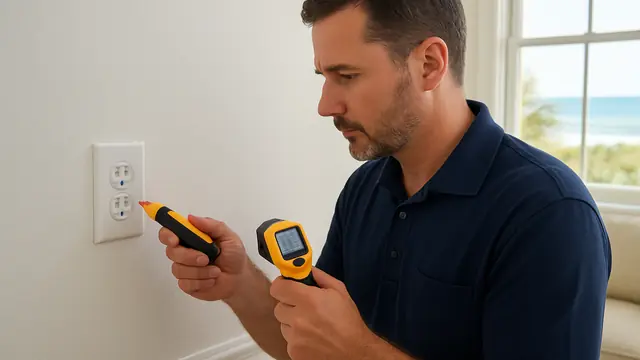
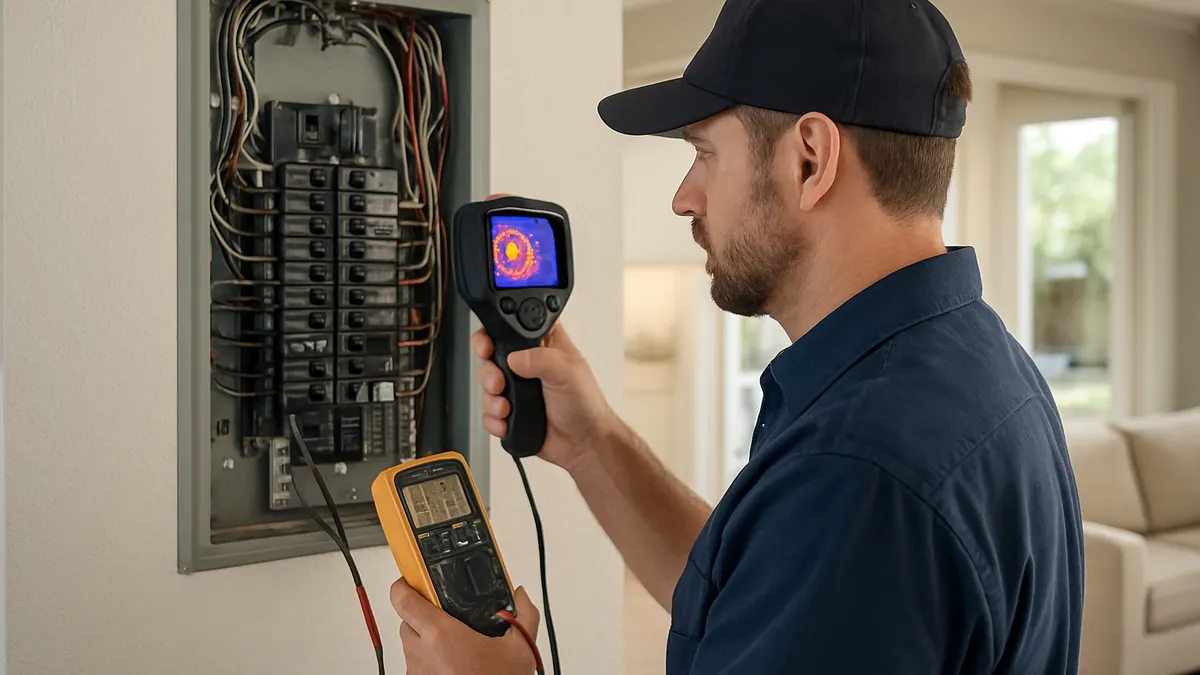
Testing may include voltage readings, current measurements, thermal imaging, and circuit isolation. If household demand may exceed service capacity, the electrician may perform a load calculation. This helps determine whether the source is an appliance, branch circuit, breaker, panel, service connection, or utility issue.
Repair Options From Least to Most Extensive
A limited problem may be corrected by securing an approved connection, replacing one damaged compatible breaker, repairing a branch circuit, or removing a defective appliance from service. An overloaded area may need a dedicated circuit instead of a full panel replacement.
Other options include adding receptacles, installing a subpanel, or using approved load management. Panel or service replacement is considered when internal damage, extensive corrosion, insufficient capacity, or unavailable parts make targeted repair impractical.
Factors That Affect Cost
Cost depends on diagnostic time, panel accessibility, number of affected circuits, wiring condition, compatible-part availability, permitting, and utility coordination. Replacing one breaker is a much smaller project than adding circuits or upgrading the service.
Hidden damage and previous alterations can increase the scope. Ask for a written explanation of the finding and repair choices.
Prevention and Maintenance
Keep the panel dry, accessible, and clear of storage. Maintain a readable circuit directory. Use licensed electricians for additions and remodeling. Schedule an inspection after water exposure, recurring symptoms, major electrical additions, or when the panel's history is unknown.
Schedule an Electrical Panel Inspection in Camp Creek
Seven signs your electrical panel needs an inspection in Camp Creek include repeated breaker trips, widespread flickering, unusual sounds, heat or burning odor, breakers that will not reset, excessive use of power strips, and visible damage or questionable alterations. These symptoms do not always require replacement, but they do require an accurate diagnosis.
About this guide: This resource provides general homeowner education, not a remote diagnosis. Actual conditions, code requirements, equipment, and safe repair options must be evaluated at the property.