Do not remove an electrical panel cover, touch exposed conductors, bypass protection, or repeatedly reset a fault. Keep clear of smoke, sparks, burning odors, hot equipment, standing water near electricity, and downed lines, then call qualified help.
You may have noticed the lights dim when the air conditioner starts, heard buzzing near the breaker box, or reset the same breaker more than once. In a 30A home, those symptoms can seem minor when power returns immediately. However, the electrical panel distributes electricity to nearly every circuit, so recurring changes deserve attention.
The safest immediate action is to reduce the load on the affected circuit, unplug any appliance connected to the problem, and leave the panel cover closed. You may reset a tripped breaker once if there is no smoke, burning odor, heat, sparking, or visible damage. If it trips again, leave it off and call a licensed electrician.
An inspection does not automatically mean replacement. A loose connection, overloaded circuit, worn breaker, damaged wire, or moisture-related corrosion may be repairable.
Seven Signs Your Electrical Panel Needs an Inspection in 30A
1. The Same Breaker Keeps Tripping
A breaker opens a circuit when current reaches an unsafe level. One trip may occur because several high-demand appliances ran together. Repeated trips can indicate an overload, failing appliance, short circuit, ground fault, damaged wiring, or weak breaker.
Note what was operating when the trip occurred. High-demand appliances can overload a shared circuit. Do not keep resetting the breaker without finding the cause.
2. Lights Flicker or Dim Across Several Rooms
A small, momentary dip can occur when a motor starts. Frequent or pronounced dimming is different. If lights in multiple rooms flicker when the HVAC system, refrigerator, pump, or another large appliance starts, the cause may be a loose connection, overloaded service, failing breaker, or voltage problem.
Flickering at one lamp may be a bulb or fixture issue. Flickering throughout the home points to a broader concern.
3. The Panel Buzzes, Crackles, or Pops
A healthy panel is usually quiet. Buzzing, crackling, or popping may indicate a loose connection or electrical arcing, which means electricity is jumping across a gap instead of flowing through a secure connection. That creates concentrated heat.
Do not remove the cover to locate the sound. Arrange prompt service when the noise persists.
4. You Notice Heat, Discoloration, or a Burning Odor
The panel should not feel unusually hot. Melted plastic, dark marks, rust-colored staining, or an odor similar to hot insulation are urgent signs. Causes can include excessive current, loose terminals, corrosion, or damaged components.
Do not touch a panel that is smoking, sparking, or too hot to approach. Call emergency services for active fire or smoke, then contact an electrician.
5. A Breaker Feels Loose or Will Not Stay Reset
Breaker handles should move firmly between positions. A handle that feels loose, rests between positions, will not reset, or trips immediately may be damaged or responding to a serious circuit fault.
Never tape or hold a breaker in the on position. It is a safety device, and forcing it closed can allow dangerous current to continue flowing.
6. You Depend Heavily on Extension Cords and Power Strips
Power strips add plug spaces, but they do not increase circuit capacity. Frequent extension-cord use may show that the home lacks enough receptacles or dedicated circuits. Several appliances on one strip can still overload the wiring.
An electrician can determine whether additional receptacles or circuits are appropriate.
7. The Panel Is Damaged or Has an Unknown History
Age alone does not prove a panel is unsafe, but older or altered equipment deserves evaluation. Warning signs include corrosion, missing labels, open spaces, damaged covers, crowded wiring, or evidence of improvised changes.
Two wires placed under a breaker designed for one are commonly called a double tap. Some equipment allows specific multi-wire arrangements, but many breakers do not. A licensed electrician must verify the exact equipment.
Why Electrical Panel Problems Develop
Panel issues commonly result from overloads, loose connections, worn breakers, moisture exposure, or household demand that has outgrown the system. New equipment or renovations may require dedicated circuits or additional service capacity. The correct solution depends on panel capacity, conductor sizes, grounding, and the calculated household load.
Safe Checks You Can Perform
Without opening the panel, note which breaker trips, what was running, whether one room or several are affected, and how often it happens. Check accessible plugs, cords, switches, and appliances for unusual warmth, damage, or odor. Reduce the load by unplugging equipment, and share your observations with the electrician.
What You Should Not Attempt
Do not remove the panel's inner cover, tighten terminals, replace breakers, move conductors, or test energized components yourself. Even with the main breaker off, parts of many panels remain energized from the utility supply.
Never install a larger breaker simply to stop tripping. Breaker size must match the wiring and equipment. An oversized breaker may let conductors overheat before protection operates.
Do not spray cleaners, rust treatments, or moisture-displacing products inside the panel.
When the Problem Is Urgent
Request prompt service for repeated trips, widespread flickering, persistent buzzing, corrosion, or a breaker that will not stay set. Smoke, sparks, flames, a strong burning odor, or severe heat require emergency action. Act quickly if symptoms began after water intrusion, storm damage, renovation work, or installation of major equipment.
How a Licensed Electrician Diagnoses the Problem
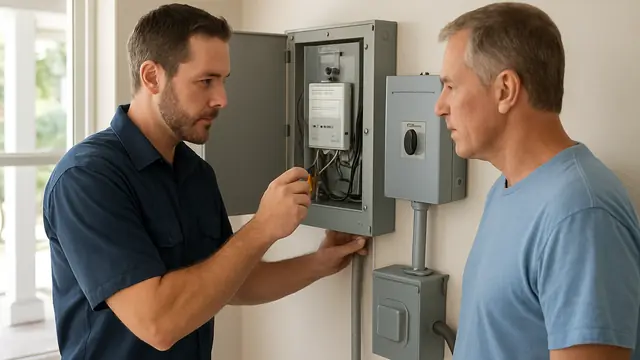
The electrician reviews when the symptoms occur and any recent changes. The inspection may cover the enclosure, breakers, conductor terminations, grounding and bonding, labels, corrosion, and signs of overheating or arcing.
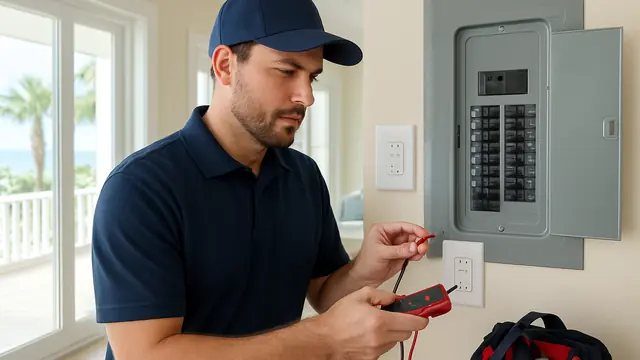
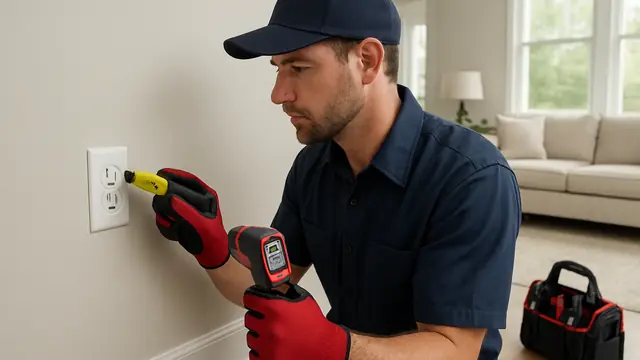
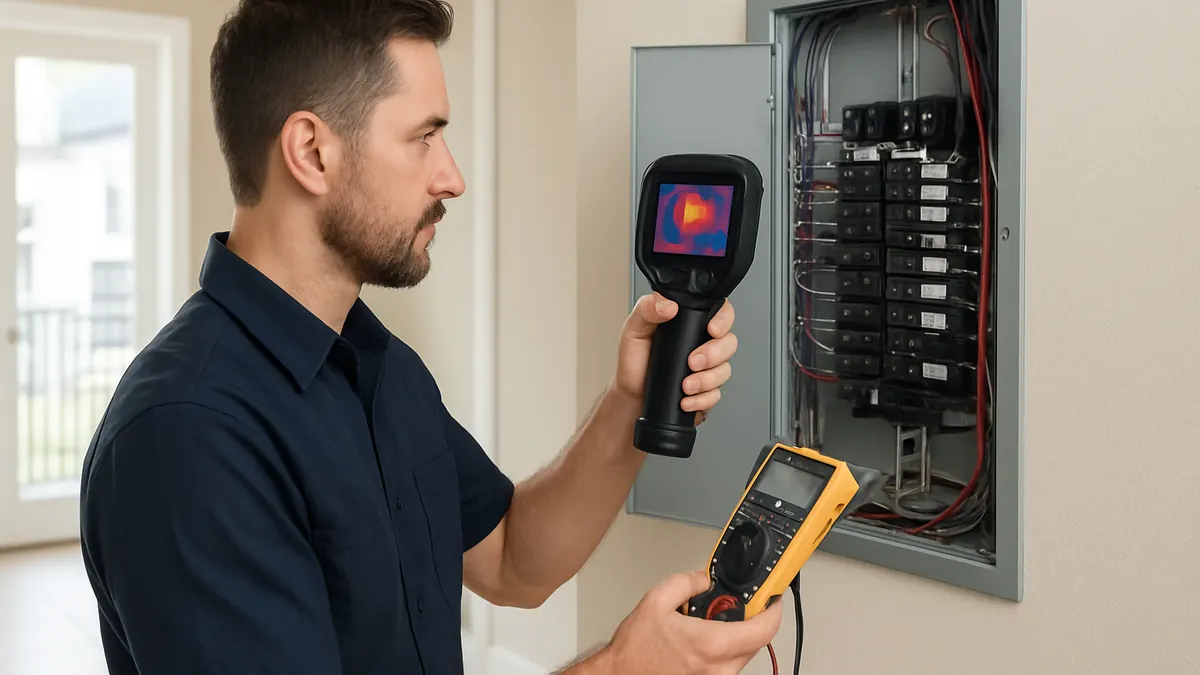
Testing may include voltage, current, circuit-load measurements, thermal imaging, and a load calculation. The electrician determines whether the trouble begins in an appliance, branch circuit, panel, meter connection, or utility service. That distinction prevents unnecessary replacement.
Repair Options From Least to Most Extensive
The simplest repair may be correcting a loose connection, replacing one damaged breaker with an approved compatible model, repairing a branch circuit, or addressing a faulty appliance. An overloaded appliance circuit may need a new dedicated circuit.
If demand has increased, options may include a subpanel, dedicated circuits, or approved load management. Panel or service replacement is considered when internal parts are damaged, corrosion is extensive, compatible parts are unavailable, capacity is inadequate, or safe repair is not practical.
Factors That Affect Cost
Cost depends on diagnostic time, panel accessibility, number of affected circuits, wiring condition, compatible-part availability, permitting, and whether utility coordination is required. Replacing one approved breaker is very different from adding circuits or upgrading the service.
Heat damage, corrosion, or previous modifications may expand the work. A written scope should identify the problem and practical options.
Prevention and Maintenance
Keep the panel accessible, dry, and clear of storage. Maintain a readable circuit directory when work is performed. Schedule an inspection after water exposure, major renovations, repeated symptoms, or installation of high-demand equipment.
Use licensed electricians for additions so breaker ratings, conductor sizes, grounding, and load calculations remain coordinated.
Homeowner FAQs
Can I reset a breaker myself?
You may reset it once if there is no heat, odor, smoke, sparking, or damage. Move the handle fully off and then on. If it trips again, leave it off.
Does repeated tripping mean the panel is bad?
Not necessarily. The cause may be an overload, short circuit, ground fault, damaged wiring, or failing appliance. Testing identifies which component needs attention.
Why does the panel buzz when the air conditioner runs?
The added load may reveal a loose connection, worn breaker, equipment problem, or voltage issue. Because buzzing can involve arcing, schedule an inspection.
Must every old panel be replaced?
No. Condition, capacity, available parts, installation quality, and current demand matter more than age alone.
Can circuits be added without replacing the panel?
Sometimes. The panel must have suitable capacity, approved spaces, and compatible equipment. A subpanel or load management may also be possible.
Schedule an Electrical Panel Inspection in 30A
Seven signs your electrical panel needs an inspection in 30A include repeated trips, widespread flickering, unusual sounds, overheating, unstable breakers, excessive extension-cord use, and visible damage. These signs do not automatically require complete replacement, but they should not be ignored.
About this guide: This resource provides general homeowner education, not a remote diagnosis. Actual conditions, code requirements, equipment, and safe repair options must be evaluated at the property.