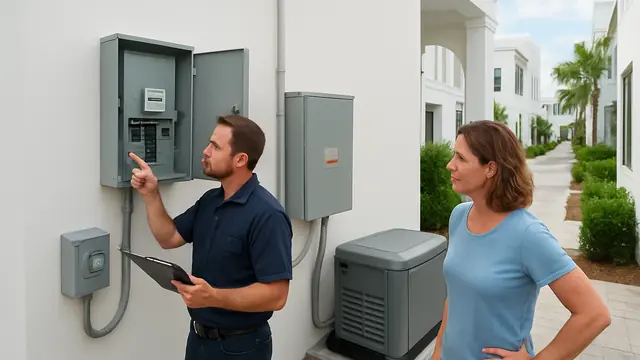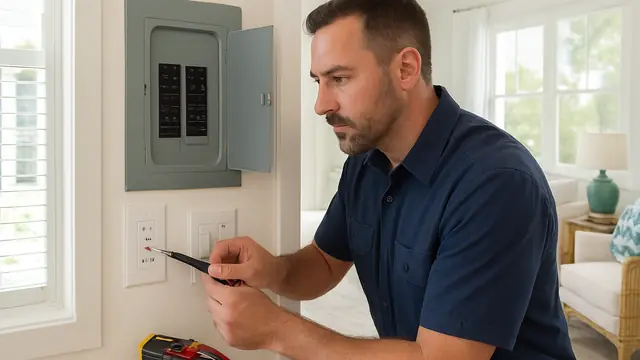
Do not remove an electrical panel cover, touch exposed conductors, bypass protection, or repeatedly reset a fault. Keep clear of smoke, sparks, burning odors, hot equipment, standing water near electricity, and downed lines, then call qualified help.
Imagine arriving at your Alys Beach property and finding that the kitchen breaker has tripped, the lights briefly pulse when the HVAC equipment starts, or a faint electrical smell appears near the utility area. The power may still work, but those changes are the panel's way of showing that a circuit, connection, breaker, or service component may be under stress.
Your first safe step is simple: stop using the appliance or circuit connected to the symptom. Leave the panel cover in place. A tripped breaker may be reset once only when there is no heat, burning odor, smoke, sparking, or visible damage. If the breaker trips again or immediately refuses to reset, leave it off and arrange an electrical inspection.
Seven Signs Your Electrical Panel Needs an Inspection in Alys Beach
1. A Breaker Trips More Than Once
Breakers protect wiring from excessive current. When one opens repeatedly, it may be responding to too many devices on the circuit, a defective appliance, damaged wiring, a short circuit, or a ground fault. A worn breaker is also possible, but it should not be assumed without testing.
Record what was running each time. If one appliance repeatedly triggers the trip, stop using it and arrange service.
2. Several Lights Flicker at the Same Time
A loose bulb can make one fixture flicker. When lights in separate rooms pulse together, the issue may be closer to the panel, service connection, or incoming voltage, especially when a large motor starts. The pattern and number of affected rooms help distinguish a fixture problem from a broader electrical issue.
3. You Hear Buzzing or Crackling
Electrical panels should not produce persistent buzzing, sizzling, or crackling. These sounds can develop when a breaker is failing or a connection is loose enough for electricity to arc across a gap. Arcing generates concentrated heat and can damage the surfaces that should carry current securely.
Stand back and listen without opening the enclosure. If the sound is accompanied by heat, odor, smoke, or visible sparking, treat the situation as urgent.
4. The Panel or a Breaker Is Unusually Warm
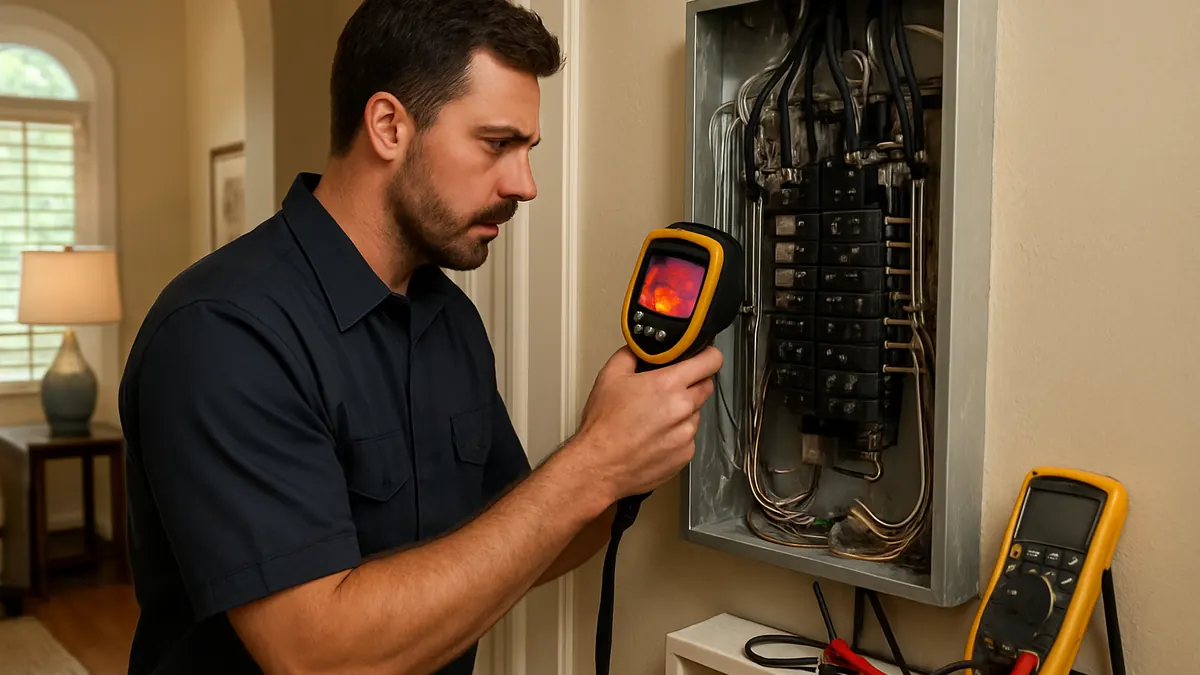
A panel may feel slightly different from the surrounding wall while circuits are loaded, but obvious heat is not normal. A hot cover, warm breaker area, discoloration, melted plastic, or sharp "hot electronics" odor may indicate resistance at a loose connection or excessive current.
A circuit can continue working while a deteriorating terminal produces dangerous heat. Do not remove the cover or touch suspicious components.
5. Breakers Will Not Reset Firmly
A breaker should click positively into its operating position. A handle that feels loose, remains in the middle, trips immediately, or will not stay on may be damaged or may be detecting an active fault.
Turn off or unplug equipment on that circuit before one reset attempt. If the breaker still will not hold, leave it off. Never wedge, tape, or repeatedly force it on.
6. New Equipment Has Increased Electrical Demand
A panel may have served the home reliably until new loads were added. An EV charger, electric cooking equipment, water heater, pool equipment, additional HVAC capacity, or remodeled space can change the electrical calculation for the property.
An empty breaker space does not prove the service has capacity. An inspection determines whether a dedicated circuit, load management, subpanel, or service upgrade is appropriate.
7. You See Corrosion, Missing Covers, or Questionable Alterations
Rust, corrosion, open panel spaces, damaged covers, mismatched breakers, missing labels, or crowded conductors are reasons for inspection. In a coastal setting, moisture and salt carried in the air can accelerate corrosion when they reach vulnerable metal components.
Previous alterations also deserve review. Incompatible breakers, open spaces, or two wires under a terminal rated for one can create poor contact and overheating.
Safe Checks Before Calling an Electrician
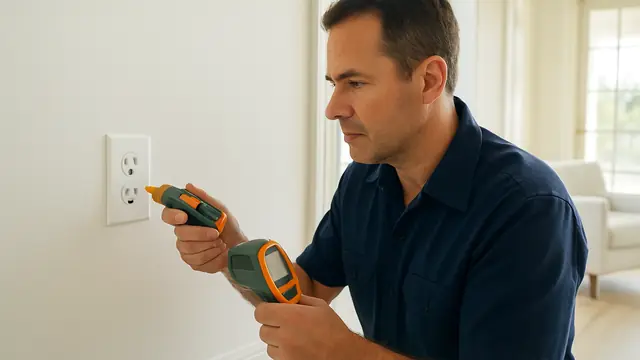
Without accessing energized parts, identify which rooms or appliances lose power and note whether the event occurs at startup, during heavy use, or after moisture exposure. Check accessible cords, plugs, switches, and receptacles for damage or warmth. Unplug nonessential equipment and keep the panel accessible. Stop if you notice smoke, sparks, strong odor, or severe heat.
What Homeowners Should Never Attempt
Do not remove the panel's inner cover, tighten internal connections, replace breakers, or insert test probes. Switching off the main breaker does not necessarily de-energize the incoming service conductors.
Do not solve repeated tripping by installing a breaker with a higher amp rating. A breaker protects wiring of a specific size. Increasing the breaker without confirming conductor capacity can allow the wiring to overheat.
Do not apply sprays, cleaners, paint, or corrosion products inside the enclosure.
Signs That Require Urgent Action
Call promptly for repeated tripping, widespread flickering, persistent noise, corrosion, or a breaker that will not remain on. Smoke, active sparking, fire, strong burning odor, or a panel too hot to approach is an emergency. Keep others away and call emergency services for active fire or smoke.
How a Licensed Electrician Diagnoses the Cause
The electrician reviews when the symptom started, what loads were operating, and whether equipment was recently added. The inspection covers breaker compatibility, conductor terminations, bus condition, grounding and bonding, corrosion, heat damage, and arcing. Voltage, current, and thermal measurements may reveal overloads or hot connections. A load calculation may be needed when capacity is in question. The goal is to identify whether the source is an appliance, circuit, breaker, panel, service connection, or utility supply.
Repair Options Starting With the Least Invasive
When the problem is limited, the repair may involve correcting a loose termination, replacing one damaged compatible breaker, repairing an affected circuit, or removing a defective appliance from service. A dedicated circuit may resolve an overload caused by equipment sharing a circuit.
Other options include correcting improper breaker types, adding surge protection, installing a subpanel, or using listed load-management equipment. A full panel or service upgrade is considered when capacity is inadequate, internal parts are damaged, corrosion is extensive, or compatible parts are unavailable. Replacement should follow diagnosis, not guesswork.
What Determines the Cost?
Cost depends on accessibility, diagnostic time, number of affected circuits, equipment compatibility, wiring condition, permits, and whether the utility must disconnect service. Correcting one connection is a different scope from installing a dedicated circuit or replacing service equipment.
Previous alterations, concealed damage, and corrosion can affect labor. Ask for a clear explanation of the finding and available choices.
Prevention and Ongoing Care
Keep the panel dry, visible, and free of stored belongings. Maintain accurate circuit labels. Arrange an inspection after water intrusion, repeated breaker activity, major remodeling, or installation of significant equipment, especially when the panel's history is unknown.
Schedule an Electrical Panel Inspection in Alys Beach
Seven signs your electrical panel needs an inspection in Alys Beach include recurring trips, multi-room flickering, abnormal sounds, excess heat, unstable breakers, increased demand, and corrosion or questionable alterations. Prompt diagnosis gives you the best chance to correct the specific problem before it causes a larger interruption.
About this guide: This resource provides general homeowner education, not a remote diagnosis. Actual conditions, code requirements, equipment, and safe repair options must be evaluated at the property.