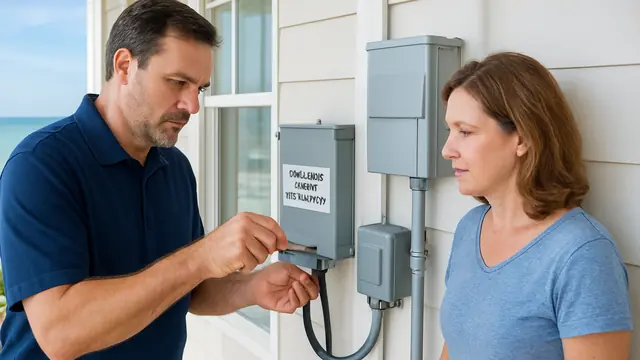
Do not remove an electrical panel cover, touch exposed conductors, bypass protection, or repeatedly reset a fault. Keep clear of smoke, sparks, burning odors, hot equipment, standing water near electricity, and downed lines, then call qualified help.
A breaker trips while dinner is cooking, the lights dip when the air conditioner starts, or you notice a faint buzzing near the panel after plugging in several devices. In a Blue Mountain Beach home, it may be tempting to reset the breaker and move on. When the same symptom returns, however, the electrical system is telling you that something needs to be checked.
Stop using the affected appliance or circuit, unplug unnecessary devices, and keep the panel closed. Reset a breaker once only when there is no smoke, heat, burning smell, sparking, or visible damage. If it trips again, leave it off. Repeated resetting can hide an overload, short circuit, loose connection, or damaged breaker.
Seven Signs Your Electrical Panel Needs an Inspection in Blue Mountain Beach
1. Breakers Trip During Normal Use
A breaker should interrupt power when current rises beyond the level the circuit can safely carry. If a breaker trips while several high-demand appliances are operating, the circuit may simply be overloaded. If it trips during ordinary use or under changing conditions, the cause may be damaged wiring, a faulty appliance, a short circuit, a ground fault, or a weakened breaker.
Note which devices were running and whether the same breaker always trips.
2. Lights Dim, Pulse, or Flicker in More Than One Area
One flickering light often points to a loose bulb or fixture connection. Several lights changing together can indicate a loose panel connection, voltage drop, excessive demand, or a service issue.
Notice whether the flicker occurs when a large motor starts. Repeated dimming, brightening, or pulsing across rooms should be inspected rather than treated as a bulb problem.
3. The Panel Produces Unusual Sounds
Persistent buzzing, crackling, or popping is not normal. A loose terminal or failing breaker can allow electricity to arc across an imperfect connection, creating intense heat that may damage breakers, conductors, or the internal bus.
Do not remove the cover to find the sound. If the noise is accompanied by heat, smoke, odor, or sparks, keep away from the panel and seek immediate help.
4. You Smell Hot Plastic or See Discoloration
A sharp electrical odor, brown marks, melted material, or unusual warmth can signal overheating. Loose or corroded contact points may continue carrying current while producing damaging heat.
Turn off major equipment only if you can do so safely without touching a hot or damaged panel. Smoke or active fire requires emergency services.
5. A Breaker Is Loose, Damaged, or Difficult to Reset
Breaker handles should move firmly. A handle that wiggles, sits between positions, will not reset, or immediately trips may be damaged or may be correctly responding to a fault.
Unplug equipment on the affected circuit before one reset attempt. If it will not stay on, leave it off. Never tape a breaker in position or repeatedly force it to remain energized.
6. Your Electrical Needs Have Outgrown the Original Setup
Homes gain electrical loads over time through upgraded kitchens, office equipment, outdoor amenities, larger HVAC systems, EV charging, or electric water heating. An open breaker space does not prove sufficient capacity. An electrician reviews the service rating, loads, and conductor sizes before recommending a dedicated circuit, subpanel, load management, or service upgrade.
7. The Panel Shows Corrosion, Openings, or Unclear Modifications
Visible rust, corrosion, missing filler plates, damaged covers, mislabeled circuits, mismatched breakers, or crowded wiring should be inspected. Coastal moisture can contribute to corrosion when it reaches electrical equipment, but the source of moisture must also be identified and corrected.
Previous work also deserves review. Incompatible breakers, open spaces, or two wires under a terminal rated for one can cause poor contact and overheating.
What You Can Safely Check
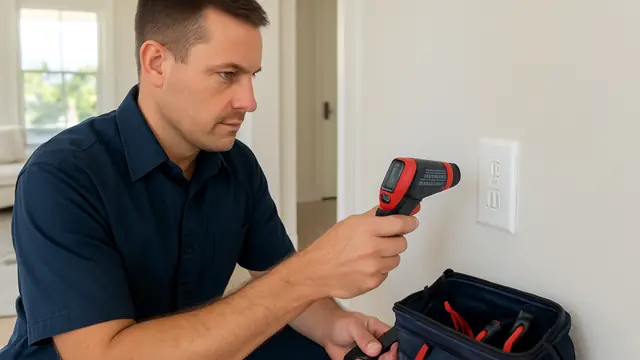
Keep your inspection outside the panel. Note the breaker number, affected rooms, equipment operating at the time, and how long the symptom lasts. Check accessible cords, plugs, switches, and receptacles for scorching, cracks, or warmth. Unplug nonessential devices and keep the work area clear. Do not touch a hot or damaged panel.
What You Should Leave to a Licensed Electrician
Do not remove the dead-front cover, tighten internal lugs, replace a breaker, move wires, or test energized conductors yourself. The dead front is the interior cover that exposes only breaker handles. Behind it are energized parts, and some service conductors may remain live even when the main breaker is off.
Do not replace a tripping breaker with a larger one. Breaker size is coordinated with wire size. Oversizing the breaker can allow the wire to overheat before protection operates.
Do not spray corrosion treatment, cleaner, lubricant, or water-displacing products into the enclosure.
When an Inspection Becomes Urgent
Arrange prompt service for repeated trips, multi-room flickering, panel noise, visible corrosion, or a breaker that will not remain reset. Act quickly after water intrusion, storm damage, or recent electrical changes. Smoke, flames, sparks, strong burning odor, or severe heat are emergencies. Keep people away and call emergency services for fire or smoke.
How an Electrician Finds the Cause
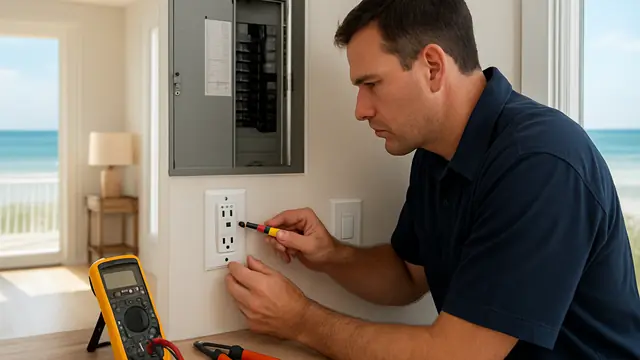
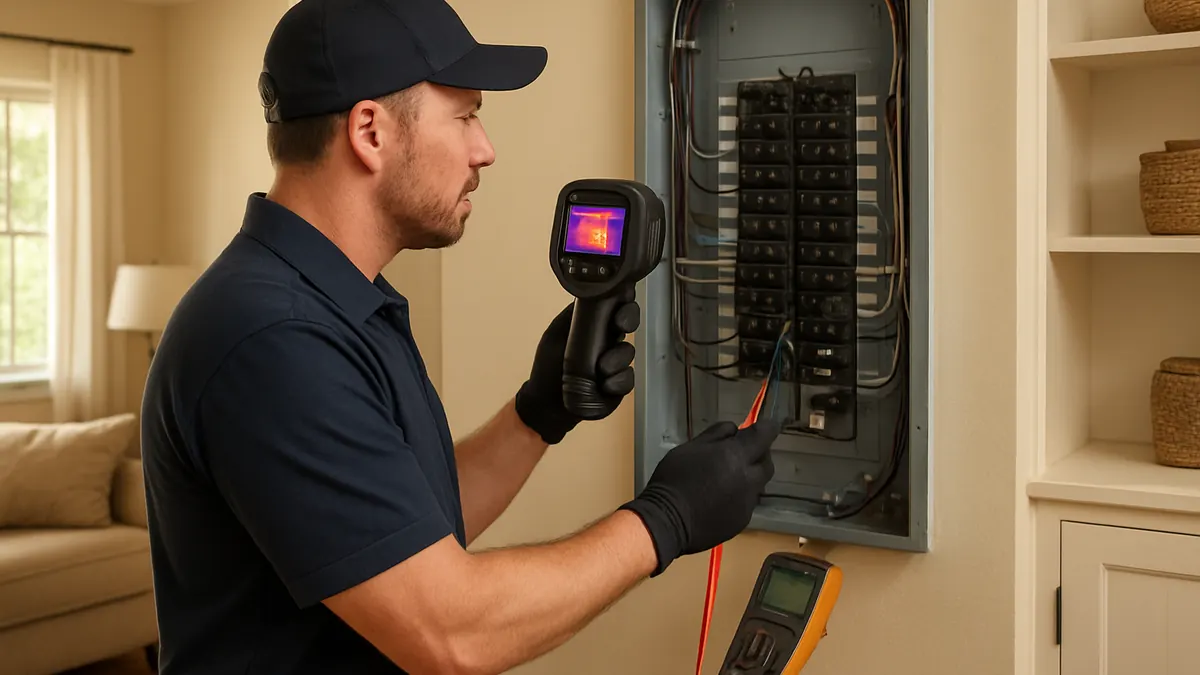
The electrician reviews when the problem occurs, what equipment was operating, and whether recent changes increased demand. The inspection may cover the enclosure, breakers, conductor terminations, internal bus, grounding and bonding, corrosion, and overheating. Voltage, current, and thermal measurements can reveal overloads or unstable connections. When capacity is in question, a load calculation separates appliance, circuit, panel, service, and utility-side concerns.
Repair Options From Targeted to Comprehensive
The least invasive repair may involve tightening an approved connection after proper testing, replacing one damaged compatible breaker, repairing a branch circuit, or taking a faulty appliance out of service. A dedicated circuit may solve recurring overloads caused by equipment sharing a general-purpose circuit.
Other solutions include correcting incompatible breakers, adding circuits, installing a subpanel, improving surge protection, or using approved load management. Panel or service replacement is considered when the internal bus is damaged, corrosion is extensive, the enclosure is compromised, approved parts are unavailable, or capacity is inadequate. The electrician should explain why a smaller repair is or is not reasonable.
Factors That Influence Cost
Cost depends on diagnostic time, panel accessibility, affected circuits, wiring condition, equipment compatibility, permits, and utility involvement. A breaker repair differs greatly from installing circuits, a subpanel, or service equipment.
Hidden heat damage, corrosion, and older modifications can increase the work. Ask for a written explanation of the findings and options.
Prevention and Maintenance
Keep the panel dry, accessible, and free of storage. Maintain a clear circuit directory. Use licensed professionals for additions so breaker ratings, wire sizes, grounding, and load calculations remain coordinated. Schedule an inspection after water exposure, recurring symptoms, major remodeling, or new equipment.
Homeowner FAQs
Can I keep resetting a breaker if it eventually stays on?
No. Repeated resets can reenergize a circuit with an unresolved fault or overload. Reset it once only when no urgent warning signs are present.
Is a warm breaker always dangerous?
A breaker may carry normal load, but noticeable or concentrated heat should be evaluated. Heat combined with odor, discoloration, noise, or tripping is more urgent.
Could one bad appliance make the panel seem faulty?
Yes. A failing appliance can overload or fault a circuit. An electrician tests the appliance, circuit, breaker, and panel before recommending panel work.
Can corrosion be cleaned instead of replacing the panel?
Sometimes limited corrosion can be addressed, but the extent, location, equipment condition, and availability of approved parts determine the repair. The moisture source must also be corrected.
How often should an electrical panel be inspected?
There is no single interval for every home. Inspection is appropriate when symptoms appear, after water exposure or major renovations, when adding large loads, or when the panel's history is unknown.
Schedule an Electrical Panel Inspection in Blue Mountain Beach
Seven signs your electrical panel needs an inspection in Blue Mountain Beach include recurring breaker trips, widespread flickering, unusual sounds, heat or odor, unstable breakers, increased electrical demand, and corrosion or questionable modifications. Acting on these signs early may allow a targeted repair and helps protect the home's wiring and equipment.
About this guide: This resource provides general homeowner education, not a remote diagnosis. Actual conditions, code requirements, equipment, and safe repair options must be evaluated at the property.