Stop and call for qualified help when plumbing water is near electrical equipment, sewage is entering occupied space, gas or burning odors are present, or a repair would require opening pressurized piping.
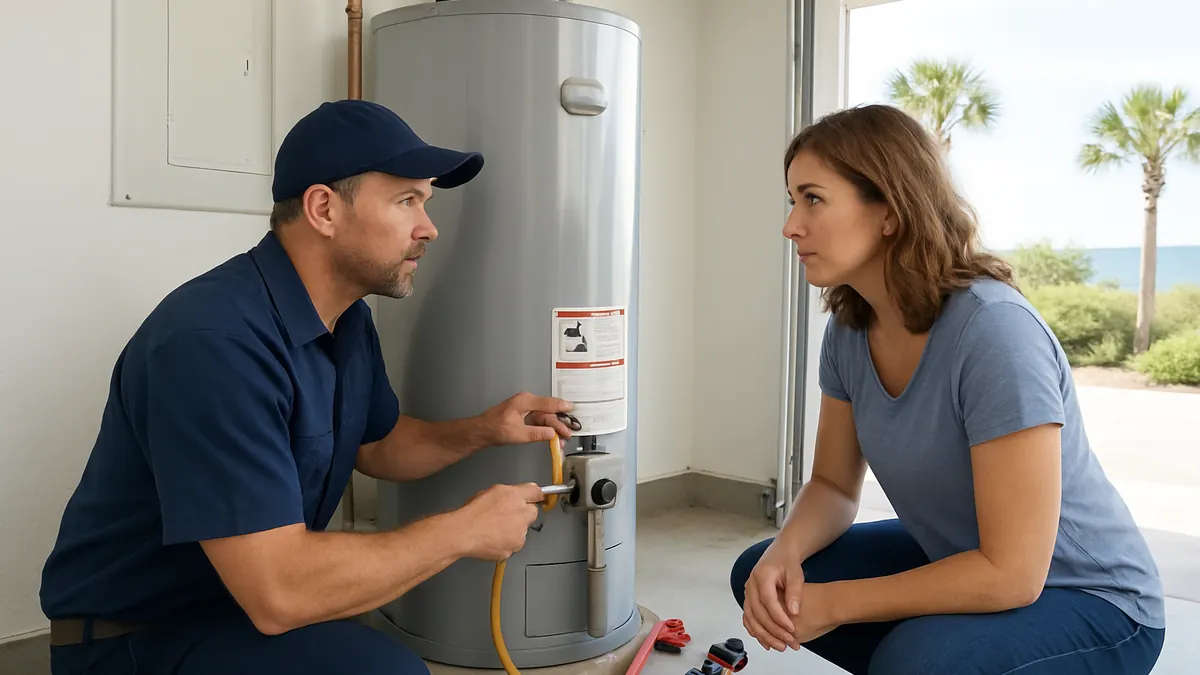
You may first notice the problem in a small way: the kitchen water takes longer to heat, the shower temperature fades sooner than expected, or the water heater begins making a low rumbling sound. Then you see a damp spot near the drain pan or discover that the breaker has tripped. For a homeowner in Blue Mountain Beach, these symptoms raise an important question: is the water heater worth repairing, or is it time to replace it?
If water is leaking, avoid standing water near electrical equipment. Close the heater's water-supply valve only if you can do so safely. Shut off electrical power at the dedicated breaker when the area is dry. If the heater uses gas and you detect a gas odor, leave the property and contact the gas utility or emergency services as appropriate.
Start With the Symptom, Not the Age
No hot water can result from a failed heating element, thermostat, ignition part, control, gas valve, burner, electrical connection, or utility issue.
Not enough hot water may be caused by one failed electric element, sediment buildup, a low thermostat setting, a damaged dip tube, slow recovery, increased household demand, or an undersized unit.
Water that alternates between hot and cold can point to a control issue, scale in a tankless heater, inconsistent flow, a mixing-valve problem, or a plumbing crossover.
A puddle can come from a replaceable connection or valve, but it can also come from corrosion through the tank. Locating the exact source is essential.
Common Reasons Water Heaters Fail
Storage-tank heaters hold heated water under pressure. Over time, the tank, fittings, anode rod, valves, and heating components wear.
Sediment can collect at the bottom of the tank, forcing the burner or heating element to work harder. It may cause popping or rumbling and reduce usable hot-water capacity.
Tankless heaters avoid storing hot water, but they still need maintenance. Scale, clogged inlet screens, flow-sensor problems, ignition faults, venting issues, and condensate problems can reduce performance.
Repair or Replace a Water Heater in Blue Mountain Beach: Questions to Ask
- Is the tank leaking? Water coming through the tank body generally means replacement. A pressurized vessel cannot be restored reliably with a patch.
- Is the failure limited to one serviceable part? A thermostat, element, igniter, sensor, valve, or connector may justify repair when the rest of the system is sound.
- Has the unit become unreliable? Multiple repairs, recurring shutdowns, repeated leaks, or inconsistent temperature make replacement more reasonable.
- Does the heater meet present demand? A unit that served a smaller household may struggle when usage changes. Repair can restore original function, but it cannot add capacity.
- Does the installation need correction? Water pressure, expansion control, venting, electrical supply, gas piping, drainage, and access can influence both safety and cost.
Safe Homeowner Checks
- Determine whether the problem is isolated to one fixture. A shower valve can fail even when the heater is working normally.
- Check the water-heater breaker. Reset it once only if there is no water, burning odor, buzzing, or visible damage. A repeated trip indicates an electrical fault.
- Look for a display code. Many tankless and high-efficiency systems store useful error information. Photograph the code before resetting anything.
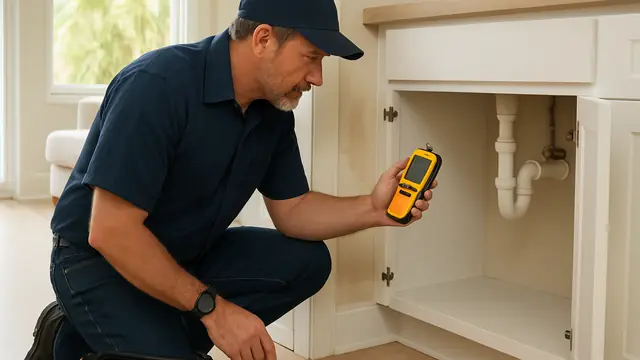
- Observe the leak without removing covers. Note whether it comes from the top connections, side valve, drain outlet, discharge pipe, condensate line, or bottom seam.
Do Not Make These Repairs Yourself
- Do not remove electrical access panels, test live wires, or replace elements unless you are qualified. Water heaters use circuits capable of causing severe injury.
- Do not work on gas controls, burners, gas piping, or venting. Proper combustion requires specialized testing.
- Never cap or plug the temperature-and-pressure relief valve or its discharge pipe. The valve protects the tank from dangerous pressure and temperature.
- Do not apply epoxy, sealant, or a mechanical patch to a leaking tank. A surface repair is not a safe long-term solution for a pressurized vessel.
Urgent Warning Signs
- Water spreading beyond the pan, dripping through a ceiling, or flowing from the tank body requires prompt shutoff and service.
- A relief valve releasing a steady stream of hot water may indicate overheating, excessive pressure, or failed expansion control.
- Repeated breaker trips, hot electrical covers, scorch marks, or burning odors require immediate shutdown.
- Gas odor, soot, delayed ignition, unusual flame behavior, or abnormal exhaust conditions require the area to be vacated and the proper utility or emergency response contacted.
How a Licensed Plumber Diagnoses the Problem
- The plumber asks when the symptom occurs, how long it lasts, which fixtures are affected, and whether recent plumbing or electrical work was performed.
- The unit's model, fuel type, capacity, installation condition, and approximate age are reviewed to guide testing and determine parts availability.
- For an electric tank, testing may include voltage, resistance, continuity, thermostats, elements, wiring, and high-limit controls.
- For a gas tank, diagnosis may include gas supply, ignition sequence, burner condition, flame sensing, venting, combustion, and safety controls.
For a tankless heater, the plumber may inspect filters, scale buildup, flow rate, inlet temperature, gas or electrical input, sensors, venting, condensate drainage, and recirculation settings.
Repair Options Before Replacement
- The least invasive repair may be tightening a connection, replacing a connector or shutoff valve, or correcting a drain or condensate line.
- A storage heater may be restored by replacing a thermostat, heating element, igniter, thermocouple, burner component, drain valve, relief valve, or anode rod.
- Sediment-related issues may improve through proper flushing when the tank is structurally sound and the maintenance history supports it.
- A tankless heater may need descaling, filter cleaning, sensor service, ignition repair, control adjustment, or correction of venting or condensate problems.
Replacement is usually appropriate when the tank leaks, corrosion is advanced, the heat exchanger is damaged, major parts are unavailable, repair costs are accumulating, or the heater cannot meet demand.
Replacement choices may include another storage tank, a heat-pump model, or a tankless system. The best fit depends on utilities, space, hot-water demand, recovery expectations, and maintenance preferences.
What Influences Cost
A repair estimate reflects diagnostic time, part cost, model, fuel type, accessibility, and whether other damaged components must be corrected.
Replacement cost depends on equipment type, capacity, efficiency, access, disposal, piping changes, drain protection, electrical service, gas supply, venting, condensate drainage, recirculation, and code-related work.
Compare the complete installed scope, expected reliability, operating needs, and likely future repairs rather than looking only at the equipment price.
Maintenance and Prevention
- Look around the heater regularly for moisture, rust, mineral residue, or staining. Early signs are easier to address before water spreads.
- Ask whether the tank should be flushed and whether the anode rod should be inspected. Recommendations vary with the heater and its history.
- Have recurring relief-valve discharge, pressure fluctuations, or connection leaks investigated. Excess pressure and failed expansion control can shorten equipment life.
Repair the Failure or Replace the Risk
The decision to repair or replace a water heater in Blue Mountain Beach comes down to the condition of the tank or heat exchanger, the cause of the failure, repair history, parts availability, and whether the unit still serves the household properly. A limited component failure may be repaired successfully. A leaking, corroded, repeatedly failing, or undersized heater may be more responsibly replaced.
About this guide: This resource provides general homeowner education, not a remote diagnosis. Actual conditions, code requirements, equipment, and safe repair options must be evaluated at the property.