Stop and call for qualified help when plumbing water is near electrical equipment, sewage is entering occupied space, gas or burning odors are present, or a repair would require opening pressurized piping.
You turn on the shower and the pressure drops when someone starts the washing machine. A faucet releases rusty-looking water for a few seconds. Another small leak appears only months after the last plumbing repair. For a homeowner on 30A, these problems can seem unrelated, but together they may be signs your home needs repiping.
Repiping replaces some or all water-supply pipes carrying hot and cold water to fixtures. It is different from drain or sewer replacement. Not every problem requires a whole-house repipe, but repeated failures should not be dismissed.
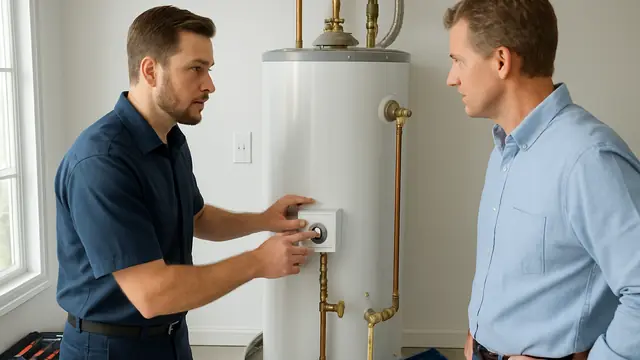
The safest immediate step is to look for active water damage. If water is dripping, staining drywall, pooling in a cabinet, or running where it should not, shut off the nearest fixture valve or the home's main water valve if you can do so safely. Then schedule a professional inspection before reopening the system.
Common Signs Your Home May Need Repiping in 30A
Repeated Leaks in Different Locations
One failed sink connector may be an ordinary repair. Leaks appearing in different rooms are more concerning. A wall leak followed months later by a ceiling stain or corroded fitting can indicate broader deterioration.
Repeated spot repairs may stop each leak temporarily, but they do not correct weakened pipe elsewhere. The pattern matters more than one failure.
Low or Inconsistent Water Pressure
Pressure can be affected by the utility supply, a regulator, a partly closed valve, or fixture buildup. Gradual whole-home decline can also result from internal corrosion or restrictions.
One slow faucet often points to a local problem. Weak flow at several sinks and showers, especially on both hot and cold sides, deserves a broader evaluation.
Discolored or Metallic-Tasting Water
Temporary discoloration can follow utility work or water-heater service. Persistent yellow, brown, or reddish water from multiple fixtures may indicate corroding metal piping.
Do not assume discoloration automatically means every pipe must be replaced. A plumber should determine whether the source is the public supply, water heater, one pipe section, or the home's distribution system.
Temperature Changes During Water Use
A shower that suddenly turns cold or hot when a toilet flushes may be related to pressure imbalance, valve design, or undersized piping. This symptom alone does not prove repiping is necessary, but it becomes more meaningful when combined with weak pressure, recurring leaks, or aging materials.
Visible Corrosion or Staining
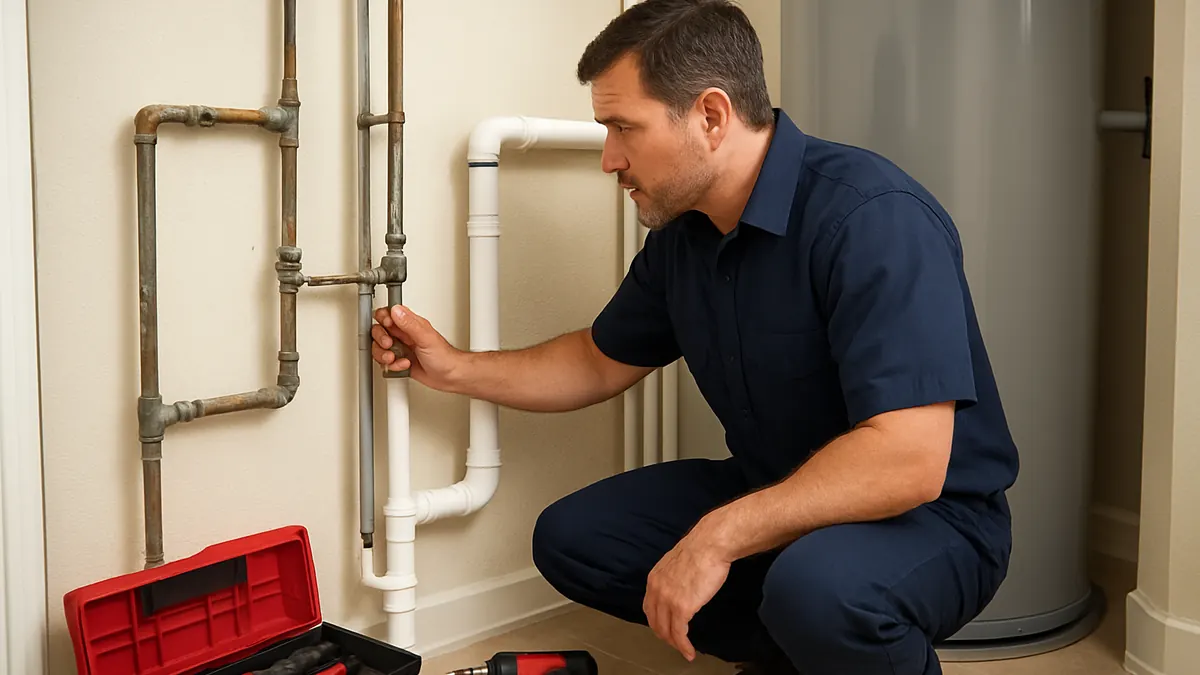
Check exposed piping near the water heater, under sinks, and around accessible valves. Green or blue staining on copper, heavy rust on steel, crusty deposits, damp fittings, or flaking metal should be evaluated. The visible damaged area may not be the only vulnerable section.
Why Supply Pipes Deteriorate
Pipes deteriorate because of material, installation quality, water chemistry, pressure, temperature, movement, and use. No single cause applies everywhere.
Metal piping can corrode internally, reducing its usable diameter and weakening the pipe wall. Plastic piping may fail because of unsuitable fittings, poor support, excessive heat, installation damage, or workmanship issues. Connections can also leak when stressed or overtightened.
In a seasonally occupied property, a small leak may continue longer before anyone notices it. Vacancy does not create the pipe defect, but delayed discovery can increase water damage.
Safe Checks a Homeowner Can Perform
First determine whether the problem is local or widespread. Run several fixtures separately. Compare hot and cold flow. Note whether pressure changes only when multiple fixtures operate.
Look for moisture, water marks, musty odors, warped cabinets, peeling paint, or soft drywall. Review bills for unexplained increases, remembering that guests and irrigation also affect use.
With all faucets and water-using appliances off, observe the water meter if it is safely accessible. Continued movement may suggest a leak. Do not open utility-owned equipment or enter unsafe spaces.
Keep a record of leak locations, repairs, discoloration, pressure complaints, and affected fixtures. That history helps a plumber identify a system-wide pattern.
What You Should Not Attempt
Do not cut into walls or ceilings just to search for pipes. Unplanned demolition can damage wiring, drains, waterproofing, or structural materials.
Avoid treating epoxy, clamps, sealants, or temporary fittings as a permanent answer to repeated concealed leaks without professional evaluation. A patch may be appropriate for an isolated emergency, but it can hide deterioration nearby.
Do not increase water pressure to overcome restricted flow. Excessive pressure can worsen leaks and damage valves, appliances, supply lines, and fixtures.
Never keep reopening the main valve when a concealed line is actively leaking. Limiting water flow is safer than repeatedly testing a failure that is damaging the home.
Signs That Make the Problem Urgent
Call promptly when water comes through a ceiling, wall, floor, electrical fixture, or light opening. Shut off water first when safe. Water near electrical components creates an additional hazard.
Other urgent signs include a rapidly moving water meter with fixtures off, sudden pressure loss homewide, wet flooring with no visible source, a burst line, or several leaks occurring within a short period.
Planning also becomes urgent when repeated repairs are disrupting the home or upcoming remodeling will cover aging pipes behind new finishes.
How a Licensed Plumber Diagnoses the System
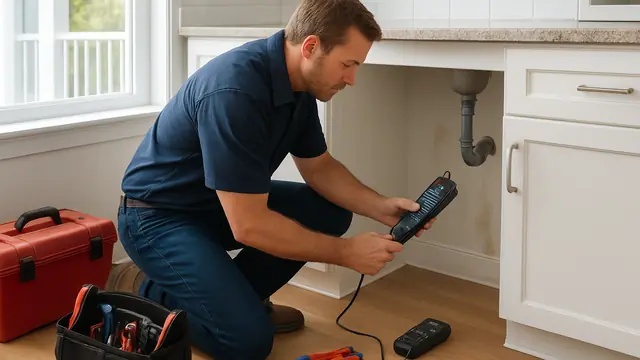
Diagnosis begins with repair history and affected locations. The plumber may measure pressure, compare fixture flow, examine exposed piping, test valves, and use leak-detection equipment.
The plumber also identifies pipe material, layout, accessible routes, and whether failures involve one branch or the whole distribution system. A whole-house recommendation should be based on condition and failure pattern, not age alone.
Repair Options From Least to Most Invasive
The least invasive reasonable option may be replacing a fixture connector, shutoff valve, fitting, pressure regulator, or short accessible pipe section. A clogged fixture component may restore flow without any repiping.
When failures are limited to one branch, partial repiping may be appropriate. A plumber might replace a problem hot-water run while leaving sound cold-water lines in service.
A phased repipe can sometimes be coordinated with remodeling or planned access work. Whole-house repiping becomes more reasonable when the same material is failing in several locations, restrictions are widespread, or repeated access and repairs are becoming inefficient.
Replacement materials may include PEX or copper, selected according to the property, code requirements, routing, and homeowner priorities.
Factors That Affect Repiping Cost
Cost depends on home size, fixture count, stories, material, access, routing, construction, and pipe-run distances.
Drywall restoration can be a major factor. Tile, built-ins, and detailed finishes may increase labor. Permits, inspections, insulation, firestopping, reconnections, and shutdowns also matter.
A useful estimate should explain what is included, what restoration is excluded, and how occupied areas will be protected.
Prevention and Maintenance
- Know where the main shutoff is and keep it accessible. Replace aging appliance hoses and fixture connectors before they fail. Have abnormal pressure corrected rather than ignored.
- Address corrosion, dampness, or staining when noticed. For an unoccupied property, arrange regular checks and consider monitored leak detection or an automatic shutoff system.
- Repiping reduces risks from deteriorated supply lines, but every plumbing system still needs observation and timely maintenance.
Take the Next Appropriate Step
The signs your home may need repiping in 30A usually form a pattern: recurring leaks, declining pressure, corrosion, discoloration, or multiple complaints that no longer make sense as isolated repairs. A licensed inspection can determine whether you need a repair, partial replacement, or whole-house repipe.
About this guide: This resource provides general homeowner education, not a remote diagnosis. Actual conditions, code requirements, equipment, and safe repair options must be evaluated at the property.