Stop and call for qualified help when plumbing water is near electrical equipment, sewage is entering occupied space, gas or burning odors are present, or a repair would require opening pressurized piping.
Start With How the Outdoor Shower Will Be Used
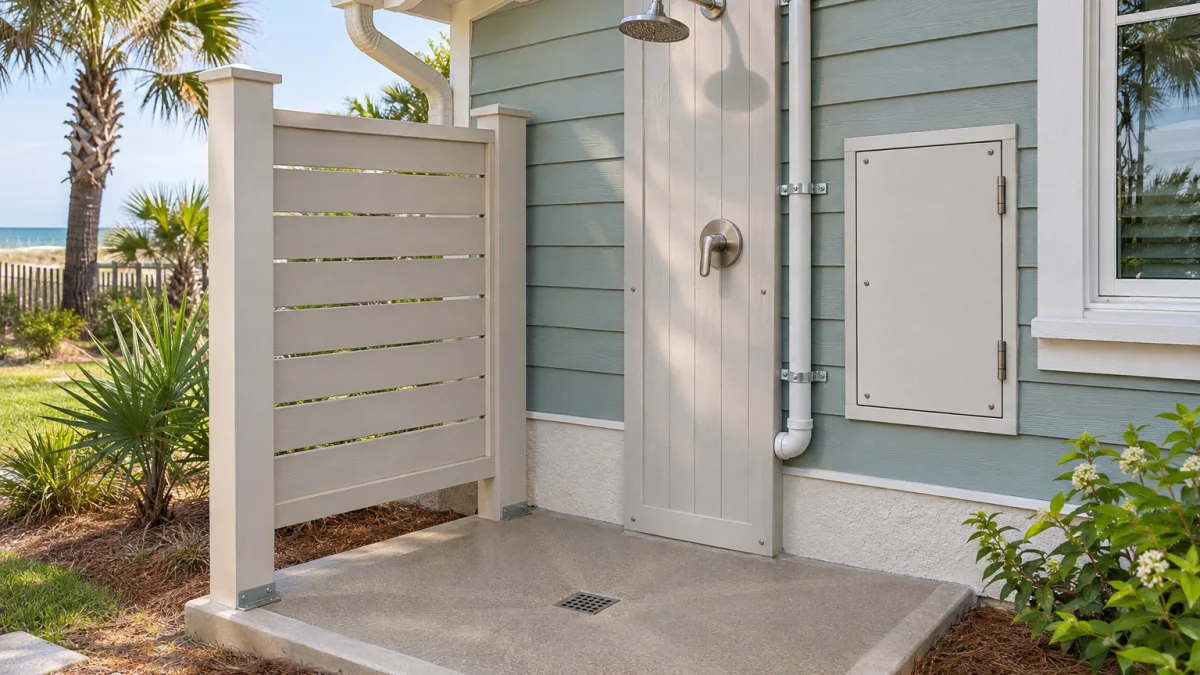
An outdoor shower can keep beach sand and wet footprints out of a Bid-A-Wee home, but its plumbing deserves the same planning as an indoor fixture. A quick foot rinse, a cold-water rinse station, and a hot-and-cold bathing shower have different demands. Decide whether users will wash with soap, whether children will use it, and whether several guests may rinse off in succession. These choices affect water supply, temperature protection, drainage, and placement.
Northwest Florida conditions add practical concerns. Sun can heat exposed piping, humidity can slow drying, and coastal exposure can shorten the life of unsuitable hardware. Seasonal occupancy may also leave a fixture unused for extended periods. Before choosing a decorative shower column or enclosure, ask a licensed plumber to assess the proposed location and connections. A fixture that looks simple above ground may require substantial work to supply and drain properly.
Resolve Drainage Before Choosing the Fixture
The first planning question is where the used water will go. Shower water containing soap, sunscreen, body oils, or cleaning products is not simply rainwater. Do not assume it can discharge onto landscaping, into a street drain, or toward a neighboring property. The appropriate arrangement depends on the intended use, applicable requirements, and available wastewater system. Have the plumber confirm the drainage approach with the authority having jurisdiction before installation begins.
Gravel beneath a shower may hide standing water without providing an acceptable wastewater solution. A finished pad also needs a coordinated drainage design so water does not collect against siding, beneath a deck, or around a foundation. If the property uses septic, a proposed connection should be evaluated for its effect on the system. Changing a rinse-only installation into a bathing shower is a reason to revisit the original drainage plan, not merely add a soap shelf.
Choose a Location That Allows Safe Installation and Repair
A location near existing plumbing can reduce the length of new piping, but proximity alone does not make it suitable. The installer needs to consider the wall assembly, foundation, buried utilities, existing drains, and access for future repairs. Waterproofing around wall penetrations matters because a poorly sealed opening can admit rain even when the plumbing itself does not leak. Pipe supports should secure the installation without relying on decorative siding or an unstable enclosure.
Leave service access to valves, connections, and any equipment that requires maintenance. Enclosing everything behind permanent masonry can turn a modest repair into demolition. Coordinate the plumbing layout with a suitable walking surface and any outdoor electrical equipment. Spray should not be directed at receptacles, pool equipment, or appliances. Any necessary electrical changes belong with a licensed electrician, and underground work should follow the appropriate utility-location process before excavation.
Size the Water Supply for Actual Use
An outdoor shower should receive water through piping and connections suitable for the intended installation. A temporary garden hose arrangement is not equivalent to a permanent plumbing system. The plumber should evaluate pipe size, available flow, simultaneous fixture use, approved materials, and protection where piping passes through walls or enters the ground. Adding a shower to a convenient small branch without checking capacity can leave both the outdoor fixture and nearby indoor fixtures performing poorly.
For hot water, distance from the heater affects how long users wait and how much water runs before it warms. A long route can make a frequently used shower inconvenient, while a rarely used branch needs attention to stagnation and seasonal startup. Ask about routing and insulation before adding specialized equipment. Also discuss any required backflow protection, particularly when the fixture includes a hand spray or hose that could rest in collected water.
Treat Outdoor Water Temperature as a Safety Issue
A hot-and-cold outdoor shower needs appropriate anti-scald protection, not simply two handles that users adjust by feel. A plumber should select a shower valve with the required temperature-control features, verify compatibility with the supply, and set and test its limits according to the manufacturer and applicable requirements. Children and guests may not recognize an unsafe temperature quickly. A valve selected mainly for its appearance may not provide the protection the installation needs.
Even a cold-water-only shower can initially deliver hot water when sunlight heats an exposed line or hose. Consider shaded routing and suitable protection from direct solar exposure. Before anyone steps under the spray, an adult should check the discharge cautiously from outside the spray path and allow sun-heated water to clear. Stop using the shower if temperatures change unpredictably, the control sticks, or comfortable water cannot be maintained. Do not compensate by making unverified water-heater adjustments.
Select Materials for Sun, Salt Air, and Serviceability
Outdoor suitability involves more than a finish described as rust-resistant. Ask whether the complete fixture is intended for outdoor installation and whether its instructions address coastal exposure. Internal parts, mounting hardware, flexible connections, and trim can have different limitations. Salt deposits may damage some finishes or promote corrosion at connections, especially where moisture remains trapped. No material should be treated as maintenance-free simply because it is commonly used outdoors.
Water piping also needs protection appropriate to its material. Some plastic piping cannot remain exposed to sunlight unless protected as specified by its manufacturer. Metal piping and fixtures require compatible connections and support. Before buying, check whether replacement cartridges, seals, and showerheads are available and whether service can occur without removing the enclosure. A serviceable fixture with clear installation requirements is generally a better planning choice than an attractive unit with unavailable repair parts.
Keep Sand and Surface Water From Becoming Drain Problems
Beach sand settles rather than dissolves. Repeated rinsing can leave deposits in drain openings, traps, and collection areas, particularly when the drainage layout does not account for sediment. If a drain is part of the installation, ask how sand will be intercepted and removed without opening concealed piping. An accessible strainer or other designed collection feature can simplify maintenance, but it must be appropriate for the drainage system and cleaned before it becomes obstructed.
Sweep loose sand from the shower surface instead of washing every accumulation into the drain. Remove accessible debris from a removable surface grate only when it is designed for routine homeowner cleaning. Persistent ponding, water moving toward the house, or overflow during normal use needs evaluation. Avoid chemical drain openers and makeshift changes to the discharge route. A slow drain may reflect sediment, a blockage, inadequate slope, or a design issue that cleaning alone cannot correct.
Build a Care Routine Around Exposure and Occupancy
Inspect the outdoor shower periodically and before a busy occupancy period. Look for drips after shutoff, loose supports, damaged pipe protection, corrosion, and dampness where piping enters the building. Clean fixtures using the manufacturer's recommended products. Gentle fresh-water rinsing can help remove salt deposits from suitable exterior surfaces, but abrasive pads and harsh chemicals can damage finishes. Avoid pressure-washing valves, seals, and wall penetrations, where concentrated spray can force water into vulnerable areas.
Before returning a long-idle shower to service, check its condition and drainage, then flush it according to the system's startup guidance while keeping people out of the spray. Follow utility instructions after a water-service interruption or advisory rather than assuming a brief flush resolves every concern. For rentals, give the turnover team a short inspection checklist and a clear reporting procedure. Staff should report malfunctioning controls instead of attempting internal valve repairs.
- Confirm that the shower stops dripping after residual water drains.
- Check that the walking surface drains and is free of slippery buildup.
- Report loose trim, damaged piping protection, or unusual temperature behavior.
Plan for Cold Weather and Recognize Urgent Problems
Northwest Florida's warm climate does not eliminate freezing conditions. Outdoor piping can be more vulnerable than piping inside a conditioned building, particularly on exposed walls. Ask the installer whether the shower needs seasonal isolation and professional winterization. Insulation slows heat loss but does not guarantee freeze protection. A product described as frost-resistant still depends on correct installation and operating conditions; the description should not replace a property-specific cold-weather plan.
Stop using the fixture if a pipe splits, water sprays from a connection, the enclosure becomes unstable, or temperature control fails. If there is a clearly identified, safely accessible isolation valve, shut off the affected supply without forcing a stuck valve. Keep clear of standing water near electrical equipment and call for professional help. Never use a torch to thaw piping. A suspected frozen line should be evaluated for damage before normal operation resumes.
Know What a Professional Evaluation Should Cover
An outdoor shower service visit should address the symptom and its cause. For dripping, a plumber may inspect the control cartridge, seals, fixture condition, and supply conditions. For weak flow, the evaluation may include the showerhead, internal restrictions, branch piping, and performance while other fixtures operate. For ponding, the plumber should distinguish a blocked drain from poor surface grading or an unsuitable drainage arrangement. Those problems require different repairs.
When requesting installation or repair through A Superior Mechanical, explain how the shower is used, whether soap is involved, and when the problem occurs. Provide any fixture paperwork and information about previous modifications. Request a scope that identifies the water connections, drainage arrangement, temperature protection, weather protection, required approvals, and responsibility for surface restoration. Ask which parts will remain accessible and what maintenance the owner or property manager will need to perform.
About this guide: This resource provides general homeowner education, not a remote diagnosis. Actual conditions, code requirements, equipment, and safe repair options must be evaluated at the property.