Stop and call for qualified help when plumbing water is near electrical equipment, sewage is entering occupied space, gas or burning odors are present, or a repair would require opening pressurized piping.
You turn on the shower and the water pressure drops as soon as someone starts the washing machine. A bathroom faucet releases brownish water for several seconds, or another damp area appears after you have already repaired previous leaks. These are common reasons a Bid-A-Wee homeowner may wonder whether another small repair will solve the problem or the home may need repiping.
When water is actively spreading, move belongings away from the area, avoid wet electrical equipment, and shut off the home's main water valve. For recurring leaks, pressure changes, or discoloration without active flooding, limit unnecessary water use and schedule a plumbing inspection. Do not cut open a wall or rely on a homemade patch.
Repiping does not always mean replacing every water line. Depending on the findings, a plumber may recommend replacing one damaged section, one branch serving a group of fixtures, the hot-water lines, or the complete water-distribution system.
Common Signs Your Home May Need Repiping in Bid-A-Wee
Leaks Keep Appearing in Different Areas
One failed fitting can usually be repaired locally. A pattern of unrelated leaks is more concerning.
For example, you may first discover water beneath the kitchen sink, then have a leak repaired inside a bathroom wall, and later notice moisture near the water heater. When failures move from one location to another, the problem may involve the condition of the piping rather than one defective connection.
Keep records of previous repairs. The locations, pipe materials, and types of failures help a plumber determine whether spot repairs remain practical.
Water Pressure Is Low or Uneven
Low water pressure can result from a partly closed valve, a failing pressure regulator, a supply issue, or a restriction inside the piping.
Older metal pipes may corrode internally. Deposits can gradually narrow the opening through which water flows, even when the pipe looks normal from the outside. You may notice that one faucet works adequately by itself, but the flow weakens dramatically when another fixture is used.
Pay attention to whether the problem affects one fixture, one room, hot water only, or the entire home.
Water Is Frequently Discolored
Brown, yellow, or reddish water may come from deteriorating metal pipes, water-heater sediment, or temporary work on a public water system.
The pattern provides useful information. Discoloration from hot faucets only may involve the water heater or hot-water piping. Discolored hot and cold water at several fixtures may suggest a broader supply-piping concern.
Water that remains discolored or repeatedly returns after running the faucet should be professionally evaluated.
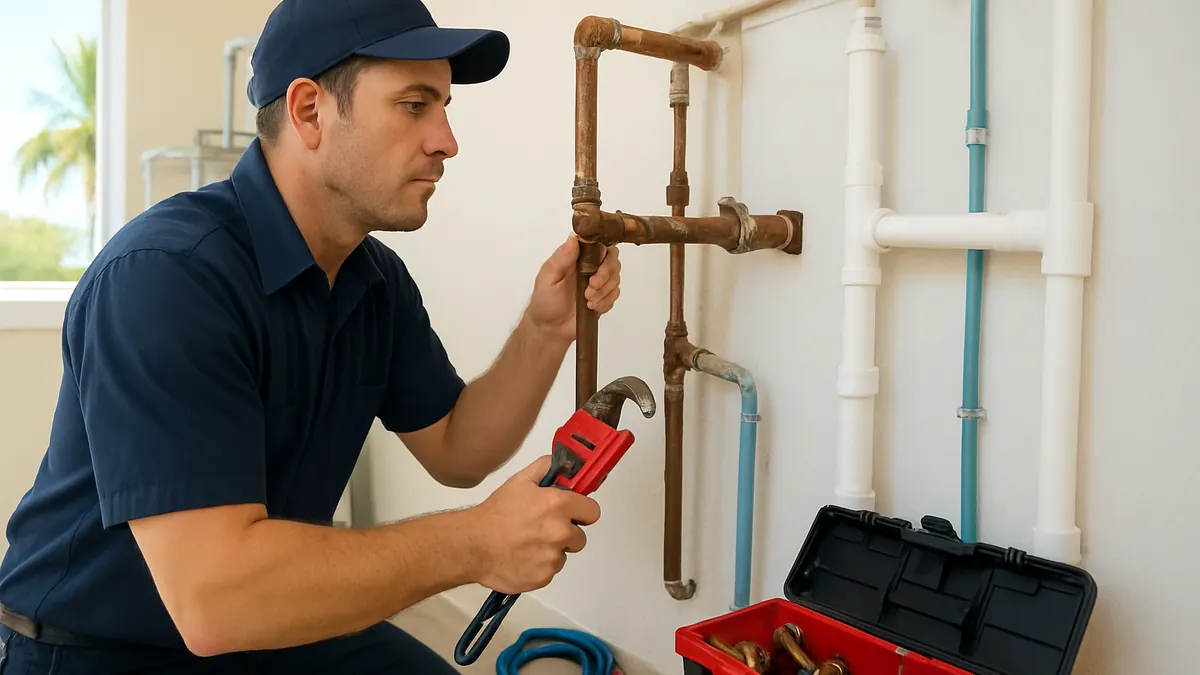
Exposed Pipes Show Corrosion or Damage
Look at accessible plumbing beneath sinks, near the water heater, and in utility areas. Warning signs include:
- Rust or green staining
- White mineral-like buildup
- Pitting or flaking metal
- Moisture around connections
- Bulging or distorted plastic
- Numerous repair couplings
Visible corrosion does not prove every concealed pipe is failing. However, deterioration in several accessible areas may indicate that hidden piping is in similar condition.
Water Develops an Unusual Taste or Odor
A metallic taste, unusual odor, or recurring cloudiness can have several causes. The source may be the water heater, a fixture, a filter, or the piping itself.
Taste and odor alone do not establish that repiping is necessary. When they occur with discoloration, leaks, or visible corrosion, they become more significant.
Pipes Bang, Whistle, or Rattle
Noisy piping can be caused by loose supports, high pressure, failing valves, water hammer, or restricted flow.
Noise by itself rarely justifies replacing the plumbing system. Noise combined with leaks, pressure loss, or damaged piping should be investigated as part of a broader assessment.
Why Residential Water Pipes Deteriorate
Pipe reliability depends on material, installation quality, water pressure, temperature, movement, and previous repairs.
Metal pipes can corrode internally. Plastic pipes may fail at stressed connections, damaged sections, incompatible fittings, or improperly supported runs. Hot-water piping can experience additional expansion and contraction as water temperature changes.
Excessive pressure places stress on fittings, valves, appliance hoses, and fixture connections throughout the home. Improperly supported pipes may move whenever water starts or stops, eventually weakening joints.
Previous remodeling can also create problems. Mixed materials, inaccessible connections, unsupported piping, and improperly installed transitions may become future leak points.
The important question is not only how old the pipes are. It is how reliably the system is performing now.
Safe Checks a Homeowner Can Perform
Document the symptoms before your plumbing appointment. Note which fixtures have low pressure, when discoloration appears, and whether hot and cold water behave differently. Photograph visible corrosion, stains, and previous repairs.
Inspect accessible areas with a flashlight. Look beneath cabinets, around toilets, near the water heater, and wherever piping is exposed. Avoid touching a connection that appears severely corroded because disturbing it could trigger a leak.
You can also check for unexplained water use. Turn off faucets and known water-using appliances, then observe the water meter. Continued movement may indicate a leak, although automatic equipment such as irrigation systems and ice makers can affect the test.
Locate the main water shutoff and keep the area around it accessible. Do not force a valve that is stuck or badly corroded.
What Homeowners Should Not Attempt
- Do not cut into walls simply to search for damaged pipes. Water lines may be close to electrical wiring, gas lines, ductwork, or structural framing.
- Do not treat tape, putty, epoxy, or a clamp as a permanent repair for pressurized piping. A temporary patch can fail suddenly and may conceal the extent of the damage.
- Do not increase water pressure to compensate for restricted flow. Higher pressure can worsen leaks and damage fixture valves or appliance connections.
Avoid replacing random pipe sections without identifying the material and layout of the system. Incorrect connections between dissimilar materials can create additional failure points.
When Repiping Symptoms Become Urgent
Shut off the water and request prompt service when water is spraying, running through a ceiling, approaching electrical equipment, or causing drywall to sag.
Other urgent signs include:
- Water running when every fixture is off
- A sudden unexplained increase in water use
- Warm flooring that may indicate a hot-water leak
- Swollen cabinets or soft flooring
- Repeated leaks occurring close together
- A persistent musty odor near plumbing
Hidden water can damage drywall, flooring, cabinets, insulation, and other building materials. Early action can reduce the affected area.
How a Licensed Plumber Diagnoses a Repiping Need
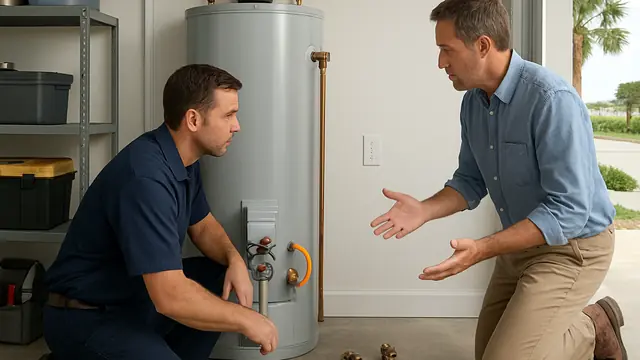
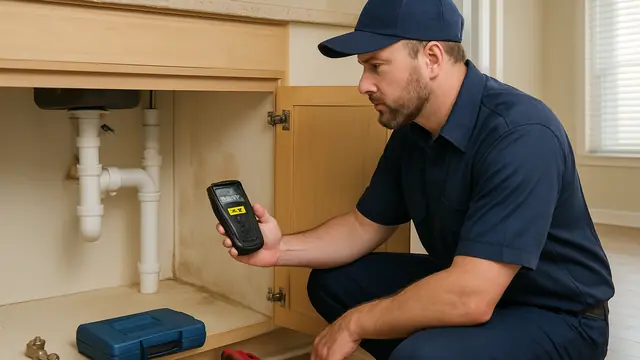
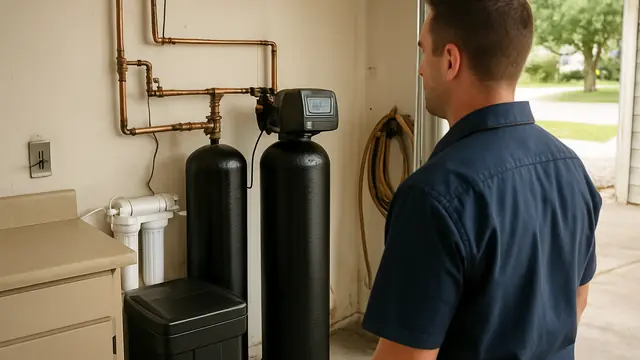
A plumber begins by reviewing the home's leak and repair history. The inspection may include identifying visible pipe materials, checking connections, testing water pressure, comparing hot- and cold-water flow, and examining valves and the water heater.
- Depending on the symptoms, diagnostic methods may include meter testing, moisture detection, thermal imaging, pressure testing, or small controlled access openings.
- The objective is to determine whether the problem is isolated, limited to one branch, concentrated in the hot-water piping, or distributed throughout the home.
- A responsible recommendation should explain what was found, which pipes are affected, and why a particular repair scope is appropriate.
Repair Options Beginning With the Least Invasive
A damaged connector, shutoff valve, fitting, or short pipe section may only require a localized repair. This is reasonable when the surrounding material is in good condition and the home does not have a pattern of failures.
- A branch-line replacement may solve recurring problems serving one bathroom, kitchen, or fixture group.
- Replacing only the hot-water piping may be considered when testing shows that the cold-water system remains serviceable.
- A phased repipe can divide the project into planned stages. The entire route should still be designed in advance so newly installed sections are not disturbed during later phases.
Whole-home repiping becomes more reasonable when leaks are widespread, flow is restricted throughout the house, unreliable material remains in many areas, or repeated repair costs continue to accumulate.
Factors That Affect Repiping Cost
Cost depends on the home's size and layout, number of plumbing fixtures, pipe material, accessibility, routing, number of stories, required permits, and the amount of wall or ceiling restoration.
A home with accessible piping and a compact layout differs from one with several bathrooms and concealed plumbing behind finished surfaces.
Ask whether the proposal includes new shutoff valves, fixture connections, pressure correction, permits when required, access openings, patching, cleanup, and warranty terms.
Prevention and Maintenance Guidance
Have the home's water pressure checked when leaks, failed hoses, or noisy valves become frequent. Inspect accessible connections periodically and replace aging washing-machine, dishwasher, and ice-maker supply lines before they fail.
Keep the main shutoff valve accessible and make sure household members know how to use it.
During repiping, ask whether isolation valves can be installed for major fixture groups. These valves can allow one area to be shut down without interrupting water to the entire home.
Do not ignore small stains, recurring discoloration, or gradual pressure changes. Early diagnosis generally provides more repair choices.
Take the Next Appropriate Step
The strongest signs your home may need repiping in Bid-A-Wee include recurring leaks, widespread flow problems, persistent discoloration, visible deterioration, and an expanding repair history.
No single symptom automatically requires complete replacement. A licensed plumber can evaluate the whole system and help you compare a localized repair, partial replacement, phased repipe, or whole-home project based on actual conditions.
About this guide: This resource provides general homeowner education, not a remote diagnosis. Actual conditions, code requirements, equipment, and safe repair options must be evaluated at the property.