Stop and call for qualified help when plumbing water is near electrical equipment, sewage is entering occupied space, gas or burning odors are present, or a repair would require opening pressurized piping.
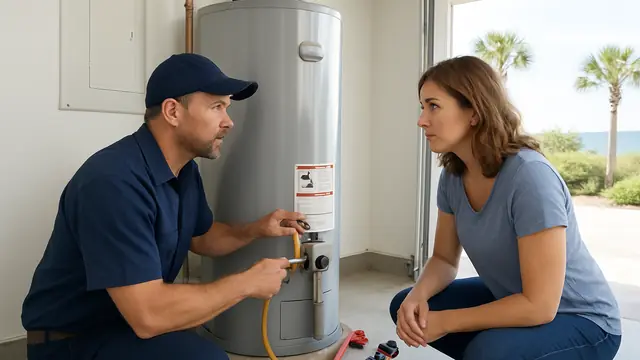
The kitchen faucet has lost some pressure, a guest bathroom takes longer to fill, and a plumber recently repaired a small leak near the water heater. None of those problems seems severe by itself. When several plumbing symptoms develop over time, however, a Blue Mountain Beach homeowner may be looking at early signs that the home needs repiping.
Repiping replaces unreliable water-supply lines in one branch, several sections, or the whole hot-and-cold system. It does not include drain or sewer replacement.
If a leak is active, stop the water before investigating. Use the nearest working valve or main shutoff when safe. Keep away from wet electrical areas, protect belongings, and call a licensed plumber.
Signs Your Home May Need Repiping in Blue Mountain Beach
Plumbing Repairs Are Becoming a Routine Expense
One repair is not a trend. A series of leaks, failed valves, corroded connections, or damaged sections is. Review where repairs occurred and which materials were involved.
If the same pipe keeps failing in separate areas, untouched sections may share the weakness. At some point, compare repeated repair disruption with planned replacement.
Several Fixtures Have Weak Flow
Low flow at one sink may come from an aerator or valve. Weak flow at multiple fixtures may point to pressure trouble, restricted piping, or undersized branches.
Compare hot and cold water. Weak hot flow may involve the heater or hot-water piping. Weakness on both sides may involve the main valve, regulator, service line, or distribution system.
Water Changes Color After Sitting
Brown, orange, or yellow water after a fixture sits unused may come from corroding metal pipe, the water heater, or the incoming supply. Diagnosis is necessary.
Note which fixtures are affected, whether the color appears on hot water, cold water, or both, and how long it takes to clear. Those details help isolate the source.
Leaks Appear Behind Finished Surfaces
A damp ceiling, peeling paint, soft wallboard, lifting floor edge, or musty odor can indicate concealed water. Roofs, drains, air-conditioning equipment, and exterior water can create similar signs.
The possibility of failing piping increases when stains grow during fixture use, the meter moves with fixtures off, or concealed supply leaks were found elsewhere.
Exposed Pipe Shows Deterioration
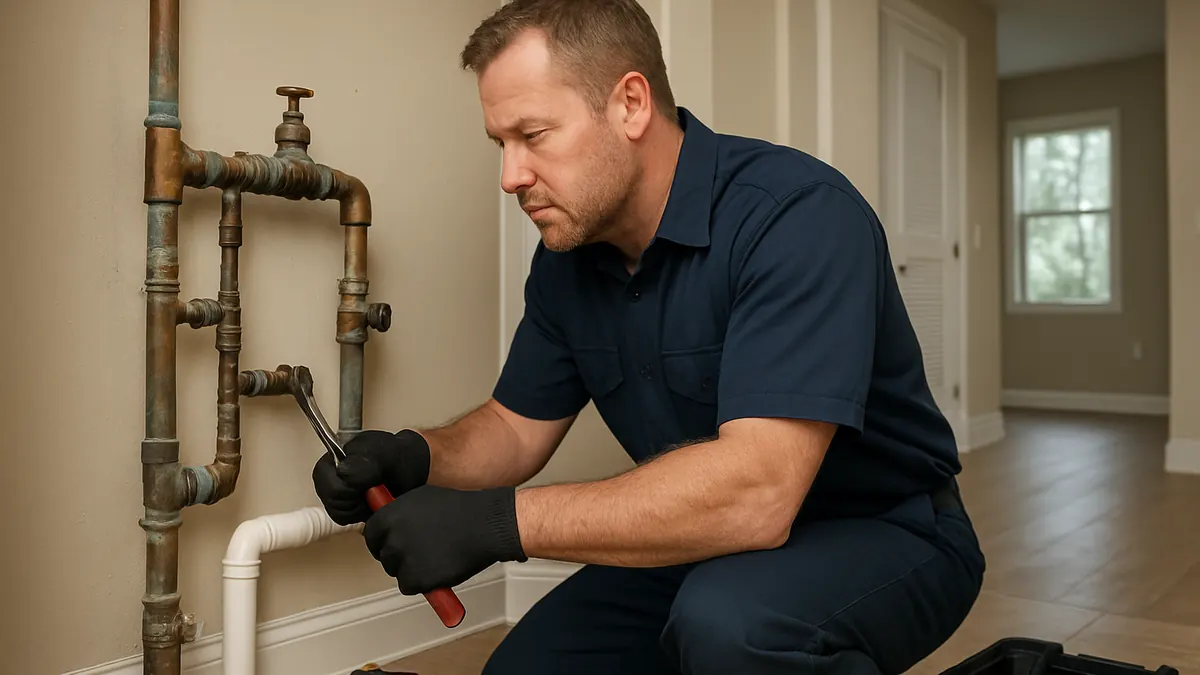
Inspect visible lines under sinks, near laundry equipment, around the water heater, and in accessible utility areas. Look for rust, pitting, colored deposits, crust, dampness, or staining.
Do not scrape, twist, or test a corroded fitting. Disturbing weakened metal can turn a slow seep into a larger leak.
Why a Home's Water Lines Can Become Unreliable
Water lines are affected by material, workmanship, pressure, temperature, movement, fitting quality, support, and water chemistry-not age alone.
Metal pipe may narrow internally as corrosion accumulates, reducing flow even when incoming pressure is adequate. Thin areas may develop pinhole leaks.
Plastic systems avoid metal corrosion but still need correct fittings, support, temperatures, and installation. Fastener or remodeling damage may cause an isolated failure rather than widespread deterioration.
High pressure may feel useful, but it stresses connectors, appliance valves, toilet parts, and joints. Correct it before or during repiping.
Safe Checks You Can Perform
- Compare fixtures without opening walls or plumbing. Run cold and hot water at several sinks, then note whether flow changes when another fixture starts.
- Inspect cabinets, nearby floors, and ceilings below bathrooms or laundry areas for swelling, stains, corrosion, dampness, or wet belongings.
- Review bills for unexplained increases. Irrigation, guests, and seasonal use also affect consumption, but a change combined with moisture deserves attention.
- With water use stopped, observe the meter if safely accessible. Continued movement may suggest a leak. Do not manipulate utility equipment or enter a flooded area.
- Document findings with photographs and dates. This helps separate one-time trouble from recurring failure.
What Not to Do
- Do not raise water pressure to compensate for restricted pipes. Higher pressure may worsen existing leaks and shorten the life of fixtures and appliances.
- Do not cover a damp wall, repaint a stain, or replace damaged flooring before the source is corrected and the area is dry. Cosmetic repair can hide continuing damage.
- Avoid repeated do-it-yourself patches on concealed water lines. Clamps, sealants, and temporary fittings may not be rated for the location, pressure, or pipe material.
- Do not assume every old-looking pipe needs replacement. Diagnosis should guide the scope and prevent both unnecessary work and repeated damage.
Warning Signs That Require Faster Action
- Sudden pressure loss, water sounds behind a wall, a spreading stain, bulging ceiling, wet flooring, or dripping through a light requires immediate attention.
- Shut off the water when safe. If water is near electricity, avoid the area and contact the appropriate emergency professional. Do not stand beneath a sagging ceiling.
- Repeated leaks over a short period are also urgent because the system may no longer be reliable.
How a Licensed Plumber Diagnoses the Need for Repiping
The plumber reviews leak locations, repair records, pressure, discoloration, and materials. Accessible lines may reveal corrosion, old patches, poor support, or incompatible connections.
- Pressure is measured with fixtures off and flowing to distinguish low incoming pressure from internal restrictions. Sections may be isolated.
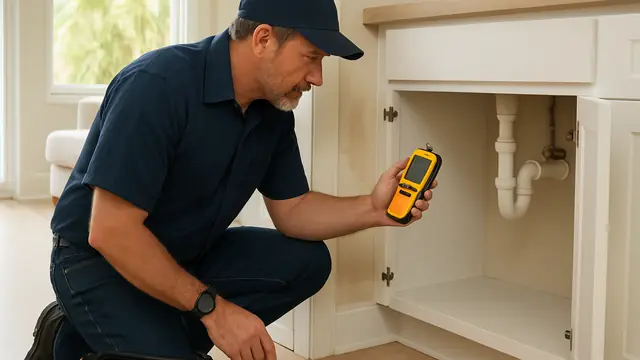
- Leak-detection tools can locate concealed water without random demolition. Acoustic equipment, moisture readings, thermal imaging, or controlled testing may be used.
- The recommendation should identify whether the problem is a fixture, valve, branch, or whole-house issue and explain why.
Repair Options Before a Whole-House Repipe
- The first option may be cleaning an aerator, replacing a valve, correcting a regulator, or repairing a short accessible section.
- A branch repipe replaces the line serving a specific area. It may be appropriate when failures are confined to one bathroom, the hot-water side, or another identifiable section.
- Selective replacement can be combined with renovation while surfaces are open, reducing duplicate access. Material transitions must be installed correctly.
A whole-house repipe becomes practical when leaks occur in several areas, restrictions affect many fixtures, vulnerable material remains throughout the home, or repairs cause increasing damage. PEX and copper are common choices, depending on routing, access, code, and priorities.
Factors That Affect Cost and Disruption
Cost depends on home size, fixture count, floors, pipe route, access, material, and finish construction.
Wall and ceiling access, drywall restoration, painting, tile work, cabinet protection, insulation, firestopping, permits, inspections, and fixture reconnections may all affect the final scope.
Ask whether the estimate includes restoration, debris removal, permits, valves, fixture reconnection, and daily water service. Lower proposals may exclude needed work.
Prevention and Maintenance Guidance
Know the location of the main shutoff and keep it unobstructed. Replace aging washing-machine hoses, refrigerator lines, toilet connectors, and faucet supplies proactively.
Have pressure tested if pipes bang, connectors fail, or fixture components wear out repeatedly. Investigate unexplained moisture and discoloration early.
For a home that is sometimes vacant, monitored leak sensors or an automatic shutoff can reduce the time between a leak beginning and someone responding. After plumbing work, keep records of pipe routes and replaced sections.
Choose the Scope That Fits the Evidence
The signs your home may need repiping in Blue Mountain Beach include recurring repairs, weak flow at several fixtures, concealed leaks, persistent discoloration, and corrosion in multiple locations. These symptoms do not automatically require complete replacement, but they do justify a systematic inspection and a repair plan based on evidence.
About this guide: This resource provides general homeowner education, not a remote diagnosis. Actual conditions, code requirements, equipment, and safe repair options must be evaluated at the property.