Stop and call for qualified help when plumbing water is near electrical equipment, sewage is entering occupied space, gas or burning odors are present, or a repair would require opening pressurized piping.
The plumbing seems normal when only one person is home, but problems appear when the household becomes busy. After two showers, a toilet flush, and a washing-machine cycle, the lowest tub begins to fill with cloudy water. Later, the drains empty again, making the problem easy to dismiss. In a Freeport home, intermittent symptoms like these often mean the sewer line is partially restricted and can no longer handle normal peak use.
Delay laundry and dishwashing, keep showers brief, and do not repeatedly flush toilets to test the line. If sewage backs into a fixture or leaks from a cleanout, stop using the plumbing and avoid contact with the wastewater.
A sewer camera inspection gives a licensed plumber a live view inside the accessible drain or sewer line. It can reveal where flow is being restricted, whether the pipe is damaged, and which repair option makes sense before unnecessary demolition or excavation is considered.
What Symptoms Point to a Larger Drain Problem?
A main-line issue may cause a toilet to gurgle when another fixture drains, water to rise in a shower after flushing, or multiple drains to slow at the same time. Other clues include recurring sewage odors, repeated professional cleanings, and stoppages that occur only when a large volume of water enters the system.
Common Causes a Sewer Camera Can Help Identify
Waste, Grease, and Buildup
Wipes, paper towels, hygiene products, grease, and organic debris can lodge in the pipe or coat its wall. As the opening narrows, ordinary waste begins collecting more easily.
Roots
Roots can enter through a crack or loose joint. Once inside, they spread and catch solids.
Misaligned Joints
When connected sections shift, an edge forms inside the line. Waste catches there, and soil or roots may enter through the opening.
Low Spots
A sewer line depends on gravity. If a section lacks proper slope or develops a belly, water and solids remain in the pipe.
Broken or Collapsed Pipe
A cracked line may admit roots or soil. A deformed or collapsed section can create frequent backups.
Safe Checks Before Scheduling Service
- Identify which fixtures are slow, noisy, or backing up. Note whether the symptoms occur after laundry, bathing, flushing, or kitchen use.
- Check the lowest shower or bathtub for rising water. Do not touch any wastewater or remove the drain cover.
- Listen for air movement or gurgling in nearby fixtures. Write down which fixture was operating when the sound occurred.
- If you can see an exterior cleanout, check for visible leakage around the cap without loosening it. A full pipe may be under pressure.
- These observations help the plumber, but do not deliberately overload the system to reproduce the problem.
What Homeowners Should Avoid
- Do not use several types of chemical drain cleaner. Mixing products can create dangerous reactions, and chemicals trapped behind a blockage can expose the service technician.
- Do not insert a pressure washer hose, garden hose, or improvised tool into the sewer line. The obstruction can worsen, and weak pipe may be damaged.
- Do not use a large rented cable machine without training. Sewer cables can bind, twist, and cause serious injury.
- Do not assume that a recurring clog means the entire line must be replaced. Diagnosis should come before a major repair decision.
What Happens During a Sewer Camera Inspection in Freeport?
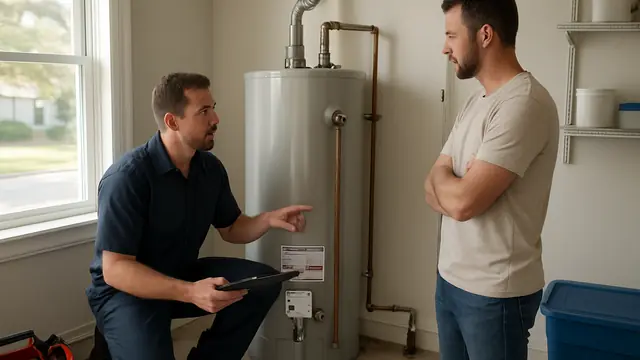
The appointment normally begins with questions. The plumber asks which fixtures are involved, when the problem occurs, and whether the line has been cleaned or repaired before.
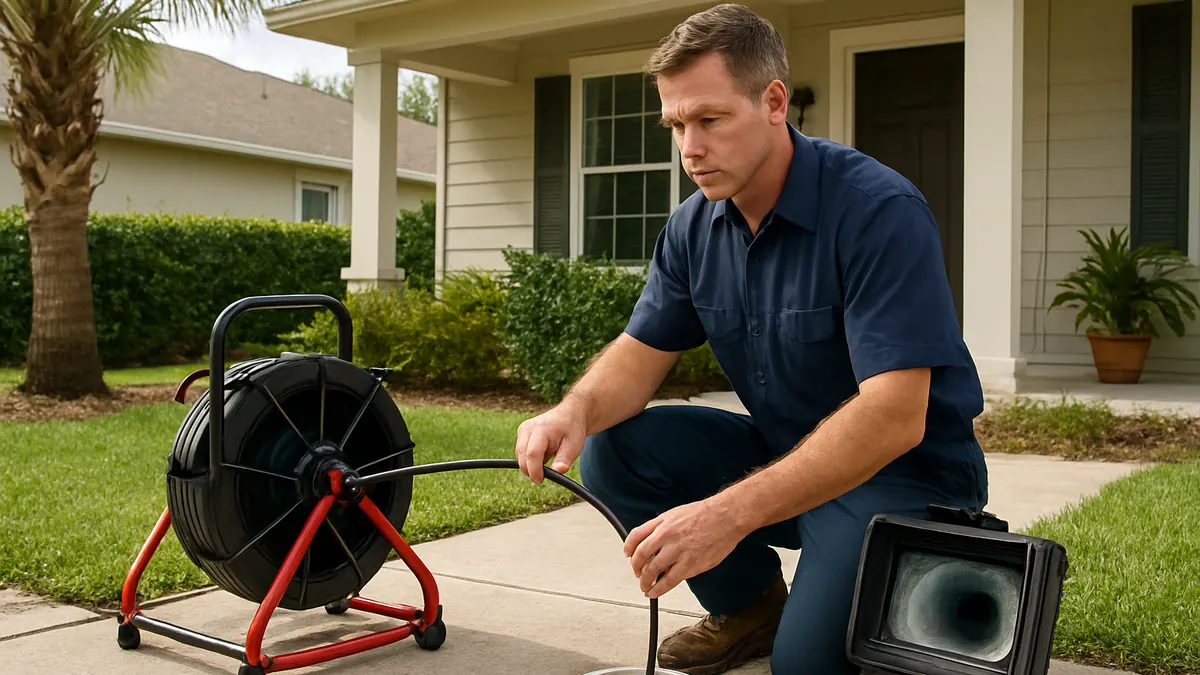
Next, the plumber chooses a suitable entry point. An accessible exterior cleanout often offers a direct route into the main sewer line. If one is not available, another approved access point may be used.
A lighted waterproof camera is mounted on a flexible cable. The plumber pushes it through the pipe while viewing live footage on a monitor. The camera shows the visible pipe wall, joints, water level, debris, and obstructions.
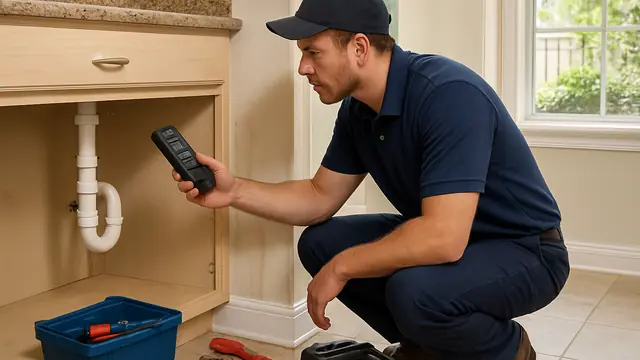
Distance markings and a transmitter in the camera head can help the plumber estimate the location and depth of a defect. The camera may reveal roots, wipes, grease, standing water, an offset joint, cracks, deformation, or collapse.
If the line is blocked completely, the inspection may stop at the obstruction. Cleaning is then needed before the camera can continue and provide a clear view of the pipe beyond it.
How the Footage Is Interpreted
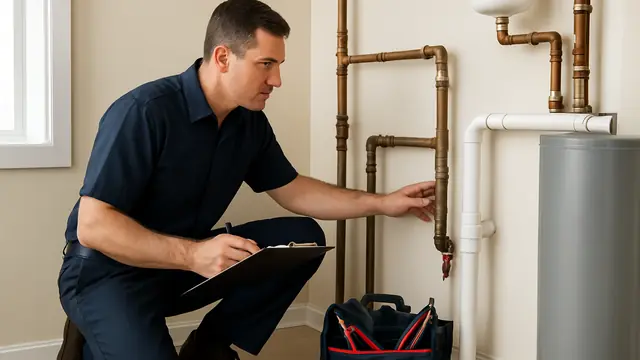
The plumber compares the video with the symptoms and expected pipe layout. Standing water may indicate a belly or a downstream clog, while a dark line may be residue rather than a crack. The explanation should separate confirmed findings from possibilities and identify any area that could not be inspected.
Signs That Make the Problem Urgent
Stop using the plumbing if sewage appears inside the home. Wastewater can damage flooring, walls, cabinets, and personal belongings while creating a sanitation concern.
Urgent service is also appropriate when all toilets are unusable, sewage leaks around a cleanout, several fixtures stop draining at once, or a recently cleared line blocks again quickly.
Repair Choices From Least Invasive to Most Extensive
- A localized clog may be removed with professional cable cleaning, and a lodged object may sometimes be retrieved.
- Hydro jetting may be recommended for heavy buildup in a structurally sound line. It uses high-pressure water, so the pipe should be evaluated first.
- Roots can be cut to restore flow, but the opening that allowed entry may still need repair or monitoring.
- A localized break or offset joint may be corrected with a spot repair. Trenchless repair may be possible in some situations when pipe condition, layout, and access are suitable.
- Full replacement is usually considered when damage is widespread, several sections have failed, or targeted repairs would not provide a reliable result.
Factors That Affect Cost
Camera-inspection cost depends on the available access, length and diameter of the line, blockage severity, cleaning needs, locating work, and whether video documentation is included.
Repair cost depends on the cause, location, depth, and length of the damaged area. Pipe material, access for equipment, surfaces above the line, and required restoration also influence the total scope.
Prevention and Maintenance Guidance
- Only human waste and toilet paper should be flushed. Keep wipes, paper towels, hygiene products, and household debris out of toilets.
- Do not pour cooking fats, oil, or grease down a drain. Scrape food into the trash and use sink strainers.
- Arrange service when several drains begin slowing or gurgling instead of waiting for wastewater to enter the home.
Schedule a Sewer Camera Inspection in Freeport
What happens during a sewer camera inspection in Freeport is a focused investigation of the accessible pipe. A licensed plumber reviews the symptoms, selects an entry point, advances a lighted camera, locates significant findings when possible, and explains repair options in practical order. When drainage problems appear during heavy use or return after cleaning, the inspection helps identify the real cause before the homeowner commits to a repair.
About this guide: This resource provides general homeowner education, not a remote diagnosis. Actual conditions, code requirements, equipment, and safe repair options must be evaluated at the property.