Stop and call for qualified help when plumbing water is near electrical equipment, sewage is entering occupied space, gas or burning odors are present, or a repair would require opening pressurized piping.
During a walkthrough in Freeport, you open the laundry-room cabinet and see a water stain below a valve. The washing machine is not running, so the area feels dry. Later, the kitchen faucet pulses when another fixture opens, and an exterior hose connection drips after it is shut off. Each symptom may have a small repair behind it, but together they raise questions about pressure, aging connectors, hidden moisture, or alterations to the plumbing system.
The safe immediate action is to photograph the conditions and avoid operating anything that leaks or appears damaged. Do not tighten the laundry valve, force the exterior faucet, or keep cycling fixtures to see whether the symptom gets worse. Request a licensed plumbing inspection before the purchase deadline.
A plumbing inspection checklist before buying a Northwest Florida home in Freeport should cover the water service, main shutoff, pressure, visible piping, fixtures, appliance connections, water heater, drains, and wastewater connection.
Trace the Plumbing Layout Before Judging Its Condition
Start by identifying where water enters the property, where the main shutoff is located, where the water heater sits, and how the principal drain exits the home. Ask whether additions, converted rooms, outdoor kitchens, utility spaces, or appliance relocations changed the plumbing layout.
Alterations are not automatically a problem. The plumber should look for proper support, compatible materials, accessible shutoffs, protected piping, and logical drain connections.
Inspect the Water Service and Main Shutoff
The main shutoff should be clearly located and accessible. A plumber can inspect the service entry and visible piping for leakage, corrosion, damage, unsupported sections, and unusual repairs.
Check Pressure and Thermal Expansion
Water pressure affects nearly every plumbing component. Excessive pressure can damage faucet cartridges, toilet fill valves, appliance hoses, connectors, and water-heater parts. Low pressure may indicate a partially closed valve, regulator problem, clogged filter, restricted pipe, pump issue, or source limitation.
The plumber may measure pressure with all fixtures off and again while water is flowing. A sudden drop when another fixture opens provides useful diagnostic information.
Examine Kitchens, Bathrooms, and Utility Fixtures
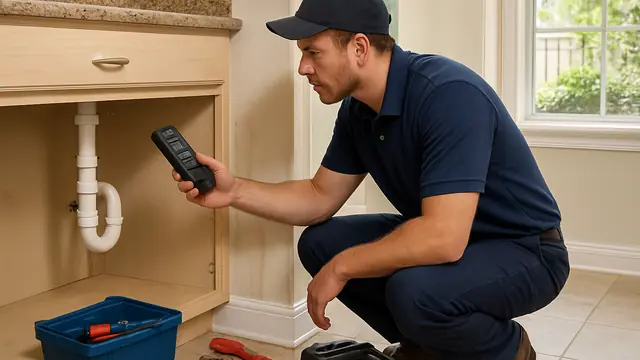
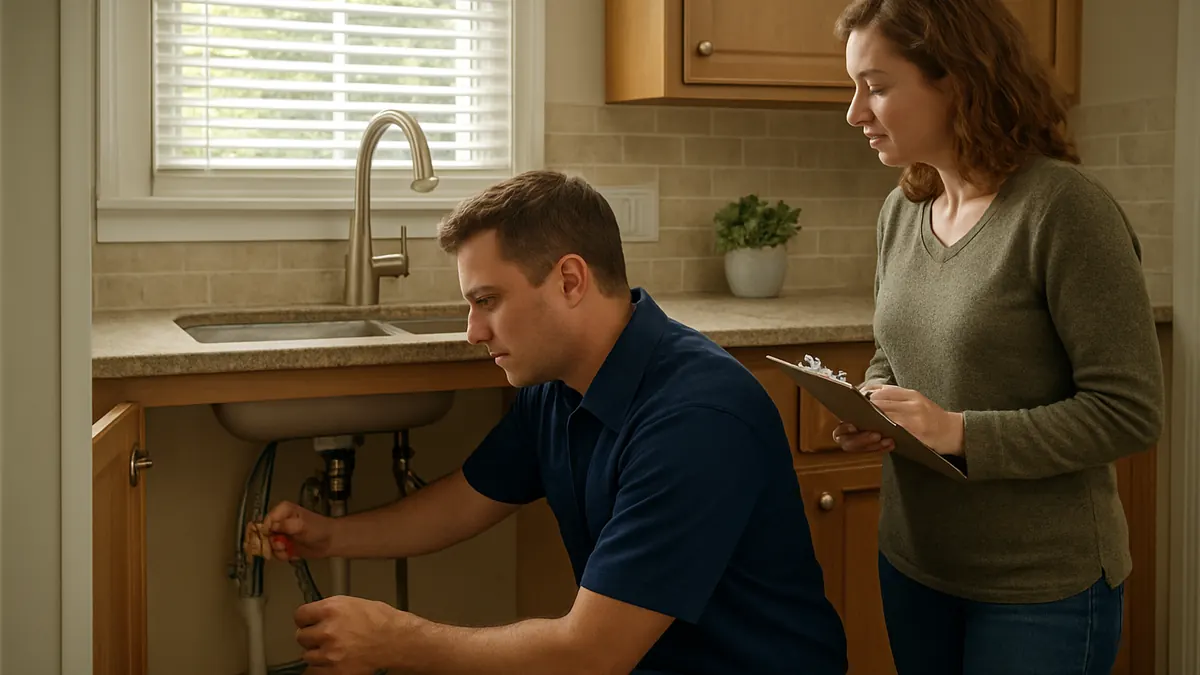
Run hot and cold water at every sink. Check the faucet base, connectors, shutoffs, traps, disposal connections, and cabinet floor. A dry stain may be old, but it may also come from a leak that appears only when the faucet turns, the disposal vibrates, or the basin is filled.
Flush every toilet and wait for it to finish refilling. Listen for continued running and check for movement at the base. A toilet that rocks may damage its seal and the flooring below it.
Operate showers and tubs long enough to test drainage and hot-water stability. Look at adjacent walls and ceilings where possible. Leakage can come from the supply valve, drain, overflow, enclosure, or waterproofing, and the repair depends on identifying the correct source.
Give Appliance Connections Special Attention
Inspect laundry hoses, recessed valve boxes, drain connections, and the floor around the machine. Check beneath the dishwasher and refrigerator where accessible. Look for rust, mineral buildup, swollen flooring, or previous patching.
Evaluate the Water Heater
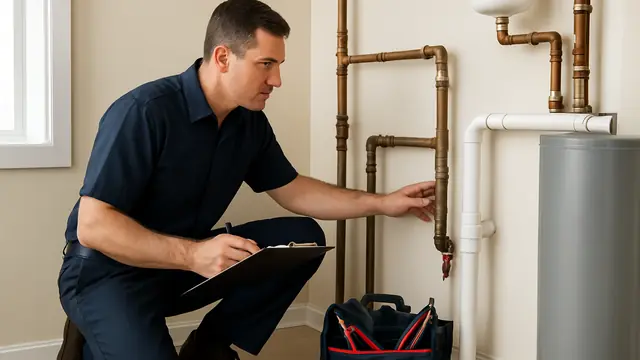
The water-heating review should identify the equipment type, approximate age, capacity, energy source, shutoff, relief valve, discharge piping, venting or electrical connection, drain pan where applicable, and service clearance.
Run hot water at several fixtures. Note delayed delivery, temperature changes, unusual sounds, or hot water that runs out quickly. Possible causes include controls, scale, heating elements or burners, recirculation equipment, fixture cartridges, or inadequate capacity.
Test Individual Drains and the Main Drain
A plumber should observe how quickly fixtures empty and whether nearby drains react. One slow lavatory may have local buildup. Multiple slow fixtures, toilet bubbling, or water rising in a shower when another fixture drains can indicate a restriction in a shared branch or main line.
A sewer-camera inspection may be appropriate when symptoms, repair history, or access justify it. The camera can show visible obstructions, roots, offsets, damaged sections, standing water, and previous repairs. It may not pass through a complete blockage until the line is cleaned.
Include Exterior Plumbing in the Inspection
Operate accessible hose connections and inspect outdoor showers, utility sinks, irrigation supply connections, and plumbing serving detached or accessory areas when they are part of the sale.
Safe Checks a Buyer Can Perform
With permission, you can:
- Run faucets and inspect cabinets while water flows.
- Flush toilets and confirm that they stop refilling.
- Compare pressure at fixtures in different areas.
- Run a tub or sink long enough to observe drainage.
- Look for stains around appliances and the water heater.
- Check accessible floors for softness or swelling.
- Locate the main shutoff.
- Ask for repair records, manuals, and warranties.
What the Buyer Should Not Attempt
- Do not remove appliance panels, disconnect hoses, open water-heater electrical compartments, lift toilets, snake unfamiliar drains, or enter unsafe spaces.
- Do not use chemical drain cleaners. They can harm some piping, create a risk for technicians, and obscure the nature of a blockage.
- Do not operate a valve that appears heavily corroded or damaged. Testing should be done by someone prepared to stop the water if the component fails.
Signs That Require Urgent Attention
Active leaks, sewage backup, persistent sewer odor, water near electrical equipment, a leaking water heater, soft flooring, sagging ceilings, unexplained meter movement, or several backed-up fixtures require prompt evaluation.
How a Licensed Plumber Diagnoses Concerns
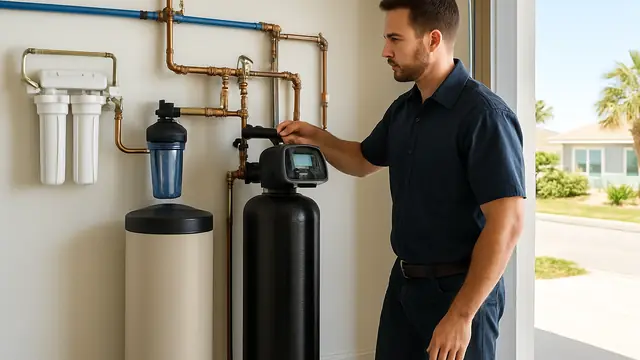
The plumber combines visual inspection with controlled operation of the system. Depending on the findings, testing may include pressure measurement, meter observation, moisture readings, fixture isolation, pressure testing, drain cleaning, and sewer-camera inspection.
Repair Options From Simple to Extensive
A minor repair may involve replacing a connector, cartridge, toilet component, shutoff, trap, hose bibb, appliance valve, or accessible pipe section. A local drain may only need cleaning.
The next level may include pressure-regulator service, expansion-control correction, water-heater repair, targeted wall access, branch-line replacement, or sewer spot repair.
More extensive conditions may require water-heater replacement, drain rerouting, partial repiping, whole-home repiping, excavation, or coordinated onsite-wastewater work. Replacement should follow documented evidence, not age or appearance alone.
Factors That Affect Cost
Cost depends on access, material, location, diagnostic testing, number of affected fixtures, equipment type, permits, excavation, and restoration. Work behind cabinets, beneath flooring, inside a finished wall, or underground usually requires more coordination than an exposed repair.
Prevention and Maintenance After Closing
Label the main and fixture shutoffs. Replace deteriorated appliance connectors and repair small leaks before they damage cabinets or floors. Keep grease, wipes, and foreign objects out of drains.
Follow manufacturer maintenance guidance for the water heater, pumps, treatment equipment, and leak-control devices. If the property will sit vacant, arrange regular checks and make sure a trusted person can reach the main shutoff.
Know the Plumbing Condition Before You Close
A plumbing inspection checklist before buying a Northwest Florida home in Freeport should reveal how the system performs under normal demand and whether repairs are isolated or connected. Reviewing the service, pressure, fixtures, appliances, water heater, drains, and shutoffs gives the buyer practical information for negotiation and future planning.
About this guide: This resource provides general homeowner education, not a remote diagnosis. Actual conditions, code requirements, equipment, and safe repair options must be evaluated at the property.