Stop and call for qualified help when plumbing water is near electrical equipment, sewage is entering occupied space, gas or burning odors are present, or a repair would require opening pressurized piping.
You move a basket in the laundry room and notice that one section of baseboard is swollen. The wall feels dry, but the area smells slightly musty after the washing machine runs. There is no obvious hose leak. This type of timing can be an early warning of a hidden plumbing leak in a Freeport home.
Stop using the nearby appliance or fixture until the area can be checked. Dry visible moisture, take photographs, and watch for spreading. If water is actively flowing into the home, close the water shutoff when safely accessible and call a licensed plumber.
Seven Warning Signs of a Hidden Plumbing Leak in Freeport
1. Damage Appears After an Appliance Cycle
Moisture that appears after the washing machine, dishwasher, refrigerator dispenser, or another water-using appliance operates may point to a supply hose, valve, drain connection, or nearby concealed pipe.
Check only visible connections. Do not move a heavy appliance if doing so could damage the floor, disconnect a line, or expose electrical hazards.
2. A Toilet Refills When No One Has Used It
A toilet that periodically refills may be losing water from the tank into the bowl. This leak may not create moisture on the floor, but it can waste water continuously.
If the floor becomes damp, the cause may involve a supply connection, valve, tank hardware, condensation, or toilet seal. Stop using the toilet if flushing causes water to appear.
3. A Ceiling or Wall Stain Changes Size
A stain may develop below a bathroom, beside a plumbing wall, or near an appliance and darken after a particular fixture is used.
Water often follows framing before reaching the visible surface. Do not assume that the leak is directly above the center of the stain, and never press on a sagging ceiling.
4. The Water Meter Moves During a No-Use Period
Turn off faucets, toilets, appliances, outdoor spigots, irrigation, and water-treatment equipment. Wait until every toilet has finished filling, then observe the meter.
Continued movement may indicate unwanted flow, although a running toilet or automatic device can produce the same result.
5. Water Pressure Changes Throughout the Home
A pressure drop at several fixtures may involve a supply leak, regulator, valve position, utility condition, or simultaneous demand.
A change at one faucet may only be a clogged aerator. Pressure loss becomes more concerning when it occurs with meter movement, running-water sounds, or visible moisture.
6. You Smell Dampness in a Cabinet or Closet
An odor that returns after cleaning can mean moisture is trapped behind a surface. Inspect cabinets, shared plumbing walls, laundry areas, and spaces near appliances. Condensation can smell similar, so timing and location must be evaluated.
7. Flooring or Cabinet Materials Begin to Swell
Cabinet bottoms may bow, laminate may lift, trim may expand, and flooring may feel soft when water is accumulating out of view.
Damage may appear several feet from the source. Stop using nearby fixtures and avoid unstable or slippery areas.
What Commonly Causes Hidden Plumbing Leaks?
Hidden leaks often develop at fixture supply tubes, shutoff valves, appliance hoses, sink traps, toilet seals, shower valves, water-heater connections, drain fittings, or pipe joints.
Wear, corrosion, pressure, movement, damage, and installation problems can contribute. A supply leak may continue while fixtures are off, while a drain leak often appears only during use. That is why some leaks move the meter and others do not.
Safe Checks Before Scheduling Service
- Photograph the surface, note when it changes, and list the fixtures or appliances used beforehand.
- Inspect visible hoses, valves, traps, toilet connections, and cabinet floors. A dry paper towel can reveal a slow drip.
- Perform a meter test only after confirming that every water-using device is off. Locate the main shutoff and keep access clear. Do not force a stuck or corroded valve.
What You Should Not Try
- Do not cut into a wall, ceiling, cabinet, or floor. The mark may be far from the failure, and concealed wiring can make an opening dangerous.
- Do not pour chemical drain cleaner into a leaking fixture. It cannot seal a loose joint or cracked drain and may remain in the pipe when a plumber begins work.
- Avoid tape, household adhesives, improvised clamps, or sealants that are not intended for the pipe and pressure involved. A temporary patch may fail suddenly.
When the Leak Requires Urgent Attention
- Treat the situation as urgent when water spreads rapidly, the meter shows substantial continuous flow, the ceiling sags, or flooring becomes unsafe.
- Moisture near a light, outlet, panel, or appliance creates an electrical concern. Do not touch wet equipment.
- Water containing sewage or appearing after a toilet flush may involve a sanitary drain. Keep people and pets away.
How a Licensed Plumber Diagnoses a Hidden Leak
The plumber determines whether the symptom is continuous or fixture-specific. Meter movement, pressure changes, appliance cycles, and stain timing narrow the possibilities.
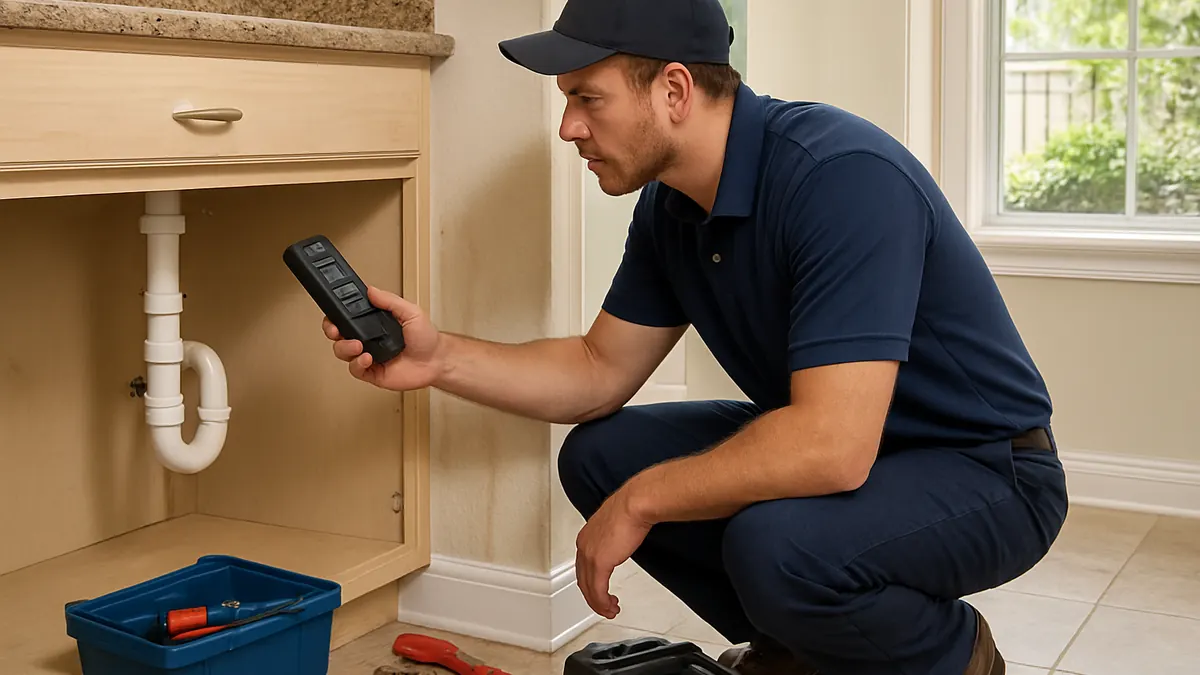
The inspection begins with accessible components. Additional testing may include pressure checks, fixture isolation, moisture instruments, acoustic listening equipment, thermal imaging where appropriate, a small inspection camera, or controlled testing of a drain.
These methods distinguish supply leakage from drain, fixture, appliance, or non-plumbing moisture. The plumber then selects a practical access point.
Repair Options Starting With the Least Invasive
An exposed appliance hose, supply tube, valve, trap, toilet part, or fixture connection may only need to be tightened correctly or replaced.
If the failure is inside a wall or ceiling, a targeted opening may provide enough access for a localized pipe repair. When direct access would damage a large finished area, rerouting a short section may sometimes be the more practical choice.
More extensive replacement may be reasonable when testing finds repeated failures or broad deterioration. It should not be the default response to one leak.
Typical Factors That Affect Cost
- The cost depends on the failed component, diagnostic time, pipe material, location, accessibility, and the amount of finished material affected.
- An accessible hose repair differs from work behind cabinetry, tile, flooring, or a finished ceiling. Emergency scheduling, drying, isolation, and restoration may add cost.
- Ask for a clear explanation of what is included in the plumbing repair and what may require a separate restoration contractor.
Prevention and Maintenance
- Inspect appliance hoses, fixture supplies, toilet connections, valves, and water-heater fittings for corrosion, cracking, swelling, or moisture.
- Monitor water use and investigate unexplained increases. Know the location of the main shutoff and make sure it remains accessible.
- Water alarms can provide early warning near appliances and water heaters. An automatic shutoff system may help when a home is unoccupied.
- After any leak, confirm that damp materials have been dried before walls, floors, or cabinets are repaired.
Homeowner FAQs
Can a hidden drain leak move the water meter?
Usually not beyond the water being used normally. The meter records water entering the home, while a drain leak occurs after that water has passed through a fixture.
Why is the stain not directly below the bathroom fixture?
Water can travel along a pipe, joist, seam, or other surface before it reaches drywall or flooring.
Can a loose appliance hose cause major damage?
Yes. A small seep may damage nearby materials over time, while a failed pressurized hose can release water quickly.
Should I keep testing the suspected fixture?
Only a brief, controlled test is reasonable when there is no active damage. Stop immediately when moisture appears.
Does one hidden leak mean the entire home needs repiping?
No. Many leaks involve one repairable component or pipe section. Broader replacement should be based on inspection findings and the condition of the system.
Responding to Seven Warning Signs of a Hidden Plumbing Leak in Freeport
The seven warning signs of a hidden plumbing leak in Freeport include appliance-related moisture, unexplained toilet refilling, changing stains, meter movement, pressure changes, recurring odors, and swollen flooring or cabinetry.
Do not rely on repainting or sealing the visible symptom. Stop the suspected water use, document the pattern, and shut off the supply when active leakage threatens the home. Professional diagnosis can identify the least invasive repair.
About this guide: This resource provides general homeowner education, not a remote diagnosis. Actual conditions, code requirements, equipment, and safe repair options must be evaluated at the property.