Stop and call for qualified help when plumbing water is near electrical equipment, sewage is entering occupied space, gas or burning odors are present, or a repair would require opening pressurized piping.
Perhaps the first warning in your Hammock Bay home is not the water itself but what it leaves behind. A faucet develops a chalky ring, dishes dry with spots, or the showerhead needs frequent cleaning. Then you notice another concern: the water tastes stale, smells unusual, or carries tiny particles into an aerator. That combination can make it difficult to decide between a water softener and whole-house filtration.
Begin by checking whether each symptom occurs throughout the home. Compare hot and cold water and inspect more than one faucet. Do not taste water that has suddenly changed color, developed a strong chemical or sewage-like odor, or contains oily material. Use another safe source for drinking and cooking until a sudden or suspicious condition is evaluated.
A softener is designed for dissolved hardness minerals. A whole-house filter is selected for a specific filtration problem. Some properties need both, but testing should come before equipment.
Why the Correct Choice Starts With the Symptom
Water problems fall into different categories. Hardness creates scale because dissolved calcium and magnesium remain behind as water evaporates. Sediment consists of particles that can often be physically captured. Taste and odor may come from chlorine, plumbing components, a water heater, stagnant water, or another source.
The symptom, its location, and test results determine which treatment is reasonable.
When Hard Water Is the Likely Concern
White crust around faucets and showerheads is a common hardness clue. You may also see cloudy glassware, a persistent shower-door film, or spots on fixtures after water dries.
Soap may feel difficult to lather or rinse. Towels and clothing can feel stiff, and small openings in aerators or spray heads may clog more often.
A water softener usually uses ion exchange. Resin inside the tank captures calcium and magnesium and replaces them with sodium or potassium ions. The system periodically regenerates with brine to restore the resin's capacity.
Hardness testing confirms whether those minerals are present at a level that supports treatment.
When Whole-House Filtration Is More Appropriate
Whole-house filtration is more likely to help when the complaint involves sediment, visible flakes, discoloration, or a verified taste or odor issue.
A sediment filter captures particles larger than its rated opening. Activated carbon may reduce chlorine-related taste and odor. Other filtration media are designed for other specific conditions.
If the problem is isolated to one sink, a fixture, supply line, or drain may be responsible. Whole-house equipment should not be the first recommendation until a localized cause is ruled out.
Safe Checks Before You Select Equipment
Run cold water at the kitchen sink and fill a clear glass. Fill another glass with hot water. Allow both to stand and compare color, odor, cloudiness, and visible particles.
Repeat the check in another bathroom. Remove aerators carefully and look for white scale, gritty sediment, rubber fragments, or metallic flakes. Note what you find rather than assuming all debris is incoming sediment.
What a Homeowner Should Not Attempt
- Do not purchase a softener solely because water spots are visible. Detergent, appliance settings, and other dissolved material can also affect glassware, so testing is important.
- Do not use a carbon filter as a substitute for hardness treatment. Carbon may improve certain taste and odor complaints, but it does not normally remove calcium and magnesium.
- Avoid installing a cartridge that is too fine for the home's flow requirements. It may clog rapidly and produce weak showers or slow appliance filling.
Never open a pressurized tank or filter housing without isolating the water and relieving pressure. Do not alter electrical controls, drain connections, or chemical-feed equipment without proper training.
Conditions That Require Faster Professional Attention
Gradual spotting or scale is usually a service and maintenance concern. Sudden changes can be more urgent.
Call promptly if water throughout the home turns dark, red, black, or oily-looking; has a strong chemical, fuel, rotten-egg, or sewage-like odor; contains persistent material; or appears to cause skin or eye irritation.
A sharp loss of pressure may mean a filter has clogged, a valve has failed, or another restriction has developed. A cracked housing, leaking tank, or continuously regenerating softener can waste water and cause property damage.
For an active leak, use the equipment bypass or main shutoff only if you know how to operate it safely.
How a Licensed Plumber Diagnoses Water-Treatment Needs
The diagnostic process begins with questions about the water source, when the symptoms began, where they occur, and how the home is used. Fixture count and simultaneous demand matter because treatment equipment must provide enough flow during peak use.
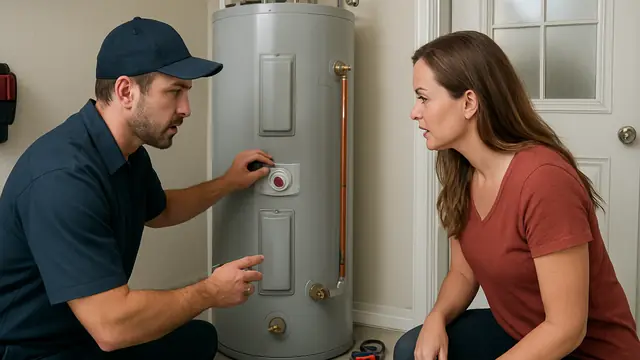
A plumber may inspect pressure, flow, the water heater, accessible piping, aerators, existing filters, softener controls, bypass valves, and drain connections.
Testing may include hardness, chlorine, pH, iron, or total dissolved solids. The plumber then compares the findings with the rated performance of available treatment equipment.
Starting With the Least Invasive Solution
A responsible treatment plan starts with the smallest correction that addresses the verified cause. That may be cleaning aerators, changing an overdue cartridge, repairing a leaking valve, correcting programming, or servicing a water heater.
If only drinking water at one sink is affected, a point-of-use filter may be sufficient. When particles are confirmed throughout the home, a properly sized sediment filter may be considered.
Activated carbon may be selected for a confirmed chlorine-related taste or odor complaint. An ion-exchange softener may be appropriate when hardness is causing scale.
When testing finds both hardness and another water-quality concern, filtration and softening may be installed as separate stages. Repiping is reserved for cases in which pipe deterioration is contributing debris, discoloration, contamination, or repeated restrictions.
What Influences the Cost?
Cost depends on the testing required, treatment media, system capacity, peak flow, plumbing access, drain location, electrical needs, and changes needed at the main water line.
An undersized unit may seem economical at first but can create pressure loss or require frequent maintenance. An oversized or unnecessary system can also waste money.
Maintenance and Prevention
Keep records of test results, cartridge changes, salt use, repairs, and system settings. Label each cartridge with its installation date.
Inspect the treatment area for dampness, cracking, loose tubing, or unusual sounds. Watch for a softener that regenerates too frequently or a filter that causes noticeable pressure loss.
Check for salt bridging, which occurs when salt hardens into a crust and prevents proper brine formation. Follow manufacturer instructions rather than striking or damaging the tank.
Retest when symptoms return, plumbing work is completed, or the water source changes. After a long vacancy, inspect for leaks and confirm normal operation before relying on the system.
Deciding Between Water Softener and Whole-House Filtration in Hammock Bay
Choose a softener when testing confirms hardness and the goal is to reduce mineral scale. Choose whole-house filtration when a specific concern such as sediment or chlorine-related taste and odor has been verified. When the symptoms overlap, a licensed plumber can determine whether one system, staged treatment, or a focused repair is the appropriate next step.
About this guide: This resource provides general homeowner education, not a remote diagnosis. Actual conditions, code requirements, equipment, and safe repair options must be evaluated at the property.