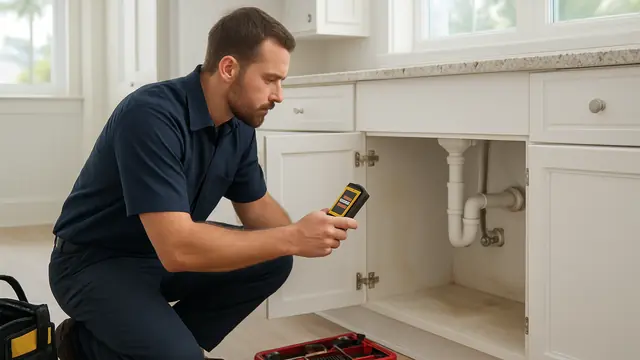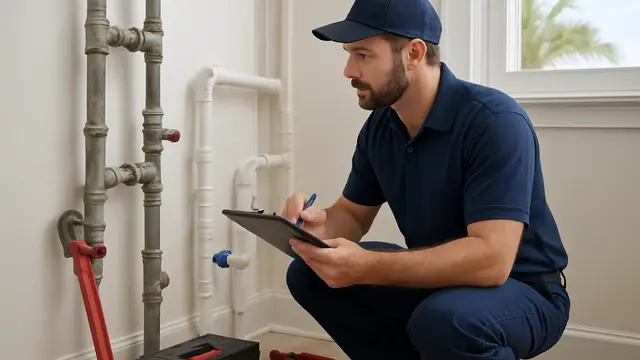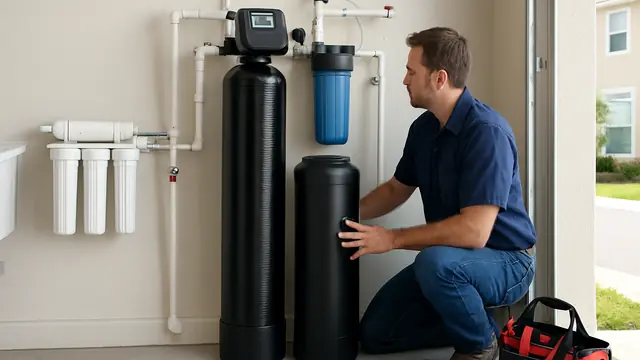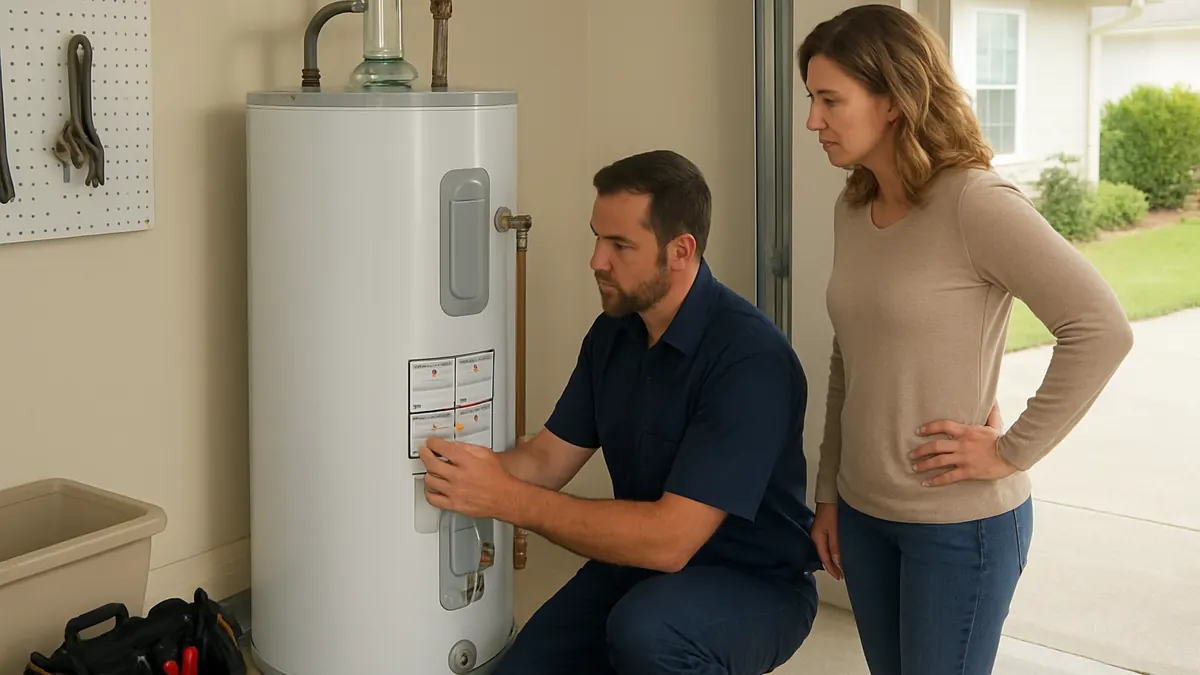
Stop and call for qualified help when plumbing water is near electrical equipment, sewage is entering occupied space, gas or burning odors are present, or a repair would require opening pressurized piping.
A water heater can seem normal one day and unreliable the next. The shower temperature may fall halfway through, the unit may need repeated resets, or you may discover water beneath it after returning to a room that was dry earlier. For an Inlet Beach homeowner, these symptoms make it important to decide whether the system needs a specific repair or whether replacement is the more dependable next step.
If water is escaping quickly, close the cold-water supply valve to the heater if it is safely accessible. Keep away from wet electrical equipment. Turn off an electric heater at the dedicated breaker only when the floor and panel area are dry. If the heater uses gas and you smell gas, leave the property and contact the gas utility or emergency services as appropriate.
What the First Symptom Can Tell You
No hot water usually points to a failure in the heating or control system. Possible causes include an electric element, thermostat, breaker, ignition part, gas control, burner, sensor, or high-limit safety device.
Hot water that disappears too quickly may mean one element has failed, sediment has reduced usable tank capacity, the burner is recovering slowly, the dip tube is damaged, or the system is undersized.
Hot-and-cold fluctuations can occur when a tankless heater has scale, restricted flow, an ignition problem, or a sensor fault. A shower cartridge, mixing valve, or plumbing crossover can create a similar complaint even when the heater is operating correctly.
Visible water may come from a loose connection, drain valve, relief valve, circulation fitting, condensate line, or the tank body. The leak location is one of the most important factors in deciding between repair and replacement.
When a Leak Can Be Repaired
A leak at a threaded connection, connector, shutoff valve, drain valve, or another external component may be repairable.
A leaking relief valve may also be replaceable, but the plumber should determine why it opened. Excess temperature, high pressure, or failed thermal-expansion control may be the real cause.
Water leaking through the steel tank shell, bottom seam, or internal pressure vessel usually means replacement. A patch cannot safely restore a vessel that stores heated water under pressure.
Repair or Replace a Water Heater in Inlet Beach?
Repair is generally reasonable when the heater has one identifiable failure, the tank or heat exchanger remains sound, replacement parts are available, and the system has otherwise been reliable.
Replacement becomes more practical when the tank leaks, corrosion is widespread, repair calls have become frequent, major components are unavailable, or the heater cannot meet normal demand.
Age matters, but condition matters more. An older unit with one minor failure may be repairable, while a newer unit with a leaking tank may require replacement.
Safe Checks You Can Make
- Check whether every hot-water fixture has the same problem. If one shower is affected while sinks and other bathrooms are normal, the issue may be fixture-specific.
- Look at the electrical panel for a tripped breaker. Reset it once only if there is no moisture, burning odor, buzzing, or visible damage. If it trips again, leave it off.
- Write down or photograph any error code displayed by a tankless or high-efficiency unit.
Inspect the visible piping, pan, floor, valves, and discharge line. Note whether the leak appears continuously or only while heating. Do not remove access covers or touch hot discharge water.
Repairs Homeowners Should Not Attempt
- Do not cap, plug, or disable the temperature-and-pressure relief valve. It protects the tank from excessive pressure and temperature.
- Do not repeatedly reset breakers, ignition systems, or high-limit controls. Repeated shutdowns indicate a fault that requires diagnosis.
- Do not adjust gas controls, repair burners, modify venting, or work on energized electrical wiring unless properly qualified.
- Do not apply sealant, epoxy, tape, or clamps to a leaking tank shell. Even if the drip slows, the vessel remains damaged.
Urgent Signs That Should Not Wait
An active tank leak is urgent because the opening can worsen and release more water.
Water near electrical equipment, repeated breaker trips, scorched wiring, or a burning smell requires immediate shutdown.
Gas odor requires evacuation and contact with the proper utility or emergency service. Soot, delayed ignition, unusual flame behavior, or evidence of venting failure also requires prompt action.
A relief valve releasing hot water continuously may indicate dangerous pressure or temperature conditions.
Suddenly scalding water can signal a failed thermostat or control and creates an immediate burn risk.
How a Licensed Plumber Diagnoses the Problem
- A plumber starts by asking when the symptom occurs, how long hot water lasts, whether all fixtures are affected, and whether the unit has shown previous warning signs.
- The model, fuel type, capacity, service history, and installation are reviewed.
- For an electric storage heater, testing may include voltage, thermostats, heating elements, wiring, and high-limit controls.
- For a gas storage heater, diagnosis may include the ignition sequence, burner, flame sensor or thermocouple, gas control, safety devices, combustion, and venting.
For a tankless heater, the plumber may inspect inlet filters, scale accumulation, flow rate, sensors, fuel or electrical input, venting, condensate drainage, recirculation, and stored error history.
Water pressure and thermal expansion may also be tested because excessive pressure can contribute to valve discharge, connection leaks, and shortened equipment life.
Repair Options Before Replacement
The least invasive repair may involve tightening a fitting or replacing a connector, shutoff valve, drain valve, or condensate component.
An electric tank may need a thermostat, heating element, high-limit control, or wiring repair. A gas unit may need an igniter, thermocouple, flame sensor, burner service, or control replacement.
A storage tank with sediment may benefit from appropriate flushing when the vessel is still sound. Flushing cannot repair corrosion or stop a tank-shell leak.
A tankless heater may need descaling, filter cleaning, sensor service, ignition repair, or correction of venting, condensate, or circulation problems.
Replacement is generally recommended when the tank shell leaks, the heat exchanger is damaged, corrosion is advanced, failures repeat, or the heater no longer meets household demand.
Choosing the Right Replacement
A replacement may be a conventional tank, heat-pump water heater, or tankless system. The best choice depends on available utilities, installation space, household demand, expected recovery, simultaneous use, flow requirements, and maintenance preferences.
Cost Factors to Consider
Repair cost depends on the failed part, model, fuel type, accessibility, diagnostic time, and whether related damage must be corrected.
Replacement cost is affected by heater type, capacity, efficiency, removal access, piping changes, drain protection, electrical requirements, gas supply, venting, condensate drainage, expansion control, and code-related work.
Compare the complete installed scope, not equipment price alone.
Prevention and Maintenance
- Inspect around the heater for moisture, rust, staining, or mineral residue.
- Follow manufacturer guidance for tank flushing, anode-rod inspection, tankless descaling, and filter cleaning.
- Have recurring relief-valve discharge, pressure changes, or leaking connections diagnosed before they cause additional damage.
- Keep the heater and its shutoffs accessible.
Make the Decision Before the Problem Gets Worse
The answer to "repair or replace a water heater in Inlet Beach?" depends on the exact failure, the condition of the tank or heat exchanger, repair history, parts availability, and whether the system still meets household demand. A targeted repair may restore dependable service when the equipment is sound. Replacement is usually the better path when the vessel leaks, corrosion is extensive, failures are recurring, or the current system is no longer adequate.
About this guide: This resource provides general homeowner education, not a remote diagnosis. Actual conditions, code requirements, equipment, and safe repair options must be evaluated at the property.