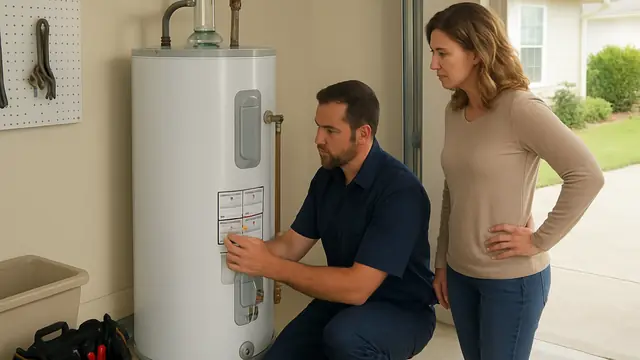
Stop and call for qualified help when plumbing water is near electrical equipment, sewage is entering occupied space, gas or burning odors are present, or a repair would require opening pressurized piping.
The water in your Inlet Beach home may look clear, yet something still seems wrong. Maybe your hands feel coated after washing, the shower fixtures collect white crust, or clean glasses dry with cloudy marks. In another room, someone complains about the taste or notices small particles in an aerator. Those observations raise an important question: do you need a water softener, whole-house filtration, or a different repair altogether?
Start by documenting the problem rather than buying equipment immediately. Check several faucets, compare hot and cold water, and note when the condition occurs. If the water suddenly becomes dark, oily-looking, or strongly chemical-smelling, do not use it for drinking or cooking until it has been evaluated. That is a different situation from gradual scale buildup and deserves faster attention.
A water softener targets hardness minerals. Whole-house filtration targets particular particles, tastes, odors, or substances according to the media used. Choosing correctly prevents unnecessary equipment and ongoing maintenance.
Begin With the Source and Location of the Symptom
These distinctions help determine whether treatment belongs at the main water line or whether a focused plumbing repair is more appropriate.
What a Water Softener Is Designed to Correct
A water softener reduces calcium and magnesium, the dissolved minerals responsible for hard water. These minerals remain behind when water evaporates, creating scale on fixtures, shower doors, and water-using equipment.
Common hardness clues include white buildup, spotted dishes, stiff-feeling laundry, reduced soap lather, and showerheads that clog repeatedly. Testing confirms whether hardness is actually present and supports proper system sizing.
A softener does not automatically remove sediment, chlorine, microorganisms, or every substance that affects taste and odor.
What Whole-House Filtration Is Designed to Correct
Whole-house filtration treats water before it reaches the home's fixtures, but the result depends entirely on the filter media.
A sediment filter may capture sand, rust flakes, or other suspended particles above a specified size. Activated carbon may reduce chlorine-related taste and odor. Specialized filters may be selected for other tested conditions.
Safe Checks an Inlet Beach Homeowner Can Make
Fill one clear container with cold water and another with hot water. Allow both to sit. Compare color, cloudiness, particles, and odor without tasting suspicious water.
Repeat the test at a second fixture. If the problem is present everywhere, check whether the home already has a filter or softener that may be overdue for service. If the issue appears only on the hot side, record any unusual water-heater sounds or changes in hot-water performance.
Remove and inspect an aerator. White crust suggests scale, while rubber fragments, metallic flakes, or gritty particles may have another source. Take a photo or save a sample for the plumber if practical.
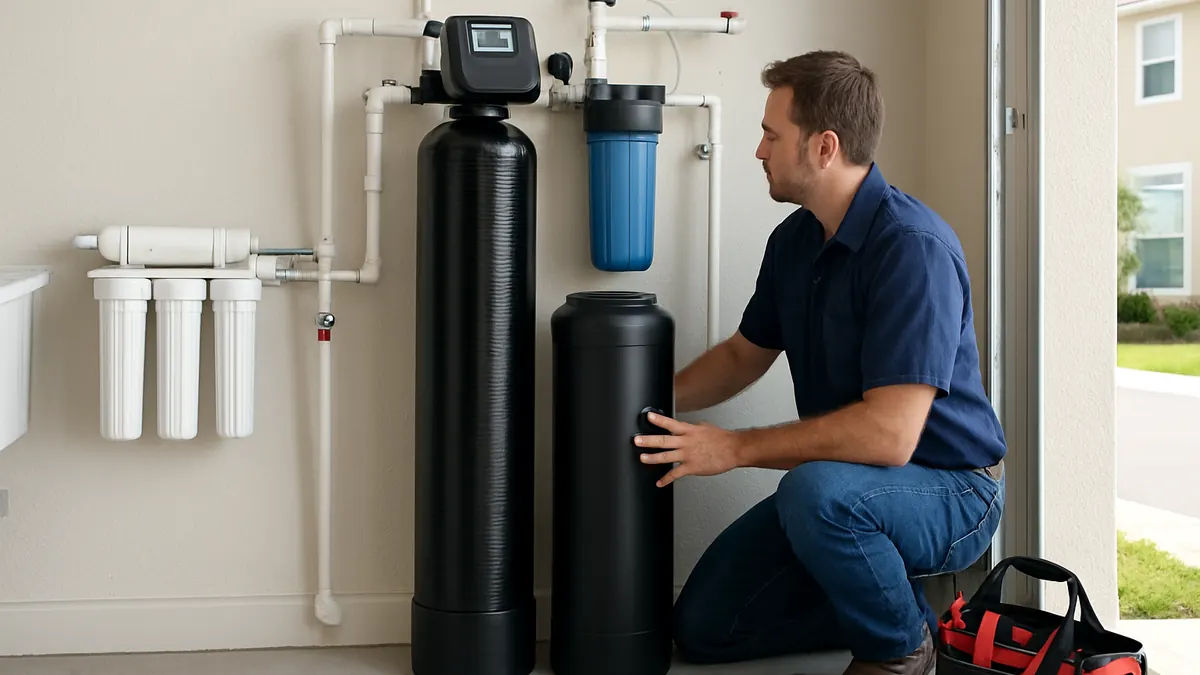
Check cartridge dates, control-panel messages, salt level, bypass position, and visible drain tubing. A system that has no power, is stuck in bypass, or has an exhausted cartridge cannot perform as intended.
What You Should Not Do
Do not choose equipment based solely on a store display, online quiz, or a neighbor's system. Similar-looking homes can have different water sources, plumbing conditions, fixture demands, and maintenance histories.
Do not use a softener to solve visible particles or a sediment filter to solve dissolved hardness. Do not assume that stronger or finer filtration is always better. A filter that is too restrictive can create low pressure and require constant replacement.
Never open a pressurized filter housing without shutting off the water and relieving pressure. Do not alter brine lines, drain connections, electrical controls, or bypass valves unless you understand the system.
Avoid adding bleach, acids, or other chemicals to the water system without testing and a safe professional procedure.
Signs That Make the Problem Urgent
Gradual spotting and mineral scale usually allow time for planned testing and treatment. Sudden whole-house changes do not.
Arrange prompt evaluation if the water turns brown, black, red, or oily-looking; develops a strong chemical, fuel, rotten-egg, or sewage-like odor; contains unexplained persistent material; or appears to cause irritation or illness.
A sudden pressure drop may mean a filter is blocked, a valve has failed, or a supply restriction has developed. A cracked filter housing, leaking treatment tank, or softener that continually sends water to the drain can cause property damage and waste.
For uncontrolled leakage, close the main shutoff if it is safely accessible and call for service.
How a Licensed Plumber Diagnoses the Water Problem
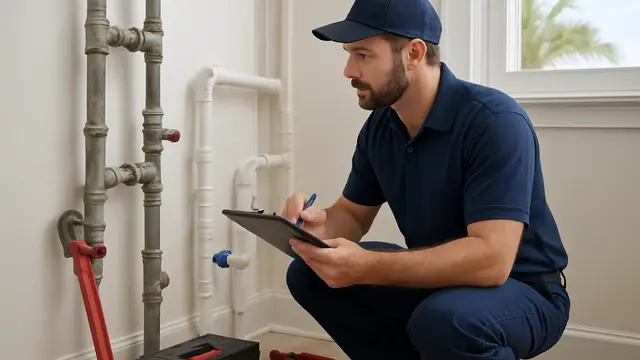
A licensed plumber first maps the symptom. The plumber asks which fixtures are affected, whether the condition is hot or cold, when it began, and whether it changes after the water runs.
The inspection may include the main water entry, pressure, flow, water heater, accessible piping, treatment equipment, aerators, controls, and drain connections. Testing may measure hardness, chlorine, pH, iron, total dissolved solids, or other factors related to the complaint.
The plumber also calculates peak demand so the selected equipment can treat water without reducing usable flow.
Reasonable Solutions Starting With the Smallest Repair
The least invasive solution may be cleaning an aerator, replacing an overdue filter cartridge, correcting a bypass setting, reprogramming a softener, or repairing a leaking control valve.
If the concern is limited to drinking water at one faucet, a point-of-use filter may be enough. If particles enter throughout the home, a properly selected sediment filter may be appropriate.
Activated carbon may be recommended for a confirmed chlorine-related taste or odor problem. A water softener may be recommended when testing confirms hardness and scale.
When both conditions exist, filtration and softening can be installed in stages. The order is based on the water analysis and the way one treatment affects the next. Repiping is considered only if deteriorating plumbing is the actual source of recurring particles, discoloration, contamination, or restrictions.
Factors That Affect Treatment Cost
Cost is influenced by the amount of testing, type of treatment, rated flow, system capacity, number of stages, plumbing access, drainage, electrical availability, and changes required at the main line.
A properly sized single-purpose system can be more effective and economical than a complicated package that treats conditions the home does not have.
Prevention and Maintenance Guidance
- Keep a service record that includes water-test results, filter changes, salt additions, repairs, and settings. Write installation dates on cartridges.
- Inspect the equipment area for leaks, cracked housings, loose tubing, standing water, or unusual sounds. Replace filters before severe pressure loss develops.
- Check a brine tank for salt bridging and follow the manufacturer's instructions for correction. Do not damage the tank while trying to break hardened salt.
Retest when symptoms change, plumbing work is performed, or the water source changes. After a long vacancy, check for leakage and confirm that the treatment system is operating correctly.
Choosing Water Softener Versus Whole-House Filtration in Inlet Beach
The right choice depends on the confirmed problem. A water softener is intended for hardness and scale. Whole-house filtration is selected for a specific concern such as sediment or chlorine-related taste and odor. A careful inspection can also reveal when a cartridge change, water-heater service, fixture repair, or plumbing correction is all that is needed.
About this guide: This resource provides general homeowner education, not a remote diagnosis. Actual conditions, code requirements, equipment, and safe repair options must be evaluated at the property.