Stop and call for qualified help when plumbing water is near electrical equipment, sewage is entering occupied space, gas or burning odors are present, or a repair would require opening pressurized piping.
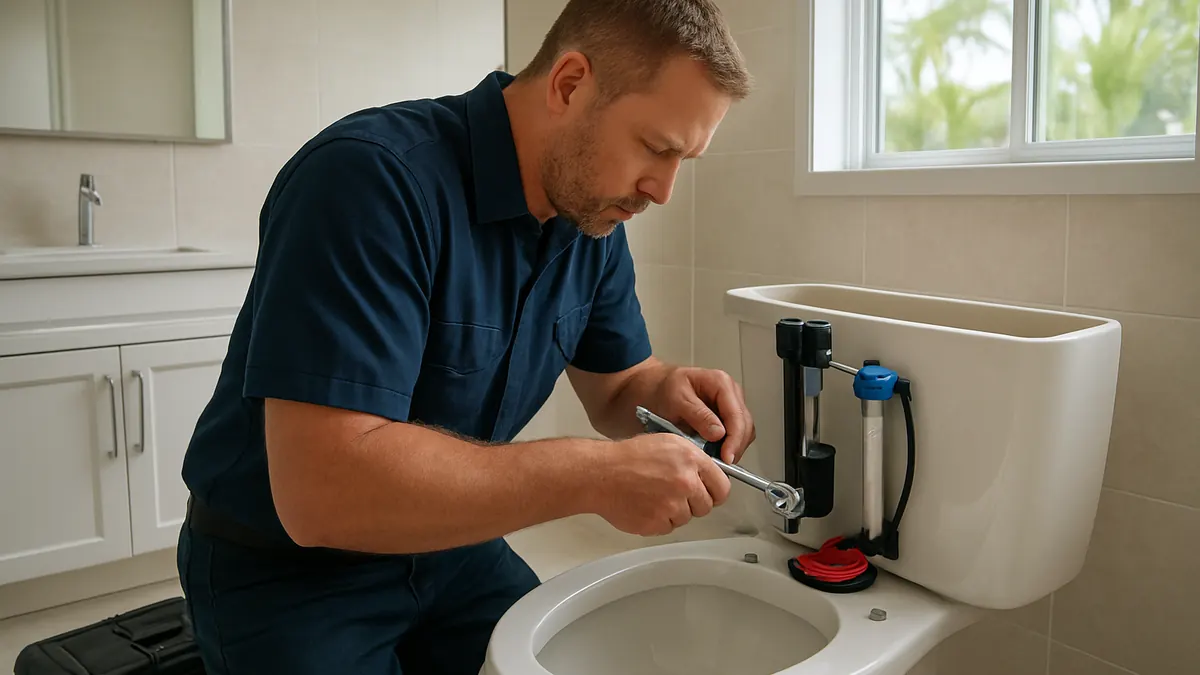
You may hear the toilet filling long after the flush is finished, or you may notice the tank suddenly cycling on for a few seconds throughout the day. Sometimes the only clue is that the handle must be jiggled before the water stops. When a toilet keeps running in a Lower Grand Lagoon home, the tank is usually losing water into the bowl, filling above the proper level, or failing to close its inlet valve.
Your first safe step is to listen, remove the tank lid, and observe the mechanism without placing your hands near moving parts during the flush. If water is leaking outside the toilet, the tank is close to overflowing, or the valve continues admitting water, turn the shutoff valve clockwise with gentle pressure. Do not force it if it is stiff.
The Difference Between Constant and Intermittent Running
A toilet that runs constantly often has water entering the overflow tube or a fill valve that cannot close. A toilet that refills every few minutes usually has a slow leak from the tank into the bowl.
Most Common Reasons a Toilet Keeps Running
The flapper is not sealing
The flapper is a rubber seal that lifts when the toilet is flushed. It must settle flat over the opening at the bottom of the tank. Age, distortion, residue, or a damaged edge can leave a small opening.
The chain is too short or too long
A short chain holds the flapper slightly open. An excessively long chain can tangle, catch on another component, or become trapped beneath the seal.
The float setting is too high
If the float is adjusted above the proper level, the fill valve may not close before water reaches the overflow tube. Water then runs continuously into the bowl.
The fill valve is defective
The fill valve controls incoming water. Internal wear can cause hissing, slow filling, pulsing, or failure to shut off.
The overflow or flush valve is damaged
A cracked overflow tube or damaged flush-valve seat allows water to escape even if the visible flapper appears acceptable.
The handle mechanism is sticking
A corroded, loose, or misaligned handle can keep the chain partially lifted. If the toilet stops running only after the handle is tapped, the handle assembly deserves attention.
Safe Checks You Can Make Before Calling
Remove the tank lid carefully and place it on a folded towel. Flush the toilet and observe each part.
Watch whether the flapper or canister rises fully and then closes. Check that the chain has slight slack when closed. Confirm that the handle returns on its own and that the float rises without hitting the tank wall.
Look at the overflow tube. The water level should stop below its top edge. If water continuously spills into the tube, lift the float gently. Water that stops suggests an adjustment or float-movement issue. Water that continues suggests the fill valve is not sealing.
To test for a silent leak, add food coloring to the tank and wait 15 to 20 minutes without flushing. Color appearing in the bowl means the tank is leaking past the flush seal.
Check outside the tank as well. Run a dry paper towel along the supply line, shutoff valve, tank bolts, and floor. Moisture outside the toilet requires faster action.
What a Homeowner Should Not Do
- Do not overtighten bolts or fittings. Porcelain can crack, and plastic parts can split.
- Do not force a shutoff valve that is difficult to turn. A damaged valve can release water rapidly.
- Do not use drain cleaner to address a running tank. Drain chemicals do not repair fill valves, flappers, floats, or gaskets.
Avoid makeshift repairs such as gluing the flapper, weighting the seal, bending the float arm aggressively, or cutting the overflow tube. These actions can interfere with safe operation.
When a Running Toilet Becomes Urgent
Turn off the supply if water is reaching the floor, spraying from a connection, overflowing the tank, or continuing after the float rises. Cracks in the tank or bowl also require immediate attention.
Arrange service quickly when the shutoff valve does not work, the toilet rocks, the bowl rises toward the rim, or repeated clogs occur. Gurgling nearby fixtures or sewage odor may indicate a drainage problem separate from the running tank.
How a Licensed Plumber Diagnoses the Toilet
The plumber begins by watching the flush and refill cycle. The technician checks how the handle moves, whether the chain is properly tensioned, how the seal contacts the flush-valve seat, and whether the float closes the fill valve at the right water level.
A dye test may be used to confirm a tank-to-bowl leak. The plumber inspects the fill valve, refill tube, overflow tube, shutoff valve, supply line, tank bolts, and visible porcelain.
If the toilet is loose, flushes poorly, or clogs repeatedly, the plumber may also inspect the base seal, mounting flange, internal trapway, and drain opening.
Repair Options Beginning With the Simplest
- The least invasive solution may be repositioning the chain, correcting a sticking handle, setting the float lower, or securing the refill tube correctly.
- If a flapper or canister gasket is worn, replacing that seal may be all that is needed. If the fill valve continues passing water, it can often be replaced as a separate part.
- When multiple internal parts are worn, rebuilding the tank may provide a more reliable repair. A rebuild can include a new fill valve, flush seal, handle components, and hardware.
If the flush-valve body is cracked or loose, the tank may need to be removed. Complete toilet replacement is generally reserved for cracked porcelain, an unstable fixture, unavailable parts, or repeated failures that make further repair impractical.
What Influences the Cost?
Cost depends on which part has failed, how the toilet is designed, whether parts are standard or model-specific, and how much disassembly is required.
A simple chain or float adjustment is different from replacing a flush valve that requires tank removal. Corroded tank bolts, a failed shutoff valve, a leaking supply line, or restricted access can add labor.
Maintenance and Prevention
- Pay attention to how the toilet normally sounds. A longer refill, new hiss, frequent cycling, or handle that sticks is an early warning.
- Inspect the tank occasionally for deteriorated rubber, tangled chain, corrosion, or water entering the overflow tube after the tank should be full.
- Avoid placing harsh cleaning tablets in the tank unless the manufacturer approves them. Some chemicals attack rubber seals and shorten valve life.
Keep the area around the toilet dry so new moisture is easy to notice. Replace a supply line that is cracked, corroded, bulging, or damp, and confirm that the shutoff valve remains accessible.
Resolve the Cause Instead of Living With the Noise
If you are wondering, "Why does my toilet keep running in Lower Grand Lagoon?" the answer is usually found in the flapper or canister seal, fill valve, float setting, chain, handle, refill tube, or flush-valve assembly.
A safe visual inspection and dye test can provide useful information. However, uncontrolled filling, outside leakage, cracked porcelain, a failed shutoff valve, or additional drainage symptoms should be handled promptly by a licensed plumber.
About this guide: This resource provides general homeowner education, not a remote diagnosis. Actual conditions, code requirements, equipment, and safe repair options must be evaluated at the property.