Stop and call for qualified help when plumbing water is near electrical equipment, sewage is entering occupied space, gas or burning odors are present, or a repair would require opening pressurized piping.
You may first notice the problem after everyone has gone to bed: the toilet suddenly refills even though nobody has used it. Or the tank may hiss continuously after a flush, forcing you to jiggle the handle to make it stop. When a toilet keeps running in a Laguna Beach property, it means the tank cannot hold water correctly or the refill mechanism cannot shut off at the proper level.
Look inside the tank to see whether water is entering the overflow tube or leaking past the flush seal. If water is reaching the floor, the tank is close to overflowing, or the fill valve will not stop, turn the toilet's supply valve clockwise. Do not force a stuck valve.
The toilet may still work, but delaying repair wastes water and can worsen the failure.
Start With the Pattern of the Running
The sound provides a clue.
A steady hiss often points to a fill valve that is not closing or water entering the overflow tube. Refilling every few minutes suggests a slow tank-to-bowl leak. A toilet that stops when you touch the handle may have a chain or handle problem.
Why Does My Toilet Keep Running in Laguna Beach?
The flush handle lifts a flapper or canister seal and releases tank water. The float drops and opens the fill valve. At the correct level, the float should close the valve. Running occurs when the seal leaks, the float sticks, the valve fails, or the water level is set too high.
Common Causes Homeowners Encounter
The flapper is warped or coated
A traditional flapper must sit flat over the flush-valve opening. Rubber can become distorted or coated, leaving an opening that lets water enter the bowl.
The canister gasket is deteriorated
Some toilets use a vertical canister. A circular gasket at its base creates the seal. When the gasket wears or shifts, the tank may drain slowly.
The chain is misadjusted
The chain needs enough slack to let the seal close. Too tight holds the flapper open; too loose may become trapped beneath it.
The float is too high or obstructed
If the float is set too high, water reaches the top of the overflow tube before the fill valve closes. A float that touches the tank wall may also stick and keep the valve open.
The fill valve is worn
A worn fill valve may hiss, fill slowly, pulse, or continue passing water after the float rises.
The refill tube is creating a siphon
A refill tube inserted too deeply into the overflow tube may siphon water from the tank.
The flush-valve body is damaged
A cracked overflow tube, damaged valve seat, or loose flush-valve assembly can create a leak that a new flapper alone will not repair.
A Safe Homeowner Inspection
Remove the tank lid carefully, place it on a towel, and watch one flush.
Confirm that the handle returns, the chain does not bind, and the flapper or canister settles completely. Watch the water level. It should stop below the top edge of the overflow tube rather than pouring into it.
If the toilet runs intermittently, add a few drops of food coloring to the tank. Wait 15 to 20 minutes without flushing. Color in the bowl confirms that tank water is leaking past the flush seal.
If the fill valve is running, raise the float gently. Water that stops may indicate an adjustment issue. Water that continues suggests the valve cannot close properly.
Check the supply line, shutoff valve, tank bolts, and floor. External water makes the problem more urgent.
What Not to Do
- Do not overtighten parts. Excessive force can crack porcelain or damage threads.
- Do not force a stiff shutoff valve. If the valve begins leaking around the stem, stop and arrange professional service.
- Do not pour drain opener into the bowl. A running toilet is normally caused by tank controls, and drain chemicals will not correct them.
- Do not cut the overflow tube, wedge the float, or glue the flapper. These shortcuts interfere with proper operation.
- Do not assume every replacement flapper fits every toilet. The wrong size or shape may create a new leak even when the part looks similar.
When the Situation Needs Fast Attention
- Turn off the toilet supply when water is leaking onto the floor, flowing over the tank edge, spraying from a connection, or continuing uncontrollably.
- Prompt service is also needed when the shutoff valve fails, porcelain is cracked, the toilet moves, or the bowl rises after flushing.
- Repeated clogs, slow drainage, sewage odor, or nearby gurgling may indicate a separate drainage problem.
How a Licensed Plumber Diagnoses a Running Toilet
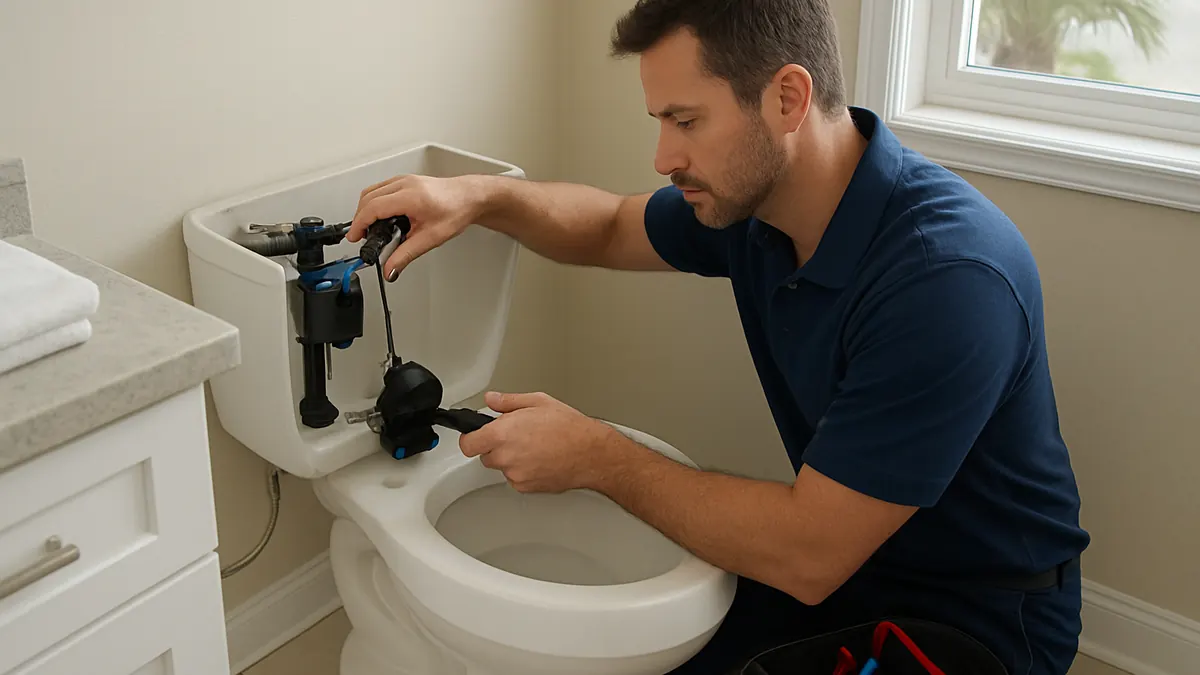
The plumber observes a complete flush and refill cycle to see whether water escapes at the seal, enters the overflow tube, or continues through the fill valve.
The technician checks the handle, trip lever, chain, flapper or canister gasket, flush-valve seat, float setting, refill tube, and overflow tube. A dye test may be used to verify a hidden leak into the bowl.
The supply line and shutoff valve are also inspected. If the toilet rocks, flushes poorly, or clogs repeatedly, the mounting, trapway, and drain opening may need evaluation.
Repair Options in a Sensible Order
First, a plumber may correct chain slack, free a binding handle, reposition the refill tube, or adjust the float. These changes preserve working components and address the least invasive causes.
- Next, a worn flapper or canister gasket may be replaced. A defective fill valve can also be changed without replacing the toilet.
- When several components are worn, rebuilding the tank may be more dependable than repeated single-part repairs.
- A damaged flush valve may require tank removal. Replacement is considered when porcelain is cracked, the toilet is unstable, parts are unavailable, or problems keep recurring.
Factors That Influence Cost
The repair cost depends on the cause, part type, toilet design, and amount of disassembly required. A float or chain adjustment is different from replacing a flush valve that requires tank removal.
Corroded hardware, limited access, a failed shutoff valve, a leaking supply line, or model-specific parts can add labor and material needs. Diagnosis helps compare repair with replacement based on the whole fixture.
Maintenance That Helps Prevent Recurrence
Notice how long the toilet normally takes to refill. A change in refill time, new hissing, repeated cycling, or a handle that no longer returns smoothly should be investigated early.
Inspect the tank periodically. Confirm that the chain is free, the float moves, the seal sits evenly, and water stops below the overflow tube. Avoid harsh tank cleaners unless the manufacturer approves them. Replace supply lines showing corrosion, cracking, or bulging, and know where the shutoff valve is.
Resolve the Running Before It Becomes a Larger Problem
If you are wondering, "Why does my toilet keep running in Laguna Beach?" focus on the tank seal, fill valve, float, chain, handle, and overflow level. A homeowner can safely observe these components and perform a dye test, but leaking porcelain, floor water, uncontrolled filling, or a failed shutoff valve requires prompt professional attention.
A thorough diagnosis will show whether the toilet needs an adjustment, one component, a tank rebuild, or replacement.
About this guide: This resource provides general homeowner education, not a remote diagnosis. Actual conditions, code requirements, equipment, and safe repair options must be evaluated at the property.