Stop and call for qualified help when plumbing water is near electrical equipment, sewage is entering occupied space, gas or burning odors are present, or a repair would require opening pressurized piping.
You flush the toilet, the bowl clears, and everything seems normal-until the tank keeps making noise. You may hear a steady hiss, an occasional refill, or a brief rush of water every few minutes. A running toilet in a Bid-A-Wee home usually means water is leaking from the tank into the bowl or the fill system is not shutting off correctly. The safest immediate step is to remove the tank lid, look for an obvious issue, and turn the toilet's shutoff valve clockwise if water is continuously overflowing or the toilet will not stop refilling.
A running toilet can waste water, increase utility costs, and wear out internal parts. The right response depends on whether the issue is a simple adjustment, a worn seal, a damaged valve, or a larger toilet failure.
Why Does My Toilet Keep Running in Bid-A-Wee?
A toilet tank should refill after every flush and then stop automatically. When it keeps running, water is usually escaping from the tank into the bowl, or the fill valve is continuing to admit water after the tank is full.
Pressing the handle releases tank water. The float drops and opens the fill valve. As the tank refills, the float rises and closes the valve. If one part does not return correctly, the toilet may run constantly or refill intermittently.
Common Causes of a Running Toilet
A worn or dirty flapper
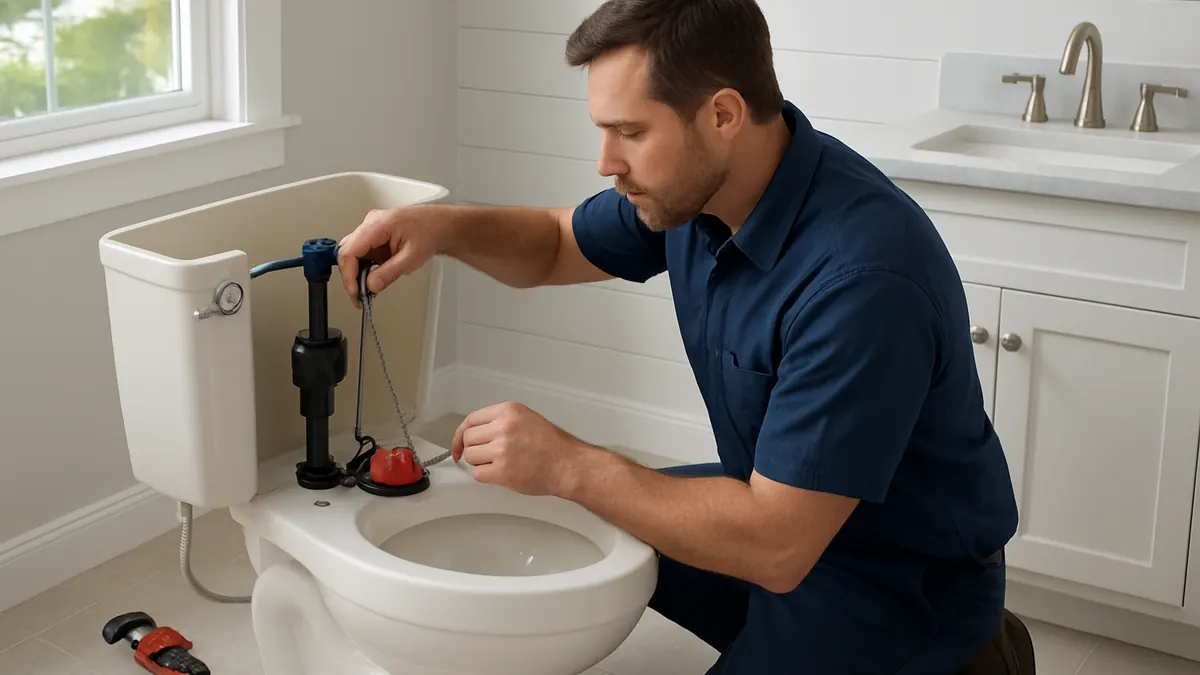
The flapper is the seal at the bottom of many toilet tanks. It should settle tightly over the flush-valve opening after each flush. It can eventually warp, harden, crack, or collect debris. Even a small gap lets tank water leak into the bowl.
A chain problem
The chain connects the flush handle to the flapper. If it is too tight, it can hold the flapper open. If it is too loose, it may tangle or become trapped beneath the seal. The chain should have a small amount of slack when the flapper is closed.
A faulty fill valve
The fill valve controls water entering the tank. Internal wear, buildup, a damaged seal, or a misadjusted float can prevent it from closing fully. You may hear a constant hiss even after the tank appears full.
Water flowing into the overflow tube
If the float is set too high, the tank may fill until water spills into the overflow tube. This tube prevents water from spilling over the tank, but water entering it means the toilet will run continuously.
A damaged flush-valve seal
Some toilets use a canister-style seal instead of a flapper. The seal can wear, distort, or collect residue. The flush-valve seat or overflow tube can also crack, allowing persistent leakage.
A sticking handle
A loose or misaligned handle may keep the lifting mechanism from returning to its resting position. The toilet may stop running only after the handle is moved or jiggled.
Safe Checks You Can Perform
Remove the tank lid carefully and place it on a towel. Watch one complete flush. Confirm that the flapper or seal closes fully, the chain moves freely, and the float rises without rubbing against another part. The fill valve should stop before water reaches the top of the overflow tube.
Place several drops of food coloring in the tank without flushing. Wait 15 to 20 minutes. If colored water appears in the bowl, water is leaking past the flapper or flush-valve seal.
If water is flowing into the overflow tube, gently lift the float. If the water stops, the float may need adjustment. If lifting the float does not stop the water, the fill valve may be failing.
Check the floor around the toilet. Moisture at the base, supply line, tank bolts, or shutoff valve may indicate a separate leak.
What You Should Not Attempt
- Do not force a corroded shutoff valve. If it will not move with gentle pressure, forcing it can break the stem and create a larger leak.
- Do not use drain-cleaning chemicals. A running toilet is usually a tank problem, not a drain blockage.
- Avoid overtightening plastic nuts, tank bolts, or supply connections. Porcelain can crack and plastic parts can split.
- Do not install a random replacement part without confirming that it fits the toilet. Flappers, seals, valves, and handles come in different sizes and designs.
When the Problem Is Urgent
Turn off the water and arrange service promptly if water is leaking onto the floor, spraying from the supply connection, overflowing from the tank, or continuing to flow after the tank is full.
Prompt help is also appropriate when the shutoff valve does not work, the toilet will not flush normally, the bowl rises unexpectedly, or the toilet repeatedly clogs in addition to running.
Cracked porcelain is serious. A crack in the tank or bowl can worsen and release water onto the floor.
How a Licensed Plumber Diagnoses It
A plumber observes the flush cycle and checks where water is escaping. The technician inspects the flapper or canister seal, chain, handle, float, fill valve, overflow tube, refill tube, and water level.
A dye test may confirm a silent tank-to-bowl leak. The shutoff valve and supply line are checked for leakage or restricted operation. If the toilet also has weak flushing, movement at the base, or recurring clogs, the plumber may inspect the bowl, trapway, mounting hardware, and drain connection.
Repair Options From Least to Most Invasive
The simplest repair may be untangling or adjusting the chain, repositioning the refill tube, lowering the float, or correcting a sticking handle.
If the flapper or canister seal is worn, replacing that seal may solve the problem. If the fill valve runs continuously or shuts off inconsistently, it may need replacement.
When several internal parts are worn, a tank rebuild can be more dependable than replacing one component at a time. This may include a new fill valve, flush seal, handle assembly, and hardware.
If the flush-valve body is cracked, the tank may need to be removed. Complete toilet replacement may be reasonable when porcelain is cracked, the toilet is unstable, compatible parts are difficult to obtain, or repairs are recurring.
Factors That Affect Cost
Cost depends on the failed component, toilet design, accessibility, condition of the shutoff valve and supply line, and whether the tank must be removed.
Additional work may be needed if bolts are corroded, the shutoff valve will not close, the supply connection leaks, or the toilet has another problem.
Prevention and Maintenance
Listen after every flush. A toilet that takes longer to fill, hisses after the tank is full, or refills without use is giving an early warning.
Occasionally inspect the tank for deteriorated rubber, tangled chains, corrosion, and water entering the overflow tube. Avoid in-tank cleaning tablets unless the toilet manufacturer approves them, because some chemicals can damage rubber seals.
Replace a visibly deteriorated supply line before it fails.
Take the Next Step
If you are asking, "Why does my toilet keep running in Bid-A-Wee?" the most likely explanation is a leaking seal, misadjusted float, faulty fill valve, or sticking flush mechanism. A visual check can help identify the symptom, but continuous running, floor leakage, a failed shutoff valve, or cracked porcelain should be addressed promptly.
About this guide: This resource provides general homeowner education, not a remote diagnosis. Actual conditions, code requirements, equipment, and safe repair options must be evaluated at the property.