Stop and call for qualified help when plumbing water is near electrical equipment, sewage is entering occupied space, gas or burning odors are present, or a repair would require opening pressurized piping.
A toilet that runs after every flush can turn a quiet bathroom into a constant source of frustration. In some Callaway homes, the sound is obvious-a steady stream of water or a loud refill that never stops. In others, the toilet seems quiet for several minutes and then suddenly refills by itself. Both symptoms usually point to water escaping from the tank or a fill valve that is failing to shut off.
Your safest first move is simple: remove the tank lid, watch what happens, and shut off the water supply if the tank is overflowing, water is leaking onto the floor, or the toilet will not stop filling. The shutoff valve is normally located on the wall or floor behind the toilet. Turn it clockwise gently. Do not force it if it is stuck.
A running toilet may still flush, but it can waste water, wear out components, and sometimes hide a second leak.
What a Running Toilet Is Telling You
Flushing lifts a seal and releases water into the bowl. As the tank empties, a float drops and opens the fill valve. The valve should close when the water reaches the correct level. If water slips past the seal, the valve turns back on. If the float or valve cannot shut off, water continues into the overflow tube.
Most Likely Causes
The flapper no longer seals
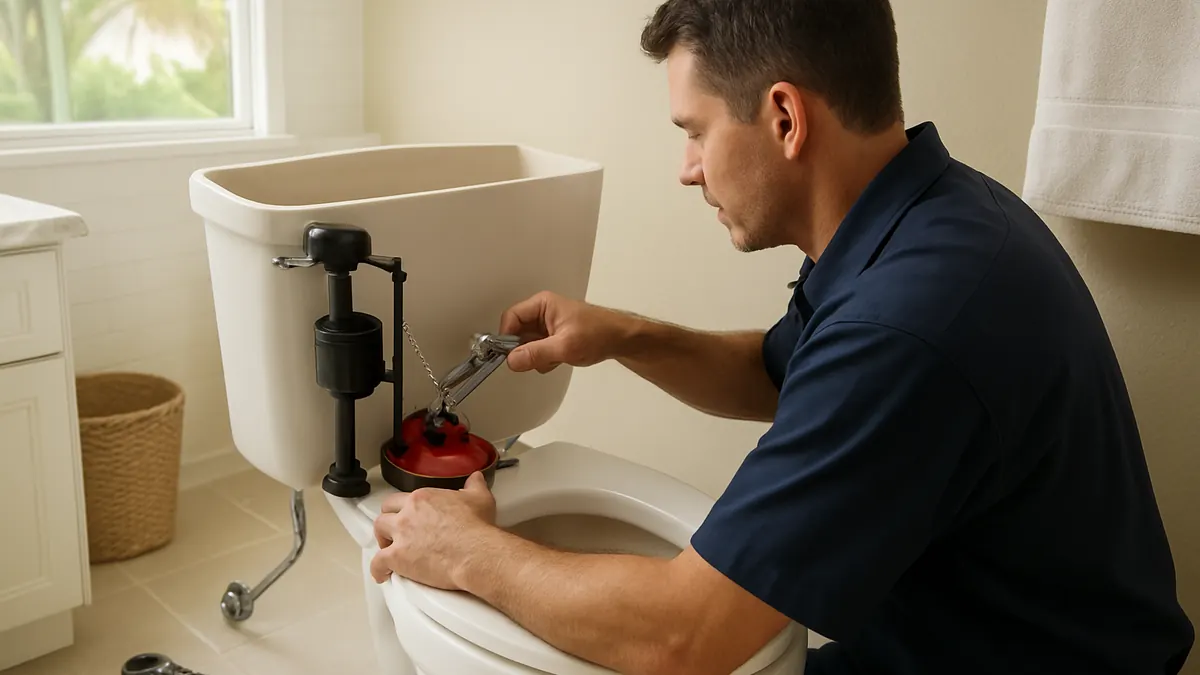
Traditional toilets often use a rubber flapper over the flush-valve opening. Age, distortion, residue, or a damaged edge can keep it from sealing.
The canister seal is worn
Many newer designs use a tower or canister instead of a hinged flapper. A rubber ring at the bottom creates the seal. When that ring becomes worn, swollen, brittle, or dirty, tank water can leak into the bowl.
The float is set incorrectly
A float tells the fill valve when to stop. If it is adjusted too high, the tank fills beyond its intended level and water enters the overflow tube. If it rubs against the tank wall or another part, it may not rise freely enough to close the valve.
The fill valve is failing
A fill valve can wear internally and continue passing water even when the float reaches the proper height. A persistent hiss or inconsistent shutoff can indicate a worn valve.
The chain or handle is interfering
A chain that is too short can hold the flapper open. A sticking handle can also prevent the seal from closing.
The refill tube is misplaced
If the small refill tube is pushed too far down the overflow tube, it can siphon water from the tank. It should be secured near the top.
Safe Troubleshooting Steps
Lift the tank lid carefully, place it somewhere stable, and observe one complete flush.
Check whether the flapper or canister drops into place. Look for a chain caught under the seal. Make sure the handle returns without sticking. Watch the float rise, and note whether water stops before reaching the top of the overflow tube.
A dye test can reveal a leak that is too quiet to hear. Add a few drops of food coloring to the tank and do not flush. After 15 to 20 minutes, inspect the bowl. Colored water in the bowl means the tank seal is leaking.
You can also lift the float gently while the toilet is running. If the water stops, the float may need adjustment. If the water continues, the fill valve may not be closing internally.
Use a dry paper towel to check the supply connection, tank bolts, and floor near the base. Dampness outside the toilet makes the problem more urgent.
Repairs Homeowners Should Avoid
- Do not force the shutoff valve, especially if it is corroded or has not been used recently. A broken valve can turn a minor toilet repair into an active plumbing leak.
- Do not overtighten tank bolts or supply fittings. Toilet porcelain can crack under uneven pressure, and plastic threads can be damaged easily.
- Do not use drain cleaner to stop a running toilet. Drain chemicals will not repair a tank valve or seal.
Avoid cutting the overflow tube, bending parts aggressively, or using glue as a substitute for a proper seal. Do not remove the toilet or tank unless you can safely manage trapped water and fragile porcelain.
Signs You Need Prompt Plumbing Service
A normal running sound deserves repair, but several conditions make it more urgent. Shut off the supply and request help when water is escaping onto the floor, the tank is close to overflowing, the supply line is bulging or dripping, or the shutoff valve cannot control the water.
Service is also important when the toilet rocks, the bowl rises toward the rim, or repeated clogs occur. Those symptoms may indicate more than one problem.
Any visible crack in the tank or bowl should be treated seriously. Porcelain cannot be reliably patched as a permanent structural repair.
How a Licensed Plumber Finds the Cause
A plumber watches the flush cycle, checks chain tension, confirms the float moves freely, and compares the tank level with the overflow tube.
The technician may perform a dye test, test the fill valve's shutoff, and inspect the flush-valve seat. The refill tube, handle, tank bolts, shutoff valve, and supply line are also checked. Weak flushing, movement, or recurring blockages may require a separate inspection of the trapway and drain connection.
Repair Choices From Simple to Extensive
The least invasive solution may be adjusting the chain, freeing a sticking handle, repositioning the refill tube, or setting the float to the correct height.
A leaking flapper or canister gasket can often be replaced without changing the entire toilet. A fill valve that will not close consistently can usually be replaced as a separate component.
If several parts are worn, rebuilding the tank may be more reliable than replacing one item at a time.
A damaged flush valve may require tank removal. Replacement becomes practical when porcelain is cracked, the toilet is unstable, parts are unavailable, or repairs keep recurring.
What Affects the Cost?
The primary cost factor is the repair scope. A basic adjustment requires less time and material than a fill-valve replacement, tank rebuild, or toilet installation.
Some toilets use standard parts, while others require model-specific seals. Corroded hardware, a nonworking shutoff valve, a leaking supply line, and tank removal can add labor.
Preventing Another Running Toilet
Pay attention to the toilet after flushing. New hissing, slow filling, repeated refills, a handle that sticks, or a change in tank sound are early warning signs.
Inspect the tank occasionally. Make sure the chain is not tangled, the float moves freely, and water is not entering the overflow tube after filling. Avoid tank tablets unless the manufacturer permits them, because some chemicals damage seals. Know where the shutoff valve is, and replace visibly damaged supply lines.
A Practical Next Step
When you ask, "Why does my toilet keep running in Callaway?" look first for a leaking flapper or canister seal, an incorrectly set float, a worn fill valve, or a chain and handle problem. Safe observation can narrow the possibilities, but outside leakage, uncontrolled filling, cracked porcelain, or a failed shutoff valve calls for prompt professional attention.
About this guide: This resource provides general homeowner education, not a remote diagnosis. Actual conditions, code requirements, equipment, and safe repair options must be evaluated at the property.