Stop and call for qualified help when plumbing water is near electrical equipment, sewage is entering occupied space, gas or burning odors are present, or a repair would require opening pressurized piping.
You refill a bottle from the kitchen faucet and notice the water tastes different, but the bathroom problem is just as frustrating: soap will not rinse cleanly, and pale deposits keep appearing around fixtures. It is reasonable to wonder whether you need a water softener or a whole-house filter. The comparison between a water softener versus whole house filtration in Niceville, FL becomes easier once each symptom is tied to a tested condition.
Do not begin by ordering the largest system. Compare hot and cold water, note whether the concern occurs at every fixture, and schedule water testing. A treatment system should solve a defined problem without creating unnecessary maintenance or pressure loss.
Start by Separating Hardness Symptoms From Filtration Symptoms
Hardness comes mainly from dissolved calcium and magnesium. It commonly shows up as scale, cloudy glassware, reduced soap lather, residue in showers, and deposits in equipment that heats water. A water softener reduces those minerals.
Whole-house filtration uses selected media. Sediment cartridges capture particles, activated carbon can reduce certain tastes and odors, and specialty media may address other confirmed concerns.
A general filter normally does not remove hardness. A conventional softener does not remove every contaminant or correct every taste and odor.
Common Reasons Homeowners Compare the Two Systems
Scale Keeps Returning After Cleaning
When chalky residue repeatedly forms around faucets, showerheads, glass, or a coffee maker, dissolved hardness minerals may be present. Cleaning removes deposits but not the minerals producing them.
Laundry and Bathing Feel Different
Hard water can interfere with soap. Towels may feel stiff, detergent use may increase, and skin or hair may feel coated. A hardness measurement is needed before sizing equipment.
Water Has an Unwanted Taste or Odor
A taste or odor may point toward filtration, but it can also come from one fixture, a drain, a water heater, or an overdue cartridge. Identifying whether the issue is local, hot-water-only, or whole-house is essential.
Fine Particles Appear in the Water
Particles in aerators, toilet tanks, or a clear glass may suggest sediment, internal plumbing debris, or water-heater scale.
Existing Equipment Does Not Seem to Work
A softener may be out of salt, improperly programmed, bypassed, or in need of valve service. A filter may be clogged or exhausted. Service may be the least invasive reasonable solution.
Safe Checks You Can Complete at Home
- Compare clear glasses from several fixtures, checking cold water first and then hot water. Record differences in color, odor, taste, or particles.
- Look for scale on showerheads, faucet bases, glassware, kettles, and ice makers. Note how quickly the residue returns.
- Inspect a removable faucet aerator for trapped debris. Follow the fixture instructions and avoid forcing corroded parts.
- Review existing treatment equipment without changing settings. Record model numbers, control messages, salt level, cartridge dates, bypass position, and visible leaks.
- Check whether pressure weakens when several fixtures run, which may indicate a restricted or undersized system.
What a Homeowner Should Not Attempt
- Do not rely on taste, smell, or appearance alone to determine water safety.
- Do not pour household chemicals into a treatment tank or plumbing system. Sanitizing and media-cleaning procedures must match the equipment.
- Do not install a filter solely because its advertising lists many possible contaminants. The selected media should address a confirmed need.
- Do not connect a softener drain directly into a waste line without a proper air gap. Do not operate unfamiliar bypass valves when equipment is leaking near electrical controls.
- Do not set softener hardness, regeneration frequency, or salt dosage by guesswork. Incorrect settings can waste resources and still leave the water inadequately treated.
When the Water Concern Becomes Urgent
Scale and soap problems usually develop gradually. Prompt evaluation is more important when water changes suddenly in color, clarity, taste, or odor across multiple fixtures.
Follow any official water-use notice that applies to your supply. Do not assume an existing softener or household filter provides protection unless it is designed and maintained for the concern.
Call for service when a filter housing is cracked, water is leaking from a control valve, the softener continually runs to the drain, or whole-house pressure drops significantly. Keep away from leaking equipment when water is near electrical wiring.
A sewage-like, fuel-like, or chemical odor should not be dismissed or sampled repeatedly.
How a Licensed Plumber Diagnoses the Problem
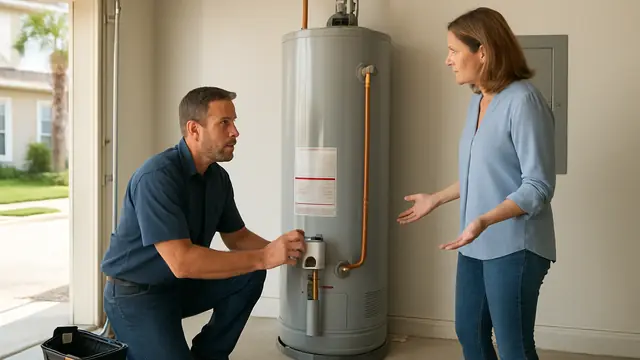
The plumber asks which fixtures are affected, when the issue began, whether hot and cold water differ, and what equipment is installed.
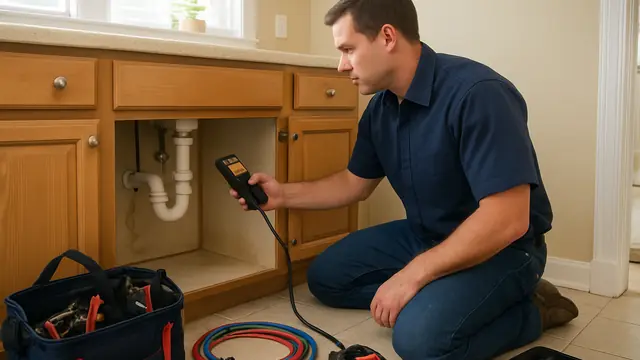
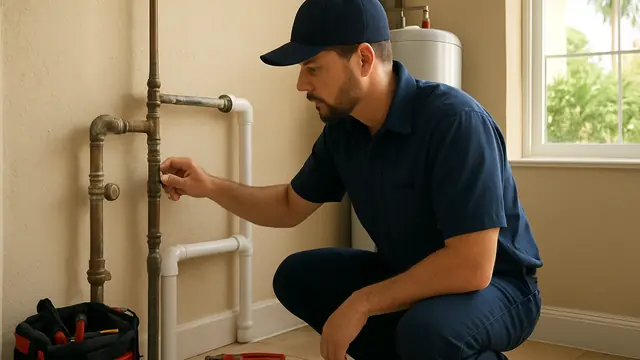
The inspection may cover water pressure, flow, visible scale, plumbing materials, the water heater, faucet aerators, treatment valves, drain connections, cartridge condition, and softener programming.
Testing identifies the conditions relevant to the complaint. A hardness result guides softener sizing. Depending on symptoms, testing may also evaluate iron, pH, sediment, taste, odor, or another concern.
The plumber considers peak flow, daily demand, required capacity, installation space, drainage, and maintenance clearance. The goal is effective treatment without unacceptable pressure loss.
Treatment and Repair Options From Simplest to Most Complete
Correct a Single-Fixture Cause
A local aerator, faucet component, cartridge, drain issue, or supply connector may be responsible at one location.
Service the Equipment Already Installed
Replacing a cartridge, correcting a salt bridge, restoring programming, or repairing a control valve may restore performance.
Add Point-of-Use Treatment
A drinking-water concern limited to the kitchen may be addressed with a selected point-of-use system instead of whole-house equipment.
Install a Targeted Whole-House Filter
If testing confirms sediment, taste, odor, or another treatable concern throughout the home, the media and housing should be selected for that purpose and required flow.
Install a Properly Sized Water Softener
When hardness is confirmed, a softener may reduce scale and improve soap performance. Capacity and settings should reflect measured hardness and usage.
Design a Combined System
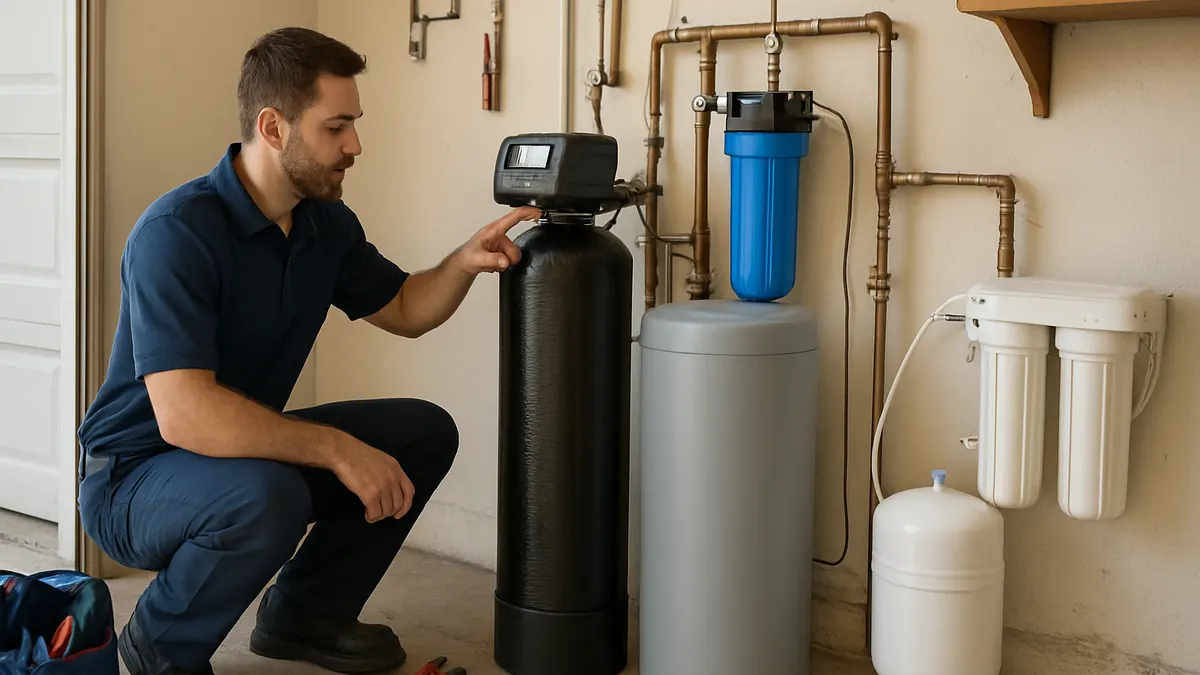
A home with hardness and a separate filtration concern may need multiple stages. Sediment protection, carbon or specialty media, and softening should be arranged to work together.
Typical Factors Affecting Cost
Cost depends on testing, equipment type, treatment capacity, flow rating, media, controls, installation location, plumbing changes, drain access, and existing equipment.
Long-term ownership includes salt, cartridges, replacement media, regeneration water, and service. An undersized system can become costly if it restricts flow or requires frequent replacement.
Prevention and Maintenance Guidance
Keep test results, model information, settings, service dates, and cartridge changes. Label bypass valves and keep equipment accessible.
Check salt according to manufacturer instructions and watch for bridging, where a hard crust forms above an empty space. Replace cartridges before pressure becomes severely restricted.
Inspect housings, drain tubing, valves, and connections for leaks. Retest if symptoms change, plumbing is altered, or the system stops producing the expected result.
Make the Choice Based on What the Water Actually Needs
The decision about water softener versus whole house filtration in Niceville, FL should connect each symptom to a confirmed cause. Recurring scale and poor soap performance suggest hardness. Taste, odor, particles, or a specific unwanted substance may call for filtration. A problem confined to one fixture may need a repair instead of whole-house equipment.
A licensed plumber can test the water, inspect the plumbing, evaluate equipment, and explain the least invasive effective option. The recommendation should state what each component treats, how it is sized, and what maintenance is required.
About this guide: This resource provides general homeowner education, not a remote diagnosis. Actual conditions, code requirements, equipment, and safe repair options must be evaluated at the property.