Stop and call for qualified help when plumbing water is near electrical equipment, sewage is entering occupied space, gas or burning odors are present, or a repair would require opening pressurized piping.
You fill a glass at the kitchen sink and notice an unpleasant taste, yet the shower doors are covered with chalky spots. The washing machine needs extra detergent, and your skin feels dry after bathing. These symptoms can point to more than one water-quality concern, which is why homeowners compare a water softener versus whole house filtration in Destin, FL.
The safe first step is to avoid buying equipment based only on a sales demonstration or one symptom. Note whether the problem affects hot water, cold water, or both, and arrange for a proper water test. A softener and a whole-house filter perform different jobs. Some homes need one, some need both, and others need a smaller correction.
Water Softener Versus Whole House Filtration: The Direct Answer
A water softener primarily addresses hardness minerals, especially calcium and magnesium. These minerals can leave scale on fixtures, reduce soap lather, spot dishes, and accumulate inside water-using equipment.
A whole-house filtration system is designed to reduce selected contaminants, tastes, odors, sediment, or other unwanted substances before water travels through the home. The result depends on the filter media and what it is designed to treat.
A softener is not automatically a complete filter, and a filter is not automatically a softener. Choosing correctly begins with identifying the symptom and confirming what is in the water.
Common Problems That Lead Homeowners to Compare These Systems
White Scale and Spotting
White residue on faucets, shower glass, coffee makers, and dishes commonly suggests hardness. Hard water does not automatically mean the water is unsafe, but mineral deposits can create cleaning and equipment problems.
Soap That Will Not Lather Well
Hardness minerals react with soap. Shampoo, laundry detergent, and dishwashing products may seem less effective or require larger amounts.
Unpleasant Taste or Odor
Taste and odor concerns may require filtration rather than softening. The correct filter depends on the source. Carbon-based media may help with some complaints, while sediment or other concerns require different equipment.
Visible Sediment
Particles in toilet tanks, faucet aerators, or clear containers can indicate sediment. A sediment filter may protect fixtures and downstream treatment equipment, but the source still needs evaluation.
Safe Checks You Can Perform Before Choosing Equipment
- Inspect several fixtures. Look for recurring white scale, spots on glassware, residue around showerheads, and deposits inside a kettle or coffee maker.
- Remove and examine a faucet aerator. Sediment or mineral buildup can provide clues, but do not use sharp tools that may damage the faucet.
- Compare hot and cold water. If the problem is worse on the hot side, the water heater may be concentrating mineral deposits or contributing sediment.
- Smell a glass of cold water immediately after filling it and again after it sits. Note whether the odor occurs at one fixture or throughout the house.
- Review any available water-quality report or previous laboratory result, but remember that a home-specific test is the most useful basis for equipment selection.
What Homeowners Should Not Attempt
- Do not choose a softener solely because soap foams differently during a sales demonstration. That does not identify every substance in the water.
- Do not install filter media that is not designed for the confirmed concern. The wrong system may provide little benefit, restrict flow, or add unnecessary maintenance.
- Do not connect treatment equipment without proper bypass valves, drainage, pressure considerations, and protection against cross-connections.
- Do not pour chemicals into plumbing or a water heater in an attempt to "clean" the water. Improvised treatment can damage components and create safety concerns.
Signs That Make the Problem More Urgent
Arrange prompt evaluation if the water changes suddenly in color, odor, or clarity; if several fixtures lose flow; or if sediment begins appearing throughout the home.
Avoid using water for drinking and cooking until appropriate guidance is obtained when there is a suspected contamination event, official notice, or unexplained chemical or sewage-like odor.
A leaking treatment tank, overflowing drain connection, continually running softener, rapidly falling pressure, or water near electrical equipment also requires timely service. Use a bypass only if you understand the valve arrangement and can operate it safely.
How a Licensed Plumber Diagnoses the Water Problem
A licensed plumber determines whether symptoms occur throughout the home or only at selected fixtures. The inspection may include scale, sediment, staining, pressure, flow, plumbing materials, the water heater, and existing treatment equipment.
Water testing is then used to match equipment to the concern. Hardness testing helps determine whether softening is appropriate and how the unit should be sized. Additional testing may be recommended for taste, odor, sediment, iron, pH, or other concerns, depending on the symptoms and water source.
The plumber also calculates peak flow demand. A system must treat water without creating an unacceptable pressure drop when multiple fixtures operate. Household size, bathrooms, appliances, installation space, drainage, electrical access, and maintenance requirements affect the recommendation.
Treatment Options Starting With the Least Invasive
Correct a Fixture-Specific Problem
If the complaint exists at one faucet, cleaning an aerator, correcting local plumbing, or installing point-of-use filtration may be enough.
Add Sediment Prefiltration
When inspection and testing confirm particulate matter, a properly selected sediment filter may protect fixtures and other treatment equipment.
Install Targeted Whole-House Filtration
A whole-house filter can be selected for confirmed substances or sensory concerns. Different media perform different functions, so the design must match the goal.
Install a Water Softener
When hardness is the primary problem, a properly sized softener can reduce scale formation and improve soap performance. Installation should include correct drainage, bypass capability, and settings based on measured hardness and household demand.
Combine Softening and Filtration
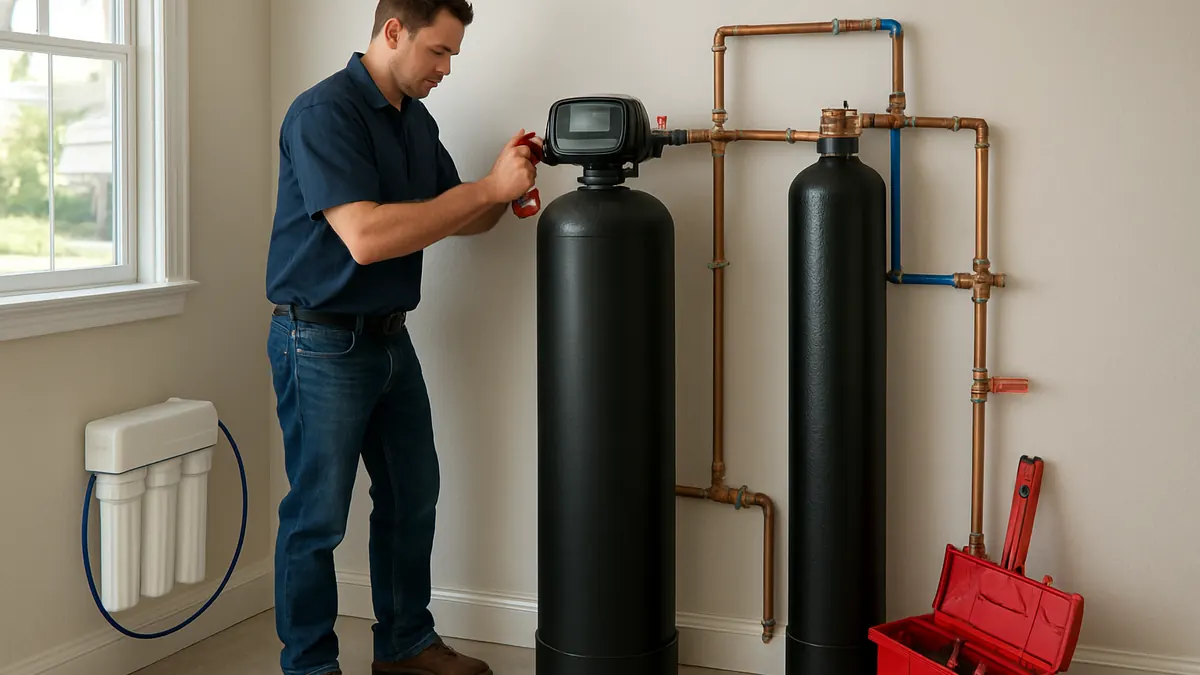
Some homes have both hardness and filtration concerns. A combined treatment train may include sediment protection, filtration, and softening in a planned order rather than unrelated tanks installed without a design.
Typical Factors That Affect Cost
Cost depends on test results, treatment goal, required flow rate, household demand, system capacity, media, controls, installation space, plumbing modifications, drain access, electrical needs, and existing piping condition.
Ongoing expenses also matter. Salt, replacement cartridges, media replacement, regeneration water, and periodic service should be considered when comparing options.
Prevention and Maintenance Guidance
Test before installing treatment and retest when symptoms change. Keep records of results, settings, service dates, and replacement schedules.
Check salt level and bridging in a softener according to manufacturer instructions. Replace filter cartridges on schedule or based on measured pressure loss.
Keep equipment dry and accessible. Inspect drain tubing, bypass valves, and connections for leaks. Have the water heater evaluated when scale has already accumulated because new treatment will not automatically remove existing deposits.
Choose the System That Matches the Water
The answer to water softener versus whole house filtration in Destin, FL depends on what needs correction. Scale and poor soap performance point toward hardness treatment. Taste, odor, sediment, or selected contaminants may require filtration. When both groups of symptoms are present, a planned combination may be appropriate.
A proper evaluation should explain what testing found, what each component will reduce, how the system will affect pressure and flow, and what maintenance it requires. That allows you to choose a practical solution instead of purchasing equipment based on assumptions.
About this guide: This resource provides general homeowner education, not a remote diagnosis. Actual conditions, code requirements, equipment, and safe repair options must be evaluated at the property.