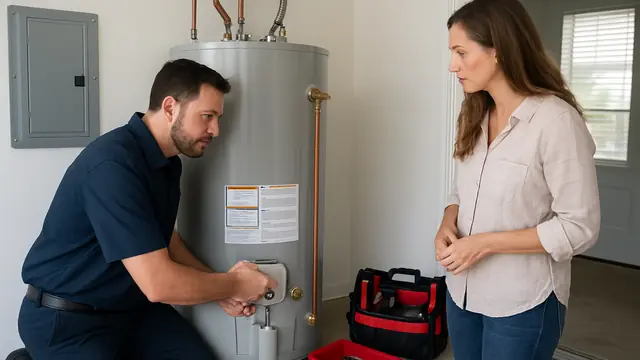
Stop and call for qualified help when plumbing water is near electrical equipment, sewage is entering occupied space, gas or burning odors are present, or a repair would require opening pressurized piping.
You may first notice a faint stain outside the mechanical closet, a drip from the heater pan, or a wet floor after several people have showered. In a home that is not occupied every day, the first warning may come from a property check, a water alarm, or a guest reporting that hot water has stopped.
If your water heater is leaking in Rosemary Beach, treat the moisture as an active plumbing problem until the source is confirmed. Stop using hot water. Move towels, luggage, cleaning supplies, and other belongings away from the equipment. If the cold-water shutoff can be reached safely from a dry area, close it. Do not touch electrical components when water is present. If you smell gas near a gas-fired heater, leave the property and call the gas utility or emergency services.
The leak may come from a removable component, attached plumbing, or the storage tank. The puddle alone does not provide a complete diagnosis.
Why Is My Water Heater Leaking in Rosemary Beach?
Water Is Running Down From Above
Connections at the top of the heater carry pressurized hot and cold water. A threaded fitting, connector, union, or shutoff valve can begin leaking because a seal has worn, a joint has loosened, or corrosion has affected the metal.
Water often follows the tank's outer jacket before reaching the floor. A leak at the top can therefore look like a failure at the bottom.
The Relief Valve Is Releasing Water
The temperature and pressure relief valve, or T&P valve, protects the tank from excessive heat and pressure. A discharge pipe carries released water toward the floor.
A few drops may come from a worn valve seal, but repeated discharge can indicate high incoming pressure, overheating, or thermal expansion. Thermal expansion occurs when water grows in volume as it heats. If that expansion is not managed, pressure inside the plumbing system can rise.
The Drain Valve Is Dripping
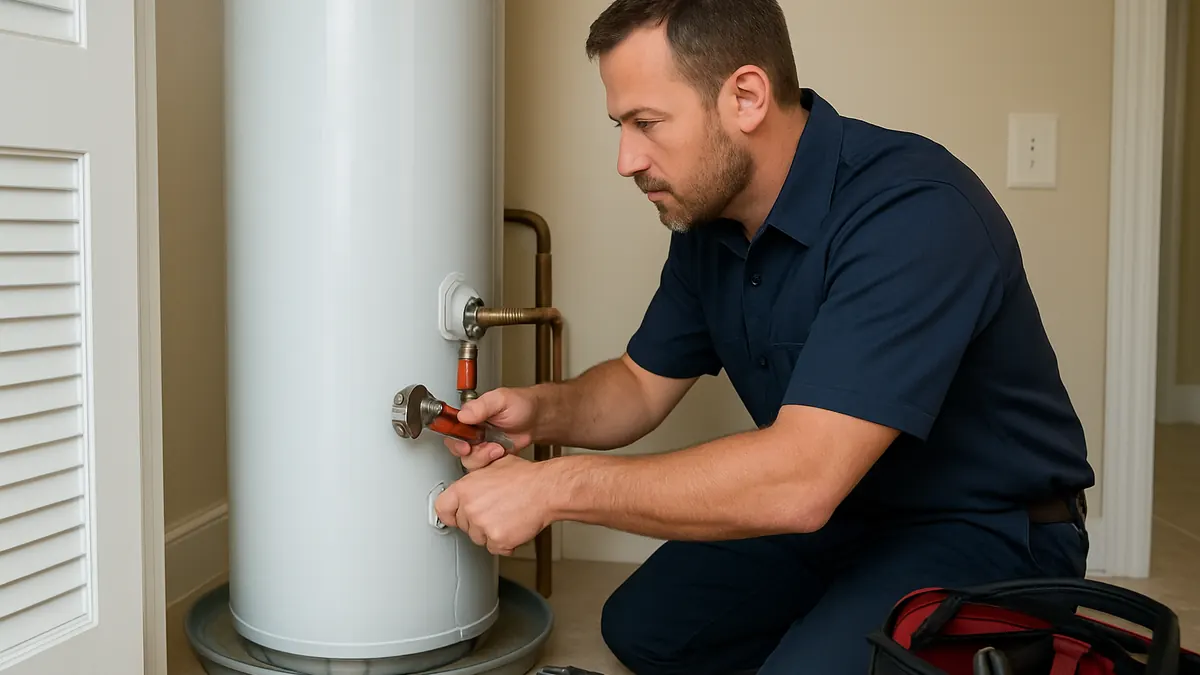
The drain valve is near the bottom of a tank-style heater and is used for flushing and service. It can leak from its outlet, stem, or threaded connection.
A drain valve may be repairable, but it should be evaluated before anyone attempts to tighten or remove it.
The Tank Has Corroded Internally
A storage water heater contains a steel tank protected by a lining and an anode rod. The anode rod sacrifices itself by corroding before the tank, but its protection eventually diminishes.
When the steel tank perforates, water may seep from beneath the outer jacket or appear in the pan without a visible fitting leak. A hole in the inner tank cannot be repaired reliably from the outside.
The Water Is Coming From Somewhere Else
Condensation, a nearby pipe, a water-treatment connection, an appliance hose, or an air-conditioning drain can produce moisture near the heater. A plumber traces the water rather than assuming the heater is responsible.
Safe Checks You Can Make
Look at the heater with a flashlight without removing covers. Start at the highest visible point and work downward.
Inspect the cold-water shutoff, top connectors, visible pipe joints, relief discharge pipe, drain valve, and pan. Look for droplets, rust trails, discolored insulation, or white crust around fittings.
If the floor is dry enough to approach safely, wipe away visible moisture and place a clean paper towel beneath a suspected connection. Check whether the leak returns while the heater is idle or only after hot water is used.
What Homeowners Should Not Attempt
- Do not plug the T&P discharge pipe to stop a drip. That valve must remain able to release pressure.
- Do not remove electric access covers while power is on. Water can be present behind the panel even when the outside looks dry.
- Do not disconnect gas piping, adjust a burner, or alter venting.
- Do not remove the drain valve or another threaded component while the tank is full and pressurized. Hot water can escape quickly and cause burns.
- Do not use tape, putty, or epoxy to cover a leak through the tank jacket. A surface patch does not restore the strength of the inner steel tank.
When the Leak Is Urgent
Seek immediate service when water is flowing continuously, the shutoff does not work, or moisture is entering walls, flooring, cabinetry, or rooms below the heater.
Repeated hot-water discharge from the relief pipe is urgent. Steam, scalding water, a visibly swollen tank, electrical arcing, burning odors, or loud banging combined with leakage also require prompt attention.
If you smell gas, leave the property without operating switches. Call for help from outside.
A small leak should also be handled promptly when the home will be vacant. The amount of damage depends not only on the leak rate but also on how long the water flows unnoticed.
How a Licensed Plumber Diagnoses the Leak
The plumber controls the water or energy source when necessary and dries the equipment so new moisture can be traced.
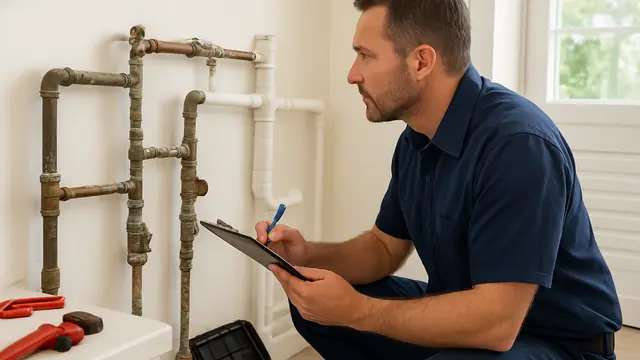
The inspection includes the top connections, shutoff valve, T&P valve, drain valve, visible piping, pan, and tank jacket. Water pressure may be tested. Expansion-control equipment and a pressure regulator may also be checked where installed.
The plumber then considers the heater's condition, age, leak source, and likelihood that a repair will remain dependable.
Repair Options Beginning With the Smallest Reasonable Fix
A loose threaded joint may be resealed. A worn connector, union, or shutoff valve can often be replaced without replacing the heater.
A drain valve may be repaired or changed if the tank connection is sound. A failed gasket on an electric heating element may also be replaceable.
A defective T&P valve can be replaced only after the plumber determines why it leaked. High pressure may require pressure-regulator service. Failed thermal-expansion control may require correction or replacement of the expansion equipment.
If the inner tank has corroded through, replacement is the dependable solution. Options can include a conventional storage heater, a higher-efficiency tank, a heat-pump model where suitable, or a correctly sized tankless system. The right choice depends on occupancy, simultaneous hot-water demand, fuel or electrical capacity, space, and installation requirements.
Typical Factors Affecting Cost
Cost depends on the failed component, accessibility, heater capacity, fuel type, venting, electrical or gas requirements, drain-pan condition, pressure controls, and piping changes. Water damage repairs are separate from correcting the leak source.
Prevention and Maintenance Guidance
Inspect the heater and pan periodically, especially before the property will be unoccupied. Look for rust, mineral deposits, dampness, and evidence that the relief valve has discharged.
- Keep the shutoff accessible. Have water pressure checked when valves, supply lines, or fixture components fail repeatedly.
- Ask whether flushing, anode-rod inspection, or expansion-tank evaluation is appropriate for the heater's type and condition.
- Leak alarms and automatic shutoff devices can provide added protection when a property is vacant or managed remotely.
Resolve the Source Before the Next Occupancy
If you are asking, "Why is my water heater leaking in Rosemary Beach?" do not rely on the puddle's size to judge the problem. A minor connector leak and a failing tank may initially look similar. A licensed inspection can identify the least invasive reliable repair and determine when replacement is necessary. Acting promptly also reduces the chance that water will reach finished surfaces or remain unnoticed between visits.
About this guide: This resource provides general homeowner education, not a remote diagnosis. Actual conditions, code requirements, equipment, and safe repair options must be evaluated at the property.