Stop and call for qualified help when plumbing water is near electrical equipment, sewage is entering occupied space, gas or burning odors are present, or a repair would require opening pressurized piping.
A guest reports that the toilet "never stops," but when you enter the bathroom the sound is barely noticeable. You may hear a light trickle in the bowl, a hiss from the tank, or a brief refill several times an hour. The toilet still flushes, so it is tempting to postpone the repair. However, a running toilet means water is moving after the fixture should be quiet.
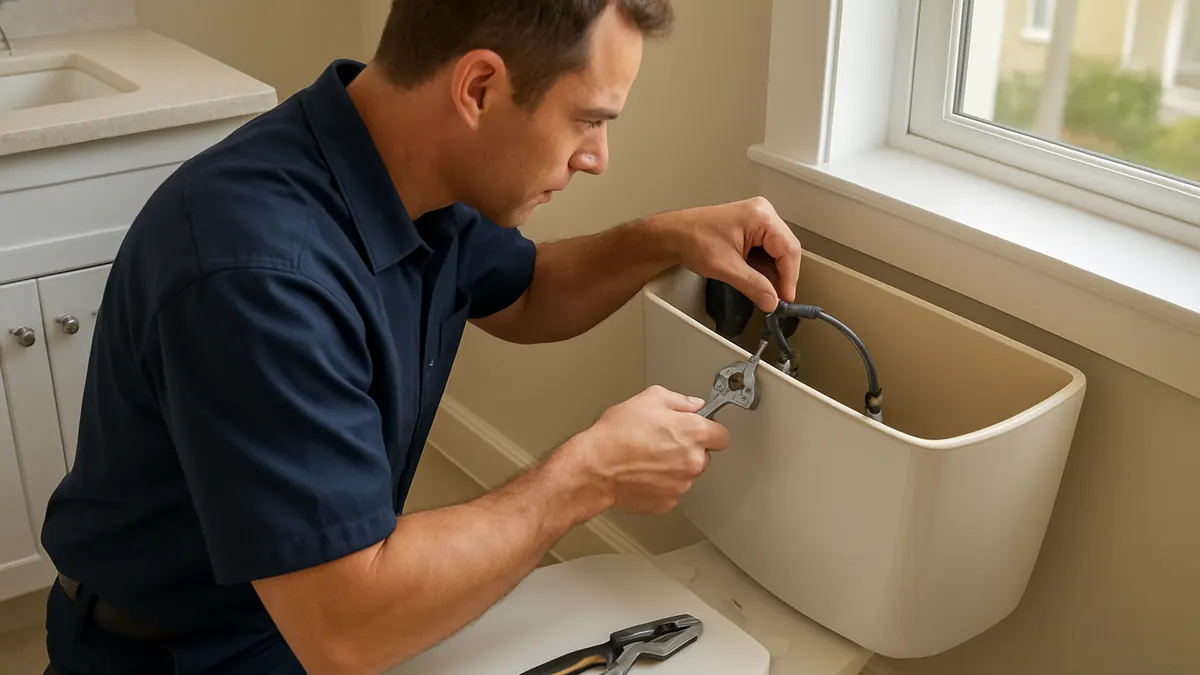
Carefully remove the tank lid and observe one flush. If the water level keeps climbing toward the top, gently turn the shutoff valve clockwise. Do not force a valve that is stiff, corroded, or already leaking. In Rosemary Beach, a running toilet often comes down to a seal that is leaking, a chain or handle that is not returning correctly, or a fill valve that cannot shut off.
First Determine Whether the Running Is Constant or Intermittent
Constant hissing usually means water keeps entering the tank. The float may be set too high, stuck, or unable to close the fill valve. You may see water flowing into the open overflow tube.
Intermittent running means the tank fills, becomes quiet, and starts again later. In that situation, water is usually leaking slowly into the bowl through the flapper, canister seal, or another part of the flush-valve assembly.
Why Does My Toilet Keep Running in Rosemary Beach?
The flapper has changed shape
A traditional flapper is a flexible seal at the bottom of the tank. It can harden, curl, warp, or develop an uneven edge. Dirt on the sealing surface can also create a small opening.
The canister seal is no longer watertight
Some toilets use a vertical canister rather than a hinged flapper. A round rubber gasket seals the canister to the flush opening. As that gasket wears, it may stretch, blister, shift, or fail to sit evenly.
The chain does not have the correct slack
The lift chain should pull the seal open during a flush and then allow it to close fully. A tight chain holds the seal up. A long chain may become trapped under it.
The fill valve is worn
A fill valve may continue passing water because of internal wear or debris. It can produce a hiss, whistle, vibration, or very slow refill. The problem is inside the valve even if the exterior appears normal.
The float is incorrectly positioned
The float controls when the fill valve closes. If set too high, it allows the water level to reach the overflow tube. If it rubs another component, it may stick before reaching its shutoff position.
The overflow tube or flush-valve seat is damaged
A crack in the overflow tube or deterioration around the flush opening can allow water to escape. Replacing the flapper alone will not correct damage to the surface underneath it.
Safe Checks Before Scheduling Service
Set the tank lid on a folded towel. Flush the toilet and observe each movement.
The handle should return without assistance. The flapper or canister should settle squarely, and the float should rise freely.
Look at the final water level. It should stop near the manufacturer's fill mark and below the top of the overflow tube. Water entering the overflow tube after the tank should be full points toward a float or fill-valve problem.
To test the tank seal, add a few drops of food coloring to the full tank. Wait fifteen to twenty minutes without flushing. If the bowl water changes color, the tank is leaking internally.
Inspect the shutoff valve, supply line, tank bolts, and floor for moisture.
What the Homeowner Should Not Do
- Do not pour drain cleaner into the toilet. A running fixture is normally a mechanical tank problem, not a clogged drain.
- Do not force the shutoff valve with pliers. A broken valve may require shutting off water to the property.
- Do not overtighten tank bolts, plastic nuts, or supply fittings. Porcelain can crack under uneven pressure, and plastic parts can split.
Avoid bending the float aggressively, shortening the chain too much, or using makeshift weights on the flapper. These shortcuts may create an unreliable flush or make the leak worse.
Correct dimensions and model compatibility matter when selecting replacement parts.
Signs That Require Prompt Plumbing Help
- Call promptly if the tank water is near the rim, the fill valve is spraying, or the shutoff valve cannot isolate the toilet.
- Water on the floor is urgent. It may be coming from the supply line, shutoff valve, tank bolts, tank-to-bowl gasket, cracked porcelain, or the seal beneath the toilet.
- Stop using a toilet that rocks, has a visible crack, repeatedly clogs and overflows, or causes wastewater to emerge from another drain.
- Do not leave a known running toilet operating in an unattended property.
How a Licensed Plumber Diagnoses the Toilet
A plumber observes the flush, closing, refill, and shutoff stages. This reveals whether the tank is losing water or being overfilled.
The technician checks the handle, chain, flapper or canister, sealing surface, fill valve, float, refill tube, overflow tube, flush valve, tank hardware, supply line, and shutoff valve.
Dye testing can confirm a hidden leak, while model identification helps ensure correct parts.
Repair Options Beginning With the Smallest Reasonable Fix
- The least invasive repair may be adjusting the chain, handle, float, or refill tube. A plumber may clean the sealing surface if debris is preventing closure.
- A worn flapper, canister gasket, fill valve, handle, supply line, or shutoff valve can often be replaced separately.
- If several tank components are worn, rebuilding the tank may be more dependable than repeated individual repairs.
Complete toilet replacement is usually reserved for cracked porcelain, instability, unavailable repair parts, significant damage, or repeated problems that make continued repair impractical.
What Affects the Cost?
The cost depends on the exact failure, toilet design, part availability, and access. An adjustment or standard seal replacement involves a different scope than a specialty canister or complete tank rebuild.
Corroded hardware, a leaking connection, or toilet removal can increase labor. Property damage is separate.
Prevention and Maintenance
- Listen until the refill cycle stops after each flush. Investigate a new hiss, trickle, whistle, or unexpected refill early.
- Correct a sticking handle instead of repeatedly jiggling it.
- Avoid harsh in-tank tablets unless the toilet manufacturer specifically allows them. Some chemical cleaners damage rubber seals and plastic components.
- Inspect guest bathrooms and less-used toilets regularly. Confirm that each fixture shuts off and that the area around the supply connection and base is dry.
Restore the Toilet's Normal Shutoff Cycle
If you are wondering, "Why does my toilet keep running in Rosemary Beach?" identify whether the sound is constant or periodic. That observation helps separate a fill-valve or float problem from a leaking flapper, canister seal, or flush-valve component.
Do not ignore rising water, exterior moisture, or a shutoff valve that will not work. A licensed plumber can identify the least invasive dependable repair and determine whether the toilet needs an adjustment, replacement part, tank rebuild, or complete replacement.
About this guide: This resource provides general homeowner education, not a remote diagnosis. Actual conditions, code requirements, equipment, and safe repair options must be evaluated at the property.