Stop and call for qualified help when plumbing water is near electrical equipment, sewage is entering occupied space, gas or burning odors are present, or a repair would require opening pressurized piping.
A home may look flawless during a showing while a plumbing problem remains hidden behind cabinetry, inside a wall, or beneath a finished floor. You may notice that one shower drains slowly, a toilet shifts slightly, hot water arrives unevenly, or a cabinet has a faint moisture odor even though no water is visible.
Those clues do not automatically make the home a poor purchase. They mean the plumbing deserves closer evaluation. Photograph the concern, note which fixture was operating, and request a licensed plumbing inspection. Do not remove panels, force shutoff valves, or flood a fixture to "test" it.
A plumbing inspection checklist before buying a Northwest Florida home in Alys Beach should evaluate performance, safety, service access, and maintenance history. When plumbing is tightly integrated with finished surfaces, access matters because a small repair can become disruptive if valves, traps, or equipment cannot be reached without removing cabinetry, tile, or wall finishes.
Review Plumbing Records Before Testing Fixtures
Ask for available building plans, repair invoices, water-heater documents, equipment manuals, remodeling records, warranties, and seller disclosures.
If the property is governed by an association, clarify which plumbing components belong to the homeowner and which, if any, are shared or maintained by the association. Do not assume responsibility based only on where a pipe appears. The governing documents and property records should control that answer.
Inspect Fixtures as Parts of One System
Sinks, Faucets, and Cabinets
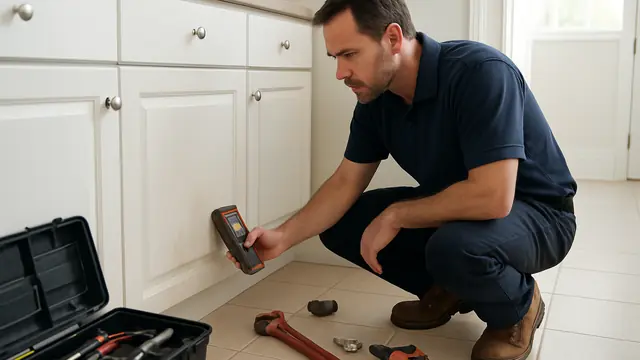
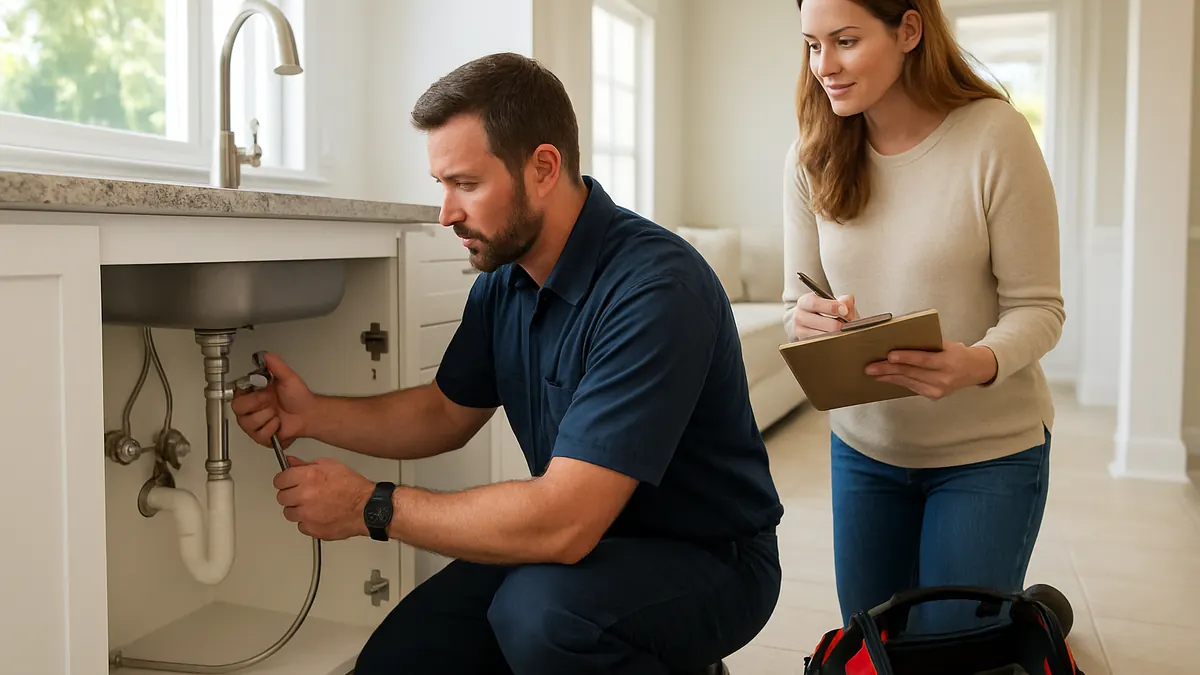
Operate each faucet and observe flow, temperature, drainage, leakage at the base, and moisture below. Check supply connectors, shutoff valves, traps, disposal connections, and cabinet penetrations.
Swelling across the cabinet floor or staining that extends into adjacent finishes may indicate a longer-running leak that requires moisture evaluation.
Toilets
Flush every toilet and watch the entire cycle. The bowl should clear, the tank should refill and stop, and the toilet should remain stable.
A rocking toilet can damage the seal between the fixture and drain. Staining at the base, soft flooring, or odor should be investigated rather than covered with caulk.
Showers and Tubs
Run showers long enough to assess drainage and temperature stability. Check valve trim, handheld connections, doors, thresholds, and accessible areas on the opposite side of the plumbing wall.
Water outside a shower can come from a supply leak, drain leak, failed sealant, door alignment, splash, or waterproofing issue. A plumber can evaluate the plumbing components; enclosure or waterproofing concerns may require another qualified specialist.
Evaluate Hot-Water Equipment and Delivery
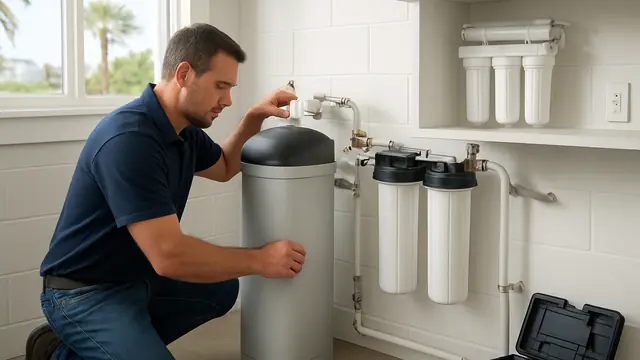
Identify the water-heating system, energy source, capacity, installation condition, shutoffs, relief protection, drain routing, visible leakage, and service access. If the home has multiple heaters, recirculation, or point-of-use equipment, determine which fixtures each component serves.
Uneven hot water may result from fixture cartridges, mixing valves, recirculation settings, scale, controls, or inadequate capacity. Diagnosis should come before replacement.
Ask for maintenance records and confirm that equipment can be serviced without unnecessary demolition.
Check Pressure, Shutoffs, and Distribution
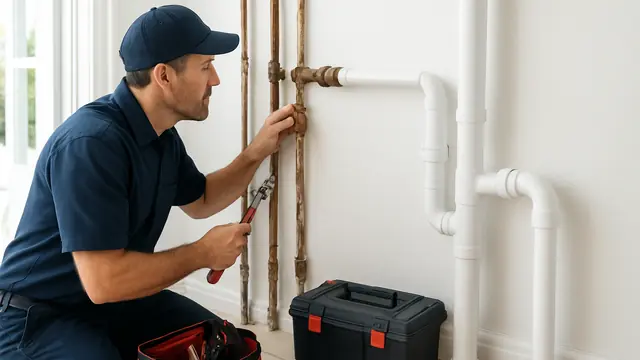
A plumber may measure pressure and observe how flow changes when several fixtures operate. High pressure can shorten the life of valves, connectors, appliances, and toilet parts. Low pressure may come from a partially closed valve, clogged fixture, regulator issue, restricted pipe, or supply limitation.
The main shutoff should be located, and accessible fixture valves should be reviewed. Buyers need to know how to stop water quickly during an emergency. Old or concealed valves should not be forced during a casual walkthrough.
Where equipment is behind custom panels, confirm the opening is large enough for inspection, service, and eventual replacement.
Look Beyond One Slow Drain
One slow sink may have local buildup. Several slow drains, gurgling, repeated toilet stoppages, or wastewater appearing at a lower fixture can indicate a larger branch or main-line restriction.
If evidence points downstream, a sewer-camera inspection may be recommended through a proper cleanout. The camera can show visible buildup, offsets, roots, breaks, or standing water, but it may not pass through a heavy blockage until the line is cleared.
Safe Checks a Buyer Can Make
With permission, you can:
- Run each faucet and check below while it operates.
- Flush every toilet and listen for continued filling.
- Note slow drainage, pressure changes, odors, or gurgling.
- Confirm whether hot water remains consistent.
- Look for stains around ceilings, cabinets, and wall penetrations.
- Verify that service panels are accessible.
- Review instructions for heaters, pumps, treatment equipment, and leak controls.
- Write down the exact sequence that triggers a symptom.
What You Should Not Attempt
Do not disassemble fixtures, remove trim, open electrical compartments, alter recirculation settings, lift toilets, snake drains, or pour chemical cleaner into slow fixtures. Do not force emergency shutoffs.
Avoid assuming that fresh sealant, new paint, or a replaced cabinet base proves the source of moisture was corrected. Cosmetic work and plumbing repair are not the same.
Conditions That Require Prompt Evaluation
Treat active leakage, sewage odor, repeated backup, water near electrical components, a leaking water heater, unstable toilets, damp finished surfaces, unexplained meter movement, or visible biological growth as time-sensitive concerns.
How a Licensed Plumber Diagnoses Concerns
The plumber begins with visual and operational testing. Depending on findings, diagnosis may include pressure measurement, moisture detection, fixture isolation, meter testing, drain cleaning, camera inspection, or limited access recommendations.
No single tool answers every question. A moisture meter confirms wet material but may not identify the source. A camera views a drain but not a pressurized supply line. Pressure testing can reveal water loss but may require isolation to locate it.
A useful report distinguishes observed defects, confirmed causes, additional testing, immediate repairs, and optional improvements.
Repair Choices From Minor Correction to Replacement
Minor repairs may include replacing a connector, trap, cartridge, toilet seal, fill valve, shutoff, or pressure-control component. A local drain blockage may be cleared, and a water-heating control may be serviced.
More involved work may require targeted access, branch-line replacement, recirculation correction, sewer repair, water-heater replacement, rerouting, or partial repiping.
Major replacement should be supported by the condition and extent of failure. Ask whether a localized repair is reasonable, whether similar components are likely to fail, and whether access can be improved during the work.
Factors That Affect Corrective Cost
Cost depends on diagnostic time, equipment type, access, pipe material, number of fixtures, permit requirements, protection of finished surfaces, and restoration after plumbing access.
Cabinetry, stone, tile, or concealed equipment can increase coordination even when the plumbing repair itself is limited. A written estimate should explain what the plumber includes and what may require another trade.
Maintenance Planning After Purchase
Create a plumbing file with valve locations, equipment models, warranties, service records, and photos of concealed access points. Label shutoffs and learn how any leak-detection or automatic-shutoff equipment works.
Repair small drips promptly, avoid chemical drain cleaners, and follow manufacturer guidance for water-heater maintenance. Before leaving the home vacant, confirm that water controls, monitoring, and emergency access match the property's needs.
Buy With a Clear Understanding of the Plumbing
A plumbing inspection checklist before buying a Northwest Florida home in Alys Beach should confirm more than whether water comes from the faucets. It should show whether the system drains properly, maintains pressure, heats water safely, can be shut off quickly, and can be serviced without unnecessary damage.
About this guide: This resource provides general homeowner education, not a remote diagnosis. Actual conditions, code requirements, equipment, and safe repair options must be evaluated at the property.