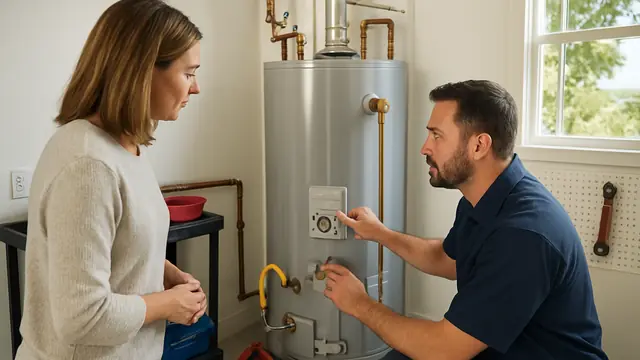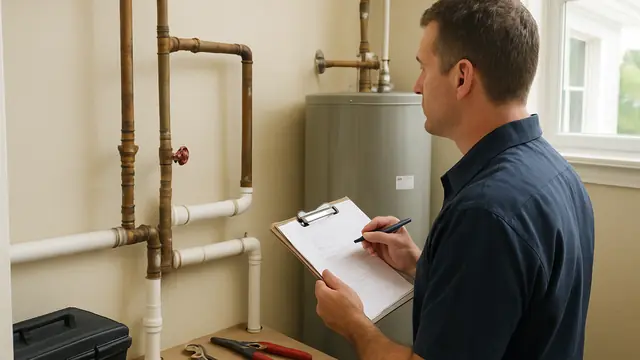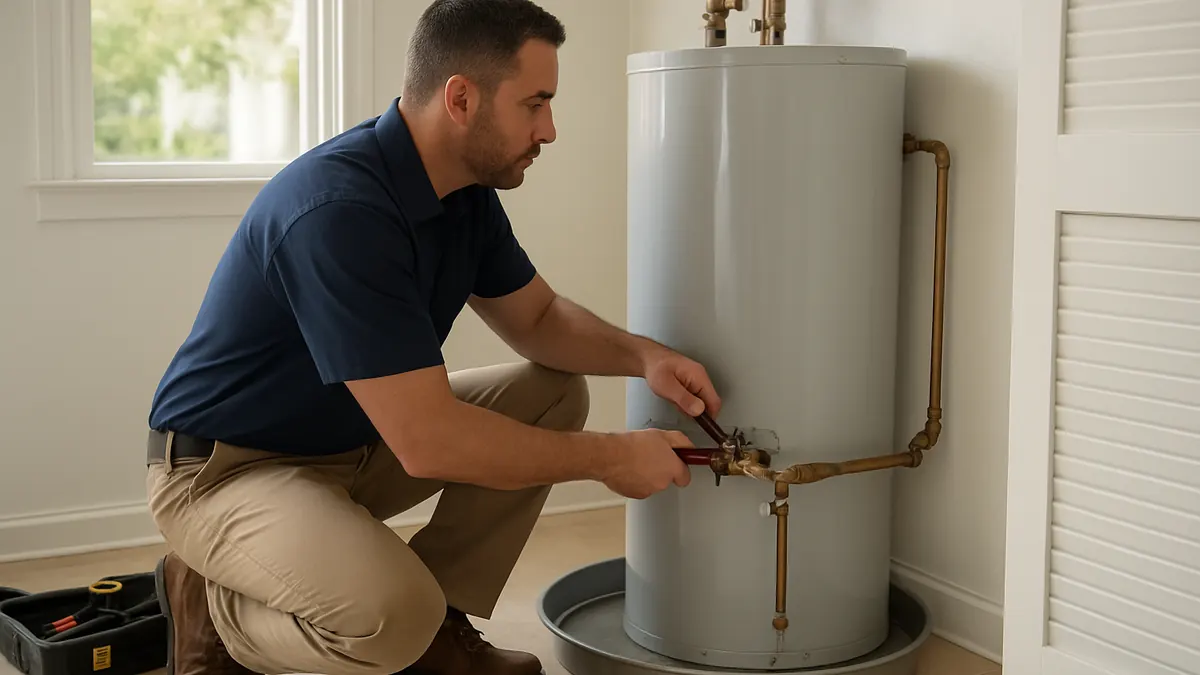
Stop and call for qualified help when plumbing water is near electrical equipment, sewage is entering occupied space, gas or burning odors are present, or a repair would require opening pressurized piping.
The first sign may be subtle: a damp closet floor, water in the drain pan, a hissing sound, or inconsistent hot water. You wipe the area dry, but the moisture returns.
If your water heater is leaking in Seaside, stop using hot water while you determine whether the leak is still active. Remove nearby belongings and keep people away from wet flooring. If the cold-water shutoff can be reached from a dry area and turns with reasonable hand pressure, close it. Do not touch electrical controls when water is present. If the heater is gas-fired and you smell gas, leave the building and contact the gas utility or emergency services.
A leak may come from a serviceable fitting or valve, or it may indicate tank failure. The puddle provides clues, not a final answer.
What the Leak Pattern Can Tell You
A steady drip while the heater is idle often points to a fitting, valve, or tank leak. Moisture during operation may involve thermal expansion, condensation, or temperature-sensitive leakage.
Water can travel down pipes or the jacket before reaching the floor, so the highest wet point matters most.
Why Is My Water Heater Leaking in Seaside?
A Connector or Shutoff Valve Is Failing
The hot outlet and cold inlet remain pressurized. Connectors, fittings, unions, and shutoff valves can seep as seals wear or corrosion develops.
A slow leak may leave mineral deposits before a puddle forms. Water from the top may collect in the pan.
The Relief Valve Is Discharging
- The temperature and pressure relief valve, or T&P valve, releases water when heat or pressure becomes unsafe.
- A dripping valve may be worn or reacting to high water pressure, overheating, or thermal expansion.
- Thermal expansion means water takes up more space as it heats. In a closed system, pressure can rise unless expansion control works properly.
The Drain Valve Is Seeping
The drain valve is near the bottom of most storage water heaters. It is used to flush or empty the tank.
Water may leak from the outlet, stem, or tank connection. Sediment or age can prevent proper sealing.
An Electric Heating-Element Seal Is Leaking
On an electric heater, each element passes through the tank wall and is sealed by a gasket. A failed gasket can wet the insulation.
This problem may not be visible from the outside, and the panel should not be removed while the heater is energized.
The Inner Tank Has Failed
The steel tank is protected by a lining and an anode rod, but corrosion can eventually reach the vessel.
Water beneath the jacket or around a seam often indicates internal failure, which cannot be repaired reliably from the outside.
Safe Checks Before Scheduling Service
Use a flashlight and inspect without removing covers.
Check the top connections, shutoff valve, visible pipes, T&P discharge pipe, drain valve, and drain pan. Look for active droplets, rust trails, green or white deposits, or insulation that appears wet.
If the area is safe, dry the heater and floor. Place a paper towel beneath a suspected fitting and watch where moisture returns.
Note whether the water is warm or cold and whether the leak occurs continuously or only after heavy hot-water use. Also note changes in water temperature, noise, or available hot-water volume.
What the Homeowner Should Not Attempt
- Do not cap or plug the T&P discharge line. A dripping safety valve needs diagnosis, not obstruction.
- Do not remove a valve, heating element, or gas control from a tank that is hot, full, or pressurized.
- Do not open electrical access panels while power is on, especially when moisture is present. Do not repeatedly reset a tripped breaker.
- Do not disconnect gas piping or alter the vent system.
- Do not force a corroded shutoff or fitting. A weakened component can break and release water rapidly.
- Do not use household sealants as a permanent tank repair. Tape and epoxy cannot restore the structural strength of the internal tank.
Signs the Leak Needs Urgent Attention
Seek prompt service when water is spreading, entering finished areas, or reaching electrical equipment. A shutoff valve that will not close also makes the situation more urgent.
Repeated discharge of very hot water from the relief pipe requires immediate evaluation. Steam, scalding water, a bulging tank, electrical arcing, burning odors, or loud impact sounds followed by leakage are serious warning signs.
If you smell gas, leave immediately. Do not operate switches or use a phone inside the property.
A small leak in an unoccupied or short-term rental property also deserves fast attention because it may continue for hours or days before someone notices.
How a Licensed Plumber Diagnoses the Leak
- The plumber makes the equipment safe, controls the water, and dries the area so new moisture can be traced.
- Fittings, valves, and nearby pipes are inspected. Water pressure, the regulator, and the expansion tank may be tested.
- Electric element gaskets or gas controls and venting may also be inspected after the equipment is made safe.
The tank jacket, seams, and drain pan are checked for evidence of internal corrosion. The final recommendation should reflect the exact cause and the likely reliability of a repair.
Repair Options Beginning With the Least Disruptive
A loose threaded fitting may need tightening or resealing. A worn connector, union, or shutoff valve may be replaced.
A drain valve or electric heating-element gasket may be repairable when the tank connection remains sound.
A defective T&P valve can be replaced after pressure, temperature, and thermal expansion are evaluated. If the underlying cause is high pressure, the pressure regulator or expansion-control equipment may also need service.
If the internal storage tank has corroded through, replacement is the reliable solution. The homeowner may compare a standard storage tank, a higher-efficiency unit, a heat-pump model where appropriate, or a properly sized tankless system.
Typical Factors Affecting Cost
- Cost depends on what failed, heater size and fuel type, access, and nearby components.
- A connector replacement is less involved than removing a tank from a finished closet. Venting, utilities, pressure controls, and piping changes can affect the scope.
- Water damage repair is separate from correcting the leak source.
Prevention and Maintenance
- Inspect the water heater and pan periodically. Look for dampness, corrosion, mineral buildup, and evidence that the relief valve has discharged.
- Keep the shutoff and service area clear. Have water pressure checked when supply lines, fixture cartridges, or appliance hoses fail repeatedly.
- Ask a licensed plumber whether flushing, anode-rod evaluation, or expansion-tank service is appropriate for the unit.
- For a property that is not continuously occupied, consider a water alarm or professionally installed automatic shutoff device.
Resolve the Leak Before It Reaches Finished Areas
If you are asking, "Why is my water heater leaking in Seaside?" have the water traced to the highest wet point and the system pressure evaluated when appropriate. A focused repair may solve a fitting, valve, or gasket problem. An internal tank leak requires replacement. Prompt service helps prevent the water from spreading into flooring, walls, cabinetry, or rooms below the equipment.
About this guide: This resource provides general homeowner education, not a remote diagnosis. Actual conditions, code requirements, equipment, and safe repair options must be evaluated at the property.