Stop and call for qualified help when plumbing water is near electrical equipment, sewage is entering occupied space, gas or burning odors are present, or a repair would require opening pressurized piping.
You press the handle, the toilet flushes, and the tank begins refilling as expected. The problem is that it never becomes fully quiet. A thin stream continues into the bowl, or you can see water flowing down the overflow tube. If you are asking, "Why does my toilet keep running in Shalimar, FL?" the fill-and-seal cycle is probably not finishing correctly.
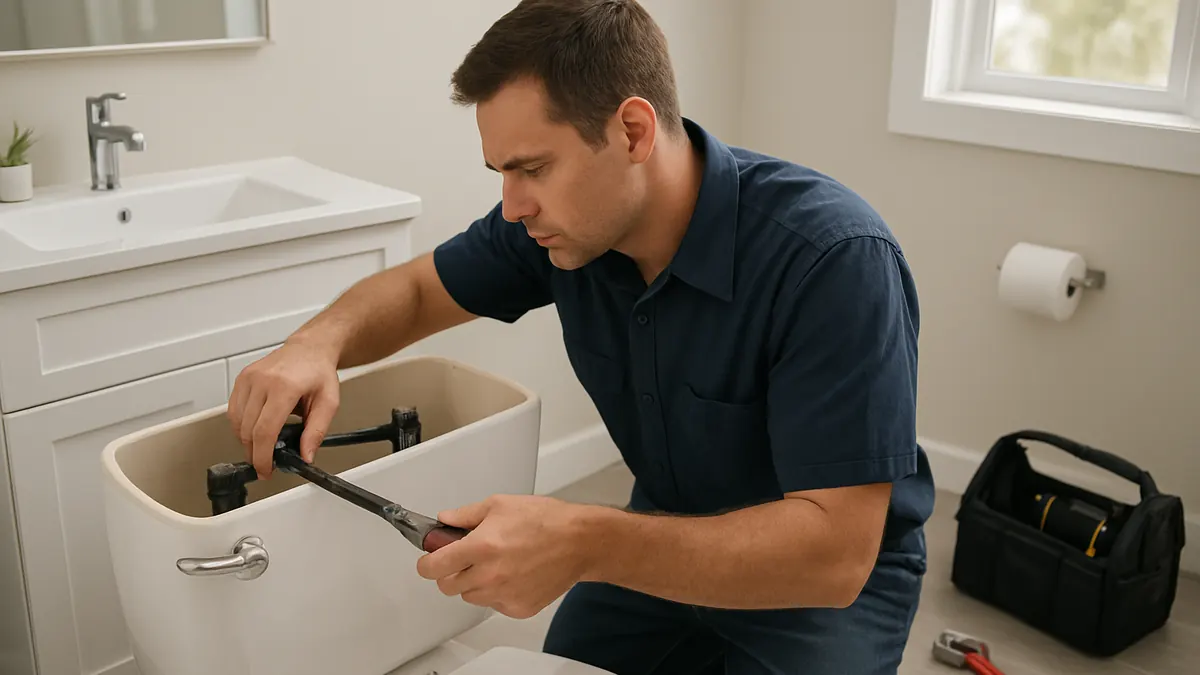
Remove the tank lid carefully and place it on a padded surface. Look at the water path without forcing the float, flapper, or handle. If water is leaking outside the toilet or the tank will not stop filling, gently close the fixture shutoff valve. Do not force an old valve that will not turn normally.
Why Does My Toilet Keep Running in Shalimar?
A toilet keeps running for one of two broad reasons. Either water continues entering the tank after it should stop, or water leaves the tank through a poor seal and triggers repeated refilling.
The distinction matters because the repair for an overfilling tank differs from the repair for a leaking flapper.
Identify Whether the Problem Is Filling or Sealing
If water flows into the overflow tube, the fill valve or float is usually involved. If the water level drops after the supply is closed, the flapper, flush valve, or overflow tube may be leaking.
If jiggling the handle stops the running, the handle, chain, or flapper alignment needs attention.
Most Common Causes of a Running Toilet
Incorrect Float Position
The float rises with the tank water and tells the fill valve when to stop. A high setting can allow water to reach the overflow tube. A float that rubs another part may not move freely.
Worn Fill Valve
The fill valve contains internal seals that wear with use. It may hiss, refill slowly, or continue supplying water after the proper level is reached.
Flapper Leakage
The flapper seals the tank outlet. Warping, hardness, tears, residue, or the wrong replacement part can prevent it from closing completely.
Chain or Handle Problems
A chain that is tight may hold the flapper open. A chain that is excessively loose can tangle beneath it. A sticking handle can also maintain tension after the flush.
Damage to the Flush Valve or Overflow Tube
The sealing surface can become damaged, and the overflow tube may crack. Water may then escape even when the flapper appears to be closed.
Problems Outside the Tank
Water on the floor may come from the supply connector, shutoff valve, tank bolts, tank-to-bowl gasket, cracked porcelain, or toilet base seal. These are not ordinary internal running problems and require separate diagnosis.
Safe Checks the Homeowner Can Perform
Watch the toilet complete one flush with the lid removed. The flapper should lift and settle flat. The chain should have a small amount of slack. The float should move freely, and incoming water should stop below the overflow-tube opening.
If the toilet starts refilling by itself, add several drops of food coloring to the tank and wait 15 to 20 minutes without flushing. Color in the bowl indicates tank-to-bowl leakage.
You may gently untangle a chain or confirm that the handle returns to its resting position. Do not make aggressive adjustments to unfamiliar parts.
If continuous water will not stop, close the toilet shutoff valve gently. Use the main shutoff only when active leakage cannot be controlled at the fixture.
What the Homeowner Should Not Attempt
- Do not pour drain chemicals into the bowl. They will not correct a flapper, fill valve, float, or chain problem.
- Do not overtighten tank bolts, supply connections, plastic mounting nuts, or the shutoff valve. Porcelain can crack, threads can strip, and hidden damage can worsen.
- Do not assume every flapper fits every toilet. An incompatible part may appear installed correctly while continuing to leak.
- Never repair cracked porcelain with adhesive and continue using the fixture. A crack can expand and release water suddenly.
Signs That Make the Problem Urgent
A running toilet requires prompt service when water is leaking onto the floor, the tank or bowl is cracked, the supply line is damaged, or the shutoff valve cannot stop active flow.
Stop using the toilet if it rocks, if water appears around the base after flushing, or if the floor feels soft. Sewage odor or poor flushing combined with base leakage may indicate a seal, flange, or drain problem.
Shut off the main water supply when necessary to prevent active damage. Keep water away from electrical equipment and nearby rooms.
How a Licensed Plumber Diagnoses the Cause
The plumber observes the tank during filling, flushing, and idle periods. Water level, overflow, float movement, fill-valve shutoff, flapper seating, chain slack, and handle operation are checked.
A dye test can confirm internal leakage. Turning off the toilet supply and marking the tank level can help identify whether water is escaping into the bowl.
The supply tube, shutoff valve, tank bolts, tank-to-bowl gasket, porcelain, base seal, flange, and floor are inspected when exterior water or movement is present.
Repair Options From the Least Invasive Up
The least invasive repair may be adjusting the float, correcting chain slack, or repositioning a sticking handle.
A worn flapper or fill valve can often be replaced without removing the toilet. A damaged flush valve, overflow tube, tank bolt seal, or tank-to-bowl gasket may require tank removal and rebuilding.
A base leak may require lifting the toilet, evaluating the flange and floor, and installing a new seal.
Complete replacement may be recommended when porcelain is cracked, the toilet is unstable, compatible parts are unavailable, failures are recurring, or the cost of several major repairs approaches the value of a replacement. One failed internal component usually does not require a new toilet.
Typical Factors Affecting Cost
Cost is influenced by the failed part, toilet design, parts availability, accessibility, and the condition of existing valves, connectors, bolts, and seals.
Tank removal, corroded fasteners, flange repair, damaged flooring, emergency scheduling, or toilet replacement and disposal can increase the scope. Ask for an explanation of what is included in diagnosis, parts, labor, testing, and cleanup.
Prevention and Maintenance Guidance
Investigate hissing, repeated refilling, or handle jiggling when it begins. Small internal leaks often worsen as seals continue to wear.
Inspect the visible supply line and shutoff valve for corrosion, moisture, cracking, or bulging. Avoid strong in-tank cleaners unless approved by the toilet manufacturer, because some chemicals damage flappers and gaskets.
Do not force the handle or use a toilet that moves at the base. Keep the main water shutoff accessible.
Correct the Mechanism Before the Problem Grows
If you are asking, "Why does my toilet keep running in Shalimar, FL?" determine whether water is entering through the overflow tube or escaping past the tank seal. That observation helps identify whether the problem involves filling or sealing.
Do not ignore water on the floor, a cracked tank, an unstable toilet, or a shutoff valve that does not work. Those conditions need prompt professional attention. A focused diagnosis can often solve the problem without replacing the entire toilet.
About this guide: This resource provides general homeowner education, not a remote diagnosis. Actual conditions, code requirements, equipment, and safe repair options must be evaluated at the property.