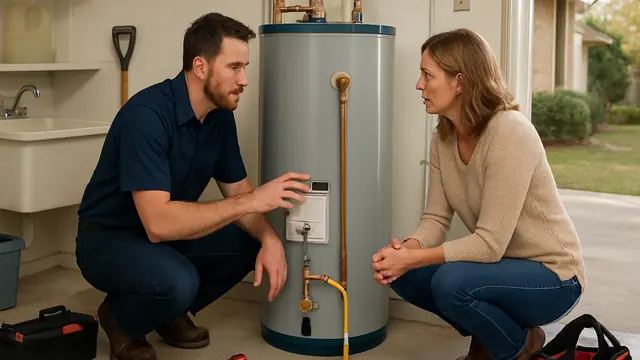
Stop and call for qualified help when plumbing water is near electrical equipment, sewage is entering occupied space, gas or burning odors are present, or a repair would require opening pressurized piping.
You may not hear the problem immediately after flushing. Instead, the toilet becomes quiet and then suddenly refills ten or twenty minutes later. Another common pattern is a steady hiss that stops only when you lift the tank lid and touch the float. When a toilet keeps running in a Springfield home, the tank is usually losing water into the bowl or the fill valve is allowing water to continue after the tank reaches its normal level.
Remove the tank lid carefully and observe the water. If water is leaking outside the toilet, approaching the top of the tank, or flowing continuously, close the shutoff valve clockwise with gentle pressure. Do not force a stuck or leaking valve.
Start by Identifying the Running Pattern
The way the toilet behaves can narrow the cause.
A constant hiss usually means the fill valve is not closing or the water level is high enough to spill into the overflow tube. A short refill every few minutes often means water is leaking slowly past the flapper or canister gasket. A toilet that stops after the handle is moved may have a chain or handle that is preventing the seal from closing.
Common Reasons a Toilet Keeps Running
The Flapper Is Worn or Dirty
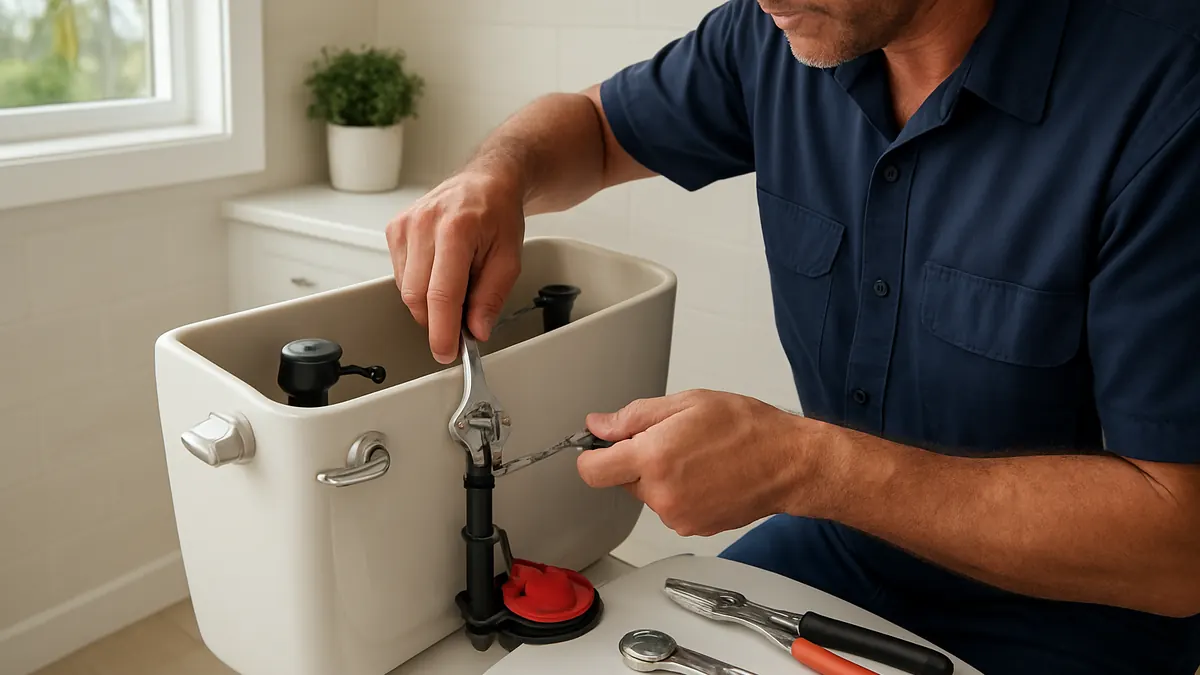
A rubber flapper can warp, harden, crack, or collect buildup. Water then leaks into the bowl even when the flapper appears closed.
The Canister Seal Is Deteriorated
A canister-style gasket can swell, fold, or wear unevenly, causing a quiet leak followed by periodic refilling.
The Chain Is Interfering With Closure
A short chain can hold the flapper open. A long chain may tangle or become trapped beneath the seal.
The Float Is Misadjusted or Binding
If the float is set too high, water may enter the overflow tube. If it rubs the tank wall, it may not close the valve.
The Fill Valve Is Failing Internally
A worn fill valve can hiss, pulse, refill slowly, or shut off only when the float is lifted.
The Flush-Valve Assembly Is Damaged
A rough valve seat, loose flush-valve body, or cracked overflow tube can allow water to escape even after the flapper or gasket has been replaced.
Safe Checks You Can Perform
- Set the tank lid on a folded towel and watch one full flush. The handle should return, the chain should relax, and the seal should settle evenly.
- The float should move freely, and the water should stop below the overflow tube.
- If water continues, gently raise the float. Stopped flow suggests adjustment or binding; continued flow suggests valve failure.
For a toilet that refills intermittently, place several drops of food coloring in the tank and wait 15 to 20 minutes without flushing. Colored water in the bowl confirms a tank-to-bowl leak.
Check the supply connection, shutoff valve, tank bolts, tank underside, and floor with a dry paper towel. Any dampness requires faster attention.
What You Should Not Attempt
- Do not force a shutoff valve that will not turn.
- Do not overtighten tank bolts; uneven pressure can crack porcelain.
- Do not pour drain cleaner into the bowl. It will not repair a tank valve or seal.
- Do not glue a flapper, wedge the float, cut the overflow tube, or install an unverified part.
Signs the Problem Has Become Urgent
Turn off the water and request prompt service if water reaches the floor, sprays from a connection, rises over the tank edge, or continues after the float is raised.
A crack in the tank or bowl is also urgent.
A toilet that rocks, leaks at the base, repeatedly clogs, drains slowly, or allows the bowl to rise may have a flange, base-seal, trapway, or drain problem. Gurgling or sewage odor may indicate a second issue.
How a Licensed Plumber Diagnoses the Problem
- A plumber observes the flush and refill sequence, looking for water passing the seal, entering the overflow tube, or continuing through the fill valve.
- The handle, chain, seal, valve seat, float, refill tube, and overflow tube are inspected. A dye test may confirm a quiet leak.
- The plumber also checks the shutoff valve and supply line. Movement, weak flushing, or clogs may require evaluating the base seal, flange, trapway, and drain.
Repair Options Beginning With the Least Invasive
- A minor adjustment may solve the problem: correcting the chain, aligning the handle, repositioning the refill tube, or lowering the float.
- A worn seal or faulty fill valve can often be replaced without removing the toilet.
- If several parts are worn, a tank rebuild may be more dependable than repeated single-part repairs.
A cracked or loose flush valve may require tank removal. Replacement may be better when porcelain is cracked, the fixture is unstable, parts are unavailable, or failures keep returning.
Typical Factors Affecting Cost
Cost depends on the failed component, toilet design, parts availability, accessibility, and whether the tank must be removed.
An adjustment requires less labor than a tank rebuild or toilet installation. Corroded hardware, a failed shutoff valve, a damaged supply line, or a drain problem can increase the scope.
Prevention and Maintenance Guidance
- Investigate longer refill times, hissing, unexpected refills, or a handle that needs jiggling.
- Periodically confirm that the chain is free, the float moves smoothly, the seal sits flat, and water remains below the overflow tube.
- Avoid in-tank tablets unless the manufacturer approves them; some chemicals damage seals and valves.
- Keep the floor dry, replace damaged supply lines, and keep the shutoff accessible.
Stop the Running by Correcting the Actual Cause
If you are asking, "Why does my toilet keep running in Springfield?" identify whether the toilet runs constantly, refills periodically, or stops when the handle or float is moved. Those patterns often point toward the seal, chain, float, fill valve, or overflow system.
A homeowner can safely observe the tank and perform a dye test, but floor leakage, uncontrolled water, cracked porcelain, a failed shutoff valve, or drainage symptoms should be evaluated promptly by a licensed plumber.
About this guide: This resource provides general homeowner education, not a remote diagnosis. Actual conditions, code requirements, equipment, and safe repair options must be evaluated at the property.